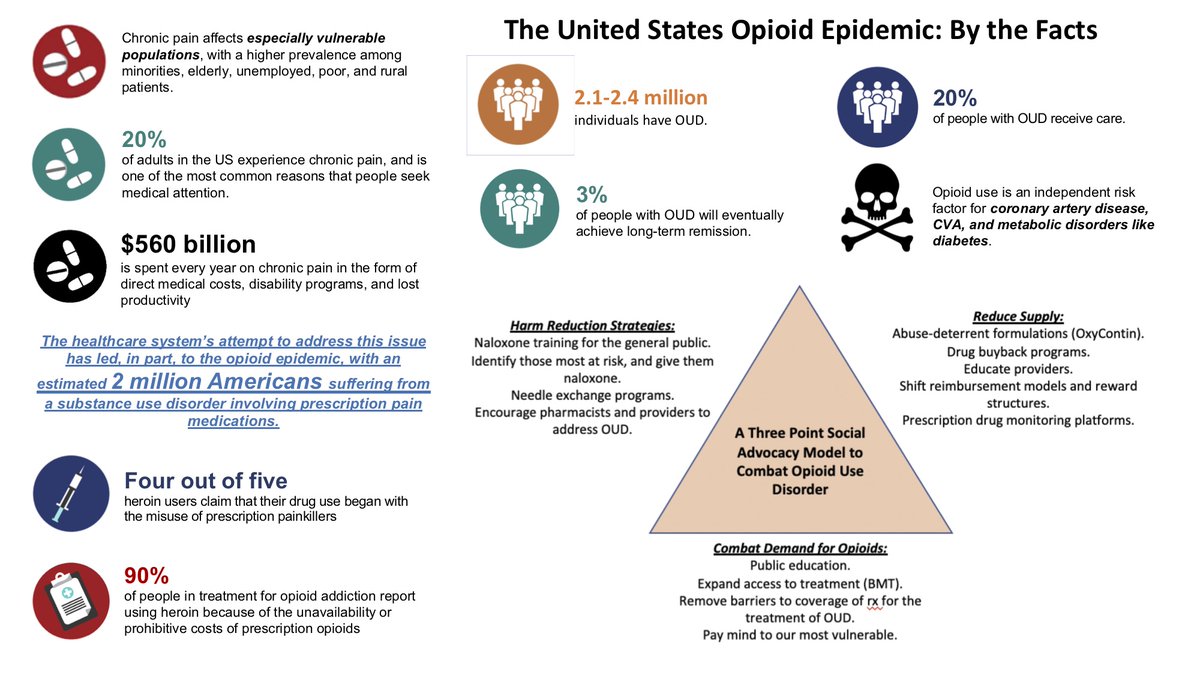
Great info-graphic highlighting the US opioid epidemic. Especially relevant are ways to combat this using different strategies — most notably harm reduction, supply-centered, and demand-centered strategies.
Should proficiency in a second language be mandatory for all physicians? Just #thoughts that show up in fruitful discussions here. Wonderfully colorful graphic, to the point, and informative.
Language barriers affect patients, the medical care they receive, and health outcomes. What are we doing to resolve this issue? @ernielesq @ananth_punyala@TylerGarman4@dorachen_13
@DavidK111893@ZolinAri @ernielesq Very interesting! Also found an article on Medicaid expansion, but this highlights some of the broader effects that expansion has had on lives saved.
@KhalidFahoum Interesting study and good questions raised. I feel like this highlights the basic needs that we have as people and how it affects livelihood and survival. Needs to be addressed.
@ernielesq 4. Expansion states prevented 1678-8132 overdose deaths between 2014 and 2016 in low-income persons. It's incredible.
My takeaway? There was empirical support for adopting & sustaining health coverage expansions as a tool for reducing deaths associated with opioid overdose 🔥
@ernielesq 3. Interestingly, the opioid death rates actually varied depending on the *specific* substance abused.
There was a substantial decreased risk of overdose deaths involving heroin and synthetic opioids. On the other hand, the opposite could be said for methadone deaths.
A recent study in JAMA Internal Medicine using difference-in-differences models finds a significant association between closure of automotive assembly plants and opioid overdose mortality rates, citing an 85% higher rate 5 years after a plant closure than expected.