Excellent infographic! What are your thoughts on the use of in-person translator services, as opposed to the use of translators through the phone? I think in certain situations, such as breaking bad news, using in-person translators may be more appropriate.
It' shocking how socioeconomic barriers and poor social support play such a large role in the healthcare and outcomes of cancer patients. I agree that increasing cancer screening and catching cancer in earlier stages can make a huge difference in the prognosis of these patients!
The 4 C's to help overcome language barriers in healthcare and promote effective communication. See our infographic below! @ernielesq @MiaDo22874343 @DavidK111893@MChitanvis
@MiaDo22874343 @NEJM @ernielesq Great article! Sometimes as physicians, even when we recognize these problems, like unemployment, in our patients, we just refer them to social workers. You brought up an excellent point that as physicians, we need to do more and advocate for our patients!
A recent study in JAMA Internal Medicine using difference-in-differences models finds a significant association between closure of automotive assembly plants and opioid overdose mortality rates, citing an 85% higher rate 5 years after a plant closure than expected.
@Susana_md14 Thanks for sharing! As future physicians, the first step would be to identify these problems and barriers our patients face. Reminds us how helpful it will be to consistently incorporate the structural vulnerability assessment tools in our patient interviews.
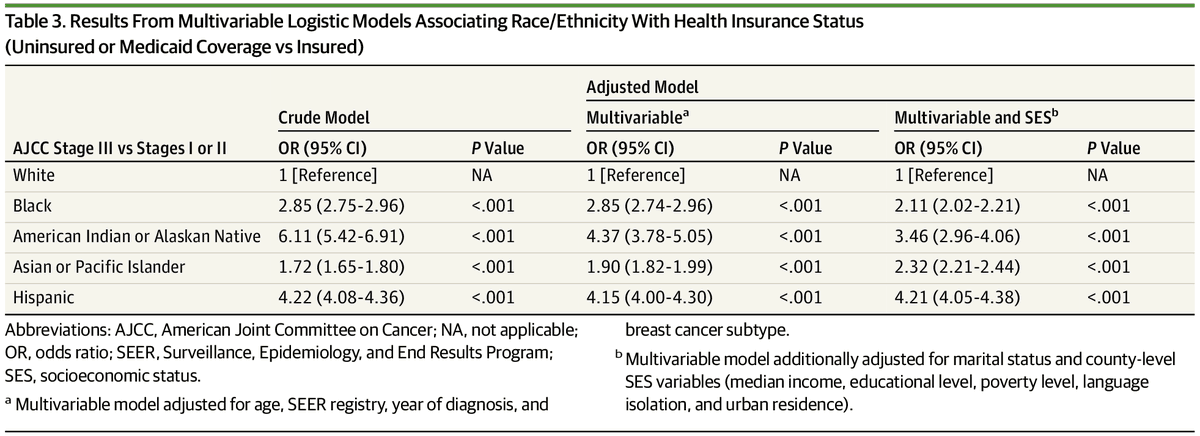
A retrospective study in JAMA Oncology finds that insurance status mediates almost half of the observed racial/ethnic disparities in higher stage breast cancer diagnosis.
Compared with white women, racial/ethnic minority women
-were more likely to be diagnosed with more advanced breast cancer, resulting in worse prognosis
-had 2-4-fold higher odds of having no insurance or Medicaid coverage at time of diagnosis