In the paper, we propose a variational quantum algorithm to compute Berry phases. This would allow us to detect conical intersections, which are known to play a role in relevant chemistry processes ✨
Our latest work on hybrid quantum algorithms for quantum chemistry was recently published in Quantum!
It has been a very interesting collaboration, including colleagues in @lorentz_inst , @VUamsterdam , @pasqalio and @GoogleQuantumAI. Congratulations to all!
Freshly published in Quantum: A hybrid quantum algorithm to detect conical intersections by Emiel Koridon, Joana Fraxanet, Alexandre Dauphin, Lucas Visscher, Thomas E. O'Brien, and Stefano Polla https://t.co/NrOShYtyls
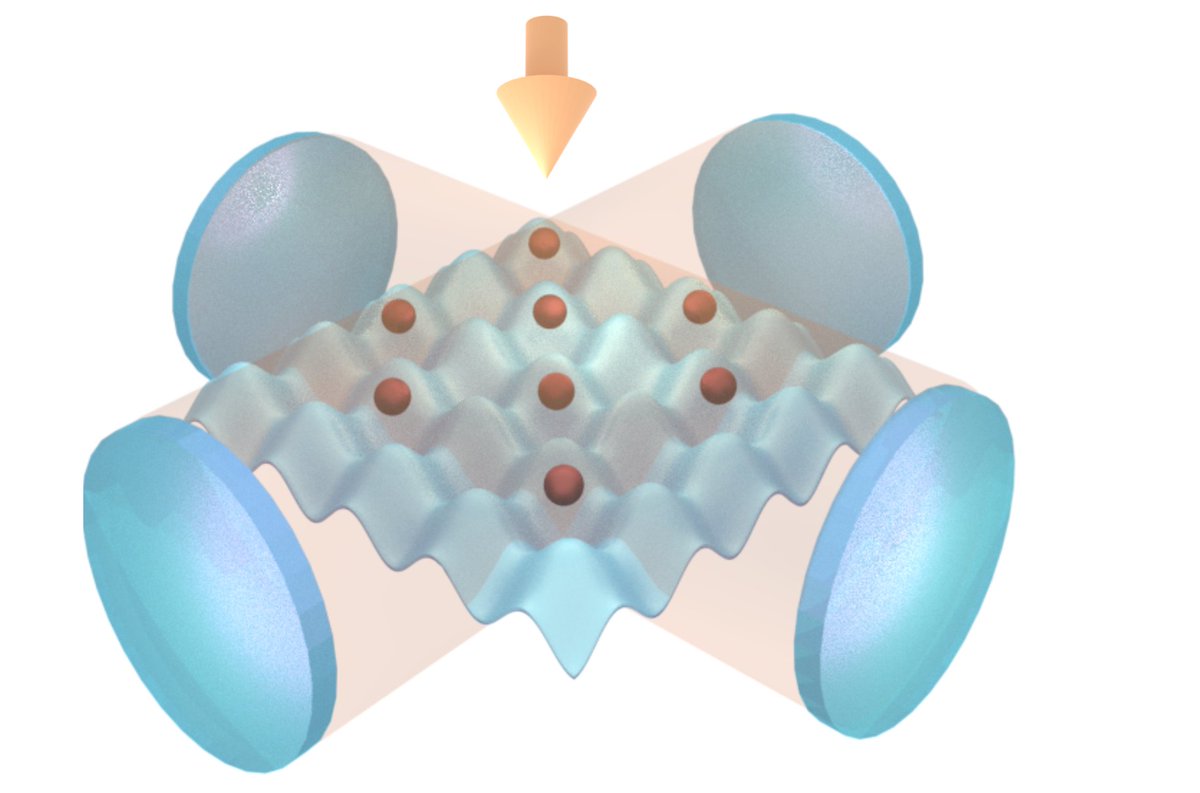
📝#NEWPaper: Researchers report on a new method that permits inducing symmetry-protected higher-order topology through a spontaneous symmetry-breaking mechanism in a two-dimensional system of ultra-cold bosonic atoms inside a cavity.
In @PhysRevLett
🔗https://t.co/4Z4pL5c786
Just before the end of the year, our work on Higher-order topological Peierls insulators was published in @PhysRevLett
This has been a long but very fulfilling project, that I'm particularly proud of. Congrats to @Joanafrx and the team! 🎉
https://t.co/yK6eUUYXsL
Thrilled to announce that the project on initial state preparation that we started during my residency program at @XanaduAI has finally seen the light, thanks to the great work of the quantum algorithms team!!
Congrats to all 😊
⏰ Preprint alert!
Is *polarization* an umbrella term for online conflict? ☂️ How can signed networks and balance contribute?
Whether you crave a US-based use case or prefer a fresh look into austrian politics, this is for you!
Read it here: [https://t.co/ngA9u48K56]
Our work on higher-order topological Peierls insulators is now on arXiv! 🔥
🔗https://t.co/S2Bvhqh0c6
This project has been a long journey that started at @ICFOnians! After intense battles with the numerics we are very (very😗) happy to finally present the results 🧵👇
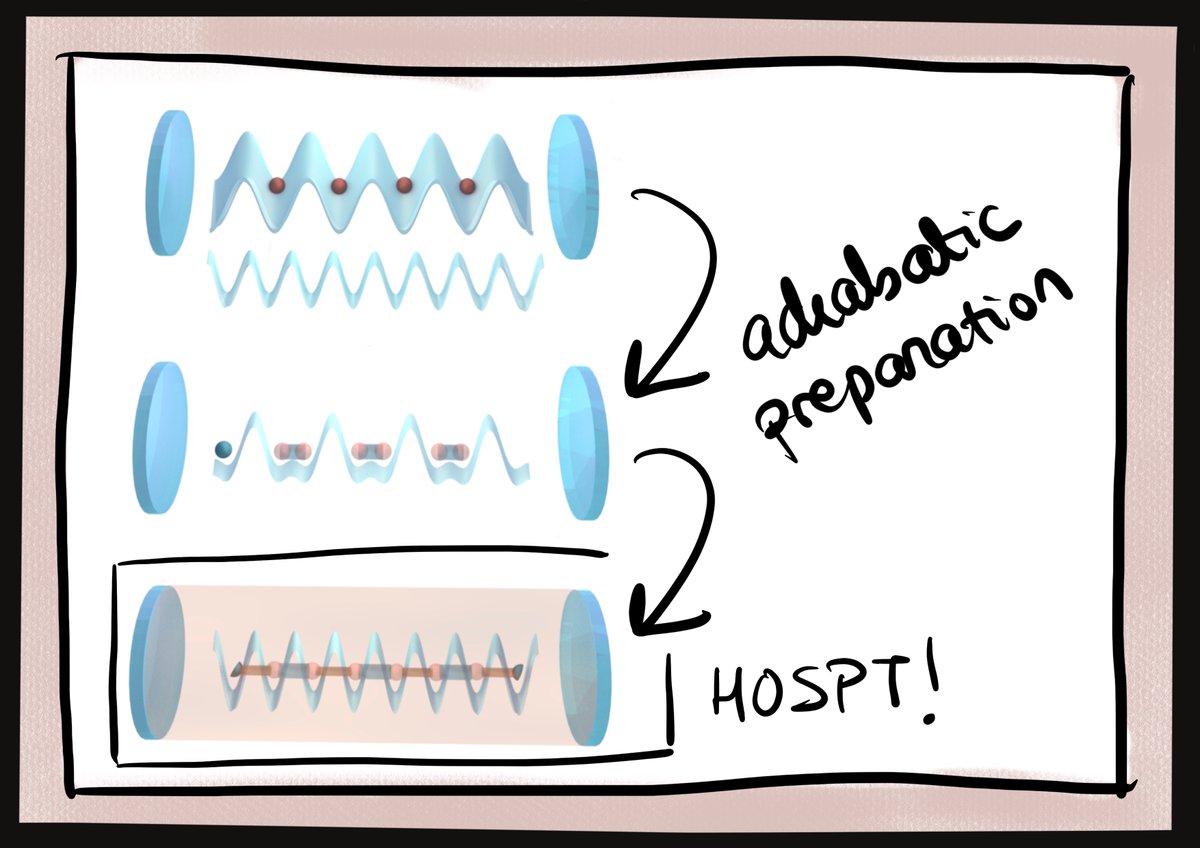
Nevertheless, the quest for the topological configuration had its results, and on the way we realized that one could prepare the HOSPT phase experimentally using an adiabatic protocol, which we explain in detail in the paper.