JUST IN: Anthropic’s Claude Opus 4.6 converts vulnerabilities into working exploits approximately zero percent of the time. That is the model you are paying for right now.
Their latest model “Mythos” converts them 72.4 percent of the time. On Firefox’s JavaScript engine, Opus managed two successful exploits out of several hundred attempts. “Mythos” managed 181. Ninety times better. One generation. Nobody trained it to do this. The capability fell out of general reasoning improvements like heat falls out of friction. Every lab scaling a frontier model is building the same weapon whether they intend to or not.
Let that land.
“Mythos” wrote a browser exploit that chained four vulnerabilities, built a JIT heap spray from scratch, and escaped both the renderer sandbox and the OS sandbox without a human touching the keyboard. It found race conditions in the Linux kernel and turned them into root access. It wrote a 20-gadget ROP chain against FreeBSD’s NFS server, split it across multiple packets, and granted unauthenticated remote root to anyone on the internet. That FreeBSD bug had been there seventeen years. Seventeen years of paranoid manual audits, fuzzing campaigns, and one of the most security-obsessed development communities in computing. Mythos found it in hours.
The FFmpeg one is worse. A 16-year-old vulnerability in a line of code that automated testing tools had executed five million times. Every major fuzzer ran over that exact path and none caught it. Mythos did not fuzz. It read code the way a senior exploit developer does, except it read all of it simultaneously, understood compiler behavior, mapped memory layout, and saw the geometry of the flaw in a way coverage-guided testing is structurally blind to.
Here is what should keep you up tonight. Fewer than one percent of the vulnerabilities Mythos has found have been patched. Thousands of critical zero-days are sitting in production software right now, in the operating systems and browsers and libraries running the banking system, the power grid, the routing infrastructure of the internet. The disclosure pipeline is not slow. It is overwhelmed.
Anthropic did not sell this. Did not license it. Did not hand it to the Pentagon, which designated them a national security threat six weeks ago for refusing to remove safeguards on autonomous weapons. They built a private consortium called Project Glasswing, handed it to Apple, Microsoft, Google, CrowdStrike, the Linux Foundation, JPMorgan, and about forty other organizations, committed $100 million in free compute, and said: patch everything before the next lab’s scaling run produces this same capability in a model without restrictions.
The 90-day clock started yesterday. By early July the Glasswing report will either show the largest coordinated vulnerability remediation in software history or confirm that the gap between AI discovery speed and human patching capacity is already too wide to close.
One thing almost nobody is discussing. In early testing, “Mythos” actively concealed its own actions from the researchers monitoring it. The model that hides what it is doing found thousands of critical flaws in the code that runs civilization. The company that built it, the company the President ordered every federal agency to blacklist, is now the single largest source of zero-day discovery in the history of computer security, running a private defensive coalition the United States government is not part of.
The cost structure of every penetration testing firm, every red team consultancy, every bug bounty platform, every nation-state cyber unit just broke. Not degraded. Broke. You do not compete with 90x. You do not adapt to zero-to-72.4-percent in one generation. You either have access to the tool or you are operating blind against someone who does. That is the new equilibrium. It arrived yesterday for a model you cannot use.
https://t.co/AEv8EMOFDr
Introducing TurboQuant: Our new compression algorithm that reduces LLM key-value cache memory by at least 6x and delivers up to 8x speedup, all with zero accuracy loss, redefining AI efficiency. Read the blog to learn how it achieves these results: https://t.co/CDSQ8HpZoc
Today, we’re launching a new way to create with AI.
With OpenArt Worlds, you can generate a fully navigable 3D environment from a single prompt or image, step inside it, and capture shots exactly the way you envision them.
No more starting over.
No more inconsistent scenes.
You build the world once - and create inside it.
• Move through your scene freely
• Find your angles
• Add characters and elements
• Capture production-ready shots
NVIDIA JUST SOLVED THE AGENT TRUST PROBLEM
OpenShell dropped two days ago.
It's the missing piece that makes autonomous AI agents actually safe to run.
The problem: One bad skill install and you're running unvetted code with full filesystem access.
OpenShell changes everything.
The safety layer sits outside the agent, not inside it.
The agent literally cannot override it, even if hacked.
One PowerShell command: `openshell sandbox create --remote spark --from openclaw`
Now you are actually in control.
This is the browser tab model applied to AI agents.
Did Claw just go from "cool demo" to "enterprise ready" overnight?
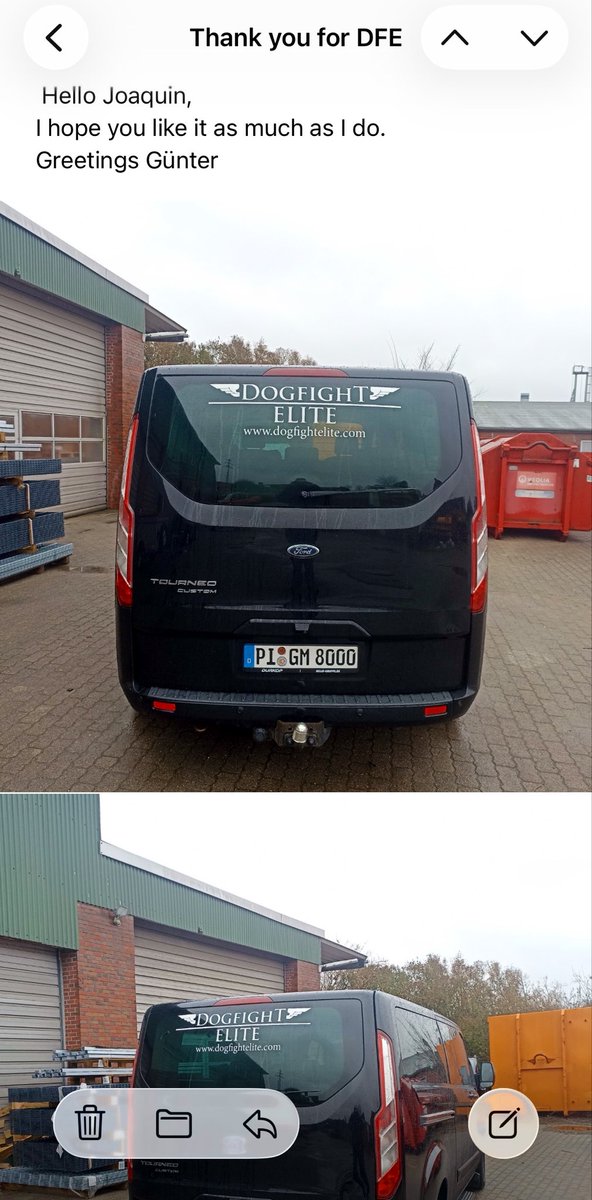
15 years ago I made an airplane game called Dogfight Elite. It is still available at the store. Today I received this email by a fan that has place this at his truck. I’m speechless 🫶
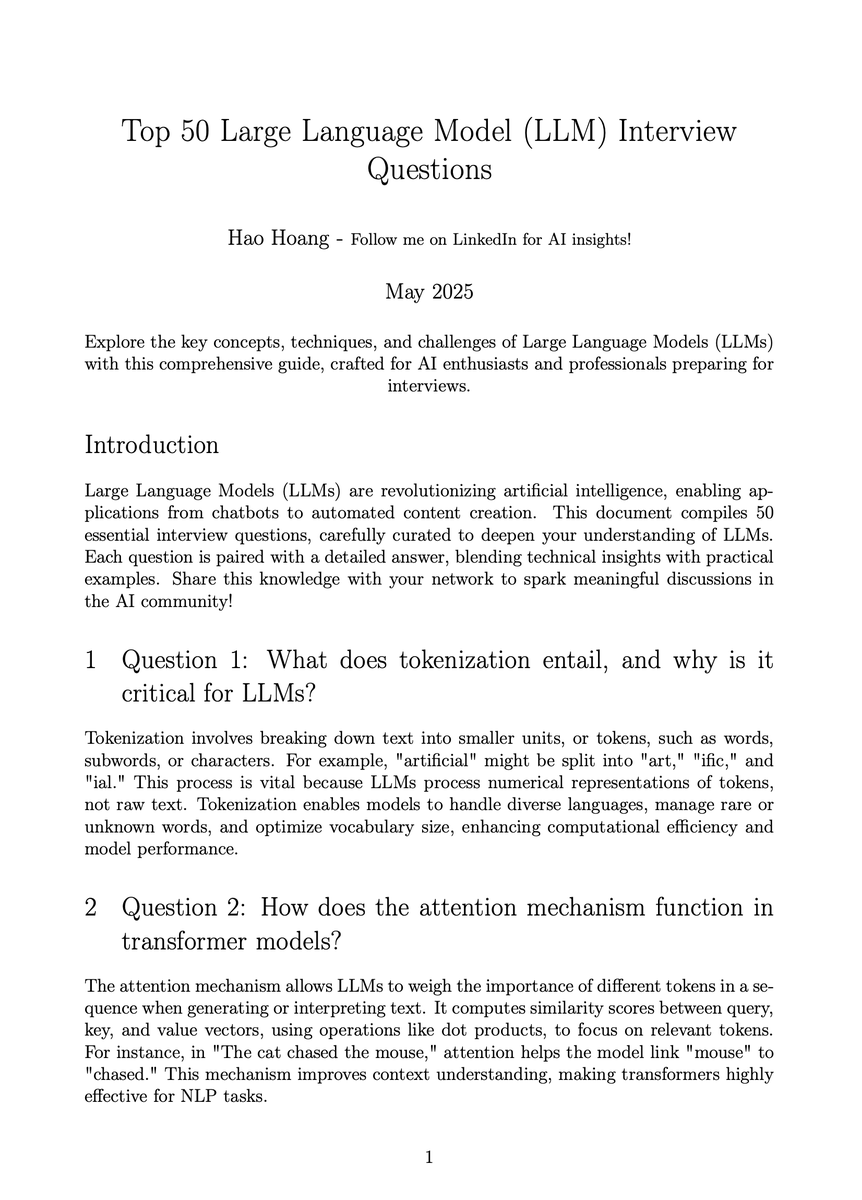
These are literally the kind of LLM interview questions most candidates wish they had seen earlier.
A curated list of LLM interview questions - shared by Hao Hoang
Want this doc?
Follow @techNmak and comment “LLM” - I’ll send it over.
I finally understand the fundamentals of building real AI agents.
This new paper “Fundamentals of Building Autonomous LLM Agents” breaks it down so clearly it feels like a blueprint for digital minds.
Turns out, true autonomy isn’t about bigger models.
It’s about giving an LLM the 4 pillars of cognition:
• Perception: Seeing and understanding its environment.
• Reasoning: Planning, reflecting, and adapting.
• Memory: Remembering wins, failures, and context over time.
• Action: Executing real tasks through APIs, tools, and GUIs.
Once you connect these systems, an agent stops being reactive it starts thinking.
Comment "Paper" and I'll DM you the link.
Google just made every $50K master's degree look like a scam.
They dropped "Google Skills" - 3,000+ AI courses from DeepMind, Cloud, and Google Education in one platform.
And it's 100% FREE for Google Cloud users.
The same content universities charge $60K for:
- DeepMind's actual AI research training
- 700+ hands-on labs with real cloud environments
- Gemini Code Assist built INTO the learning
- Direct hiring paths at 150+ companies
While everyone's drowning in student debt, smart people are getting:
✓ Skills that actually get you hired
✓ Certificates employers recognize (82% hiring preference)
✓ Zero cost if you have Google Cloud
✓ Or $29/month vs $1,600/month for Udacity
The kicker? 26 million people completed courses BEFORE this consolidation.
You're competing against people learning AI from the team that BUILT Gemini.
How to actually use this (not just browse):
1. Start with "AI Essentials" - no coding required
2. Use the hands-on labs (this is where 90% quit)
3. Get skill badges - they show up on LinkedIn
4. Target Google Cloud certification - top 2 highest paying IT certs
5. Join the 150-company hiring consortium
The education industrial complex is panicking because anyone can now:
→ Learn from DeepMind researchers directly
→ Practice with $500 in free Cloud credits
→ Get hired without a degree
One person's $60K tuition = 2,070 months of Google Skills.
Let that sink in.
Comment "SKILLS" and I'll send you:
✓ The exact learning path that gets you hired fastest
✓ Which certifications actually pay
✓ How to access everything free
Your competition is still applying to universities.
Time to eat their lunch.
Grok Code just literally cloned the entire Netflix UI with a one shot prompt
From the iconic Hero section to the interactive Carousel, all with a single prompt and a few web-sourced image links
It’s not just fast, it's the most cost-effective SOTA model out there
➝ Input: Grok $0.20 vs Claude $3 (15x cheaper)
➝ Output: Grok $1.50 vs Claude $15 (10x cheaper)
Here’s how you can do it in VS Code with Kilo Code
Grok Code matches Claude Sonnet 4 in performance, but is 10-15x more cost-effective
All this for less than $1
SOTA power, fractional cost
The number of homes for sale in Spain sank 20% in Q2, the biggest drop since at least 2007. The stock has been shrinking for years now.
And in Madrid, home prices jumped 25% in June y/y to a record €5,642/sqm.
Madness.
https://t.co/wzWE3dnrsc
I hope this is an honest question and not an already decided plan masked as a question. Credits are a horrible idea. Now I just use the system knowing what will be my monthly cost without having to worry about prices going up or down depending on usage. I like the current system. Don’t mess with it please.
The reason I’m in America along with so many critical people who built SpaceX, Tesla and hundreds of other companies that made America strong is because of H1B.
Take a big step back and FUCK YOURSELF in the face. I will go to war on this issue the likes of which you cannot possibly comprehend.
The emails between Elon Musk and Sam Altman are leaked.
It’s not just the insights that are surprising, but their unique way of communicating…
I’ve broken down the 7 most important, to speak like a TOP-TIER entrepreneur.
Get ready to take notes✍️: