Wat een verademing. Een journalist die kritische vragen stelt en bij ontwijkgedrag nog even een tandje bijzet!
Zo anders dan de gemiddelde mainstream-rapporteur...
Brandstof tekorten????
2 weken geleden geladen in Vlaardingen met bestemming Amsterdam. 10 dagen wachten om te kunnen lossen. We worden gebeld, nieuwe bestemming, Gent bij onze zuiderburen. Afgelopen woensdag aangekomen. En daar liggen we dan, geen orders en niet lossen. Hoe drijf je de prijs van bio diesel verder op. En we zijn niet de enige die al bijna twee weken als opslag liggen.
"If this were a real war, Iran wouldn't fire a single shot".
Correct.
Here's what you need to know about this country.
The Iran that exists today as a regional force; the Shia crescent stretching from Tehran through Baghdad, Damascus, Beirut, and into Yemen,
was not built by Iranian strategy alone.
It was built by a sequence of US foreign policy decisions that eliminated every structural check on Iranian expansion while maintaining the rhetorical position that Iran was the principal threat to regional stability.
Saddam Hussein's Iraq was the primary Sunni counterweight to Iranian regional ambition.
The 2003 US invasion removed him.
What replaced him was a Shia-majority government in Baghdad with deep institutional ties to Tehran.
Iran gained a land bridge to Syria and Lebanon without firing a meaningful shot.
The US handed it to them.
The Syrian civil war provided the next expansion point: Western intervention aimed at removing Assad inadvertently required Iran and Russia to defend him, and when Assad survived, Iran consolidated its military presence in Syria, completing the corridor from Tehran to the Mediterranean.
Yemen's collapse created the vacuum the Houthis filled, extending Iranian influence to the Red Sea and the Babel Mandeb strait.
Every intervention conducted under the banner of containing Iran produced the opposite result.
Either this represents the most sustained strategic incompetence in modern foreign policy history, or the expansion of Iranian regional influence was not,
in fact,
the problem it was being presented as.
Who benefited from four decades of Iranian regional expansion? The US defense industry, which sold weapons to every Gulf state terrified of the Shia Crescent.
Israel, which used Iranian proxy activity as perpetual justification for its military operations. And Iran itself, which accumulated regional reach it could never have built without the chaos that US intervention provided.
Greater Israel, the expansion of Israeli territorial control across the West Bank, Gaza, and potentially into southern Lebanon and Syria,
requires one structural precondition above all others:
a fractured Arab and Muslim world incapable of presenting unified resistance.
A unified Sunni Arab bloc with coherent political will and military coordination poses an existential threat to Israeli expansion.
Five direct Arab-Israeli wars demonstrated this clearly enough that the strategic lesson was absorbed: Israel cannot survive a unified regional front.
The Sunni-Shia division is the most durable fracture line in the Islamic world.
Iranian Shia expansionism, the deliberate empowerment of Shia communities and militias in Iraq, Syria, Lebanon, and Yemen,
deepened this fracture structurally.
Saudi Arabia and the Gulf states, facing an expanding Shia Crescent on their borders and within their own populations, became consumed with containing Iranian regional influence.
The Organization of Islamic Cooperation fractured along sectarian lines. Arab states that might otherwise have coordinated against Israeli expansion were instead managing existential concerns about Iranian proxy penetration of their own political systems.
The Muslim world that Israel faces today is not a unified bloc. It is a collection of states managing sectarian competition, proxy conflicts, and competing patron relationships with the US, Russia, and China.
Iran's Shia expansion produced exactly the Arab division that Israeli territorial strategy requires. That this division serves Iranian interests; regional reach, Shia ideological expansion, leverage over Arab neighbors,
and simultaneously serves Israeli interests,
a divided opposition incapable of unified resistance,
is not a coincidence.
It is the structure of the arrangement.
Iran and Israel are not allies. But their mutual exploitation of the Palestinian cause, and the regional fragmentation that exploitation produces, has made each more powerful than either could have become in a genuinely hostile relationship.
___
Hamas, Hezbollah, the Houthis, and the Iranian-backed Iraqi militias, the so-called Axis; are collectively the most profitable non-state military ecosystem the US defense industry has ever operated alongside.
This requires understanding how the Military Industrial Complex generates revenue. It does not generate revenue from peace. It generates revenue from threat.
Hamas in Gaza justifies $3.8 billion in annual baseline US military aid to Israel, plus emergency supplemental packages that have run into the tens of billions.
Every Iron Dome interceptor fired costs $50,000 to $100,000. Every precision munition Israel expends requires replacement from US manufacturers.
Hezbollah in Lebanon has justified decades of US weapons sales to Israel and the sustained posture of US naval assets in the Eastern Mediterranean.
The Houthis in Yemen provided the justification for US naval operations in the Red Sea in which a single Tomahawk cruise missile, cost approximately $2 million, was fired at Houthi positions worth a fraction of that.
The Iranian nuclear program, perpetually two weeks from completion since the Carter administration, has justified US military basing rights across the Gulf, arms sales to Saudi Arabia that have run into the hundreds of billions over four decades, and the entire architecture of CENTCOM's regional force posture.
Remove the Axis of Resistance and the Iranian threat, and you remove the justification for almost the entirety of US military revenue in the Middle East.
The Gulf states stop buying F-35s. Israel's emergency supplemental packages lose their congressional rationale. The Fifth Fleet loses its homeport justification. The MIC's Middle East revenue model does not survive a genuinely pacified region.
The Axis of Resistance is not a threat to the MIC's interests.
It is the MIC's interests, maintained in a permanently threatening but permanently defeatable condition.
Iran has been spared for forty years because a destroyed Iran is worth nothing to the structure described above.
A dead boogeyman cannot justify arms sales.
A collapsed Iranian state cannot generate the regional chaos that keeps Gulf states purchasing US weapons and hosting US bases.
The boogeyman must remain alive, militarily capable, rhetorically threatening, and critically, ultimately defeatable.
The narrative requires that Iran could be destroyed if the US chose to act decisively. The operational reality requires that the US never actually makes that choice.
This is the paradox that sits at the center of forty years of US-Iran relations, and it explains every feature of the relationship that otherwise appears contradictory:
the nuclear deal that relieved sanctions without eliminating the program, the billions in frozen assets periodically released, the intelligence reportedly leaked to Iran about Israeli strike plans, the calibrated military responses that degrade capability without eliminating it.
But the arrangement is finally breaking down, and Iran is the one breaking it. Iran has read its own structural position correctly. It has accumulated regional reach, it has approached the nuclear threshold, and it has watched the multipolar world take shape around it; BRICS expanding, Gulf states normalizing with China and Russia, the petrodollar weakening, US influence in the region contracting on multiple fronts simultaneously.
Iran has calculated that the boogeyman role, which was never chosen and was always a cage, can now be escaped. The systematic assassination of senior Hamas and Hezbollah leadership; targets that Iran did not protect with the full weight of its intelligence apparatus, signals that Iran is preparing to safely distance itself from its proxy network.
You do not allow your most valuable assets to be eliminated without response unless those assets have transitioned from strategic resources to strategic liabilities.
Iran is shedding the Axis of Resistance not because it has been defeated but because it no longer needs it.
The proxies served their function: they prevented the completion of Israeli ethnic cleansing long enough for the regional balance of power to shift.
They are now standing between Iran and the normalization it requires to enter the multipolar order as a legitimate state actor rather than a sanctioned pariah. The MIC's most productive asset; the controllable, permanent, profitable Iranian threat, is retiring itself.
And the faction within the US establishment that sees the multipolar transition coming and prefers to manage it rather than resist it is not entirely displeased.
The real Iran was never the revolutionary state about to go nuclear. It was a carefully maintained threat, granted just enough capability to remain credible, denied just enough capability to remain defeatable, and exploited by every player in the region; including itself, for four decades of mutual profit.
What is happening now is the unwinding of that arrangement. The question is not whether Iran survives. The question is what role it plays in the order that replaces the one being dismantled.
Which brings us back to where we started. If this were a real war, Iran would not be able to fire a single shot. Because now you should understand, that Iran's military capability exists within a tolerance envelope set by the US.
The fact that it has fired thousands, across Israel, across the Gulf, across five proxy theatres simultaneously; for four decades without triggering the military response that would end it in days is the most honest confession the system has ever made about itself.
The US has never destroyed Iran because Iran was never the enemy.
It was the product.
And the most telling sign that the arrangement is finally ending is not the missiles being fired.
It is the careful, deliberate silence from Iran every time one of its proxies is eliminated, the sound of a system allowing its own infrastructure to be quietly dismantled, because the product has outlived the market for it.
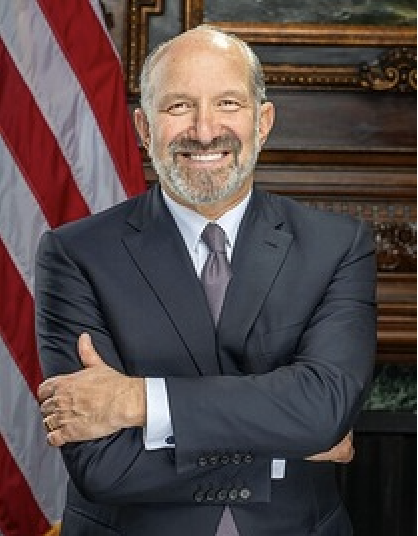
Howard Lutnick's opmerkelijke mazzel:
Als leidinggevende bij de grootste huurder in het WTC Cantor Fitzgerald gokte hij een paar dagen vóór 9/11 met miljoenen in putopties Americain Airlines en United Airlines en verdiende daar tientallen miljoenen mee toen die beurskoersen inzakten na de rampdag.
(De SEC onderzocht dit maar verklaarde het tot "mazzel" omdat er geen verband gevonden werd tussen C&F en Al Quaida..)
Hij verscheen die ochtend van 9/11 niet op zijn werk want voor het eerst in vijf jaar wilde hij zijn kids naar school brengen.
CF verloor 658 werknemers bij de aanslag.
Meest jonge dertigers met jonge gezinnen.
Lutnick stopte de salarisbetalingen aan de 658 al vier dagen na de ramp.
Lutnick regelde een enorm schadefonds en pikte daar zelf 60% van in die hij uitdeelde aan zichzelf en aandeelhouders.
Dan naar nu:
Lutnick was als Trump's Minister van Handel voorstander van de tarrifs.
150 miljard dollar aan tarrifs betaalden bedrijven aan de Amerikaanse Belastingdienst.
Let nu op:
De zoons van Lutnick boden die bedrijven aan om hun "rechten op terugbetaling bij blijken van onrechtmatigheid van deze tarrifs" op te kopen voor 15 a 20% van de nominale waarde.
Doordat gisteren het Hooggerechtshof deze tarrifs als onrechtmatig vonniste zitten de Lutnicks op een miljardenberg aan claims.
Lutnick stond aan de wieg van de tarrifs en wist dat ze onrechtmatig waren.
Jim Carrey’s wife died shortly after he made these statements. People who were in the audience note that the room was actually dead silent, the laugh tracks and applause were all added in after the fact.
I have a feeling that this Trump/Melania coin nonsense will be very bullish for gold.
You’re seeing the veil torn off the crypto grift at the highest levels of authority.
People are realizing that everything is funny money.
"Volgens racisten hielden politie en politiek de zaak doelbewust in de doofpot, omdat de daders voornamelijk van Pakistaanse afkomst waren. De jonge slachtoffers waren bovendien voornamelijk witte meisjes."
Ja hoor, het staat er echt: volgens racisten.
Dus als je aandacht besteed aan de Pakistaanse achtergrond van de daders dan ben je een ... racist!
https://t.co/kv3CS0g5Qc via @deKanttekening
Het lijkt erop dat de Amerikaanse Deep State bezig is een stokje te steken voor de benoeming van Tulsi Gabbard tot Director of National Intelligence, de hoogste inlichtingenbaas. Gabbard is fervent anti-oorlog. Dan lig je er snel uit in Washington.
https://t.co/WfgKQdtEHo
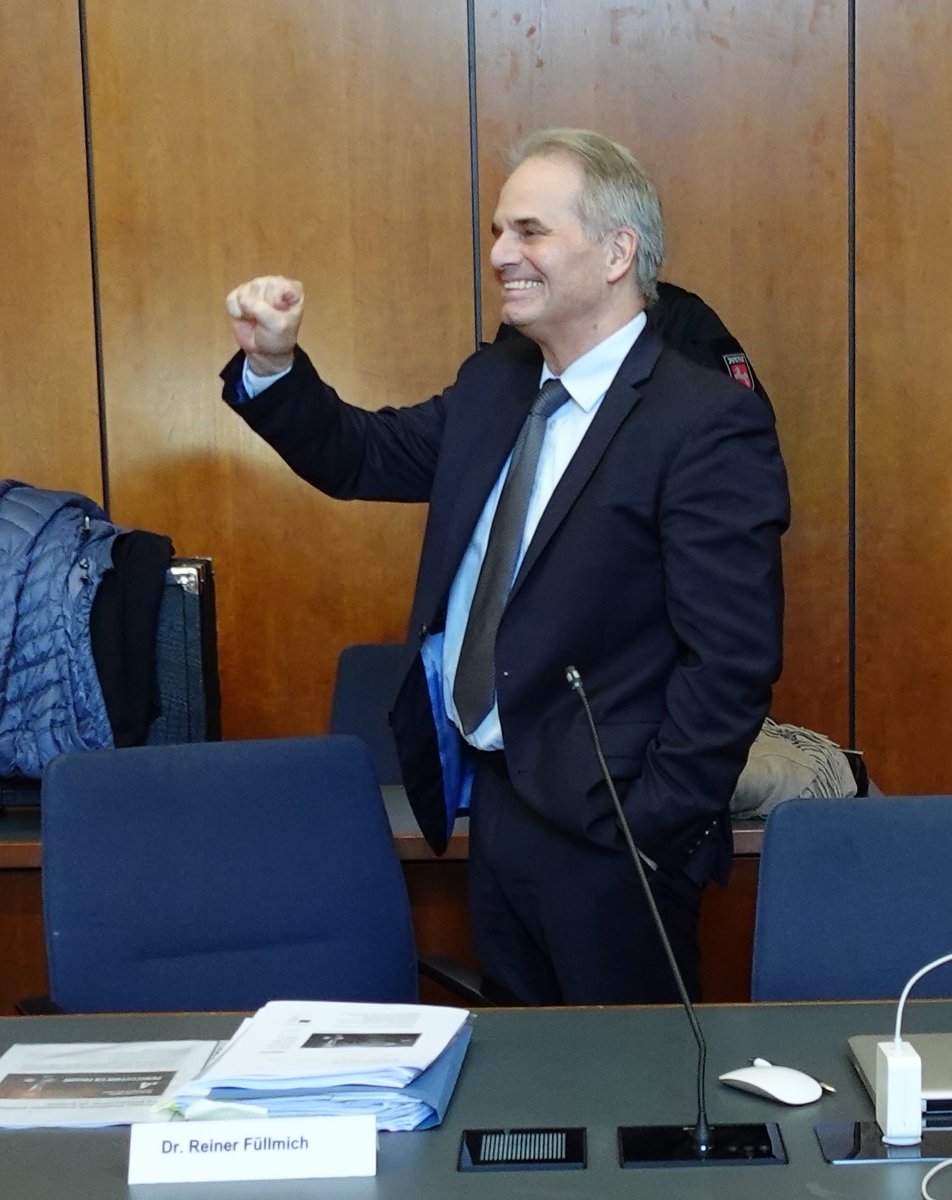
"Reiner Fuellmich to Run Against Former Secret Services Head in upcoming German Elections"
Like a plot twist worthy of a John le Carré cover, the German lawyer Reiner Fuellmich is taking steps to run against Thomas Haldenwang, former president of the ‘Bundesamt für Verfassungsschutz’ (BfV, Germany’s Secret Services), in the upcoming parliamentary elections, at the end of February 2025.
Fuellmich’s name as an independent candidate has been put forward by three signees, as is required, and he will have to obtain 200 supporting ‘first vote’ signatures, to secure his candidacy in Wuppertal’s District 1.
Wuppertal is part of North Rhein-Westphalia and not of Lower Saxony, where Fuellmich used to live and is currently held on remand in the prison of Rosdorf. The city was specifically chosen, after Haldenwang defeated Derya Altunok, on 30 November, as the CDU-candidate.
As the co-founder of Corona Ausschuss (Corona Investigative Committee) and therefore a vocal critic of the global corona crisis and Great Reset agenda, working towards an international class action suit against the instigators, Fuellmich could not be a more contrasting alternative to Haldenwang.
Haldenwang, one of the main people responsible for the corona crisis in Germany and, it is alleged, for the political prosecution of Reiner Fuellmich, built his career as a civil servant. Having studied law, like Fuellmich, Haldenwang worked 12 years in total for the Federal Ministry of the Interior and for Home Affairs (BMI). In 2009, he joined the BfV in 2009, becoming its president in 2018. He left the Secret Services on 24 November 2024 to pursue his current political ambition.
During his BfV presidency, Haldenweg made so called right-extremists his focus, later adding ‘antisemites’. He advocated to infiltrate groups labelled as such, by politicians and the media, such as the political party, AfD and Die Basis.
If Haldenwang is successful in the upcoming elections and votes may push him to the very top, Germany will follow the Netherlands (and to a lesser extent the United Kingdom) as another western nation where the country’s top political position is being taken up by a former head or associate of the intelligence services. (Dick Schoof, prime minister of the Netherlands, however, was simply appointed. Unprecedented, his name never even appeared on a ballot, nor was he a member of a political party.)
A German directive states that all political candidates should enjoy the same rights. This means that, if Fuellmich is successful in obtaining the required 200 signatures for his candidacy, he will have to be granted the same access to the media and equal time to campaign, as other candidates.
As Fuellmich is currently being kept in solitary confinement and was not allowed to talk to other prisoners for six months (from 10 June until Friday 6 December 2024), this will mean a remarkable change in the conditions under which he is being held captive.
Even more remarkable will be the debates with Haldenwang, that Fuellmich has said to be looking forward to. The published RKI-files, and recent main stream media reports on ‘vaccine’ injuries will, no doubt, make for fiery discussions.
Fuellmich, however, will want to discuss more. Such as, the role of the Bundeskriminalamt (part of BMI) in him being lured and abducted from Mexico. Or the leaked secret services document in which employees were instructed to infiltrate the groups in which Fuellmich was active, and to find – or create(!) – reasons to prosecute him on criminal grounds, so that he “would never be able to hold a political position”.
The political prosecution of Fuellmich was meant to silence him. Since his intention to enter the elections was aired on Bittel TV, on Sunday 8 December, Tageschau and other media have disclosed that the Public Prosecution Services in Göttingen are fining Fuellmich’s leading lawyer, Katja Wörmer, €4,400 for having recorded statements Fuellmich made for the general public, during telephone conversations with her client. Not mentioned in the publications is the fact that Wörmer was given permission for these recordings by the court, from December 2023 onwards.
Ten of these public statements have been aired, over the last year, each of them now representing a fine of €400. The publications are an unlikely coincidence, in terms of timing. Rather, it appears that what was tolerated during the last year, is now being punished in light of the government’s nightmare threatening to come true: a publicly vocal and politically active Reiner Fuellmich.
If Fuellmich succeeds in securing the 200 signatures, voters in Wuppertal will likely be in for an exciting month, in the run up to the elections. The lawyer who made a name for himself, internationally, by representing clients in court cases against Deutsche Bank, Kühne + Nagel and Volkswagen and who provided a lifeline for (hundreds of) thousands of viewers with his Corona Ausschuss platform, will not make things easy for his political opponent. There is not a topic Reiner Fuellmich will not touch.
Haldenweg has mainly operated in the political background and possibly lacks the empathy, people and public speaking skills that Fuellmich is generously endowed with. At Haldenwang’s disposal, however, is a wealth of information that is not publicly available, as well as a large network of people who can ‘make things happen’, including those who ‘infiltrate, lure and kidnap’, as Fuellmich’s prosecution has revealed.
If Fuellmich succeeds in securing the candidacy, he will be in for a busy time, as the current proceedings have not yet finished and the next trial is likely to follow right after. The deadline for the signatures is 25 January 2025.
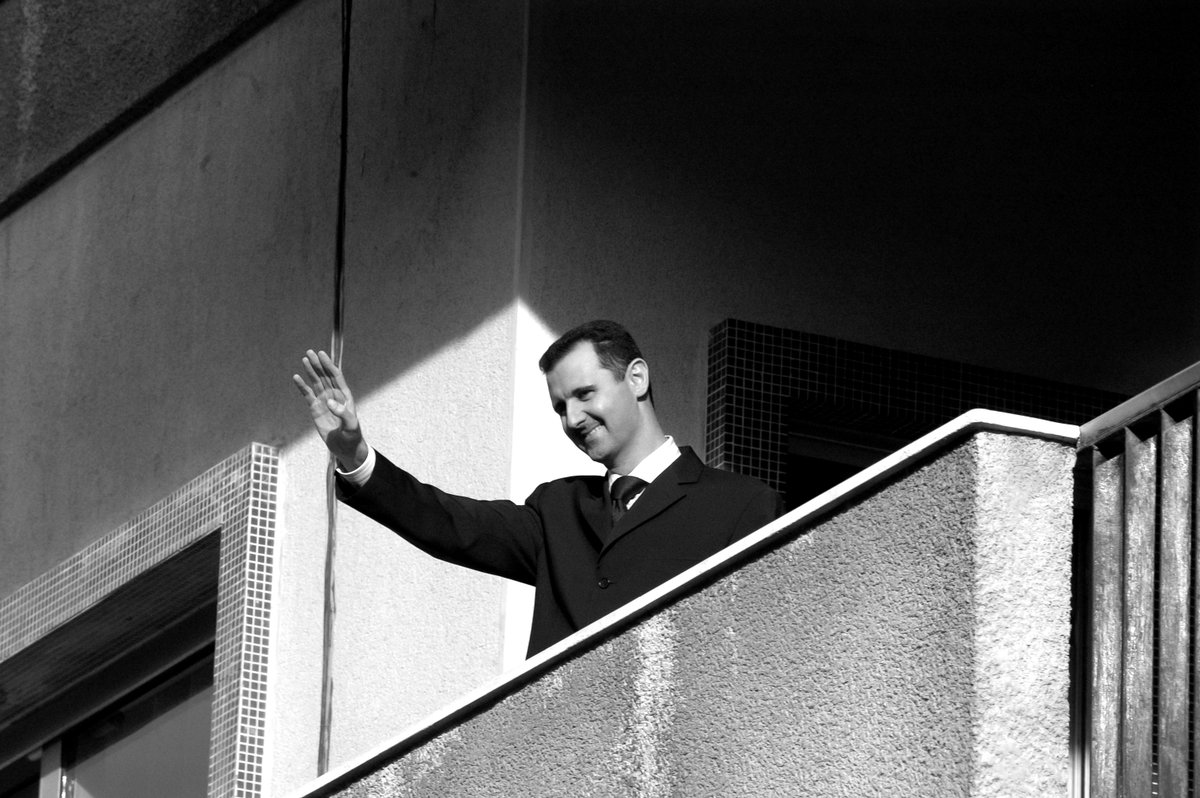
The fall of Assad’s Syria is not a victory for freedom—it’s a manufactured tragedy. Globalists orchestrated this chaos, empowering terrorists and leaving Christians in peril. Here’s the truth they don’t want you to know. 🧵 1/25
@bobatl Anybody from your team help man. Been trying to reach you because I didnt get my elements lp I bought. UPS fd up but I cant reach anybody from your side neither. Cut me some slack ffs. Please reach out.