@EVStraya@Socceroos Great result,however we need to improve our ball control moving forward.
We couldnt string more then 3 passes together.
Higher ranked teams will punish that.
Go Ausies!!!
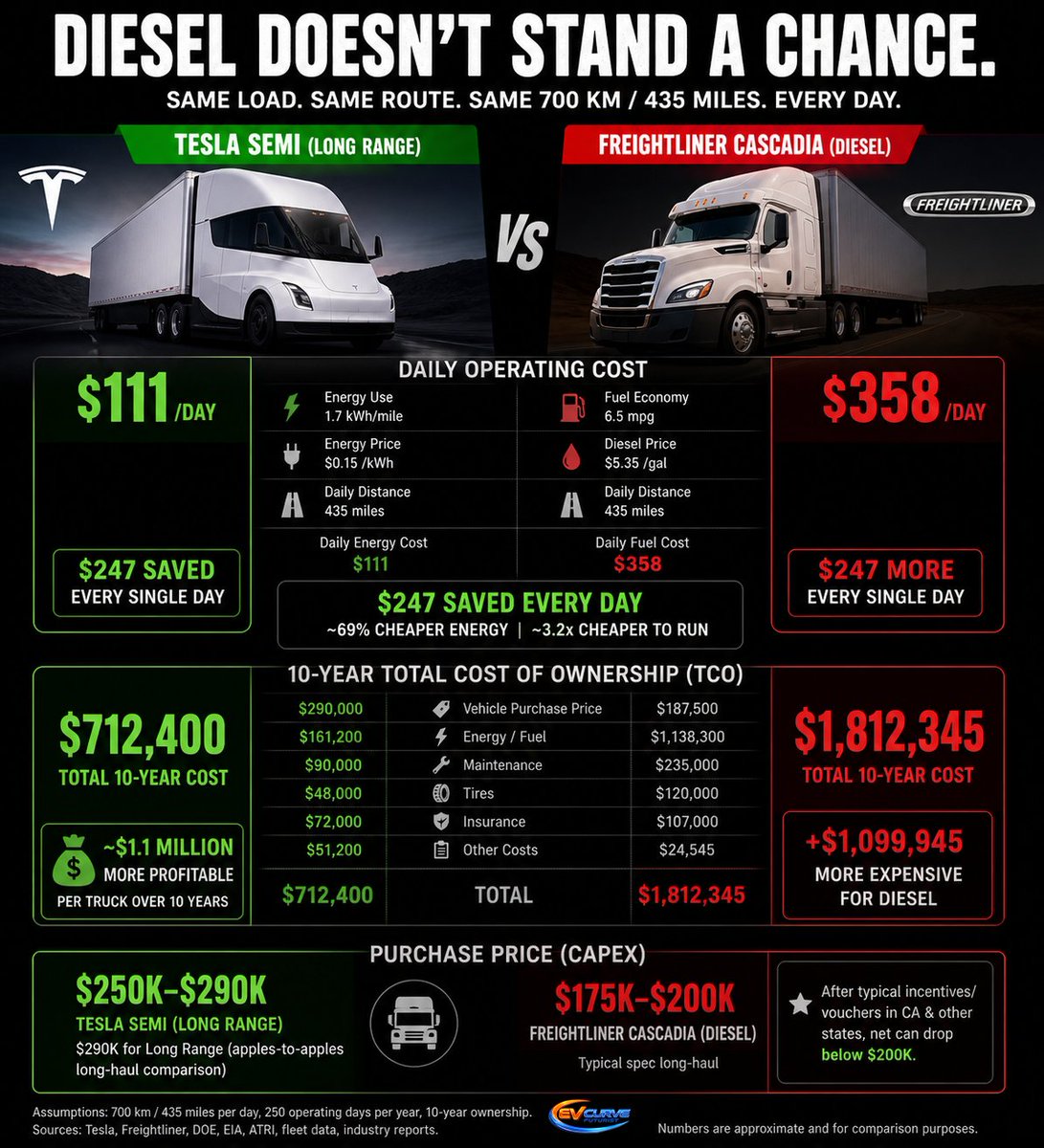
DIESEL DOESN’T STAND A CHANCE.
Tesla Semi high-volume production started April 29, 2026.
Same load. Same route. Same 700 km / 435 miles. Every day.
Tesla Semi → $111/day
Freightliner Cascadia → $358/day
→ $247 saved. Every single day.
→ ~69% cheaper energy
→ ~3.2x cheaper to run
10-year TCO:
Tesla Semi → $712,400
Diesel → $1,812,345
→ ~$1.1M more profitable per truck
The math is bulletproof.
Every day you wait costs you $247.
Fleet owners… your move.
#TeslaSemi #ElectricTruck #Bettrification #EV
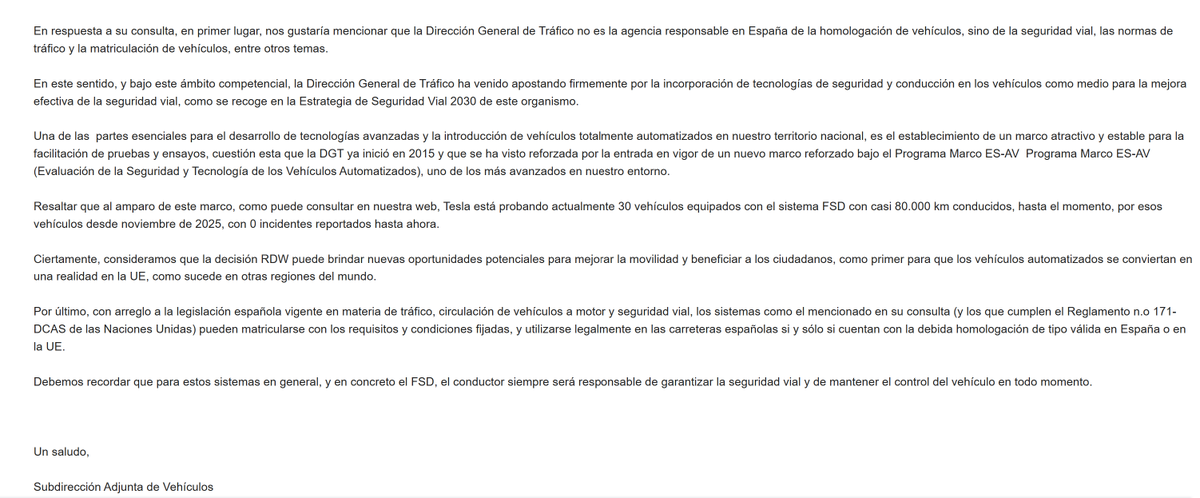
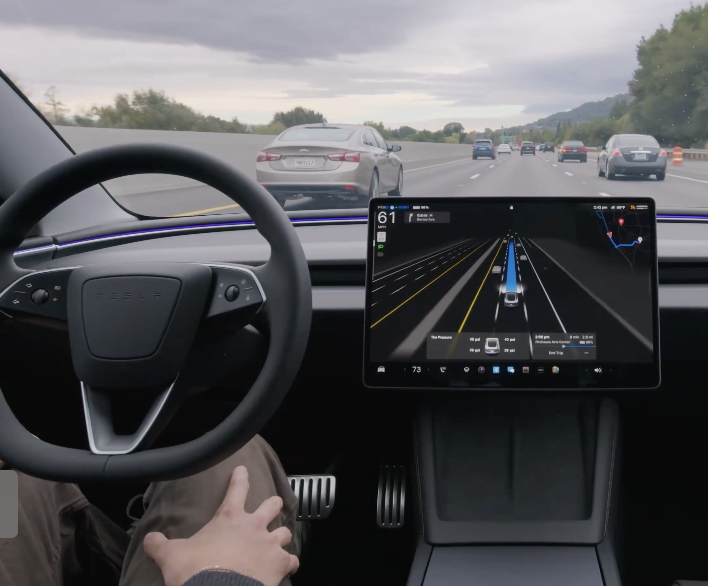
Spain says that @Tesla currently has 30 vehicles testing on the road in the country with FSD (Supervised), with nearly 50,000 miles driven so far by these vehicles since November 2025. There have been 0 reported incidents to date.
"We certainly believe that the RDW decision can provide new potential opportunities to improve mobility and benefit citizens, as a first step towards automated vehicles becoming a reality in the EU, as is happening in other regions of the world."
Not the final chapter. The stepping stone.
A 600-ton excavator just went electric. Tethered to the grid, backed by a ~450 kWh buffer battery. This is how S-curves move. Solve what works, then scale.
Mining was the holdout. Now it’s the proving ground.
Inflection starts here.
For those asking about specs, this isn’t a small demo.
We’re talking a ~600–650 ton class excavator, in the same league as a Liebherr R 9800. These machines typically draw ~5–10 MW in operation.
This one is fully electric, but not battery-only. It’s grid-connected via high-voltage cable, with a ~450 kWh onboard battery acting as a buffer.
That battery isn’t for runtime. It smooths peak loads, handles transient spikes, and allows short repositioning. Think shock absorber, not fuel tank.
Diesel equivalents burn ~300–500+ litres per hour. This removes that entirely. Lower opex, less maintenance, higher efficiency.
And the key point most miss:
You don’t electrify the hardest sectors by waiting for perfect batteries. You start where power exists, solve the economics, then expand.
Mining isn’t truly mobile. It’s fixed geography. Easier to bring power to the machine than fuel to the site.
This is step one of the shift:
diesel supply chain → electric energy system.
Not the final chapter. This is exactly where the curve starts bending. #Bettrification
🚗 800,361 km.
Zero defects. Passed inspection again.
In a Tesla Model S.
You know… the “toy” that was supposed to die after a few years. 😉
No engine rebuild.
No oil changes.
No emissions drama.
Just… driving.
Meanwhile, the internet keeps repeating:
❌ “Batteries die quickly”
❌ “EVs don’t last”
❌ “Not real-world proven”
Funny.
My car didn’t get the memo.
Maybe the real issue isn’t the technology.
Maybe it’s that some opinions are just… pre-installed.
Curious:
Does anyone know a car in Austria with more than 800,000 km on the clock?
I’d genuinely like to see it.
More details here:
👉 https://t.co/ez0OMT8mLt
The future isn’t coming.
It’s already parked in my garage.
🍿
#EV #Tesla #ElectricVehicles #MythBusting #Innovation
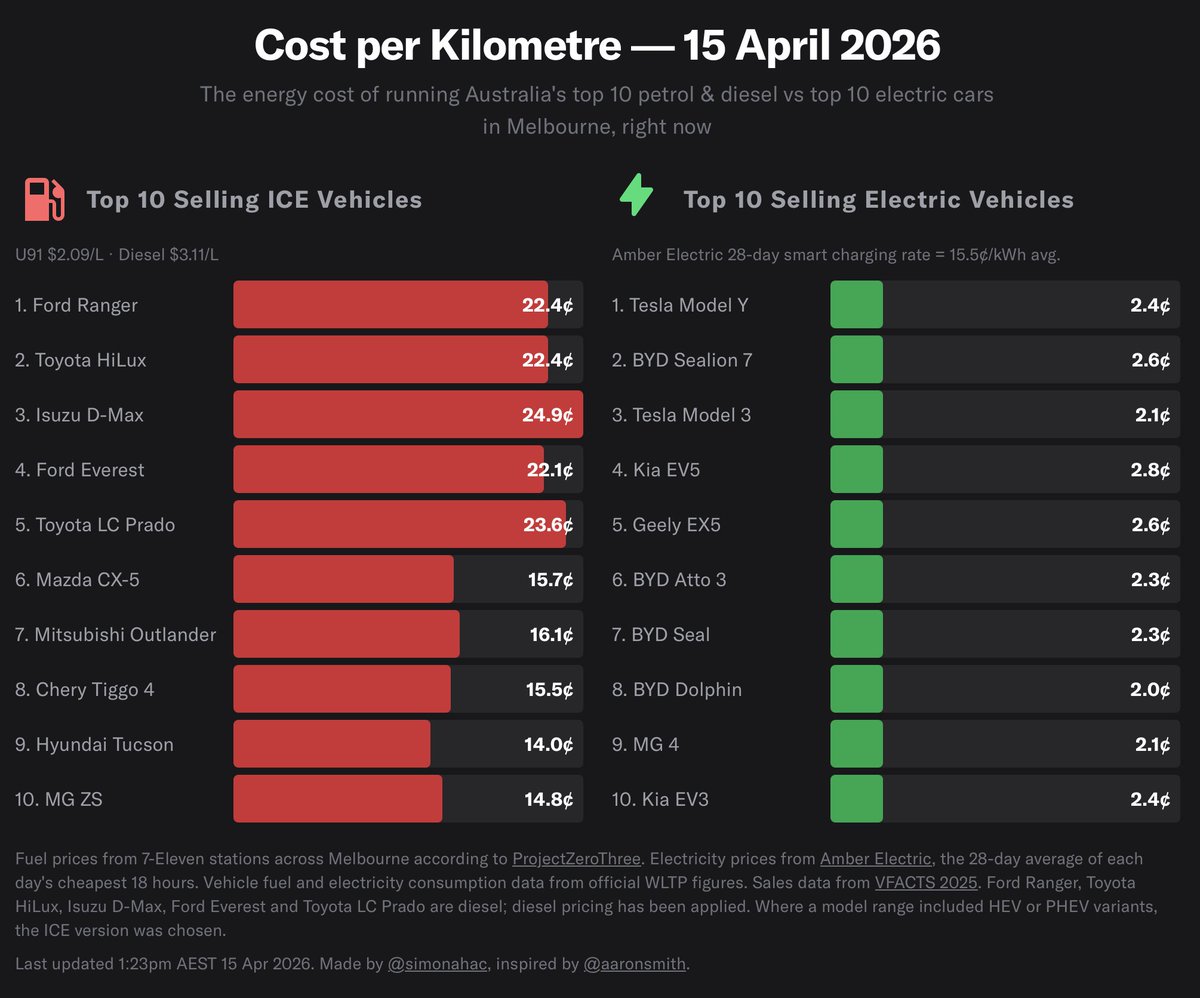
This is a great graphic that compares cost per kilometer in Australia between the top 10 ICE vehicles & top 10 EVs. The difference is huge.
Top EVs:
1) Tesla Model Y: 1.7¢
2) BYD Sealion 7: 1.8¢
3) Tesla Model 3: 1.5¢
Top ICE vehicles:
1) Ford Range: 16¢
2) Toyota HiLux: 16¢
3) Isuzu D-Max: 18¢
The Hyundai Tuscan (9th bestselling ICE car) costs 8X more per kilometer than the @Tesla Model Y. I converted all amounts above to USD.
While the graphic is for new car sales, the Model 3 and Model Y were the top two bestselling used EVs in Australia in March 2026, as used EV sales went up 138% from February, likely as Australians try to ditch petrol and diesel in favor of cheaper alternatives.
More great graphics here: https://t.co/DeIdl6HRXa
This is the sound of the all-electric Tesla Semi.
Deliveries of the new Production Version begin this year:
• Long Range model has 500 miles of range with a full payload.
• 1.7 kWh per mile efficiency (average diesel semis are roughly 5–7 kWh per mile equivalent energy use).
• Tri-motor powertrain with 800 kW of power (~1,073 hp), 3x the power of the average diesel semi.
• The battery in the Semi is designed to last 1M miles.
• Standard Range model (325 mi) has a similar turning radius as a Tesla Model 3/Y.
• 0.4 drag coefficient.
• Independent truckers are able to buy a Semi for use, not just fleet owners.
• Semi fleet uptime is at 95% due to extremely low maintenance and reliability.
• Integrated safety features in the Semi protect not just the driver but others on the road as well.
• Future wireless charging.
• Semi uses the same 4680 battery cells found in the Cybertruck.
• Semi can power a whole refrigeration trailer or any powered unit. The technology is shared with Cybertruck Powershare.
Electric trucks “can’t handle heavy freight”… until one quietly does a 480 km round trip fully loaded in NSW and makes diesel look outdated.
36 tonnes. Real route. No shortcuts.
600 kWh used.
~$50 energy cost.
Diesel?
~$300 (prewar)
~$600 today.
That’s not merely incremental. This is a massive system shift!
~1400 hp vs 500–700 hp diesel. It was overtaking trucks up Mount White.
Held speed the whole way → ~40 mins faster.
Less breaks. More flow.
• Faster
• Stronger
• ~80–90% cheaper energy
• Lower total cost over time
High capex, low opex wins.
This is already happening on Australian roads.
The economics have flipped.
Now it’s just adoption curves. ⚡📈
#Bettrification
Buy an #EV and start fueling with Aussie sunshine ☀️🇦🇺
No tankers. No chokepoints. No imported oil.
Just your roof, your grid, your energy—getting cleaner every year.
ICE runs on geopolitics.
EVs run on physics.
Support local. Drive electric. Save money.⚡ #Bettrification
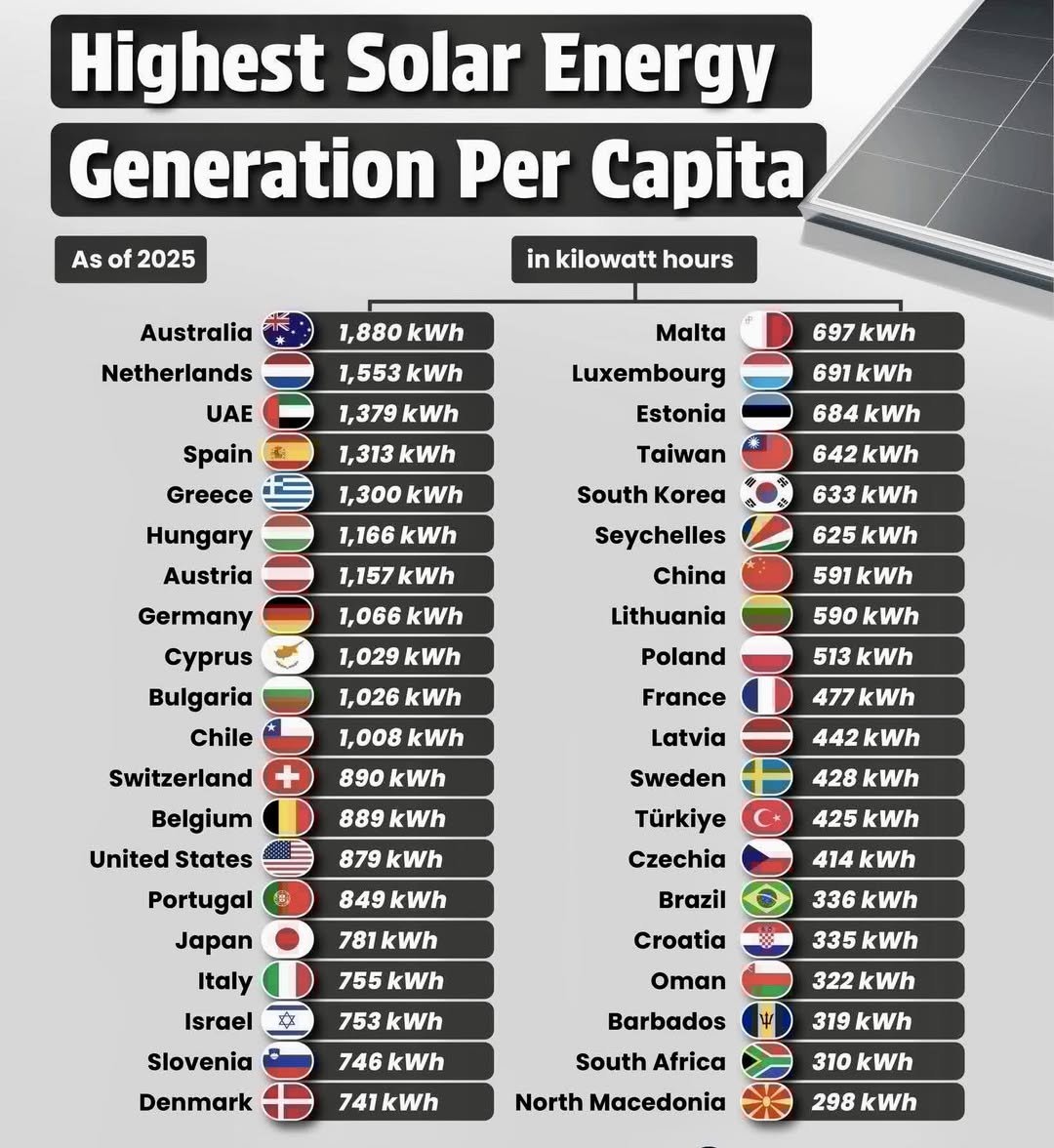
This isn’t peak solar. This is early innings of system replacement. Australia leads per capita as rooftops turn homes into power stations & BESS scales fast. Centralized grids aren’t competing anymore—they’re being replaced faster than linear models anticipated. #Bettrification
A two-megawatt turbine pays back its build energy and emissions in 6-12 months, then runs clean for the next 25+ years.
The fossil fuel industry doesn’t own the sun and the air.
That’s why they’ve spent billions electing puppets to attack and delay the renewable revolution.
Daniel Bleakley: 🇦🇺
"We transported essential household goods for our customer Who Gives A Crap from their distribution centre in Sydney to Canberra with a Windrose prime mover on a single charge."
"Australia must act now and seize this moment to decouple from diesel."
⚡️⚡️⚡️
Electric trucking in Australia could smash diesel imports and cost in less than 4 years. Transport accounts for 20% of the nation's emissions. Electric B-Double prime movers cost about 30 c/ km for electricity, a third of diesel's cost. Analysis by David Leitch confirms that replacing the ~ 6,000 prime movers on the Sydney - Melbourne route saves over 4 billion litres. Payback in just 4 years. If expanded to Brisbane, it would account for about 54% of diesel imports. $10 billion in imports are gone. Sovereignty gained.
Why not?