🚨 New Job Alert🚨
Come work with us at @OurWorldInData!
We're looking for someone to lead our econ work – especially core OWID topics like global poverty, inequality, economic growth, and government spending.
Info: https://t.co/V7RDIqFBsM
Deadline: Sunday 11 August
We’re hiring a writer. 🖊️
This role is central to our mission of presenting research and data to improve the public's understanding and awareness of the world’s largest problems and their possible solutions.
It’s permanent, flexible, and can be remote.
Interested? Read on 🧵
@r_o_farrell@adam_tooze@OurWorldInData I’ve reworded the chart and the write-up in our War & Peace page to hopefully make things clearer.
https://t.co/QmAbDh4mJ1
I'm looking for a freelance designer to help out on some @OurWorldInData projects. You'd be working on data visualization and art for upcoming articles. Flexible hours, competitive rate.
Is this you or someone you know? Reach out via DM
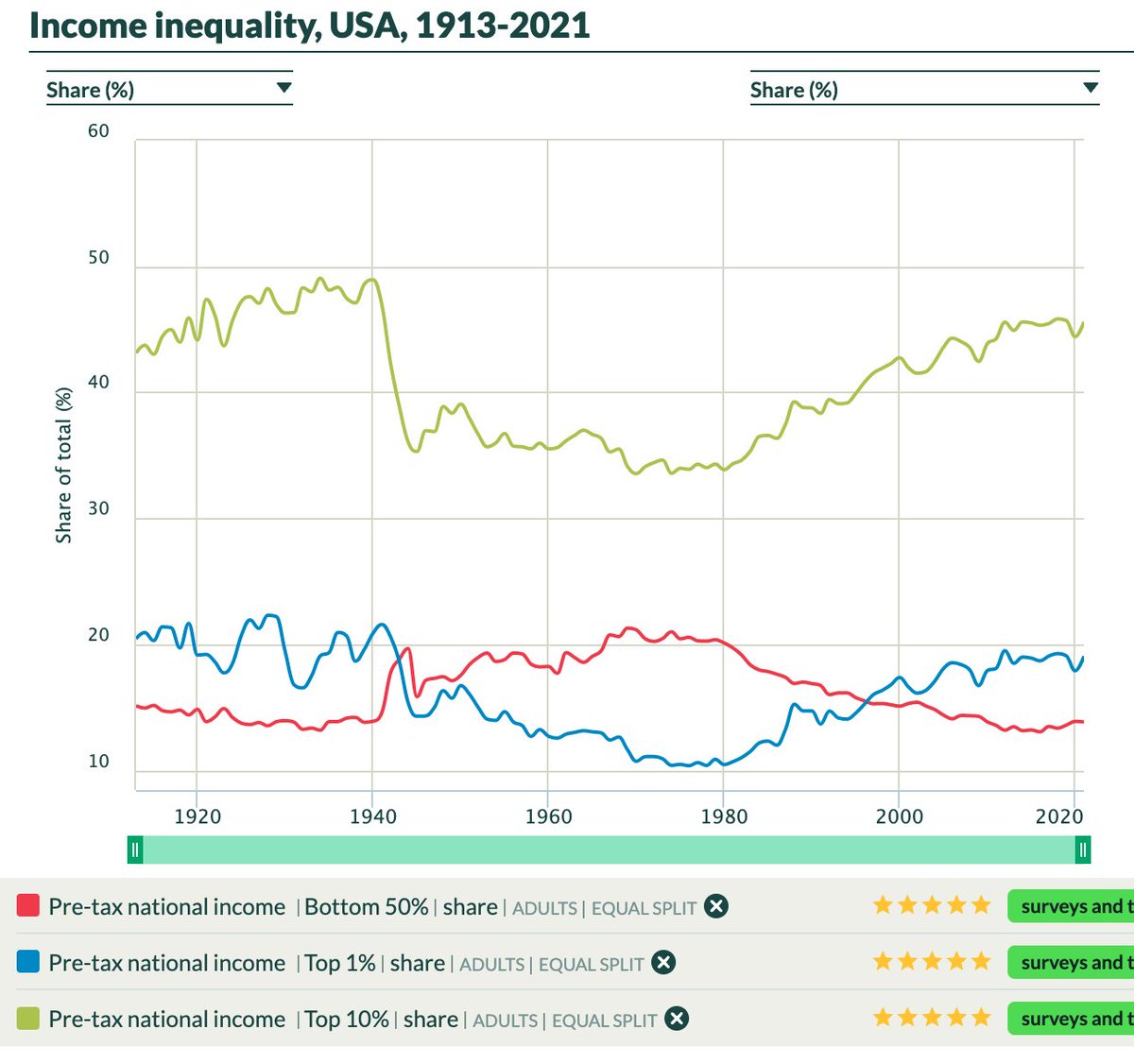
A lot of the focus on US inequality concerns the top.
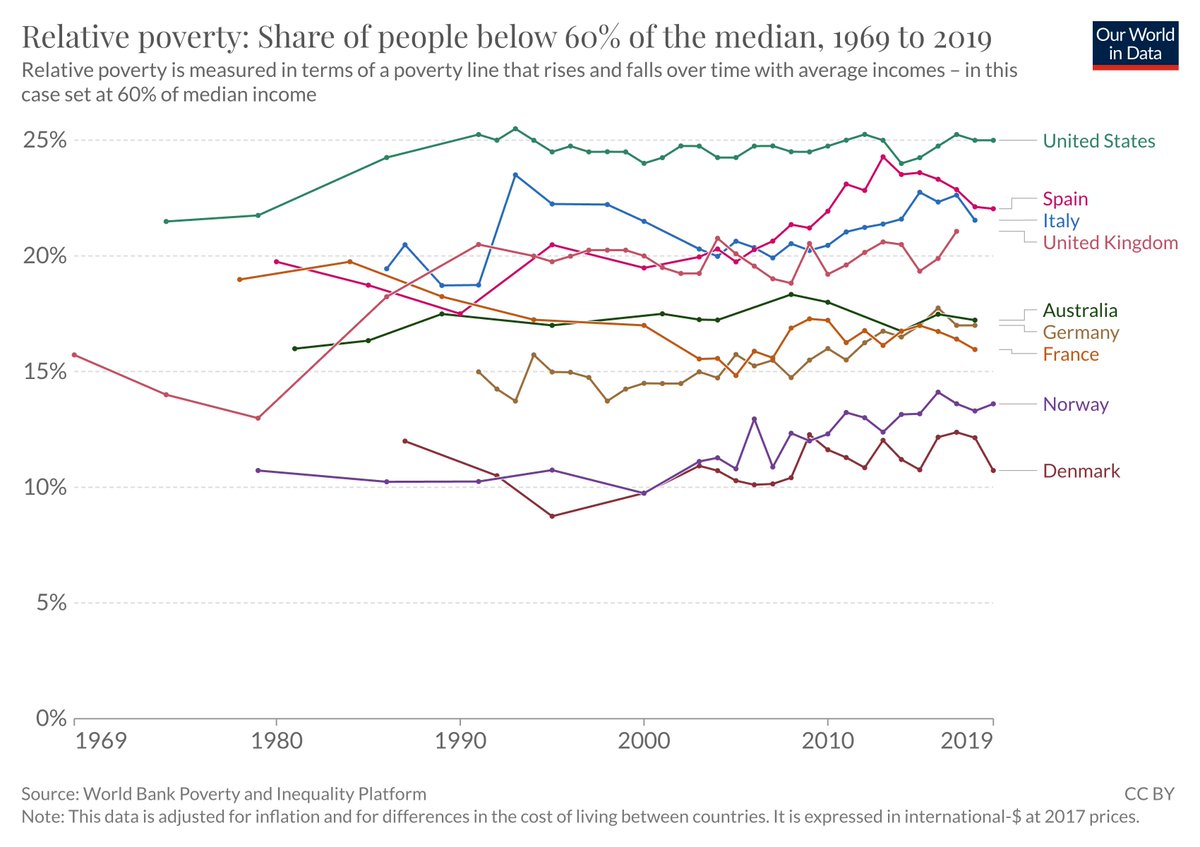
But worth noting that the bottom of the distribution in the US is also very unequal compared to other rich countries.
(The data is disposable income per capita from World Bank)
https://t.co/BulGMPBh3j
@StefanFSchubert Lots of differences in the data sources there, but in any case I don’t think that’s inconsistent – inequality within the bottom can be high, even though the bottom may have closed the gap with the top a little bit of late.
@lunarmobiscuit Couldn't agree more Luni!
The fact that $2.15 a day implies such awful living conditions is why we need to draw attention to the hundreds of millions living on such low incomes – or lower still. Here you can explorer the data for a range of poverty lines: https://t.co/Ekd37mgEk0
And we built this Data Explorer to let you see how the World Bank’s data on incomes and poverty compare when using 2011 and 2017 international-$.
https://t.co/zBML9n13Wf
The World Bank’s definition of extreme poverty was recently updated – from $1.90 to $2.15 a day.
In a new article, I unpack what’s going on with this change and what it means for our understanding of global poverty.
https://t.co/IToa4rrXuv
To understand these changes, we need to understand what international-$ are and the two adjustments it makes: for inflation, and for differences in the cost of living between countries.
I do my best to explain what’s going on there in the article!
https://t.co/UfuYcOHsaH