This work was funded through the @amnh REU program; Gerstner Family Foundation @RGGSatAMNH; Mary Gates Endowment @uw; Iuvo Award @UWBiology; @Mammalogists Grant-in-Aid of Research; @UTAustin Provost Fellowship; and @NSF awards IOS-2017738, DBI-1906248, & DBI–2128146 8/x
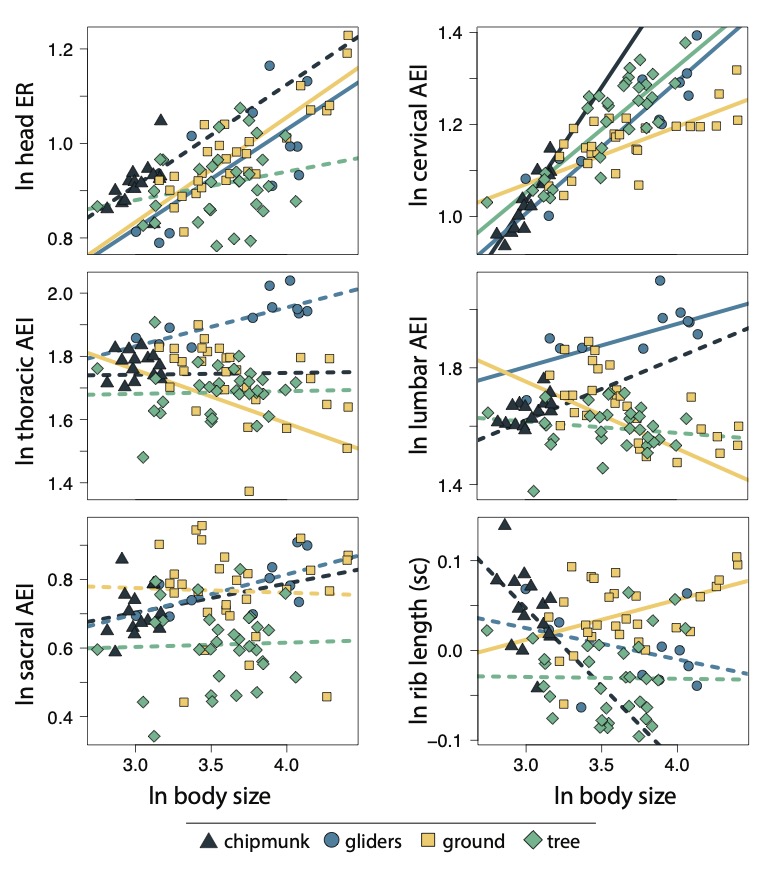
Overall, our work contributes to the growing understanding of mammalian body shape evolution and how it is influenced by body size and locomotor ecology, in this case from robust subterranean to gracile gliding squirrels. 6/x
Lastly, we found that the relative length of the ribs and elongation or shortening of the thoracic region contributes the most to body shape evolution across squirrels. 5/x
Next, we found that only ground squirrels exhibit a relationship between forelimb length and body shape, where more elongate species exhibit relatively shorter forelimbs. In contrast, there was no relationship between relative hindlimb length and body shape. 4/x
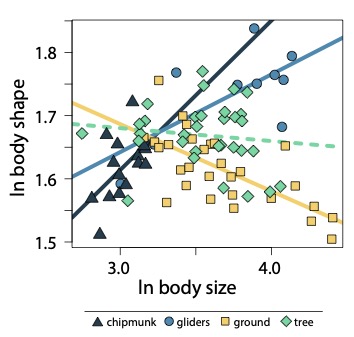
We found that body shape scale with body size, but these allometric patterns differ among squirrel ecotypes: chipmunks & gliding squirrels exhibited more elongate bodies with increasing body sizes whereas ground squirrels exhibited more robust bodies with increasing body size 2/x
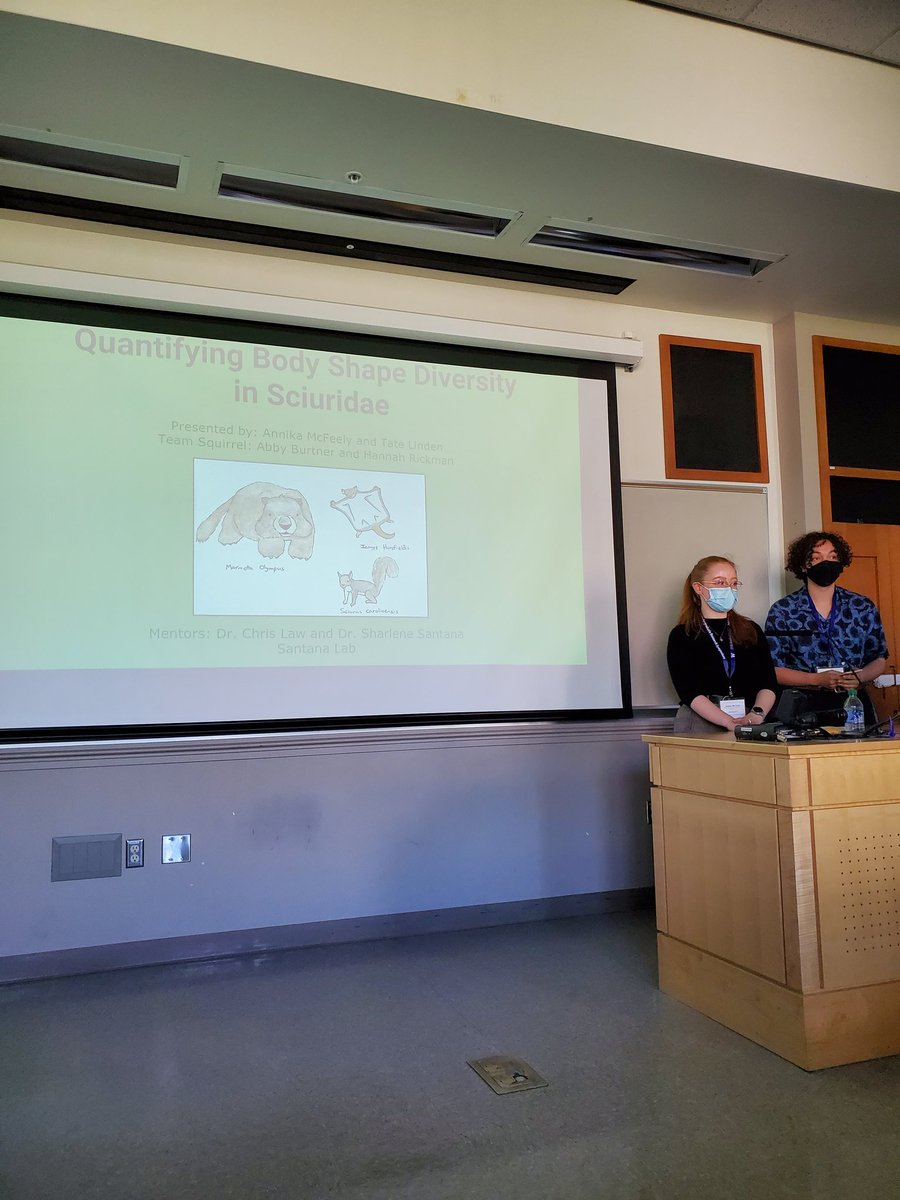
The first #TeamSquirrel paper is published! Led by Tate Linden, we tested scaling patterns of body shape, body size, & limb lengths among squirrel ecotypes and described the underlying morphological components that contribute to body shape evolution 🧵1/x https://t.co/0gDl8gZNex
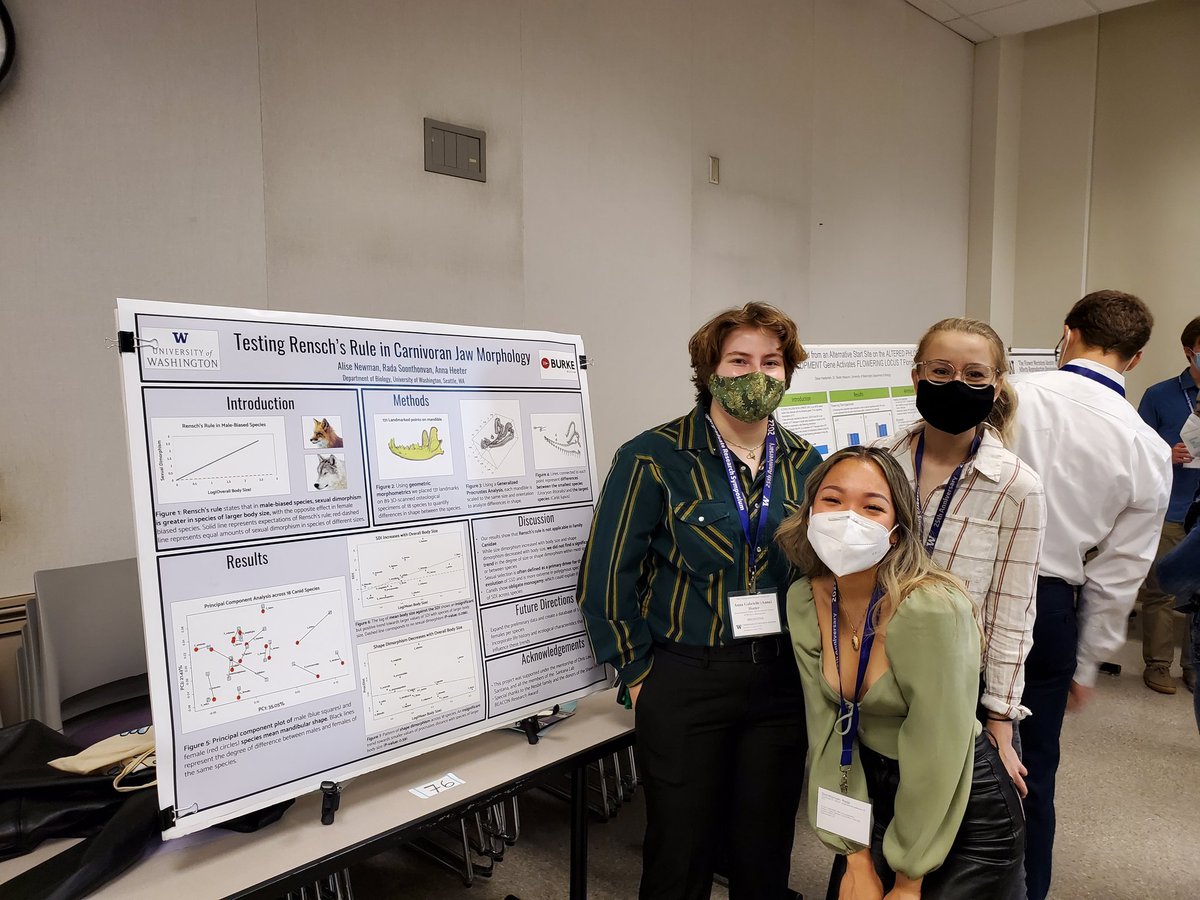
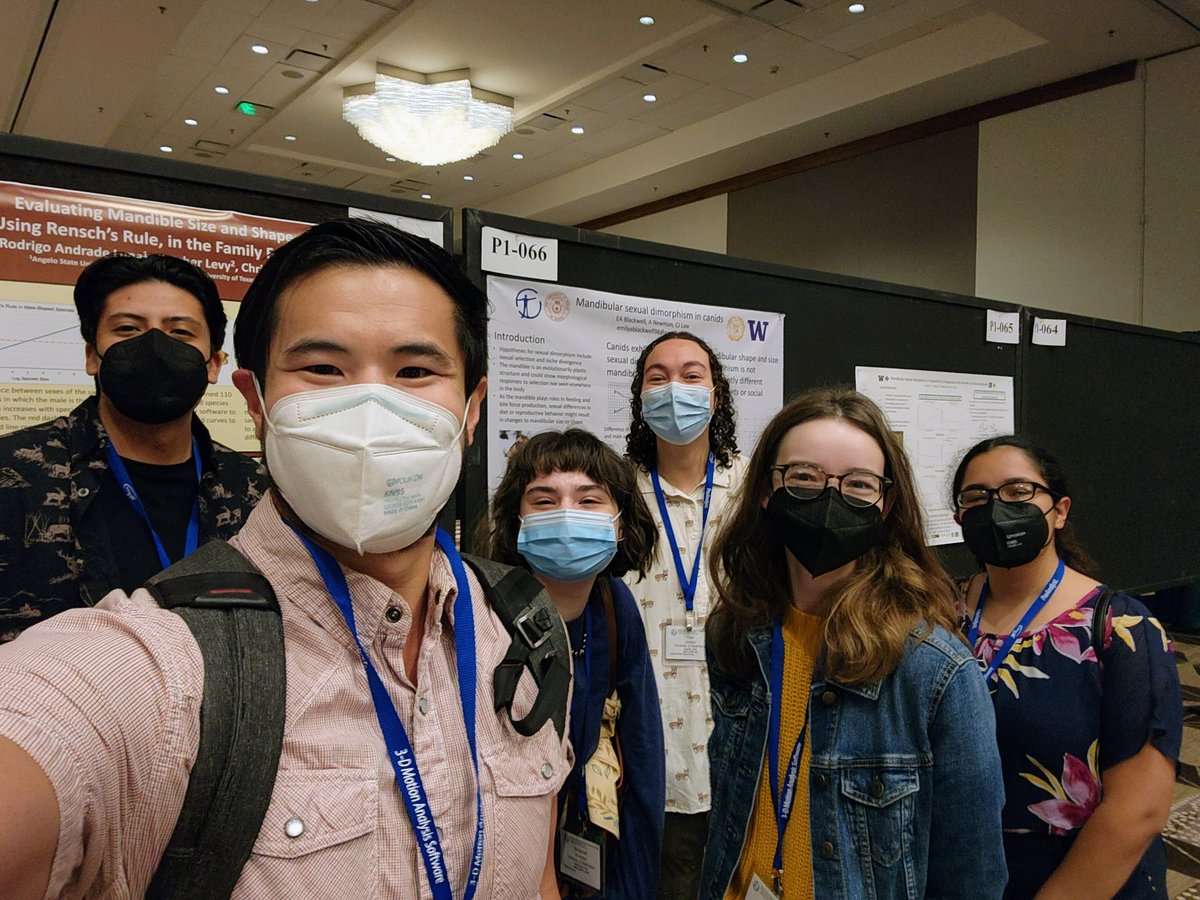
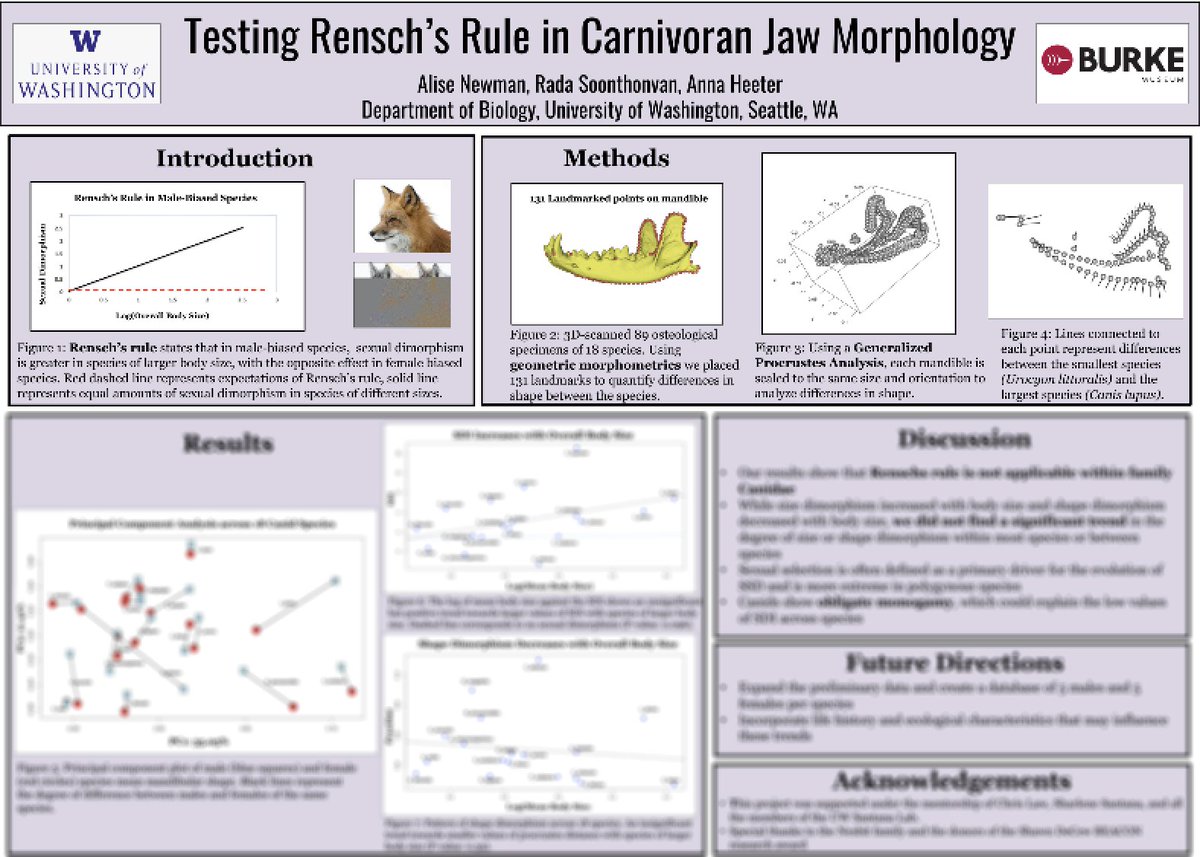
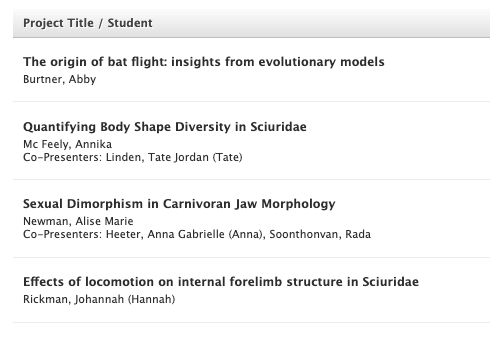
All undergrads are accounted for! Be sure to stop by the poster session later today to learn about squirrel limbs and carnivoran sexual dimorphism! #SICB2023@SICB_DCB_DVM
Come check out my 3 undergrad #SICB2022 posters today!
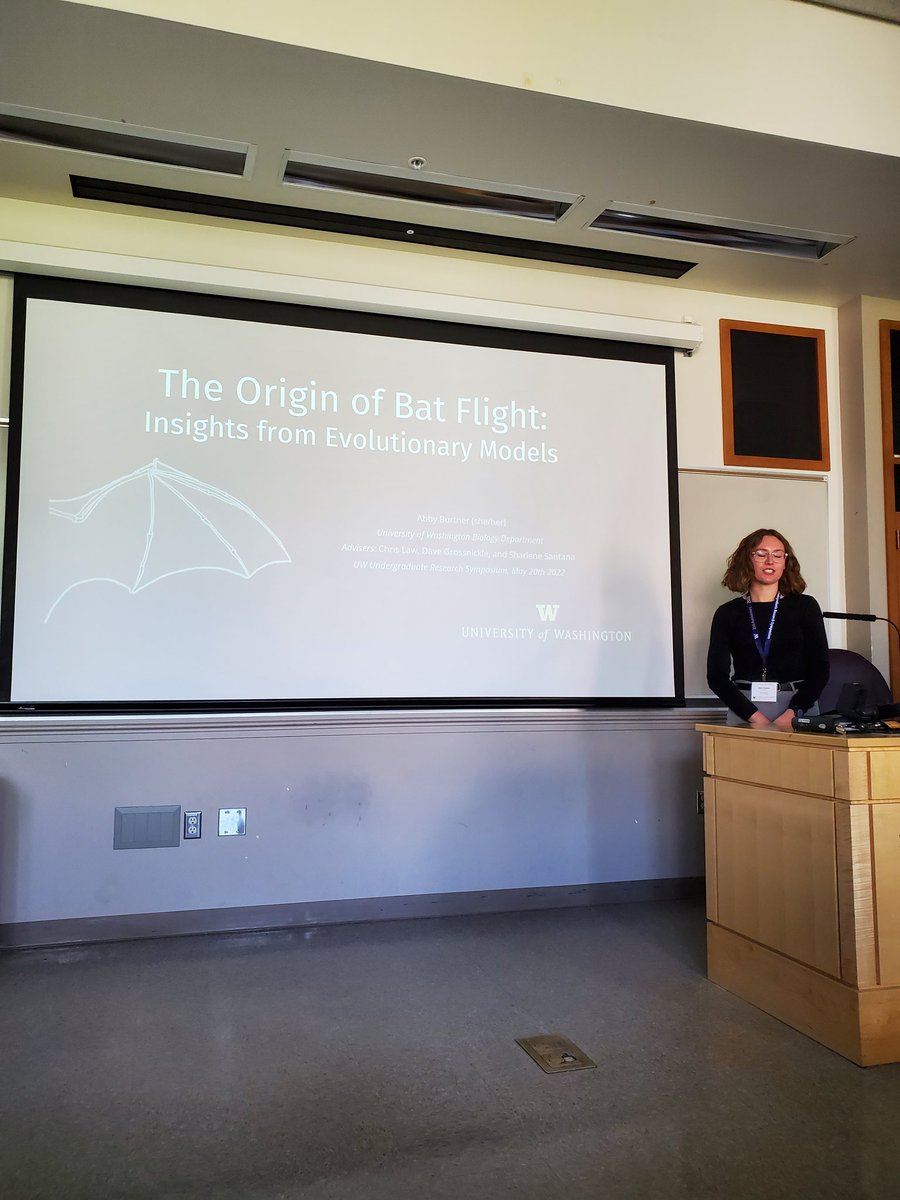
1) transitions from gliding to flying mammals by @AbbyEBurtner
2) squirrel limb evolution by @JohannahRickman 3) carnivoran skull evolution (SICB+) by @EmilyABlackwell
bonus 4) body elongation convergence by me
@SICB_