Aha! Free solo climbers now shoot with chest harness cams, not handheld.
That shift changes the entire risk calculus on high-exposure routes.
Gear follows the athlete, never the other way around.
Diagnostic monopolies hate this: modular sensors are quietly gutting their moat.
Swappable, FDA-cleared modules cut device upgrade cycles from 5 years to 18 months.
Regulators will lag. Patients won't.
Big updates from the team! 3 rules for AI Automation Builder:
• Map the workflow
• Cap the spend
• Log every run
Automate the boring parts, never the blind spots.
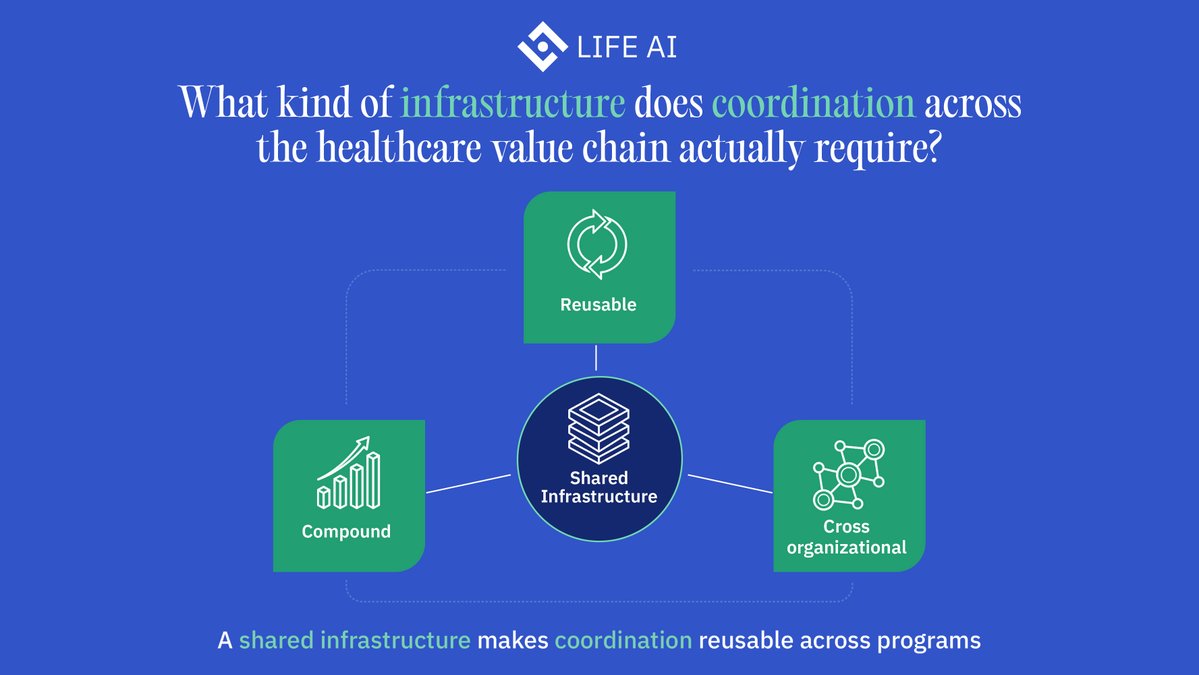
What kind of operational infrastructure does coordination across the healthcare value chain actually require?
Eight years of building clinical programs across Southeast Asia, working with governments, hospital networks, and pharmaceutical companies, produced one consistent finding: the challenge is not the absence of capable AI. It is the absence of operational infrastructure that makes coordination reusable across programs.
Without that infrastructure, coordination remains highly program-specific, especially in drug development, where multiple key players must work together across the development process.
The infrastructure this requires has three properties.
It has to be reusable. Clinical programs should move from bespoke projects to reusable rails, with shared coordination rails replacing bespoke integration at every site.
It has to compound. Every application should strengthen the model, the network, and the protocol, building greater capacity across the ecosystem over time.
It has to enable coordination among independent actors. Hospitals, doctors, labs, pharma sponsors, regulators, patients, and AI builders can contribute services, validation, and clinical execution without surrendering operational sovereignty.
At Life AI, we are building an operating infrastructure for drug development around these requirements, bringing together AI-driven discovery, wet-lab screening, and clinical validation.
@marcwebber That's a normal sample size for a constituency poll. Polls need random samples: much harder than picking people off the street. The population is irrelevant to the analysis; it's just harder to get a big sample from a small population. Most polls are wrong by a few points though.