Co-founder of Euclidean Technologies, an investment firm that applies machine learning to value investing. Machine learning, investing & software development.
Today is launch day. 🚀🚀🚀
We find ourselves in a time with much fear/anxiety about careers. I hope this book can be a positive antidote. The permission, motivation, and methodology to do what you truly love.
https://t.co/glk24A6206
We're excited to announce our investment in Finpilot, a game-changing #AI product poised to reimagine the financial analyst’s journey. Join us in welcoming Co-founder @lakshay2001 to the Madrona family & Co-founder @JohnAlberg back to the Madrona family!
https://t.co/my2rfkmhrb
Finpilot has raised $4 million in a seed round led by Madrona Ventures. Co-founders Lakshay Chahaun and John Alberg are revolutionizing financial analysis, empowering analysts with enhanced efficiency through AI and natural language processing.
Congrats to the team!
Read more here: https://t.co/nfDo1Pu3uE
#seattlestartups #verticalai #financialanalysis
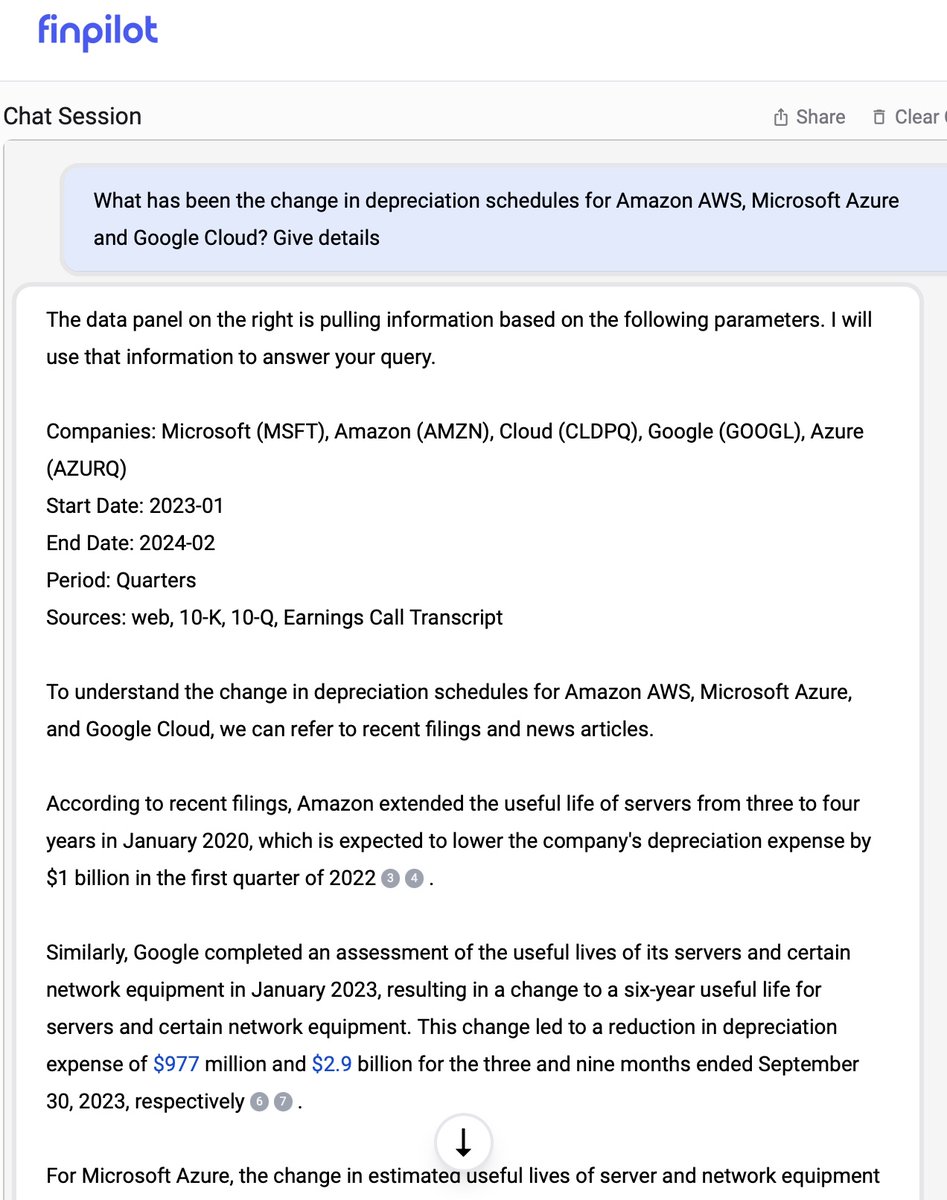
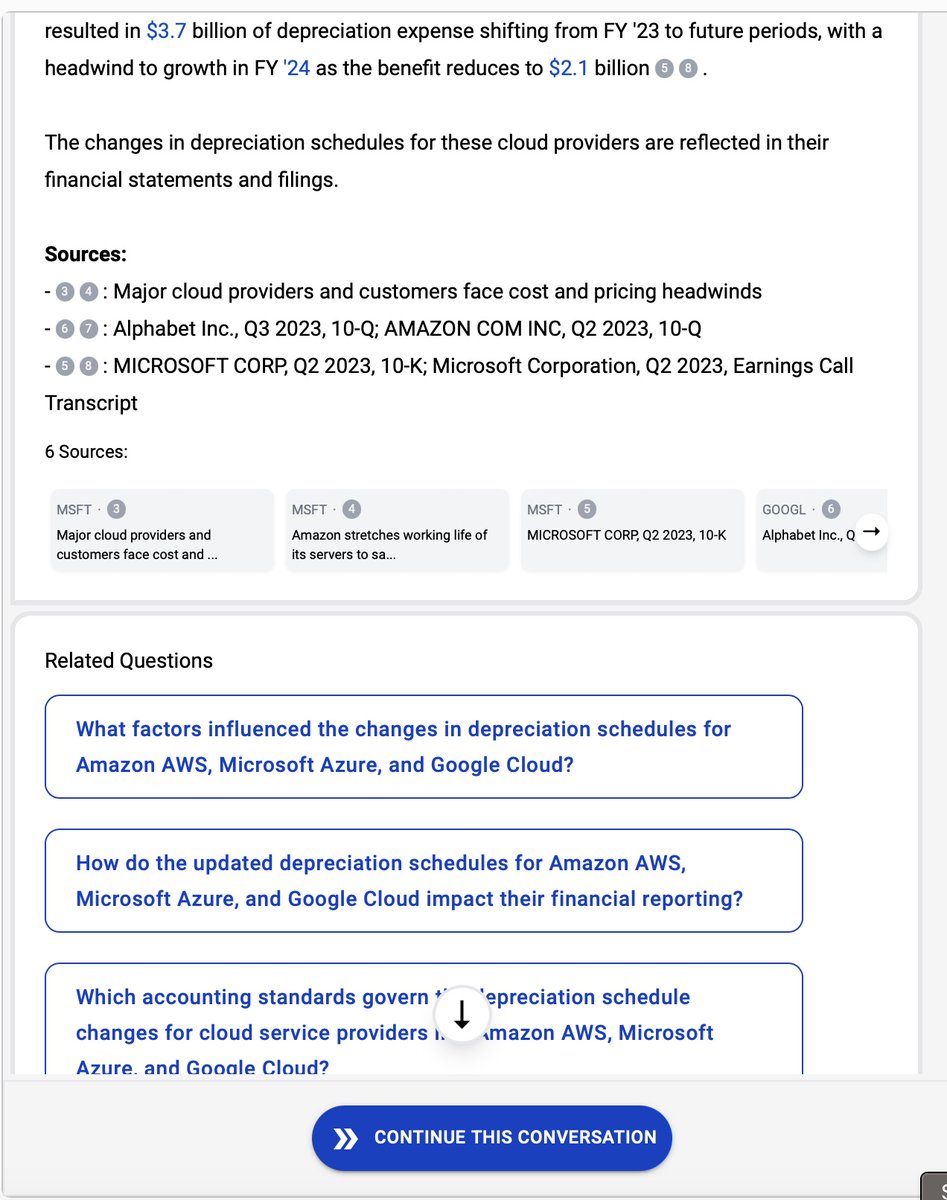
I couldn't bait @mjmauboussin into an answer, so I will take a try myself. All thing being equal, pushing out depreciation schedules is negative, not positive. This answer says it "lowers" cost. Cash cost remains the same. It's just a non-cash accounting change. Why negative then? It lowers earnings quality. If FCF > net income, that's better for earnings quality. Pushing out depreciation increases net income with no increaase in cash flow. Hence, FCF relative to net income drops. As such, earnings quality drops. This is regardless of whatever the "appropriate" schedule should be.
I couldn't bait @mjmauboussin into an answer, so I will take a try myself. All thing being equal, pushing out depreciation schedules is negative, not positive. This answer says it "lowers" cost. Cash cost remains the same. It's just a non-cash accounting change. Why negative then? It lowers earnings quality. If FCF > net income, that's better for earnings quality. Pushing out depreciation increases net income with no increaase in cash flow. Hence, FCF relative to net income drops. As such, earnings quality drops. This is regardless of whatever the "appropriate" schedule should be.
"Finpilot is an AI copilot for finance."
"All answers and numerical values can be traced back to the original sources with a single click."
https://t.co/zYfcRFSAGQ
NYT/OpenAI lawsuit completely misunderstands how LLMs work, and judges getting this wrong will do huge damage to AI. Basic point: LLMs DON'T "STORE" UNDERLYING TRAINING TEXT. It is impossible- the parameter size of GPT-3.5 or 4 is not enough to losslessly encode the training set.
👼📈👼call for fintwit angels:
portco: gen ai research saas for financial analysts. deeply technical founder, spun out from og ml-based hf/etf.
round: priced seed, multistage lead. $250K left, split among most useful/high profile wall street angels
hmu: kirby at ascend dot vc
Talking #valueinvesting, #momentum, #factors & #ETFs with Wes Gray of Alpha Architect. Also, his separate ETF launching business is firing on all cylinders 🔥
End-November EBIT/EV ratio to 3.48. Still unusually high--higher than 2000 and 2009--but the gap is closing.
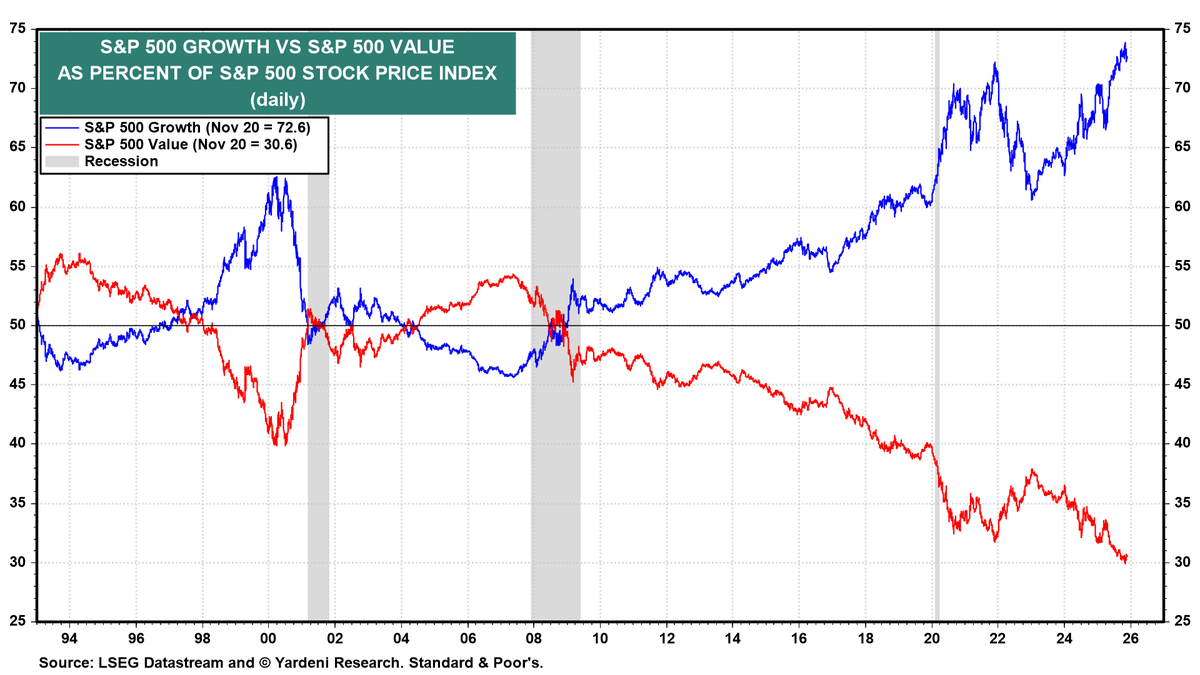
When the ratio goes up, value underperforms. When it goes down, value outperforms. Peak was February 2023.
Open-source AI is closing fast, the opposite of what they told ya!
I’ve always felt like the naysayers never really tried to read or understand Eric Raymond’s iconic work: https://t.co/rBoTuPsItu
Superior outcomes should be expected.
Yesterday, I had the honor of speaking in the US Senate AI Insight Forum on privacy & liability, moderated by @SenSchumer@SenatorRounds@SenatorHeinrich & @SenToddYoung. Each panelist submitted a written statement for @SenSchumer's website. Here’s mine:
https://t.co/KEp7eygTAB
If you look at both Henry Kissinger and Charlie Munger you see the power of staying curious. They stayed with it to the very end. I think their curiosity, their love of reading, their love of discussion, their love of argument was part of what caused them to flourish for so very long.
https://t.co/sgXtN7Njrx
Bill Gurley @bgurley has a great talk on regulatory capture and how it's crushed competition and innovation in many industries. How can we stop this pattern from playing out in AI regulation?
Here's his talk: https://t.co/h7lYc17Vi8
Max, how many times do we have to repeat that the main disagreement is about *foundation models* particularly *open source* ones.
The ones who do want broad regulations are Google, OpenAI, Anthropic, and a few EA-funded doomer institutes like your FLI.
The ones who don't want regulations on R&D and open source AI are Meta, HuggingFace, Mistral, Kyutai, and pretty much the entire academic, startup, and VC worlds.
No one is against product regulations done right.