🧬 𝗪𝗲𝗲𝗸 𝟯𝟲 (𝗔𝘂𝗴 𝟯𝟭–𝗦𝗲𝗽 𝟲) · 𝟮𝟳 𝗕𝗮𝘆 𝗔𝗿𝗲𝗮 𝗕𝗶𝗼𝗲𝗰𝗼𝗻𝗼𝗺𝘆 𝗲𝘃𝗲𝗻𝘁𝘀 🧬
🌁 Bay Area Weather: high of 69, low of 58, no rain all week 🌁
Full list of event links:
https://t.co/1wlJgS0seG
That is now running. Kim's team is using OCTO-VC for virtual cell experiments, patient stratification, and multimodal predictions on H&E data, fine-tuned on a small amount of GSK's own data.
Congratulations to Kim Branson and the team at GSK, and to Ron Alfa and everyone at Noetik.
Excited to see where this goes next.
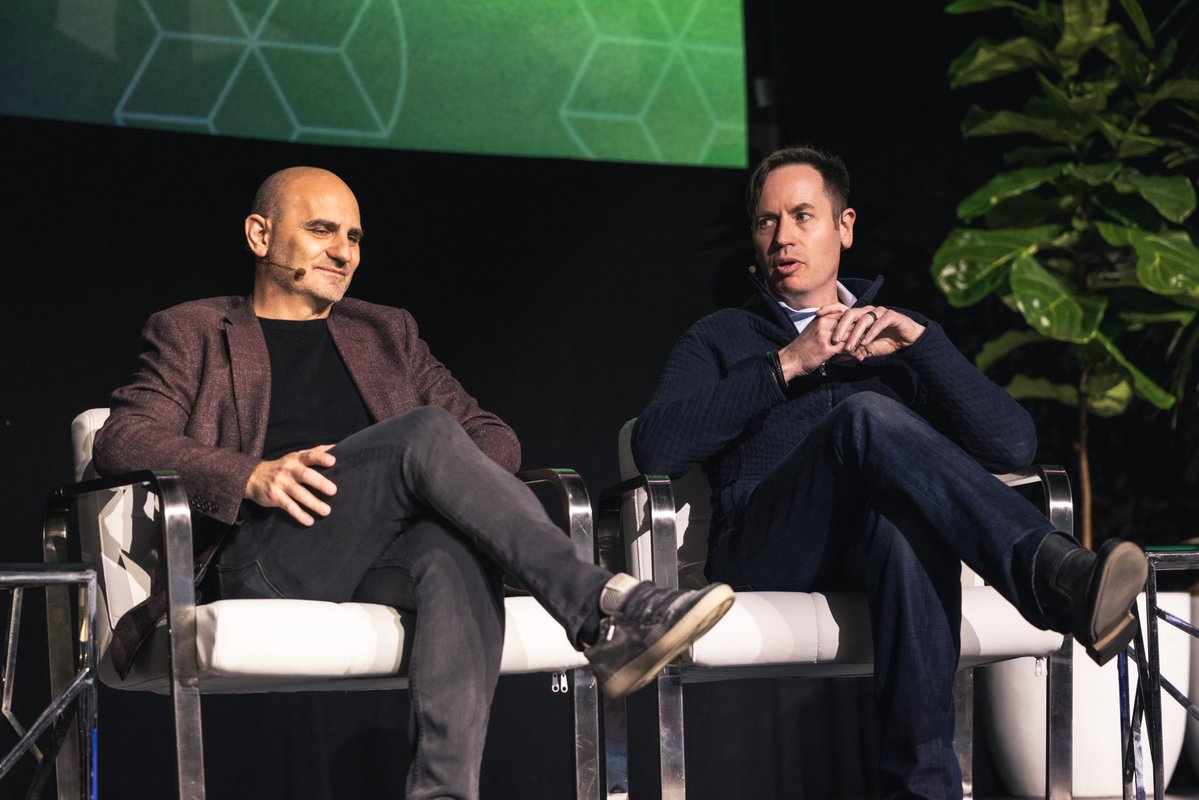
@Ronalfa and Kim Branson sat on the @SynBioBeta 2026 main stage in May and described what their $50M partnership would mean if it worked.
This morning they announced the first milestone is done 🎉
Kim called it a mesoscale problem. We measure biology at one scale and predict outcomes in populations at another.
Everything turns on calibration. Know your model's predictive value and it becomes useful even when that value is modest.
Get that right and you can start answering the question that actually decides trials: what to give, to whom, when, and why.
"Cost per base measures the economics of the supplier, not whether a customer's science can actually happen reliably."
The frontier is the line between sequences that can be made and sequences that cannot.
Full story by @synbiobeta 👇
https://t.co/SboRR7SMaX
The NB-3 system makes linear multi-kilobase DNA in ~80 minutes per batch from nanogram inputs, poly-A tails over 300 bases included.
Stackable microfoundries that sit inside a CDMO instead of replacing one.
NunaBio assembles DNA cell-free from pre-characterised inputs. No de novo synthesis per construct. No cells.
Sequence complexity stops driving manufacturing cost.
Biology became designable faster than it became manufacturable.
@NunaBioLtd CEO Joe Hedley told @SynBioBeta the DNA synthesis bottleneck is no longer biology. It is manufacturing. 🧵
Conventional gene synthesis stacks two processes: build oligos base by base, then stitch and propagate them in a bacterial host.
Every stage has a failure mode. Living cells reject what is toxic or unstable.
Synthesis failure rates run above 20% even after computational screening.
The sequences that fail most often are repeat-rich, high-GC, inverted terminal repeats and long poly-A tails.
The same formats gene therapy and mRNA need.
In a world of megarounds for the few, a shrinking early-stage market, and a patent cliff pushing pharma to source externally, the art of partnership has moved from nice-to-have to survival skill for biotech companies.
But how does one actually develop a partnership?🧵
Many drugs work by binding to a specific target in the body and blocking or changing what it does. An important first step in the drug development process is designing a molecule that can bind tightly to its target. Traditionally, that's meant weeks or months of expert work per target, sifting through a large number of candidates to identify the few that work.
We wanted to test if Claude could successfully design novel protein binders from scratch (also called de novo design). With a protein design prompt written by a human expert, Claude autonomously designed protein binders against 14 out of 15 targets.
We then worked with Adaptyv Bio and Twist Bioscience, who independently built and tested the proteins Claude designed.
I want you to join me November 14 to 20 in India on a trade delegation through one of the world's most exciting emerging bioeconomies.
I've been to India four times in my life.
Three of those trips were in 2025!
Every visit has reinforced the same idea: India is entering a defining moment for biotechnology.
India is no longer just an emerging market. It's making a serious bet on biotechnology. In 2024, the Indian government launched BioE3 (Biotechnology for Economy, Environment, and Employment), an ambitious national strategy to make India a global leader in high-performance biomanufacturing by 2047.
This delegation is designed to help you understand where that momentum is coming from and where the opportunities are. We plan to meet directly with leaders from the Department of Biotechnology, BIRAC, and Invest India to hear how this vision is being translated into partnerships, investment, and commercial growth.
From there, we'll travel through India's biotechnology hubs:
📍 Delhi for government engagement and policy discussions, with an optional Taj Mahal visit before the delegation begins.
📍 Bengaluru during the Bengaluru Tech Summit, where we'll connect with companies and organizations e.g., Biocon, Syngene, Laurus Bio, String Bio, and the C-CAMP startup ecosystem.
📍 Hyderabad to explore Genome Valley, leading CROs, API manufacturers, and industrial biotechnology facilities.
We'll take care of the logistics, including visas, internal flights, airport transfers, five-star hotels, meals, and curated introductions for business development and partnering opportunities.
We're limiting this delegation to just 30 participants, and based on our previous international delegations, I expect it to fill quickly.
If you'd like to learn more or reserve your spot, reach out to Claire Besinio at [email protected] by August 28.
I hope you'll join me in India!
@arjunrajlab is our new Chief Scientific Officer at @CellularIntelHQ & scientific co-founder. In his first year he built our data engine and first models. Now, he sees a path from observing cellular decisions to predicting and eventually controlling them.
Such an honor, Arjun!
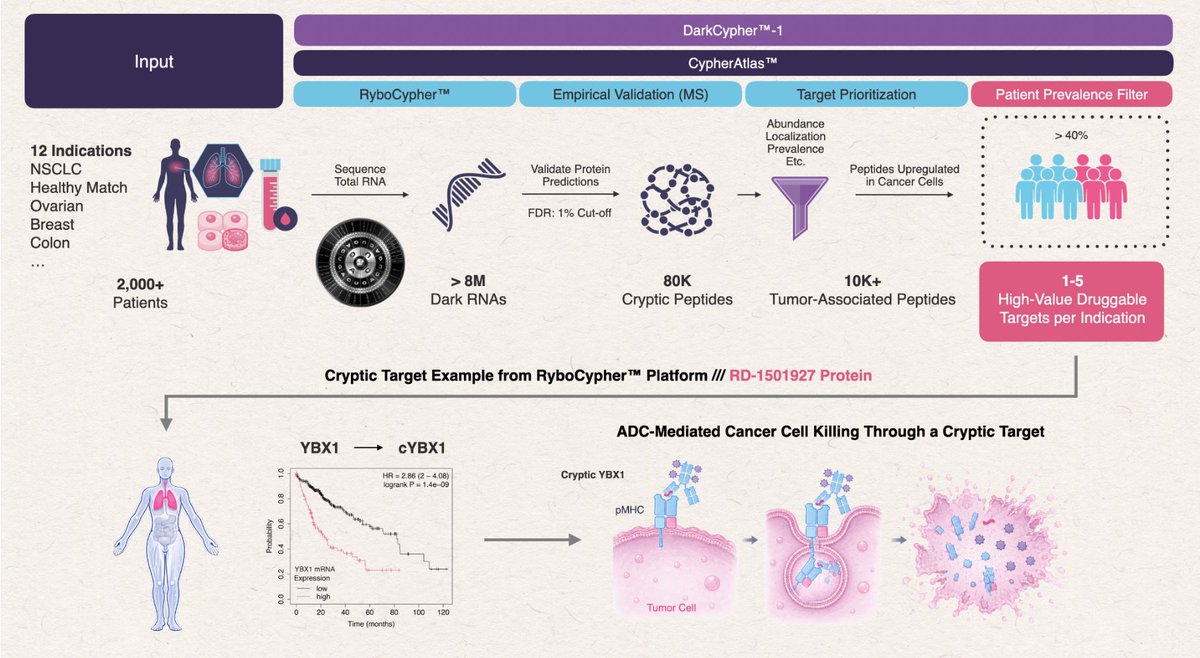
We are not running out of cancer targets. We have been reading the wrong half of the transcriptome.
#SynBioBeta2027 is May 3-5th in San Jose, California, you can learn more about the conference and get your tickets here: https://t.co/8abYWJ18mc
New targets entering the pipeline fell from ~100/yr to ~30 in 2024. RyboDyn's answer is 80,000 cryptic peptides no database had.
"AI could not have guessed this biology existed, because it was never in the training data." Imad Ajjawi, RyboDyn CEO
These conversations happen in the room.
Visit the @SynBioBeta website to read the full article.
Remembering Maya Skubatch (1974-2026)
Maya, a partner at @wilsonsonsini and one of the most respected patent minds in biotech, passed away last week after a five-year battle with a rare cancer called Blue Nevus Melanoma. She was 52.
To the founders she represented, Maya was who you called before anyone else. "Innovation can be lonely work, but with Maya I was emboldened by her excitement: 'Jake, this is really new, no one is doing anything like this, push forward,'" said Jacob Glanville (@CurlyJungleJake), founder & CEO of @Centivax.
Maya joined WSGR 23 years ago as the first associate hired into its patents & innovations group. Under her and founder Vern Norviel's stewardship, it grew into one of the largest life sciences IP groups in the world, 248 people strong today. "With Maya's help, it became the best patent group in the history of American law," said Michael Hostetler, senior partner of the group. "With over 14 partners, Maya mentored 12 of them."
Norviel, who hired Maya twice, remembers her for something that had nothing to do with patents: "When my late wife was sick, also with a rare cancer, Maya would take time every week and sit with her, often just holding her hand."
Julia Minitti, a WSGR partner who worked alongside Maya for twelve years, wrote in a LinkedIn tribute: "Maya was the person I turned to for everything, the minutiae of day-to-day patent practice, scientific expertise, business development, office politics, and most importantly, family and life. She modeled high expectations, but always with humanity."
During her illness, Maya turned advocacy into action. In 2024 she founded the Blue Nevus Melanoma Foundation, and formed BNM Oncology with UCSF researchers to develop a drug for the mutation driving BNM and Uveal Melanoma, serving as CEO while pursuing treatment herself.
"We spoke often about her vision for better access to treatments for rare diseases," Glanville said. "She was right that we need reform."
Maya is survived by her husband, Amit, and their three children. She didn't just protect innovation. She pushed for it, mentored those who'd carry it forward, and fought to make the system better for the patients it was meant to serve.
Rest in peace, Maya.