That was demoralizing for reviewers - and bleak for the science landscape. An enormous amount of time and effort is devoted to unproductive grant-writing. (11/10)
Almost every time we look at the DNA from ancient creatures, we find signs that their evolution involved surprising mixtures. New work on cave lions finds they’re not as different as long thought.
https://t.co/2vOdpcRtjl
I feel a little heretical in saying that the headlines may say Homo erectus, but the Denisovan connection is pointing me a different direction. The connections over time within China are an old topic, and protein data has made them resurface again.
https://t.co/1YNOonN2gj
Next week Sunday May 24, I'll be in Kraków, Poland at the 2026 Copernicus Festival. I'll be talking about "A new history of Homo sapiens", deep time Africa and the intricate history of mixture underlying humanity's origin. Free and open to the public!
https://t.co/nUaFqodJVN
@djfreg1 It’s consistent but most of the nodes among these teeth and Denisovans are driven by noise. The tree making algorithm will connect fossils based on coverage and gaps even though that’s not biology
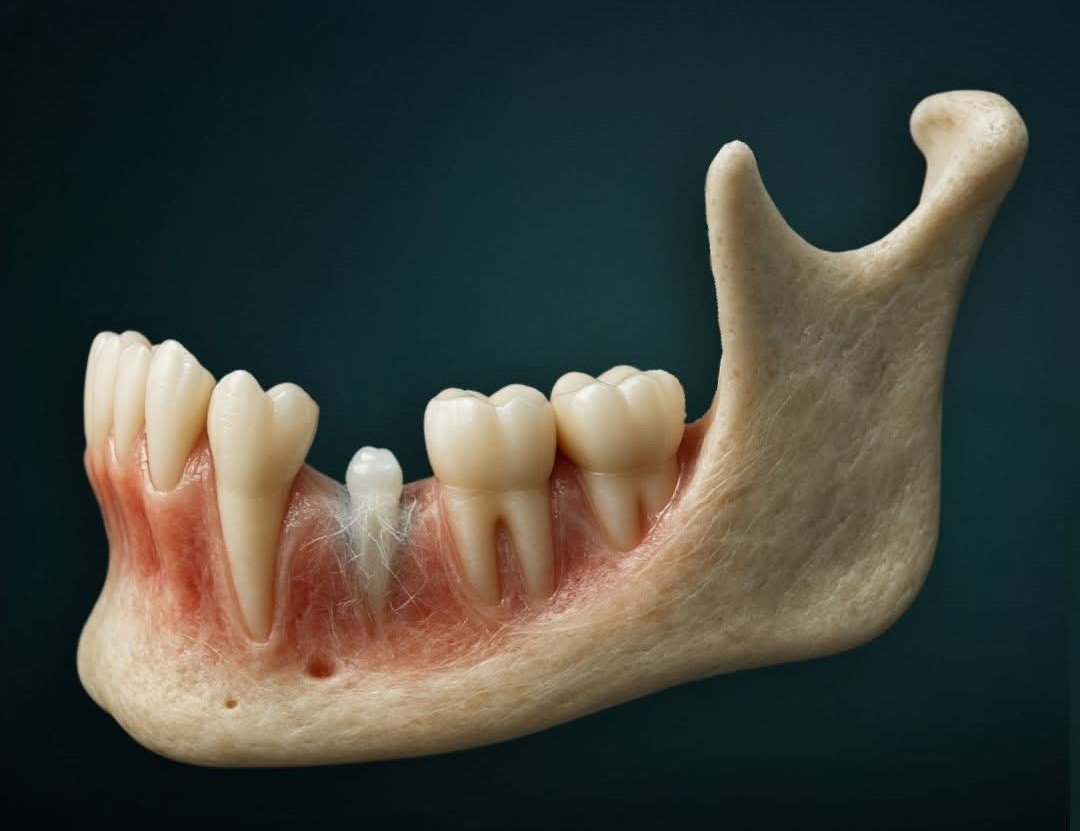
Really neat writeup by @Carolynyjohnson of the new work showing that a Neanderthal from Chagyrskaya Cave, Russia, sat for a dental drilling almost 60,000 years ago.
https://t.co/jkfj9AkDHz
“Few archaeological sites have undergone such geological contortions. Its sediments may have formed in even, flat layers, but in a million-plus years the falling center of the Jordan Rift upended them, so that some tilt upwards almost vertically.”
https://t.co/3SyZJ3s9RR
A remarkable sequence of artifacts in layers upended by the Jordan Rift represent some of the oldest hominins in Eurasia. With a new estimate around 1.9 million years, the Acheulean artifacts from ‘Ubeidiya approach the earliest known in Africa.
https://t.co/3SyZJ3s9RR
Lots of interest in recent natural selection over the last week, with the new work from Ali Akbari and coworkers supporting the idea of pervasive selection on ancient genomes. A great step forward based on a foundation of work over more than 20 years.
https://t.co/Aaj229JhMi
Actually there is quite a lot of evidence about the pace of adaptive substitutions on several timescales across human evolution. Our best estimates are all low compared with the picture of selection on adaptive variants across the last 40,000 years. There is a layer of uncertainty regarding how much adaptive evolution might be invisible because it did not result in substitutions. I do not disagree that our count may have included some candidates that later would look like false positives, as has been the case in most genome-wide scans. However our lines of argument concerning acceleration are robust even if the count was an order of magnitude smaller.
@mbeisen It’s newer than mine from 2007 🤣. Anyway the 2-year-ago preprint is in the post, and I have to acknowledge it had 7000 fewer ancient genomes than the published version
If the main thing we are seeing in recent time is partial sweeps, then a much longer time period would have resulted in many completed sweeps, and certainly that was a common way of thinking about the problem in the early 2000s, and is reinforced in Akbari et al. 2026. Still, even in the early 2000s it was clear that positively selected variants may stall at intermediate frequencies for lots of reasons, either because they reach equilibrium in a balance, or because collectively alleles at many genes bring the phenotype to an optimum without completing a sweep, and today it's not clear what proportion of variants may have one fate versus another. One innovation of the Akbari approach is that only a fraction (~1/3) are new variants and most are standing variants, again tending to reduce expectations of a longer-term effect.
Along similar lines, if we look at the modern-Neanderthal difference, there are really incredibly few fixed coding variants in modern humans (~100), most of which would reflect the span between ~700ka and 50ka. It will be very interesting to have a better count of noncoding functional variants. It would also be interesting to think through the scheme of partial and incomplete sweeps and standing variants as possible mechanisms for modern human differentiation from archaics.
It's one of the interesting consequences of neutral theory that selection of this kind doesn't matter much to the number of substitutions between two lineages. So our estimates of genetic divergence are probably not too badly affected by selection. But the relationship between genetic divergence and population divergence can be strongly affected by selection in the common ancestral population, and that factor is very hard to model after a remove of hundreds of thousands of years.
I’ve done two episodes with @johnhawks and both are excellent. If you’re interested in human evolution, you should check them out and follow Dr. Hawks, who writes frequently about the latest paleoanthropology research.
Fun fact: I took a couple of courses with John back in college, which really sparked my interest in human evolution.
The National Science Foundation has proposed eliminating the directorate that includes most of the federal funding for fieldwork and research in human origins. It's a sudden acceleration of a decades-long trend. I comment on what this means.
https://t.co/usckfOaWrW