@storyandplot Tom if you were to plot out the through lines to, say, TAXI DRIVER, BRAVEHEART OR GLADIATOR, what would they be ? I’m doing this as an exercise with every movie I watch now, thanks!
Most of my early screenwriting was structured solely around plot. It led to inconsistent results.
It wasn't until I started structuring the character's emotional journey right along with it that my projects found a more certain footing.
This is one of the ways I do that. 🧵👇
Something I emphasize for myself is to simplify the process whenever possible.
The more we simplify, the more confident and decisive our decision-making.
The more decisive our decision-making, the more bold and adventurous we can be.
With that in mind --
Just like you learned the 4 acts for the physical journey, break your character's emotional journey through those acts as well.
Identify their emotional and spiritual state of mind through each act and find the simplest way to describe their line of action through it.
One of my favorite examples is DIE HARD, where John McClane spends Act 2A just trying to call the cops. That's it. Everything follows that line of action. There are action scenes, plot twists, and executions, but that is the basic throughline of that act.
John MacClane tries to contact the police.
That character's external want should track with the character's emotional journey.
Why? Because all character is:
1. What they want.
2. What they're willing to do to get it.
Which is illustrated through their choices.
John McClane is still at the point where he wants, expects, and would rather rely on help.
When he finally does alert law enforcement, we hit the midpoint and the famous line, "Welcome to the party, pal!"
Unfortunately for him, alerting the police does not help his wife, so he changes tactics. He's even now forced to protect the police!
After his first choice fails, he now needs to investigate what the "terrorists" are actually up to himself.
This is why the midpoint is so important. Not because it changes the stakes or the situation but because those changes change the character's direction.
Die Hard in the simplest of terms:
Act 1: He wants his wife to repent.
Act 2A: He wants to find help.
Act 2B: He needs to figure this out himself.
Act 3: He is the only one who can save his wife.
The character's emotional throughline drives the next action.
Another example is from a project I sold. Even though it's an action comedy, I modeled the basic structure after a revenge film.
Act 1: Orginal Sin
Act 2A: On the Hunt.
Act 2B: Loss of Humanity
Act 3: Regains Humanity
The plot is underneath, of course, but this is the character's journey through the acts. An event at the end of each act forces a choice, and that choice initiates the shift to a new driving action.
The Avengers is ultimately a buddy movie with the "team" at the center.
Act 1: Assemble the team.
Act 2A: Fight amongst themselves.
Act 2B: Defeated because they are not unified.
Act 3: Victorious because they are.
A slew of story structures are about the antagonist infiltrating and unraveling the protagonist's life. The 90s were filled with thrillers like FATAL ATTRACTION, THE HAND THAT ROCKS THE CRADLE, and others. They each had variations of what was basically this:
ACT 1: The original sin.
ACT 2A: On their heels.
ACT 2B: Fight back inside the system.
ACT 3: Fight back outside the system.
Inside the throughlines are plot mechanics, tension, and great scenes, but the goal is to have the emotional journey dictate the driving action and describe it in the simplest of terms so you can let it guide your decisions as the storyteller.
Key point: this is supplemental to everything else you know about structure. It is not meant to replace it.
Jeffrey Alan Schechter, another screenwriting teacher, observes a more general character journey:
ACT 1: Orphan
ACT 2A: Wanderer
ACT 2B: Fighter
ACT 3: Martyr
If I struggle to get specific, I have found this a fantastic template to start from.
While four throughlines, one for each act, is perhaps the most common, you're not limited to four. GROUNDHOG DAY has eight shifts in the character; one with each sequence.
Sequence 1. He's a jerk.
Sequence 2. Confusion
Sequence 3. Fear and desperation.
Sequence 4. Exploits his power.
Sequence 5. Depressed and suicidal.
Sequence 6. Uses his power for good.
Sequence 7. Finds true humility.
Sequence 8. Lives the perfect day.
My writing grew exponentially when I stopped seeing stories as plot mechanics, and more as character journeys with simple driving actions that carry great scenes and sequences.
Like anything, this tactic works better for some projects and less for others, but if it works, I embrace it. Any big choice that narrows my later choices is a good one.
This may sound counter-productive, but it's infinite choices that freeze you up!
The more you can shrink the pool of possible choices that help your story, the better.
Simplify, simplify, simplify.
@jtimsuggs -that also would’ve lent more weight to the ‘ball or sword’ decision scene with Luke & Yoda’s lightsaber that Filoni ripped off from Lone Wolf and Cub.
@jtimsuggs -the main plot-line of season 3 could’ve been mando trying to restore Mandalore and the recurring subplot could’ve cut back to Grogu at the Jedi Academy trying to learn and not fitting in -eventually deciding to leave.
#31DaysofHalloween 🦇
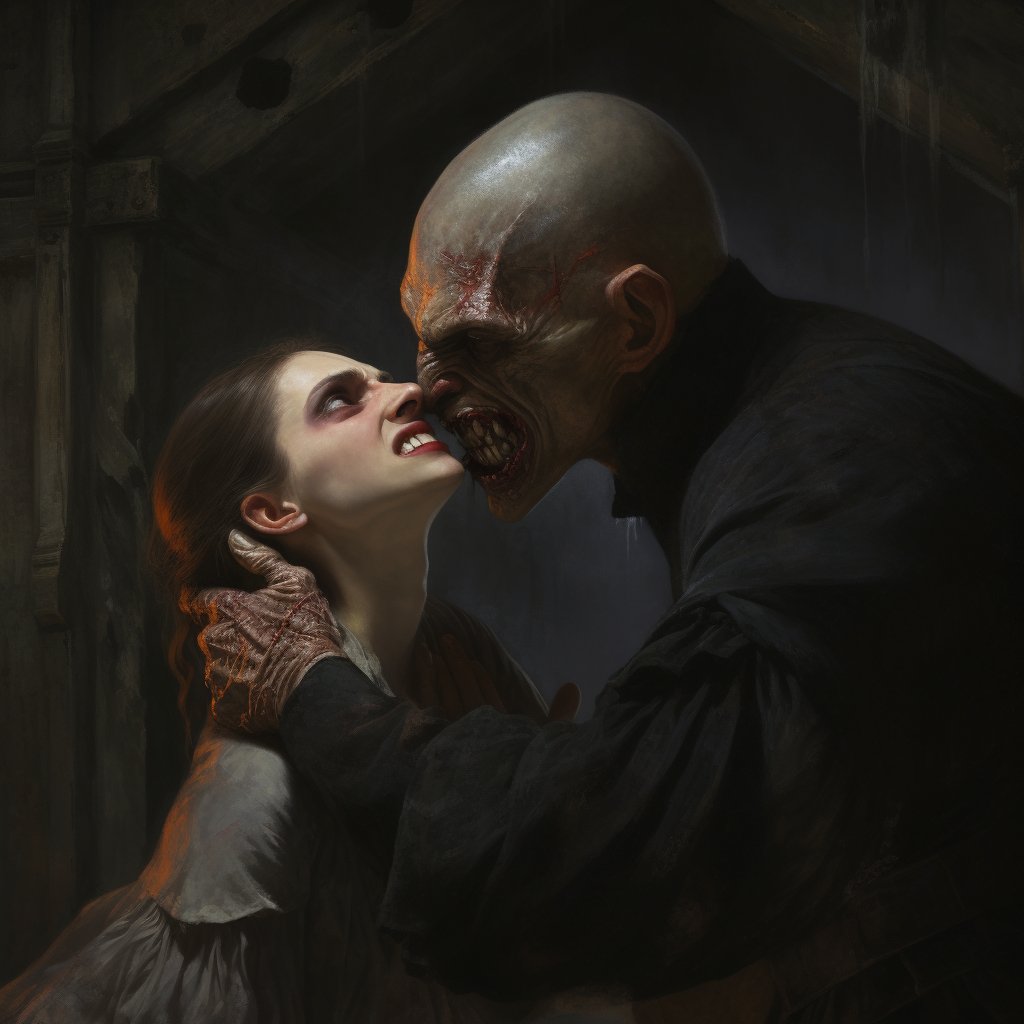
Vampire of Croglin Grange as written by Dr Augustus Hare, in his 'Memorials of a Quiet Life', 1871, but the tale is considered even older
~ Cumbrian vampires
https://t.co/Vkr70ALPeP
#vampires#folklore#Cumbria
imagine thinking you can just dress a character in white after they return from a little fall and then suddenly inherit all the gravitas of Sir Ian McKellen’s performance as Gandalf in the Lord of the Rings trilogy through no actual storytelling craft of your own. #Ahsoka#filoni