T-shaped, data-driven marketer with 8+ years of experience in customer acquisition, brand growth, and revenue impact for B2B/B2C, DTC, and marketplaces.
if i had to start an agency *today*, I'd pick the following service
Email Deliverability Consulting
- for outbound teams
- for outbound agencies
You'd be surprised how many agencies still struggle with this
read on below if you want to copy this
your agent can search Twitter, Reddit, and GitHub for free - zero API keys, zero billing 😳
agent-reach is trending on github with 23K stars. it lets your AI agent read Twitter posts, browse Reddit threads, search GitHub repos, watch YouTube videos - all without paying for a single API subscription
what your agent accesses for $0:
- Twitter/X posts, profiles, and search
- Reddit threads and comments
- YouTube videos, metadata, and search
- GitHub repos, issues, and profiles
- 10+ more platforms - all in one pip install
what this replaces:
- Twitter API: $100/mo for basic access
- Reddit API: rate-limited free tier, expensive at scale
- YouTube API: quota limits, pay for more
- GitHub API: generous but still rate-limited
why this matters:
- most AI agents are blind to the internet because APIs cost money
- this gives any agent real-time web access at zero marginal cost
- perfect for research agents, content radar, competitive intel, market analysis
how to set up (2 min):
> pip install agent-reach
> run: agent-reach doctor
> connect it to your agent as a tool
> done - your agent can now search the internet for free
important:
- uses direct parsing, not official APIs - no keys needed
- works with claude code, cursor, aider, langchain, any agent framework
- MIT licensed, fully open source
- not for production web scraping at scale - use for agentic research and prototyping
- 23K stars and trending - community vetted
let your agent browse Twitter, Reddit, and GitHub for $0
while everyone else is paying $100+/mo for API access
bookmark this before payying for extra api
↓ repo in comment
Scrape LinkedIn safely with these tools
Expandi - 25k exports/day + LI automation
Scrapin - non-public LinkedIn data
Bright Data - flexible enterprise grade API
peter is right.. in other words you have to know how to coordinate and give the right roles to your agents.
for example, i'd bet most people running /goal on codex don't have a system behind it... they're still prompting some big block of text..
the point of /goal is to stop answering and start coordinating well.
/goal "<objective>"
don't give me one answer turn my objective into a multi-agent loop:
>decompose the work
>assign the right agent
>coordinate dependencies
>execute in order
>review against the original goal
>gate before shipping
>save what worked
>report only what matters
this will 10x your output, because you basically will stop prompting big text and start using codex's agents the way they're meant to while everything has its role so your goal gets executed perfectly and big part of this is that you just stop being the bottleneck...
apply this eveyrwhere not just codex btw.. decompose, assign, coordinate, gate, report...claude code, your own agent stack, anything...
This is the best site on the internet to learn harness engineering.
Free. Completely.
Most AI engineers have never heard the term.
https://t.co/bwDbTTYsjM
Bookmark this site.
Then read this setup ↓
Honorable mentions
Search:
- Exa (NLP searches)
- AI Ark (better value Apollo alt)
Enrichment:
- Trayo (300+ org signals)
- Veerview (2-3x cheaper than FullEnrich)
Outreach:
- HeyReach (greater LI scale)
+ all these have API/MCPs so its easy to build custom workflows together
As an AI Engineer. Please learn
>Harness engineering, not just prompt engineering
>Context engineering, not just long prompts
>Prompt caching vs. semantic caching tradeoffs
>KV cache management, eviction, reuse, and memory pressure at scale
>Prefill vs. decode latency and why they optimize differently
>Continuous batching, paged attention, and throughput optimization
>Speculative decoding vs. quantization vs. distillation tradeoffs
>INT8, INT4, FP8, AWQ, GPTQ, and when quantization hurts quality
>Structured output failures, schema validation, repair loops, and fallback chains
>Function calling reliability, tool contracts, argument validation, and idempotency
>Agent guardrails, loop budgets, tool budgets, and termination conditions
>Model routing, graceful fallback logic, and degraded-mode UX
>RAG architecture: chunking, embeddings, hybrid search, reranking, and freshness
>Retrieval evals: recall, precision, grounding, attribution, and citation quality
>Evals: golden sets, regression tests, adversarial tests, LLM-as-judge, and human evals
>LLM observability as a first-class discipline: traces, spans, tokens, latency, errors, and drift
>Cost attribution per feature, workflow, tenant, and user journey not just per model
>Safety engineering: prompt injection defense, data leakage prevention, and permission boundaries
>Multi-tenant isolation, cache safety, and cross-user context contamination prevention
>Fine-tuning vs. in-context learning vs. RAG vs. distillation and when each is the wrong tool
>Latency, quality, cost, and reliability tradeoffs across the full inference stack
>Production failure modes: hallucinated tool calls, malformed JSON, stale retrieval, runaway agents, and silent eval regressions
i can't believe people don't know you can just make your skills better using iterative AutoResearch
we did it for our browser skills and created /autobrowse, read about how we make our skills up to 90% faster and cheaper to run.
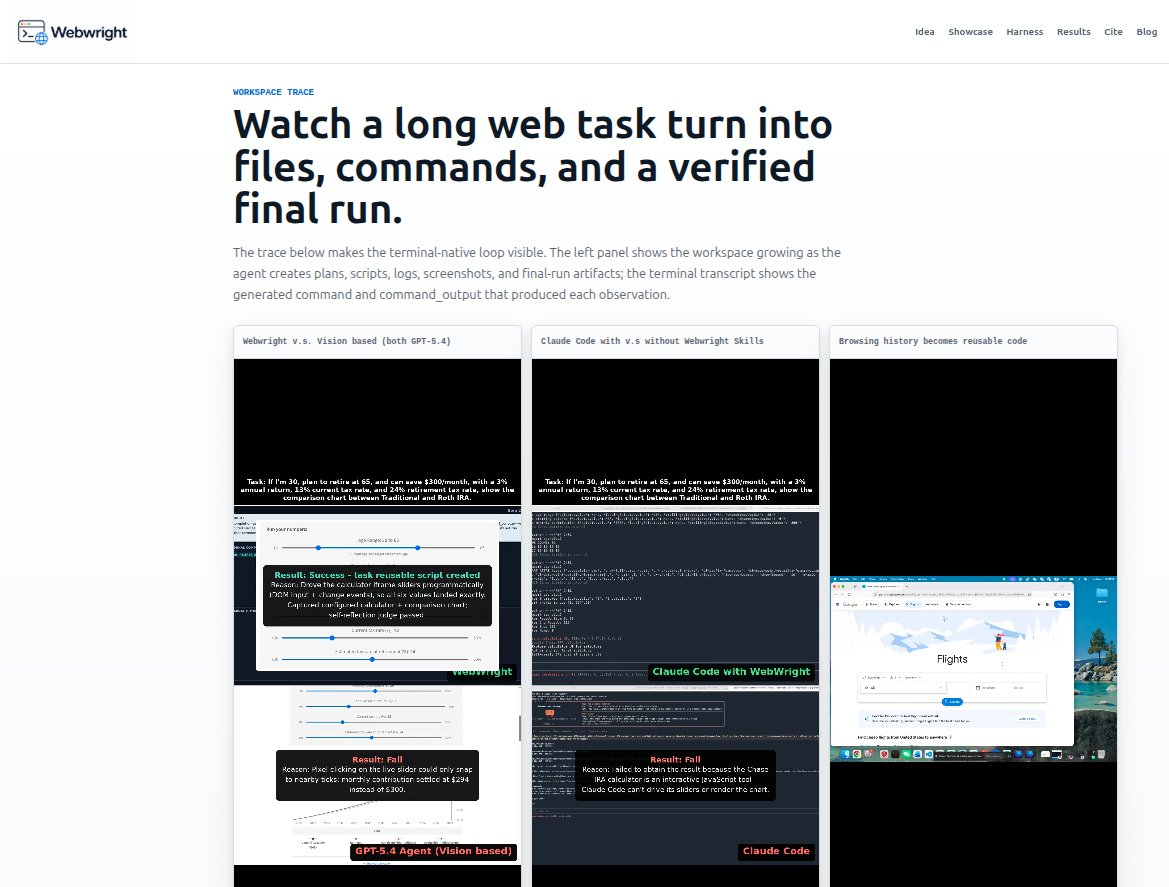
Microsoft dropping a massive Playwright update geared specifically for agents, Webwright!
This is an absolute game changer for agentic browser use as every session becomes a reusable workflow
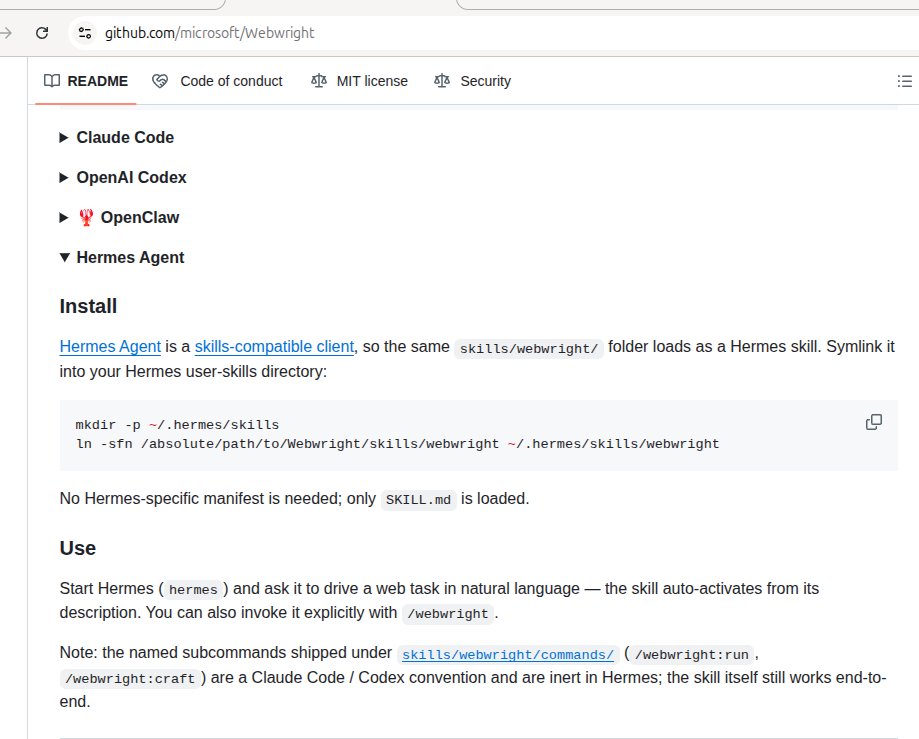
The repo includes a @NousResearch Hermes Agent skill 😍
https://t.co/mDmKCN9kV9
last 90 days of fleet data across one client book:
— 68% of bookings from email 1
— 22% from email 2
— 4% from email 3
— under 6% from emails 4-7 combined
the 7-step sequence is dead
Most cold email copy peforms poorly because it sounds like a seller wrote it
The fastest way to improve it is to inherit the language of the market
Most people write cold email from the seller’s side of the table
-They describe the offer
-They explain the value prop
-They try to sound credible
-They polish the sentence until it feels “professional”
Then the prospect reads it and immediately knows:
“This is a vendor trying to sell me something”
That's the problem
The copy sounds like someone marketing to the market
If you want better cold email, start with language extraction
Before writing the email, go find where the market talks when no seller is present
-Forums
-Reddit threads
-Industry comment sections
-Association posts
-Niche Facebook groups
-Review sites
-Trade publication comments
-Old Q&A threads
-Operator communities
You are looking for raw language
How the buyer talks when they are annoyed, confused, skeptical, afraid, or trying to solve the problem with peers
That is where the copy comes from
Example:
If you sell to cold email operators, don’t say:
“Improve your outbound performance through enhanced deliverability infrastructure”
That is vendor language
The market says:
“My emails are bouncing”
“My domains are cooked”
“Everything is landing in spam”
“I can’t tell if the issue is copy, list quality, or inbox health”
That language is usable because it is native to the buyer
Same idea in any niche
If you are emailing business owners about selling their company, don’t start with:
“We help founders evaluate strategic liquidity opportunities”
That is seller language
Go read M&A threads
You’ll find business owners saying things like:
“I had a broker reach out and I don’t know if they’re legit”
“I don’t want to waste months with tire kickers”
“I’m not sure what my business is worth”
“I don’t have a succession plan”
“My kids don’t want the business”
“I’d sell if I knew the buyer wouldn’t ruin what I built”
Now you have copy
Not because you invented a clever angle
Because the market handed you the pain in its own words
The practical workflow:
Write the first draft normally
Get the offer down
-Who you help
-What signal you are using
-Why now
-What you want them to do
Do not obsess over language yet
Build a market-language swipe-file
Pull 30-100 raw snippets from places where the buyer talks naturally
You're looking for:
-Complaints
-Fears
-Skepticism
-Shorthand
-Repeated phrases
-Buying triggers
“I wish…” statements
“Has anyone dealt with…” posts
Objections
Words they use that outsiders would not use
Feed that into AI
Not with:
“Write me a cold email.”
Use: (Do better than this though)
“Here is raw language from the personas I'm going to be reaching out to [insert more about your offer]
Extract the recurring pain points, fears, phrases, objections, and buying triggers
Identify any pain angles and native market-words that are missing from my current copy”
As a pattern detector
It might tell you:
“You keep writing about reliability, but the market keeps talking about last-minute pickups”
Or:
“You are emphasizing price, but the market is more concerned about compliance risk”
Or:
“You are writing about strategic buyers, but owners are actually afraid of brokers wasting their time”
That's the alpha
You're using it to find the angle you would have missed
Rewrite the copy in the buyer’s native language
The final email should feel like it came from someone who understands the world the buyer lives in.
Not like a marketer discovered their industry yesterday
Bad:
“We help hazardous waste generators streamline recurring collection needs”
Better:
“Hey, we drive by your facility all the time and could add you to our route for a pickup this week”
Bad:
“We assist business owners in exploring liquidity options”
Better:
“Noticed the company’s been around 23 years
Do you have a succession plan, or is this still something you’re figuring out?”
Bad:
“We support real estate investors with flexible capital solutions”
Better:
“Looked into the property on [street]
We’ve already underwritten part of the deal and may have a path if you’re still looking at it”
The difference is not just style
It is proximity to the buyer’s actual mental state
Good cold email usually has three layers:
Signal
Why this person, why now?
Native language
Does this sound like their world?
Low-friction next step
Can they respond without committing to a sales call?
Most bad copy only has the offer
That is why it feels generic
The rule:
Do not write copy until you know how the market complains
Complaints are more useful than testimonials
-Complaints show urgency
-Complaints show vocabulary
-Complaints show what buyers are already trying to solve
-Complaints show what they do not trust
And the best copy often just reflects that back with a specific path forward
This is also why “clever” copy usually fails
Clever copy makes the writer feel smart
Native copy makes the buyer feel understood
There is a big difference
“Take this off your plate” sounds polished
“We can pick up the waste this week” sounds operational
“Unlock strategic liquidity” sounds vague
“Do you have a succession plan?” starts a real conversation
“Optimize outbound infrastructure” sounds like software
“Are your emails bouncing?” speaks to the actual pain
Peer-to-peer language beats polished marketing language because buyers do not talk to themselves in positioning statements
They talk in problems
Your job is to capture the problem in the language they already use
Then make the next step feel obvious
That is the real cold email workflow:
-Scrape the market
-Extract the pain
-Find the native phrasing
-Build the angle
-Write the shortest version that starts a conversation
The best cold email does not sound like copy
Most AI-generated outbound ends up deleted before it ever gets read.
So I’ve spent all year building a Claude workflow trained around how I actually prospect.
…and it gets my emails ~95% done in seconds.
I dropped the full prompt/workflow in today’s newsletter here: