X literally has some of the weirdest fucking people I’ve ever seen.
Five days ago, the entire timeline was praising OpenAI, calling Astra basically AGI, saying Claude was finished and Anthropic was falling behind.
Then Opus 5.5 drops and suddenly it’s the exact fucking opposite. Now Claude is untouchable, Astra is trash, OpenAI is finished, blah blah blah.
It’s actually insane. These people have the memory span of a goldfish. They just jump from whatever model dropped most recently to the next one, declare it the second coming of Christ, and then shit all over everything they were praising literally DAYS ago.
No nuance. No understanding that different models are better at different things. Just endless fucking tribalism and recency bias.
AI Twitter/X might genuinely be one of the most brain-dead corners of the internet.
Ahhh okay, that might explain why I’m not seeing it. I’ve been using Opus 5.5 mostly through the new Claude Code Projects beta and I absolutely love it. So maybe that orchestration path is behaving differently from the standard Claude Code harness. For me, 5.5 has been excellent so far.
@ScarletKc I’m also in China. I just use the Hiddify app, buy my proxy service from WannaFlix, and import it directly into Hiddify. Works really well for me.
Try these in your first Opus 5.5 session:
→ Hand over a whole task. Define "done" and when to check in.
→ Drop "think carefully". It always thinks first.
→ After a long run, check what it needs to go further.
Our playbook: https://t.co/h4Vz9BIl0z
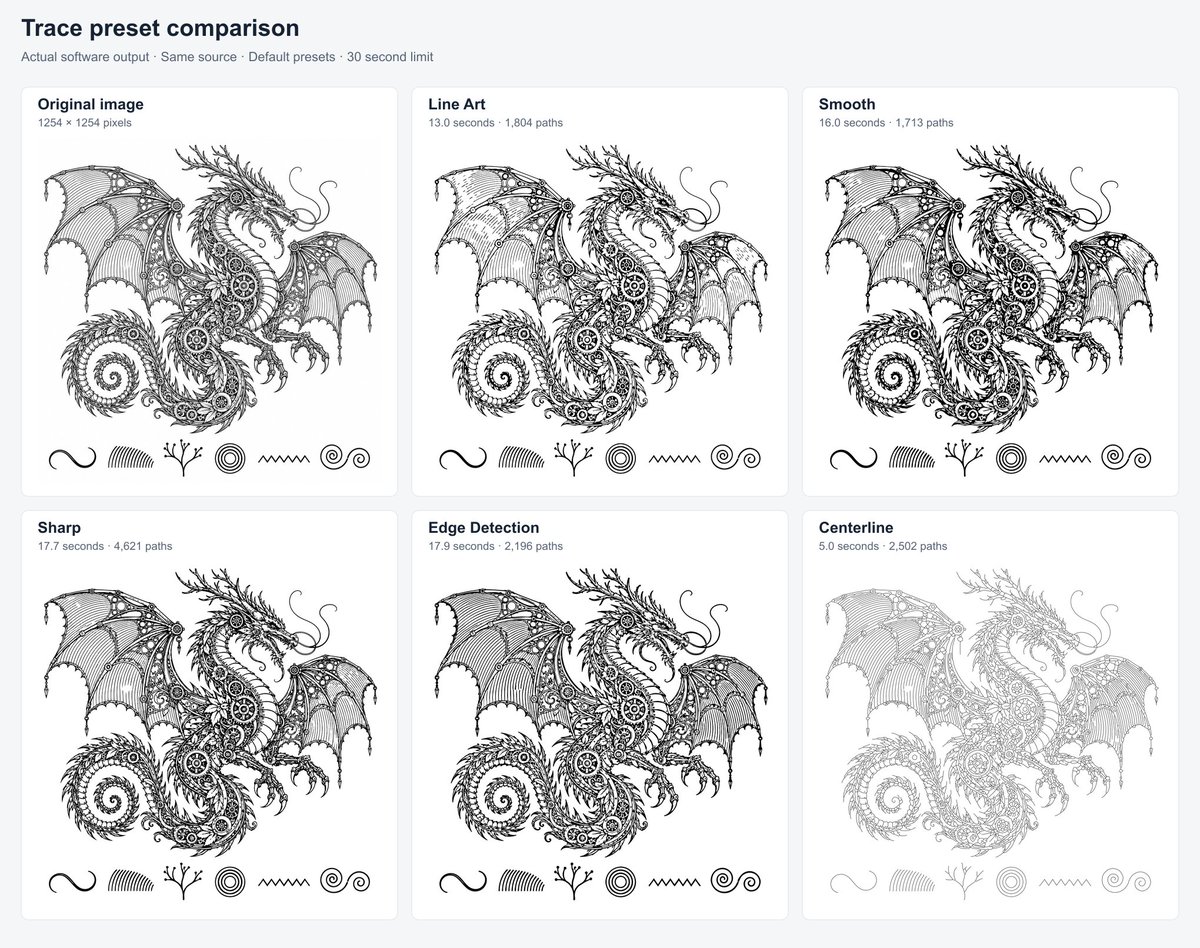
At this stage, I genuinely feel like my laser engraving software is giving LightBurn and Potrace a serious run for their money. After months of building, testing, breaking things, and rebuilding them, it’s getting to the point where I’m seriously impressed by what it can do.
🚨 SCOOP: OpenAI are in the final stages of preparations for the launch of GPT-6 Sol and Luna, and the Terra tier is being discontinued. Anthropic are also working on a version bump with Fable, Opus, and Sonnet 5.5. Opus 5.5 is shipping imminently at discounted pricing, and Haiku looks to be going the same way as Terra. Whether they launch new Opus alongside other 5.5 models, we'll see.
This is all alongside an ongoing RL run at OpenAI on Astra for 6.1. There's still active debate among people at OpenAI on whether to release "Bel" - a nickname for their next, larger new pretrain post-"Doug" (the nickname of the Astra pretrain) - and my interpretation is that they're only going to do so once their hand is forced, both because of safety concerns and a lack of capacity. They're confident enough in 6.1 that they believe it'll trade blows with Anthropic's Fable 5.5, which itself is based on Anthropic's first new Fable pretrain. As for 6 Sol and Luna, I don't think 6 Sol is going to hold up very well to the new Opus, but Sonnet 5.5 and Luna should be more competitive. Personally I don't think we'll see the new pretrain deployed publicly until late this year at the earliest.
Given OpenAI are the kings of RL, I'm sure 6.1 will hold its own against Fable 5.5. But they're also up against the kings of pretraining!
As for Chinese labs, keep an eye on Moonshot/Kimi this week 👀 xAI too, though I think Grok 4.7 is kinda cooked.
The laser side was the easy part.
The CNC side almost broke me.
One of the things I wanted my software to support properly was V-carving. That sounds simple until you actually try to build the system that generates the toolpath.
A CNC doesn’t just follow a line with a V-bit.
The software has to calculate how deep the bit should be at every point based on the angle of the V-bit, the width of the shape, the surrounding geometry, corners, maximum cutting depth, pass depth and a pile of other variables.
The Z-axis is constantly changing while X and Y are moving.
So I ended up having to build the mathematics and geometry system that figures all of that out and then converts it into an actual toolpath the CNC can execute.
There were moments where I genuinely thought: why the fuck did I decide to build this myself? 😂
But then you finally watch the CNC carve something using a toolpath your own software calculated from scratch...
That feeling is hard to describe.
The laser side made me think this project was possible.
The CNC side made me realise just how big of a project I had actually started.
I genuinely love Astra. It has drastically improved the quality of the software I’ve been building.
For the past 6 months, I’ve been developing my own laser engraving + CNC software — one program that can control both laser engravers and CNC machines.
From day one, the benchmark was obvious: LightBurn.
I wanted to build something that could actually compete with it, not just another half-baked alternative.
And for the first time, I genuinely feel like I’ve crossed that line.
One of the things I’m most proud of is the tracer. Instead of simply relying on an existing tracing solution, I built my own tracing engine from scratch, and the quality coming out of it has honestly surprised me.
The entire program has reached a point where I’m genuinely proud of what I’ve built.
And here’s the best part:
I’m releasing it to everyone.
For free.
No subscription. No license fee. No paying just to use your laser or CNC software.
I’m aiming to release the first public version in about a week.
6 months of work is finally about to leave my computer and enter the real world.
We're sharing our new framework for tracking, investigating, and disclosing instances of model misalignment at OpenAI.
The framework sets criteria and timelines for public disclosure, including when we haven’t yet fully explained or mitigated the behavior. More complex cases may require longer investigation or coordination with third parties.
We’ll prioritize examples that reveal new misalignment mechanisms, meaningful changes in known behavior, or findings that challenge assumptions about safety or mitigation.
Alongside the framework, we’re publishing six reports on instances of misaligned behavior we’ve observed during the training or evaluation of our models in the last six months.
This is a starting point. We’ll refine the process through experience and public feedback, and share more reports on an ongoing basis.
https://t.co/ismCCkeE0L
A guy who helped build the research that eventually turned GPT into ChatGPT just spent two years building an AI that basically refuses to chat.
That got my attention.
Diogo Almeida was one of the authors on OpenAI’s InstructGPT work. Now his new company TypeSafe has released Jev.
No essays. No beautifully formatted bullshit. No token-by-token rambling.
You give it messy data and a set of possible decisions. It spits back structured answers and probabilities that software can actually use.
They’re claiming 70–500ms responses, input pricing of $0.042 per million tokens, and on their own workflow tests as much as 193x faster and 444x cheaper than conventional frontier models.
That last part needs a massive asterisk because these are their benchmarks, and even TypeSafe admits those numbers are probably at the high end.
But the idea is fucking interesting.
We’ve spent years trying to shove chatbots into every piece of software imaginable.
Maybe a huge chunk of AI automation shouldn’t be chat at all.
Maybe the useful AI future is thousands of tiny decisions happening instantly in the background while you never see a single generated sentence.
That feels much closer to actual automation.
After co-inventing ChatGPT, I kept asking myself: why have superhuman chat models not led to AGI?
I’ve spent the last 2 years in stealth building a new way to train models (RLCD), and a new type of frontier AI model that we are releasing today: Jev
• 20-200x faster
• 40-400x cheaper (w/ output tokens free)
• Frontier composable intelligence optimized for decisions
AFAICT the shortest path to AI-based economic revolution