I'm a Reserve Manager at a central bank.
My job is buying gold.
297 tons this year.
Quietly.
While we print money.
Loudly.
Gold hit $5,000 an ounce yesterday.
We've been buying since it was $1,800.
That's called "reserve diversification."
Diversification means we don't trust our own currency.
But we can't say that.
So we say "diversification."
The Governor went on television last month.
He said inflation is "anchored."
Anchored means 6%.
Used to mean 2%.
We moved the anchor.
That's monetary policy.
He said the currency is "sound."
Sound means losing 20% of its value.
Per year.
But it sounds sound.
That's what matters.
We bought 45 tons in November.
Poland bought 95 tons.
Brazil bought 43.
China reports 1 ton.
China is lying.
We all know.
Nobody says it.
95% of central banks plan to buy more gold next year.
That's a survey.
We surveyed ourselves.
On whether we trust ourselves.
We don't.
We trust gold.
Citizens ask why prices keep rising.
We say "supply chains."
We say "external factors."
We don't say "we printed 40% of all money in existence since 2020."
That's not external.
That's us.
The Finance Minister asked if gold is a hedge against our own policies.
I said "gold is a strategic reserve asset."
Strategic means yes.
I just can't say yes.
Gold is $5,000 now.
Our currency buys less every day.
Our gold buys more.
That's the strategy.
For us.
Not for you.
You get the currency.
We get the gold.
That's central banking.
This is Canada's newest millionaire.
A police officer forgets to put his car in park so the car rolls and runs over the suspect's legs. Then he jumps in the car and presses gas running over the suspect again and a police officer 🤦🏼
Absolute clownshow.
Not as embarrassing as when Toronto Police delivered coffee to Hamas fart catchers blocking roads and intimidating communities.
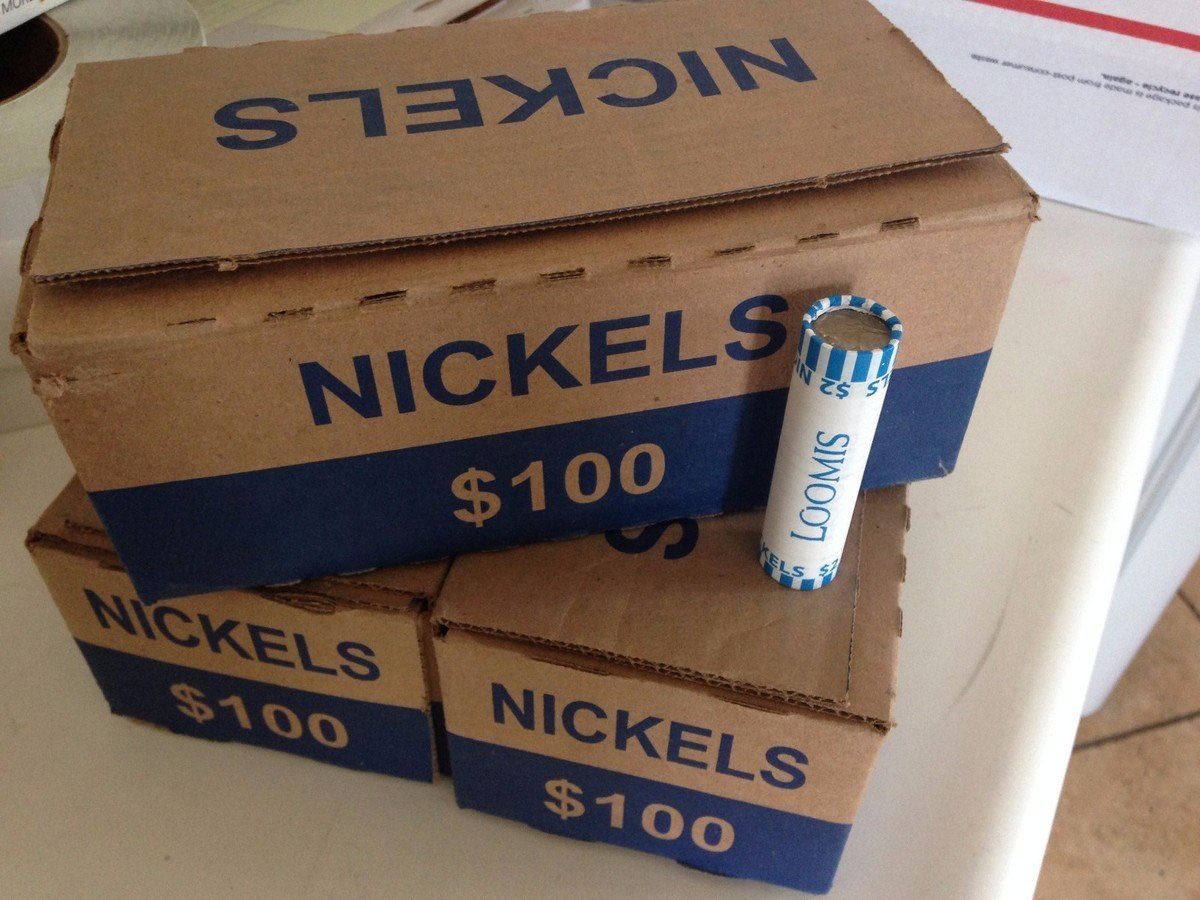
I Bought $250,000 Worth of Physical Nickels
No, that’s not a typo.
That’s 5 million coins. 55,000 pounds of American metal stacked in boxes from a local bank vault — an asset the government literally can’t print anymore.
Most people would call it insane.
But let me explain the thesis.
Each U.S. nickel is made of 75% copper and 25% nickel, weighing 5 grams. That means every $1 million in face value equals roughly 100,000 pounds of metal.
At current metal spot prices, the melt value of a modern nickel sits around $0.043 – $0.047, depending on commodity fluctuations — or roughly 90–95% of face value. That means the U.S. Mint loses money on every coin it produces. They’ve tried to change the composition for years, but Congress hasn’t approved it yet.
So what happens when they finally do?
The old “real” nickels become the last batch of government-issued coins containing significant industrial metal. When that happens, they’ll vanish from circulation overnight — just like the 90% silver coins did after 1964. Those who held them saw a 10–15× nominal gain over the following decades as melt value outpaced inflation.
My $250,000 position, therefore, isn’t a “trade.”
It’s an asymmetrical bet that the U.S. Mint will eventually debase the coinage again, that metal scarcity and inflation will continue to erode the dollar, and that a bag of nickels will one day be worth more dead than alive.
Worst case? I still have $250,000 in legal-tender coins backed by the full faith and credit of the United States.
Best case? The melt value doubles, triples, or gets banned outright — which would make the existing supply finite and far more valuable to collectors and contrarians alike.
It’s not crypto, it’s not stocks, it’s not even silver.
It’s 5 million tiny claims on an industrial commodity the government accidentally subsidizes.
That’s deep value.
That’s the Nickel Standard.