Is a 3PL a media company? Can be.
This month, @HelloTidalwave launched a new service to clients called "Content Pass". We make professional behind the scenes content for your brand.
Thesis: Give our brands another tool in the toolbelt to succeed on Facebook. They sell more stuff, we ship more stuff, we all win.
Creative fatigue is higher than ever, and this style of content historically has worked well. If you use a 3PL, this style of content is either not possible, or prohibitively expensive.
We charge $200/mo (now). Our upside is ... your ad pops off and I can ship thousands of incremental packages.
So much in social media is BS hype.
I used to think the cheat code for founders to generate business was to put out content that makes them look smart.
But what has happened, especially with AI, is that everybody is just looking for a hook.
I’ve started to do something that’s pretty interesting.
Anytime I see some “game changing opportunities” posted by influencers, creators, or experts I loaded into AI and I ask it to pressure test the opportunity.
Shocking: so far after loading 50 posts into this format, 90% of them are flagged as hype, and not real opportunities.
But Boy does my ADHD get the biggest dopamine hit when I read these lol
AI is currently helping me stay focused by calling BS on all these hype posts
Thank you, Claude
So I walk into the office today.
Team = 🤯
Me = 🤔
Team = “Do we still have a job?”
Pumped to see the output here.
P.S. yes they have a job, it just got soooo much faster.
Higgsfield MCP now connects to Claude! 🧩
The first way to generate visuals on Claude, powered by Seedance 2.0, GPT Images 2.0, Marketing Studio and Cinema Studio.
Research on Claude. Polish your prompts. Generate ads, videos and brand content via the Higgsfield connector.
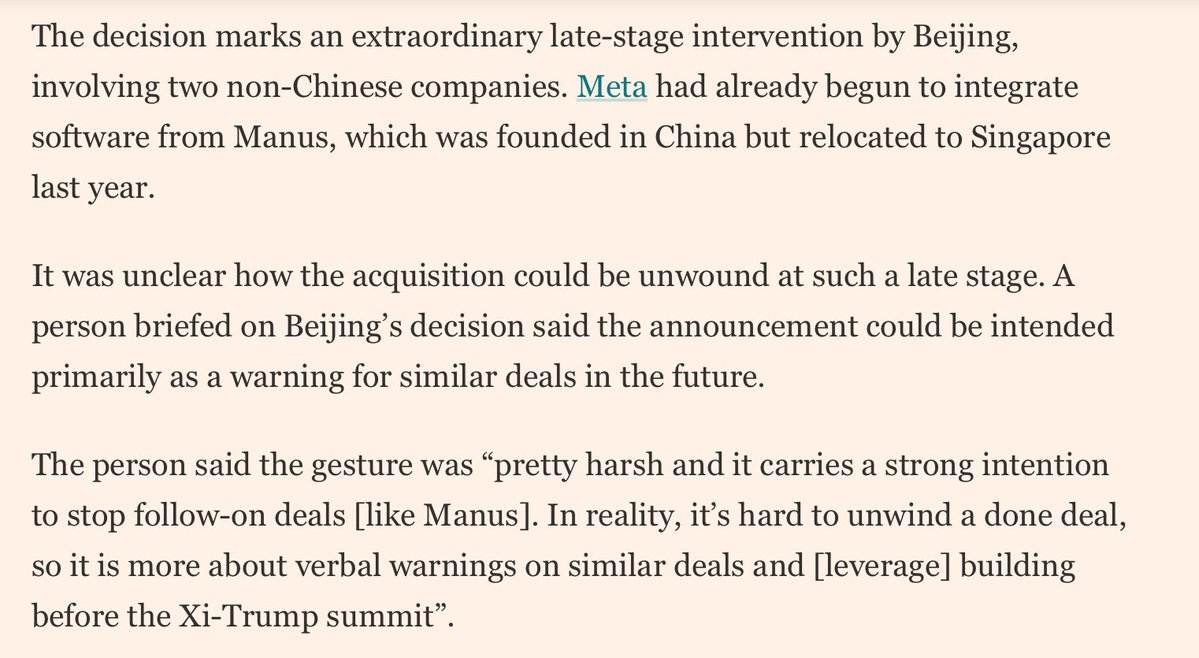
China block’s Meta’s months-old acquisition of Manus.
Unwinding the acquisition at this stage would be messy. And Meta has already substantially integrated Meta’s agents into its advertising manager suite.
Founders don’t lose money because of traffic.
They lose money because of structure.
I’ve reviewed hundreds of DTC ad accounts over the years. The pattern is predictable:
Revenue growing.
Ad spend growing.
Pressure growing.
But conversion rate stuck below 1%.
CAC creeping up.
Margin slowly compressing.
That’s not a marketing problem.
That’s a funnel architecture problem.
When your model only works if spend increases every month, you don’t have scale. You have exposure.
The real leverage comes from:
• Increasing revenue per visitor
• Engineering higher AOV
• Fixing product page psychology
• Removing checkout friction
• Building retention systems
Better ads amplify results.
They don’t fix weak foundations.
If your margin feels tight even though sales are strong, look at your funnel before you touch your budget.
Traffic is rented.
Conversion systems are owned.
#DTCBrand #EcommerceGrowth #ConversionRateOptimization #FounderMindset #GrowthStrategy
Every February I see the same pattern.
Brands look at January numbers, see traffic holding and spend continuing, and assume February will bounce back. It usually doesn’t.
Not because demand disappeared, but because January quietly exposed the cracks in the system.
Higher CAC.
Weaker offers.
Lower conversion rates.
Post-purchase leaks no one wanted to look at.
February isn’t the problem. It’s just the month where excuses stop working.
If traffic were the solution, January would have fixed February already.
The brands that win this part of the year don’t chase more clicks. They fix the system underneath the spend.
If you want to see where your growth is actually breaking, start with conversion rate.
👉 https://t.co/18zdzClgtf
That’s where real leverage is.
I keep seeing the same pattern with ecommerce founders lately.
Ads are still getting clicks.
Traffic doesn’t fall off a cliff.
But revenue slowly starts to disappear.
The first reaction is always the same:
change creatives, tweak audiences, increase spend.
Almost never works.
In most cases, the ads didn’t stop converting.
The funnel did.
I wrote an article breaking down where conversion rate quietly leaks revenue post-click and why scaling ads on a broken funnel only makes the problem more expensive.
Before touching your ad budget, calculate how much your current CVR is actually costing you.
👉 Use the CVR calculator: https://t.co/18zdzClgtf
#ecommerce #growth #cro #founders #digitalcommerce
February always tests discipline.
Every year CPMs rise.
Every year CAC gets tighter.
And every year the same mistake shows up waiting.
When CAC spikes 20 to 40 percent hesitation becomes expensive.
The brands that protect margin do not wait for conditions to improve.
They adjust structure creative and offers early.
If February hit your CAC that is not noise.
It is a signal.
This video breaks down what is actually happening and what needs to change now.
One of the biggest MER mistakes I see isn’t in ads.
It’s what happens after the checkout.
A customer buys, the order is done… and then nothing.
No cross-sell. No upsell. Weak post-purchase experience.
At that point, your acquisition cost never really pays itself back.
When we audit brands, this is where MER usually gets capped:
• No logical cross-sells tied to the original purchase
• No upsell path to a higher-value version
• Email and SMS that talk, but don’t actually help
• Zero strategy to earn the second order
If you want a wider MER, stop obsessing over the first conversion.
The real leverage is turning one purchase into two, then three.
Ads bring customers in.
Post-purchase is where efficiency is built.
#ecommerce #dtc #marketingefficiency #MER #retention #postpurchase #lifecyclemarketing #customerlifetimevalue #shopify #growthstrategy #scalingbrands #founders #operators #johnspeaks
One thing I’ve learned is that MER only becomes confusing when teams forget why they’re measuring it.
MER tells very different stories depending on the phase you’re in.
📈 When you’re in an investment phase
• You’re putting money into organic, YouTube, or new channels
• MER compresses for multiple quarters
• You’re trading short-term efficiency for long-term leverage
📊 When you’re in an optimization or reporting phase
• You need clean numbers for boards and equity partners
• Fewer channels matter more than experimentation
• MER should stabilize and become easier to read
⚠️ Where I see teams struggle
• Trying to invest and optimize at the same time
• Expanding channel mix while expecting MER to stay flat
The fix is rarely inside ad platforms.
It’s choosing the phase you’re actually in and aligning the channel mix to that reality.
MER only works when it’s evaluated in context, not in isolation.
One thing I’ve learned the hard way: you can’t look at MER without looking at ops.
I’ve seen teams celebrate a strong MER while the business was quietly bleeding underneath. Orders arriving late. Packages damaged. Customers asking for refunds weeks after the sale. On a dashboard, marketing looks efficient. In reality, profit is slipping.
📦 Ops issues turn into returns.
💸 Returns turn into margin loss.
📊 And if you’re reviewing MER week to week without fully accounting for refunds, you’re looking at an inflated number.
This is why I don’t treat MER as an ads KPI.
It’s a business metric.
Marketing can drive demand, but ops decides whether that demand turns into profit. If marketing and ops aren’t aligned, MER tells an incomplete story. Not wrong — just misleading.
Whenever MER looks “off,” my first question isn’t about bids or creatives.
It’s about fulfillment, delivery, and returns.
That’s usually where the truth is.