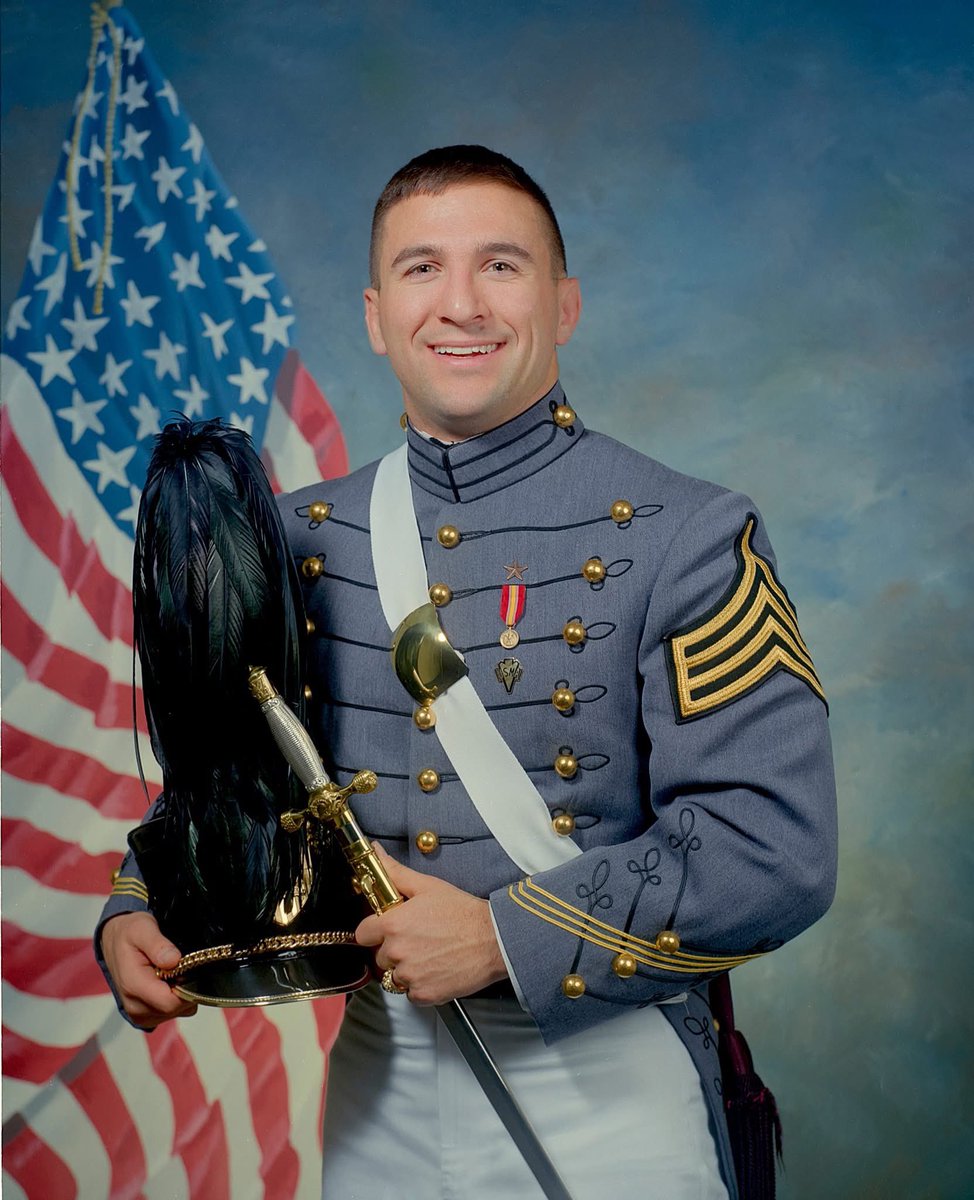
In 2006, I was out of the Army. I had done a tour in Iraq in 2003-04 and I was sour on the Army (to say the least). I had moved on and I had a decent job, but it just wasn’t the same as being in. Then came Memorial Day Weekend: one of my best friends, @CoachDiCenzo called to tell me that his brother Doug had been killed in Iraq. He was a Company Commander and he had been killed on his PDSS.
I was in utter shock. I had idolized Doug, who was a year older than me. He was a big reason why I joined ROTC coming out of high school. Our mothers worked at the same school, we played little league together, he was my teammate on the football team. He was an undersized lineman and an absolute beast on the field and the wrestling mat. He was the epitome of setting the example for others to follow. Much has been said about Doug over the years and our home town has done a great job of keeping his memory alive. None of that does justice to describe what an incredible leader, man, husband, father and friend Doug was.
He was also the reason I went back in the Army. I was already feeling something was missing in my life. Doug’s death was the catalyst for me to go back in the Army. A few weeks later, I walked into a recruiting office and asked how I could get back in. By the end of the summer, I was back in. Even after he had passed, Doug still drove me to be better.
RIP, brother. We will never forget. 🇺🇸🫡
@BuzzPatterson@HartshornFrank I’m here for it too, Buzz! Just goes to show that most of the BS we see online and on TV is just that…BS. People are great.
To the Commission,
As a Gold Star spouse, I am grateful that our nation is finally building a memorial to honor those who served and sacrificed during the Global War on Terrorism. This generation answered the call after September 11th and carried the burden of nearly two decades of war. Their service deserves to be remembered.
That said, I have serious concerns about the proposed design.
When I look at the concept images, I see an abstract landscape. I see architecture, symbolism, and reflection spaces. What I do not see are the men and women who fought these wars or the names of those who never came home.
My husband, SSG Alan Shaw, was killed in Iraq in 2007. He was 31 years old. He had a name. He had a family. He had children who grew up without their father. Like thousands of others, his sacrifice was not abstract.
Nothing about the current design makes me want to take my grandchildren there to learn about their grandfather and the sacrifices made by him and thousands of others. A national memorial should do more than inspire reflection. It should teach. It should tell a story. It should ensure that future generations understand who served, who sacrificed, and what was lost.
The men and women we lost were not concepts. They were individuals with dreams, families, and futures that ended in service to this country. I believe names matter because names force us to confront the true cost of war. They transform statistics into people.
The Vietnam Veterans Memorial remains one of the most powerful memorials in our nation because visitors are immediately confronted with the scale of the sacrifice through the names of the fallen. The names are not a design element. They are the memorial.
I am not opposed to symbolism or artistic expression, but I believe the Global War on Terrorism Memorial should provide direct recognition of those who made the ultimate sacrifice. If someone visits this memorial fifty years from now, they should not have to guess who it was built to honor. The memorial itself should tell that story clearly and unapologetically.
The combat fallen deserve more than an abstract representation of their sacrifice. They deserve to be remembered by name.
Respectfully,
Sharrell Shaw
Gold Star Spouse