We are pleased to announce that #Pharmaceutics has achieved a heightened #CiteScore of 7.9 and ranks 32 among 183 titles (Q1) in CATEGORY #PharmaceuticalScience.
Thank you for the dedication of all journal editors, reviewers, authors, and readers. #MDPI
https://t.co/pvFIJjaHfj
#MDPIPharmaceutics
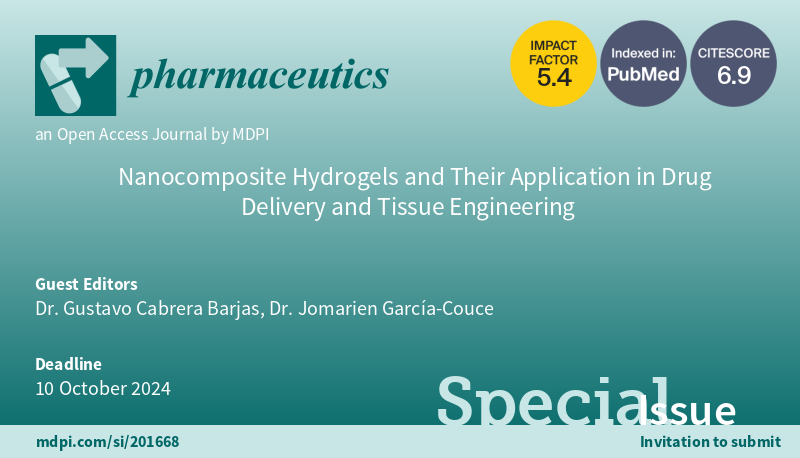
Special Issue "Nanocomposite Hydrogels and Their Application in Drug Delivery and Tissue Engineering" is open for submissions.
Edited by: Dr. Gustavo Cabrera Barjas and Dr. Jomarien García-Couce
Read more at: https://t.co/TBmFtijBik
The registration form for the #LatinXChem23 edition is now open on our webpage https://t.co/lFgSxtPTJ8 or through the following link: https://t.co/74KvPvR9V6. We remind you that the deadline to register is Sep. 30, 2023. Don't miss out, and help us spread the word!
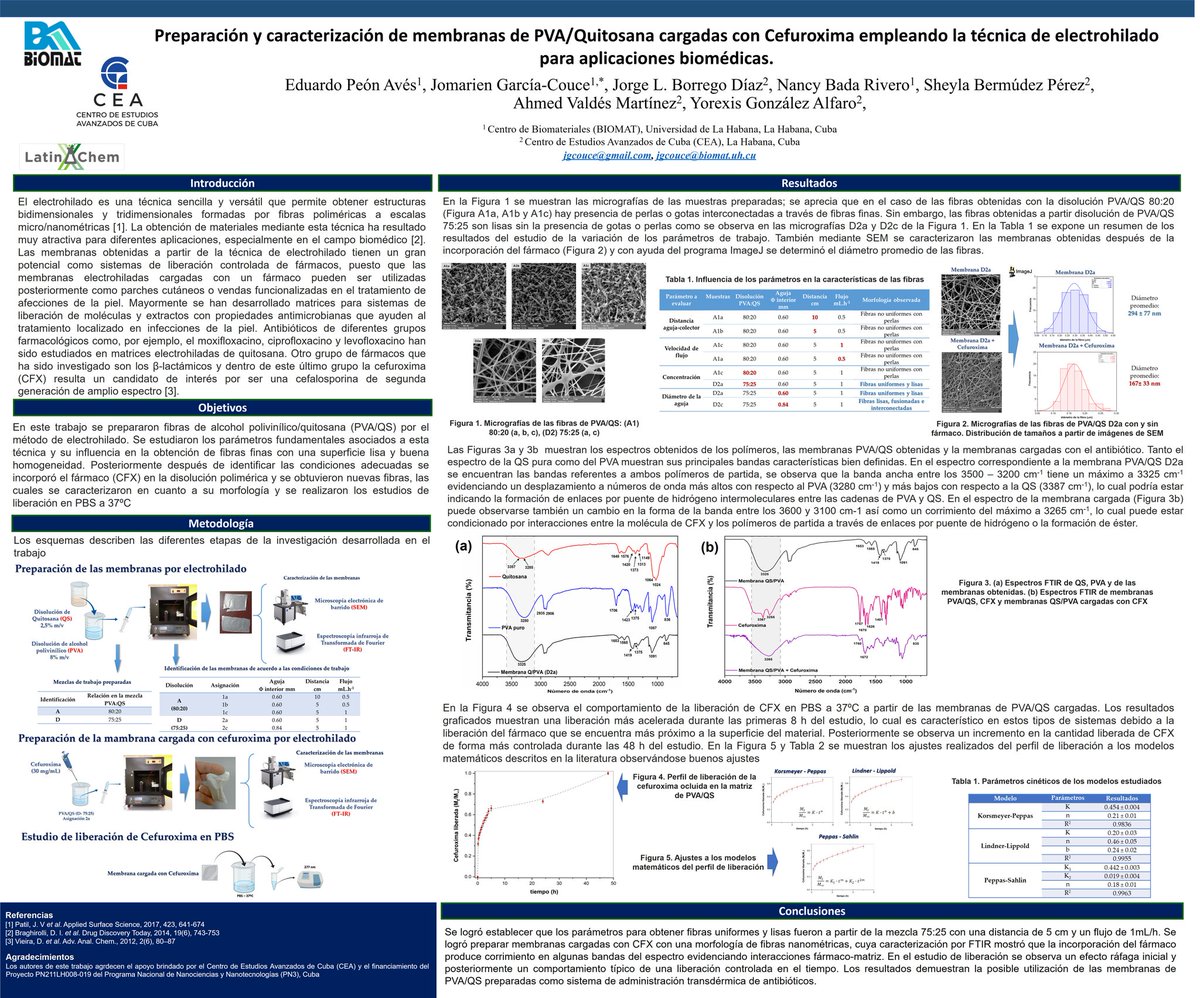
@WaldmanLab@LatinXChem Dear @WaldmanLab thank you for your comment. The fibers were obtained from a physical blend of components, polymers and polymers + drug in the case of loaded fibers. Everything was mixed together in a syringe
Hola @LatinXChem, este es mi trabajo "Preparación y caracterización de membranas de PVA/Quitosana cargadas con Cefuroxima empleando la técnica de electrohilado para aplicaciones biomédicas" #LatinXChem22#LXChemNanoMat#NanoMat076
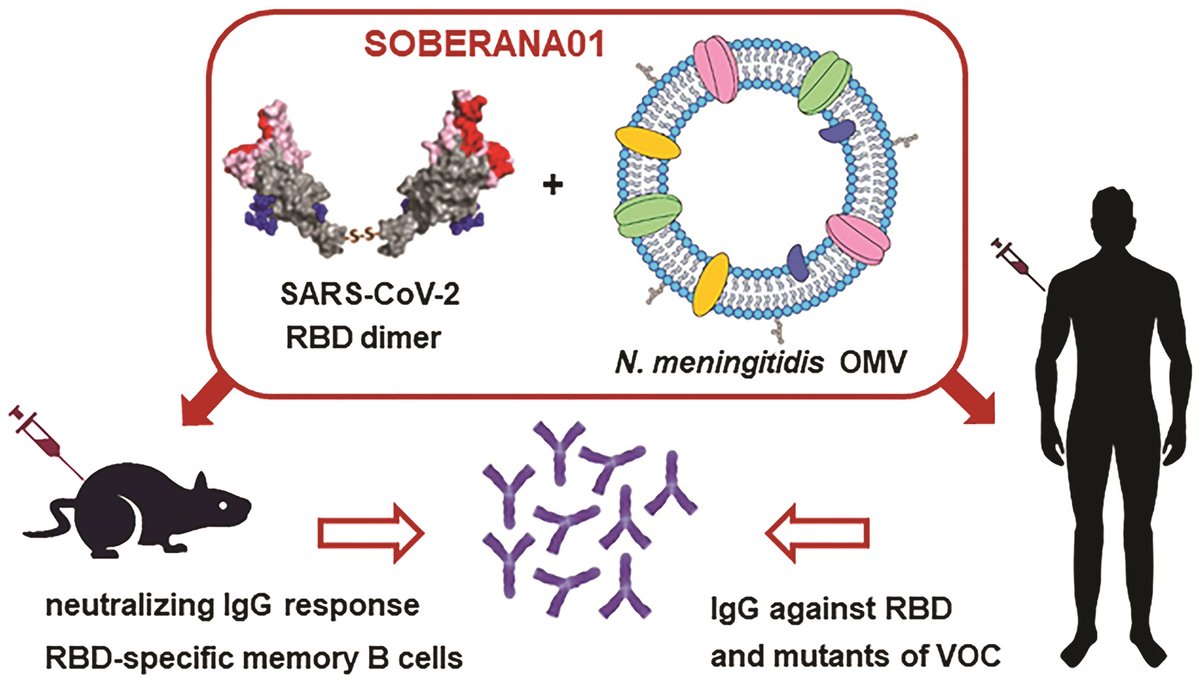
🔥 New advance article for RSC Chemical Biology! 🔥 @Daniel_G_Rivera et al @SintesisLab@FinlayInstituto with a #COVID-19 vax candidate composed of virus' RBD dimer & Neisseria meningitidis outer membrane vesicles #chembio
🧐Read the #OpenAccess article 👉https://t.co/OK3GnkhCP3
@Calderon_Lab@LatinXChem Hi, thanks, well, the next steps could be doing mechanical tests, a more extensive study of material degradation, in vivo tests on some animal models.
Hi @LatinXChem, this is my work "Synthesis, characterization & in vitro evaluation of AlgNa-g-poly(QCL-co-HEMA) hydrogels as biomaterials for controlled delivery of betamethasone", #LatinXChem#LXChemMat#Mat040#LatinXChem2021
@Dr_Desimone@LatinXChem Due to the composition, this sample contains the highest %QCL, which is a charged monomer, also has 3 methyl groups at the end of the chain forming a bulky group. Both conditions can cause their inclusion in the growing polymer chains is reduced, unreacted monomers remained
@Dr_Desimone@LatinXChem Hi, thanks for the question, according to the analysis of the results, we consider that the main cause is the interactions between AlgNa and HEMA with the drug through H bond, which delay the release of the drug from the matrices with a higher content of HEMA & AlgNa