Vulnerable? Critically Endangered? How can we tell if an ecosystem is in danger of disappearing?
The IUCN Red List of Ecosystems is a global standard for how we assess their status.
#ecosystems@redlisteco
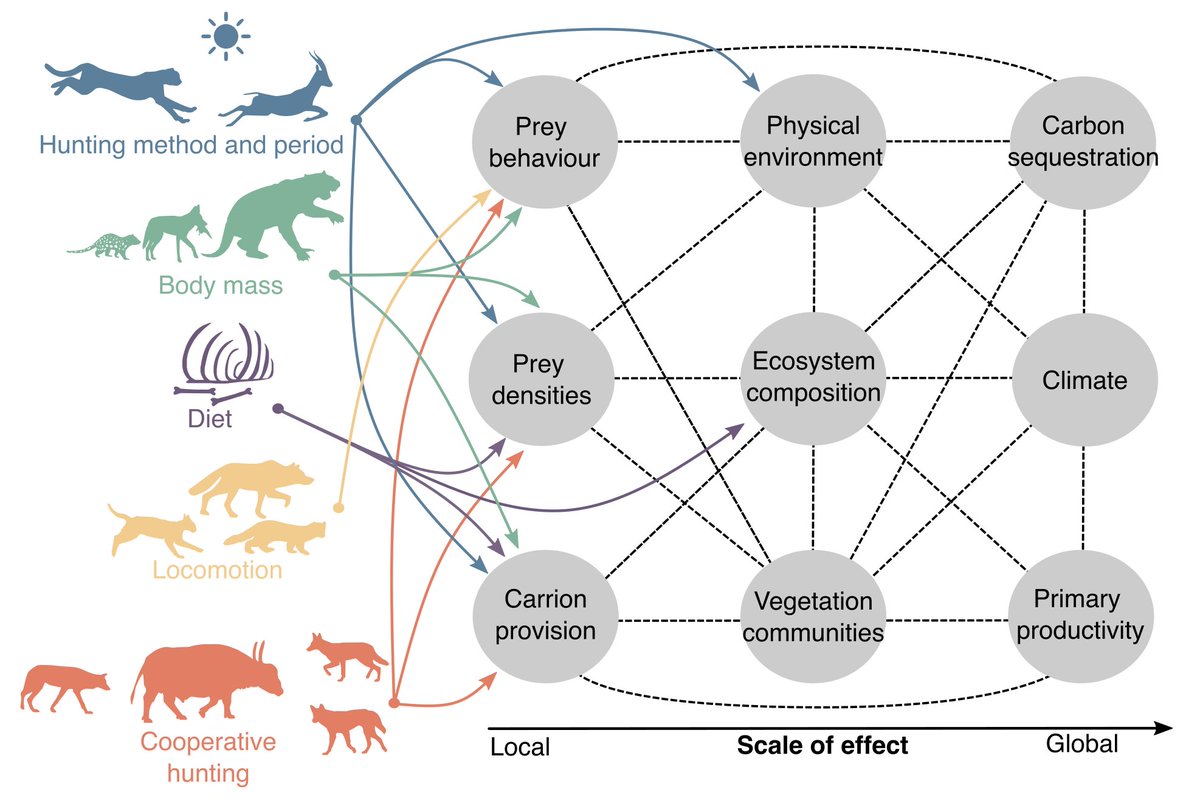
CarniTraits - The Traits of the World's Late Quaternary Terrestrial Mammalian Predators out now in @GEB_macro. The dataset features a suite of traits for recently extinct and all extant predators.
https://t.co/z8RolEAmN7
We are pleased to announce our new book: The World of Zero-Inflated Models: Using GLLVM. Zuur and Ieno (2025)
This book explores modern statistical methods for analyzing complex datasets, focusing on multivariate models, mixed-effects models, and latent variable models. GLLVMs integrate GLMs and GLMMs with multivariate analysis techniques, allowing multiple response variables to be modeled within a single framework.
Key topics include count data models with excess zeros and distributions such as Poisson, negative binomial, zero-inflated Poisson, zero-inflated negative binomial, and Tweedie. The book also provides practical guidance on implementing these models in R using the gllvm package.
Designed for researchers, statisticians, and analysts working with multivariate ecological, environmental, or social science data, this book is also a practical resource for R users looking to apply complex statistical models effectively. Each chapter includes detailed R code and case studies, demonstrating how to fit and interpret complex models, diagnose potential issues, and refine model performance. Emphasizing practical solutions, the book helps readers apply these methods to real-world datasets.
🐺🐑 Our social research on wolf-livestock interactions is out! Part of my PhD, this study sheds light on the real challenges farmers face. While wolves do impact farmers, economic pressures, policy gaps & poor infrastructure can have a greater impact.
🔗https://t.co/6skyQlXeKo
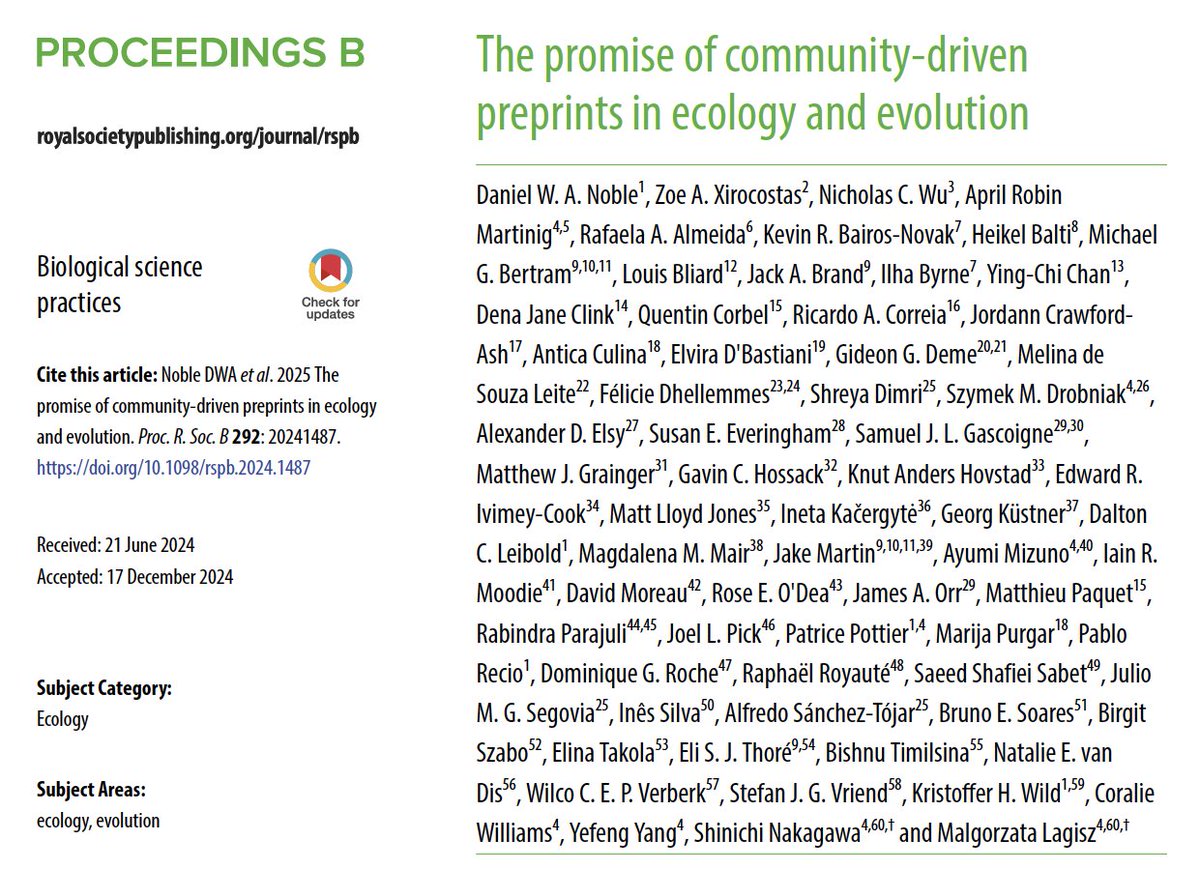
Excited to share our new paper, led by @DanielWANoble, in @RSocPublishing!
‘We believe that the future of preprints is bright, and community-driven initiatives, such as EcoEvoRxiv, will play a crucial role in the future of scientific publishing.’
👉https://t.co/26id74lsiS
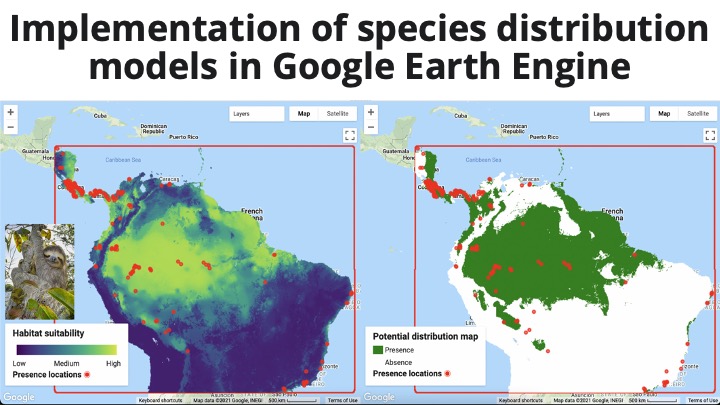
Implementation of species distribution models in Google Earth Engine
Tutorial Link: https://t.co/1vulrE5NcG
Paper Link: https://t.co/U5f1WscPCU
The Full Course syllabus from this link: https://t.co/i4EFoxX5HU
#googleearthengine#SDM#gee#EarthEngine
Bats' vocalizations can reveal their personalities…
Bold, exploratory, and proactive individuals were more likely to produce social calls – and more agitated bats called even more!
https://t.co/cMOPj7wLVf
Photo by Michael Stifter
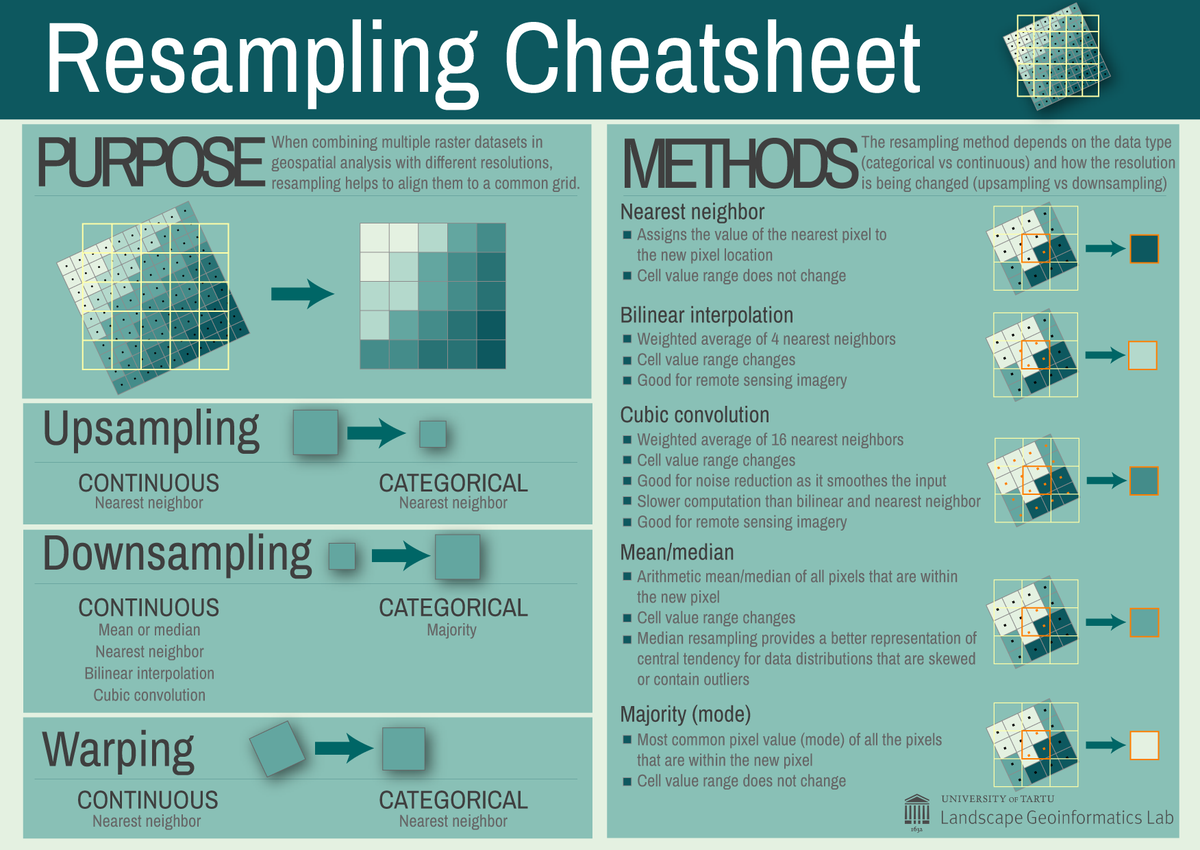
🌍 We're building a #datacube@LGeoinformatics to integrate spatial data with varying resolutions.
Resampling is key for aligning datasets with different resolutions, coordinate systems, or extents.
Check out our quick cheat sheet for resampling tips!
Have any suggestions?💬
❗️Urgent Policy Change Needed❗️
El Bizri et al shared that #socialmedia data uncovered hidden patterns of #illegalhunting and #wildlife depletion and highlight urgent need for policy change in #Brazil.🇧🇷 Read their full article at https://t.co/o0xqA0AWcI
#conservation#science
🚨PhD position alert
Are you a data scientist interested in developing AI to help wildlife conservation? Our group @UniNMBU is hiring a PhD student to quantify & map illegal mortality of large carnivores in Scandinavia using AI
Apply👉 https://t.co/8g7IMUj5dY
Photo Shutterstock
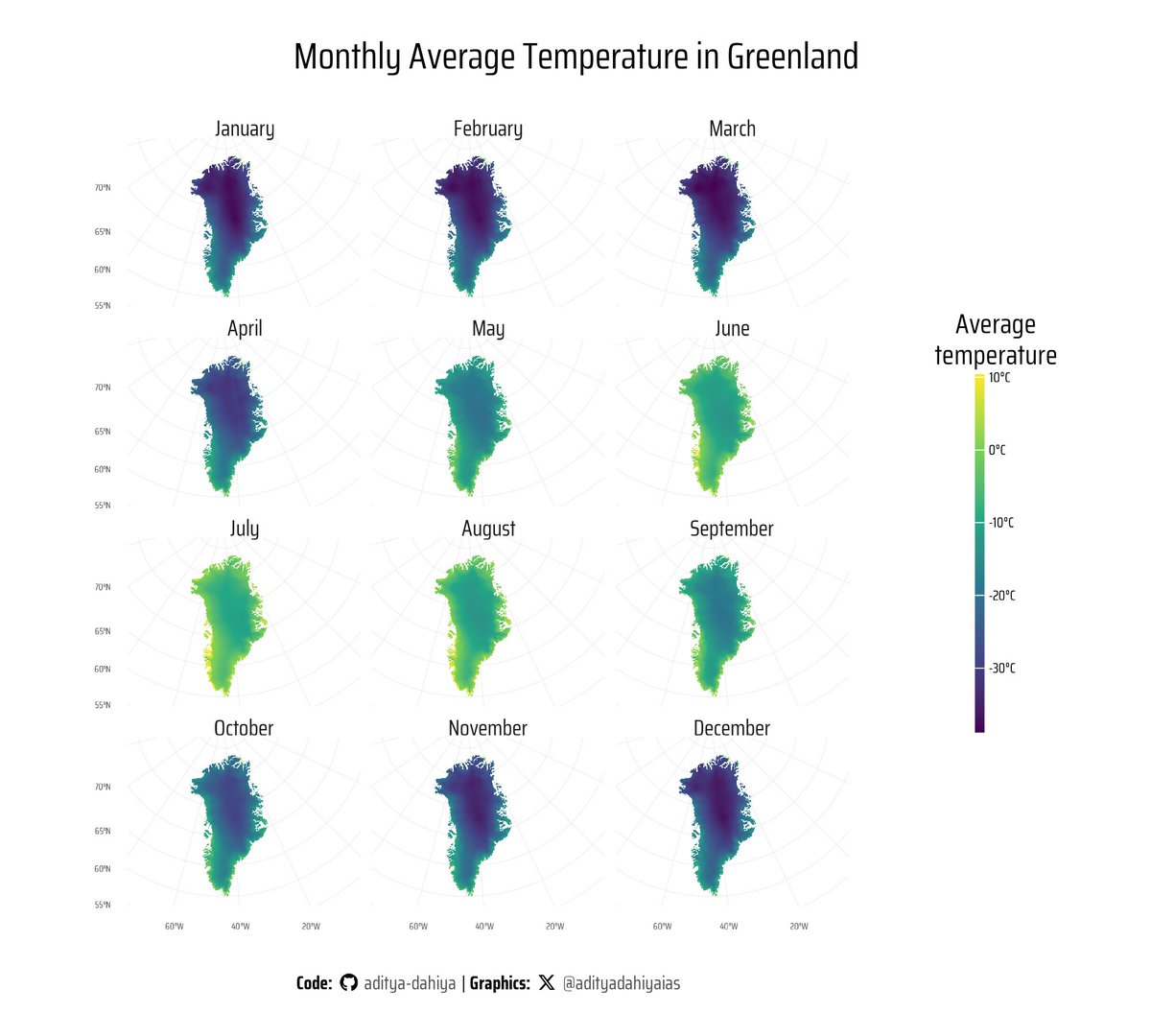
#raster#maps Code demonstration on using freely available climate data by https://t.co/sGrBJf9LZ1 with {geodata} in #rstats to fetch and plot monthly average temperatures for any region.
Full Code 🔗 https://t.co/liQjUZ1W6O
Tools #rstats#ggplot2#sf#terra with #geodata
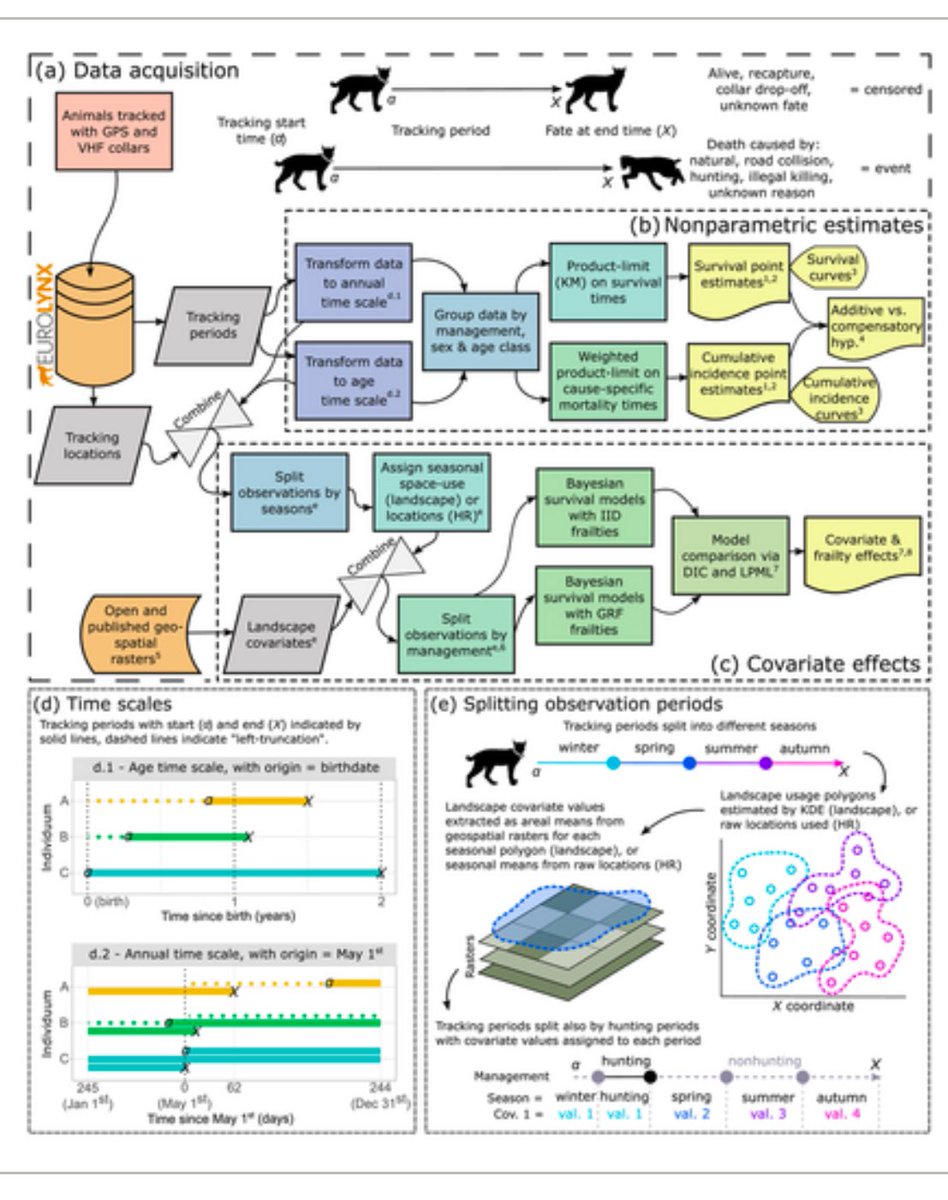
First #Eurolynx pager on the survival of Eurasian #lynx in the human dominated landscape of Europe published. Congratulations to Joe Premier! @ConBiology https://t.co/EVxBFAEcG4
I'm happy and excited to share our latest work with Torsti Shulz and @marjosaastamoinen.bsky.social on Model-based variance partitioning for statistical ecology
https://t.co/fF9Z76s66t
We present it as a general tool to gain more insight from ecological data.
1/5
Global warming has accelerated, a lot!
The first 19 days of 2025 were on average +1.74°C above pre-industrial.
That's about 0.1°C warmer than the same period last year. Then we had an El Niño, now a La Niña.
https://t.co/Dz6ZtKZ95I