Great article by Stephen Brien. Transformation needs 4 things concurrently:
1. A political settlement where leaders' constituencies can take a hit
2. A political window
3. Visonary leadership
4. Teams ready in advance 'as windows do not wait'.
@kopalo
https://t.co/boBNdRmzZo
“Tunisia’s problem is not a lack of skills, but the economy’s inability to turn skills into production, investment and job opportunities”.
https://t.co/KhbJ6DHOZm
“And just to be clear, this implies a very large fraction about what is being said about state capability is convenient nonsense.”
https://t.co/Sn3RrwASQf
A reminder that in economics the definition of market is:
Any system, mechanism, or arrangement where buyers and sellers interact to exchange goods, services, or economic information.
It's not the same as consumer demand, or post-farm, or post-factory, or post-office.
The problem with the discussions at the WB Annual Meetings re low-income countries is they're nearly all framed as a financial problem.
Yet the biggest issues in countries are not financial.
We need to start from an economic transformation and industrial strategy framing.
Economist Joseph Stiglitz: "Indeed, rent-seekers typically destroy wealth, as a by-product of their taking away from others. A monopolist who overcharges for her or his product takes money from those whom she or he is overcharging and at the same time destroys value. To get her or his monopoly price, she or he has to restrict production.
Growth in top incomes in the past three decades has been driven mainly in two occupational categories: those in the financial sector (both executives and professionals) and non-financial executives. Evidence suggests that rents have contributed on a large scale to the strong increase in the incomes of both."
Read more: https://t.co/vGFQefKANV
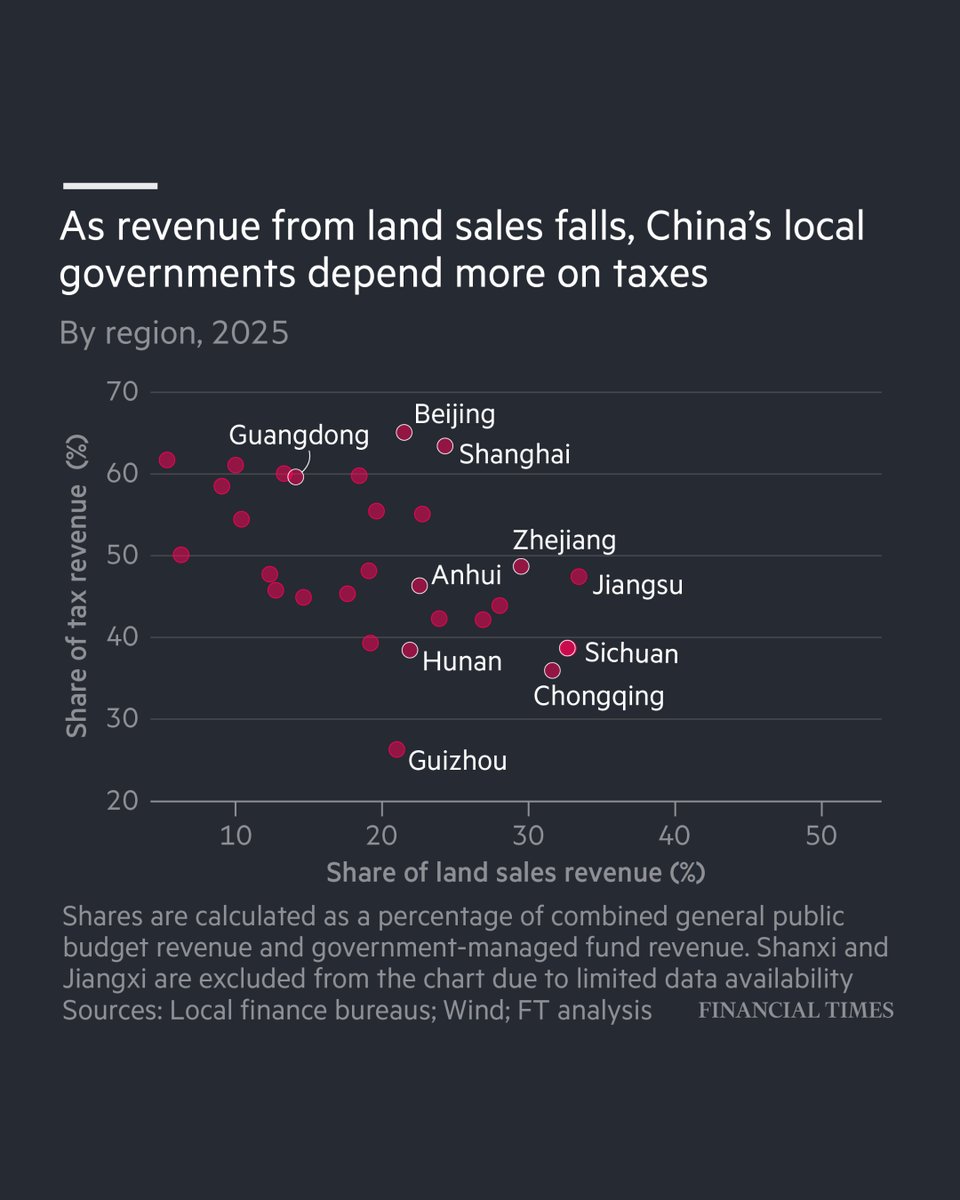
China boasts the world’s second-biggest economy, with more than 5mn millionaires. Now leader Xi Jinping wants those who benefited the most from China’s economic ascent to increase their contributions back to the state. https://t.co/EHCIAEbZDh
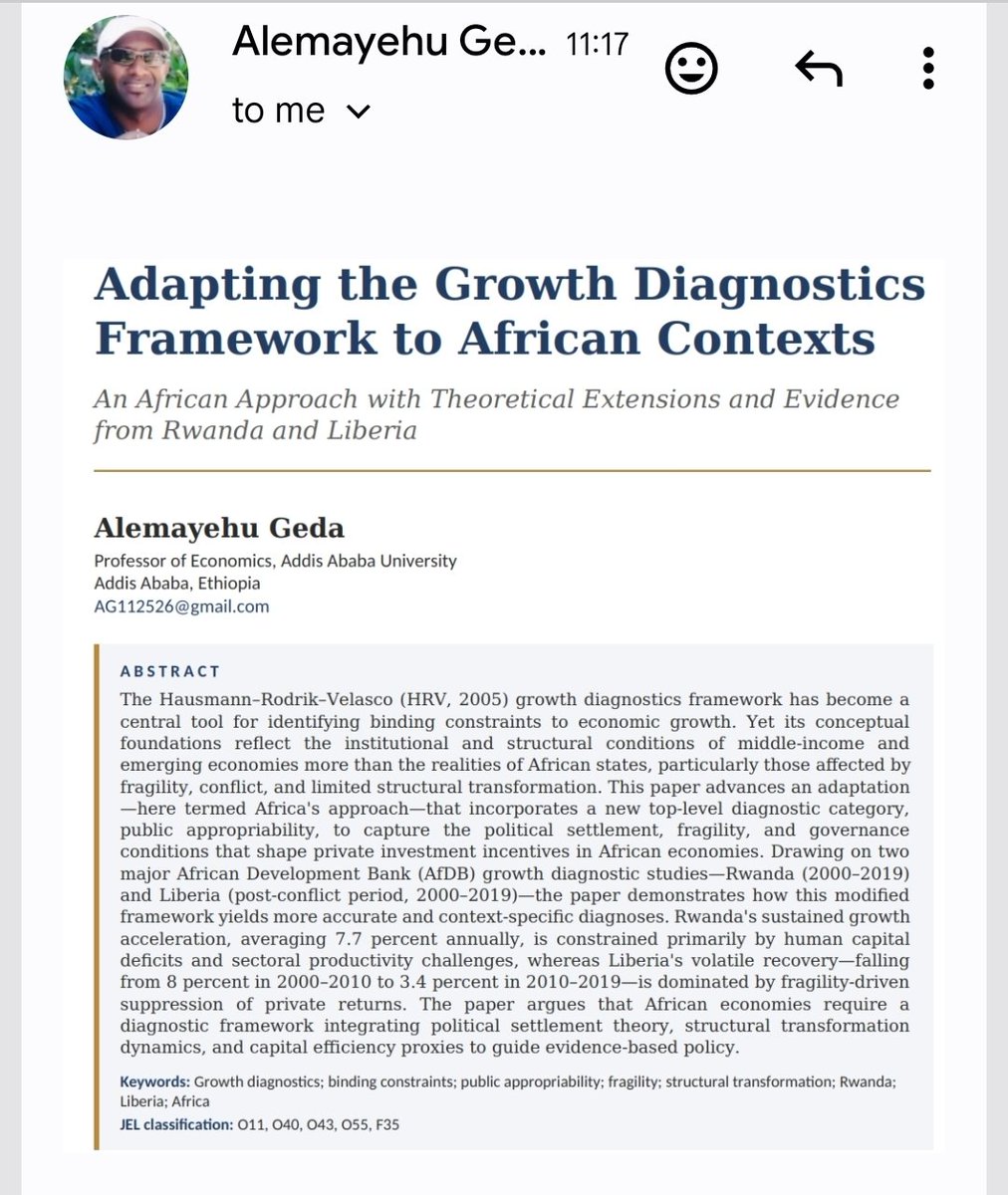
Growth Diagnostic studies in Africa are dominated by the HRV (Hausmann-Rodrik-Velasco) theoretical framework, which is crucial for applied work by institutions like the AfDB. In my new paper👇, I argue that this framework needs serious modifications to be truly relevant for Africa.
(PDF) Adapting the Growth Diagnostics Framework to African Contexts: An African Approach with Theoretical Extensions and Evidence from Rwanda and Liberia https://t.co/yOukngASfH
Does Africa need development economics?
This week on Ideas in Development (@vox_dev), @kopalo joined me to discuss the craft of policymaking and the economic research that Africa needs.
Watch, listen or read wherever you get your podcasts (links below)
Development economics gives you read access to an economy.
Industrial development economics gives you write access.
One helps us understand how economies work.
The other asks how we can change them.
Industrial policy is about firm growth.
Agroprocessing is highly technical & scientific, & must be driven by consumers (the market).
If you've never been in an agro-processing factory, this video is worth watching, especially if you're a policymaker.
https://t.co/gY1fadOsHl
@gabe_gk It’s not a matter of capital. It’s matter of business case, development case and risk management (financial, political). These require market systems and capability. And a favorable political economy. Capital can then be unlocked.
Drought is a regular feature in African agriculture transformation, but it doesn't need to mean crop failure.
The issue isn't technology breakthrough. It's about the market systems & state capability necessary to ensure farmers can actually use them.
https://t.co/Lx2DxYFhKb
@yuenyuenang@mmpiatkowski While there’s never an actual ‘replication’, I don’t like how he defines industrialisation. He excludes ag & tradable services, which are industries too! He ignores role of adaptive industrial policy & intra-African trade. Point is Africa needs export-led industrialisation.
Rwanda's pension fund has done well to grow economy, but has 2 big gaps: @pritishbehuria
1. Rwanda’s services-first model, which hasn't yielded substantial formal sector employment.
2. Limited support for growth of domestic firms to invest in technology.
https://t.co/u1hE0mEP3E