Sad to hear William Orbit has died. He played a part in so many hits of the 90s… from Madonna, All Saints, Blur, Beth Orton, Finlay Quaye to U2.
Always adored Bassomatic’s ‘Fascinating Rhythm’. Farewell to a producer extraordinaire.
#WilliamOrbit#TOTP
Almost 5,000 people waited for hours in the rain at a swabbing event in Worcester, to get tested to see if they were a match to help save the life of a five-year-old boy fighting a rare cancer, after his parents asked for help
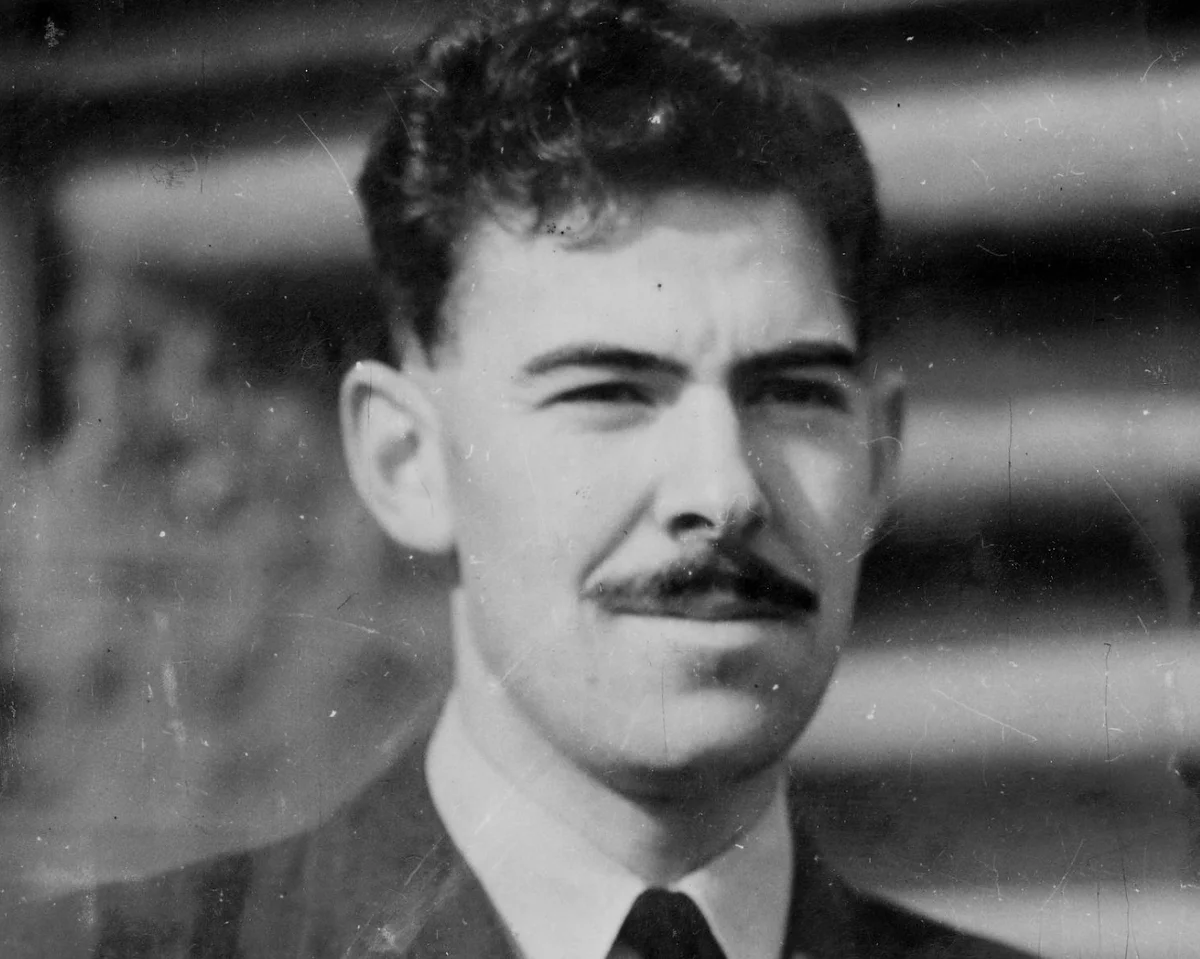
Seventy-two. That is how many separate wounds John Cruickshank had in him, two of them through his lungs, while he lined up a burning flying boat for a second run at a U-boat that had just shot his aircraft to pieces. Most men have one of those wounds and they are finished. He had seventy-two and he pressed the attack.
He was 24, a former bank clerk from Aberdeen, flying a Catalina flying boat out of the Shetland Islands with Coastal Command. The job was the long, freezing, mind-numbing patrol, fourteen hours over the grey Atlantic hunting the U-boats that were strangling Britain. On the 17th of July 1944, far out over empty water, they caught one on the surface, U-361, and Cruickshank took the big slow flying boat down to attack.
The first run failed. The depth charges would not release. Any sane man makes a note and turns for home. Cruickshank swung the aircraft around and came back for a second pass, low and straight, and this time the submarine's gunners were waiting. Flak ripped through the Catalina. It killed the navigator, wounded half the crew, and tore into Cruickshank again and again, those seventy-two wounds, two punching into his lungs, ten into his legs.
And he flew the attack home anyway. Bleeding everywhere, in agony, with the fuselage holed and on fire, he held the aircraft dead level, aimed, and released the depth charges himself. They straddled the U-boat perfectly. It broke apart and sank beneath him.
Then came the part that should have killed him. He collapsed from blood loss, and the wounded co-pilot, who had never landed a Catalina, took the controls for the long flight back. Cruickshank refused the morphine that would have knocked him out, because he knew the man flying needed him. Drifting in and out, he had himself carried back up to the cockpit again and again through the night to help nurse the shot-up aircraft down, and at dawn they got it onto the water safely. He had lost so much blood the doctors said he had no business being alive.
He lived. He took the Victoria Cross from the King, went quietly back to banking after the war, and rarely spoke of it. And he kept on living, and living, and living. John Cruickshank died in 2025 at the age of 105, the last man on earth wearing a Victoria Cross earned in the Second World War. Seventy-two wounds over the Atlantic, and he outlasted every other hero of that war by decades.
16 years old. First season as a lifeguard.
Waves repeatedly slamming him. Grown men getting knocked back and retreating.
And this kid locks onto that 10-year-old with a death grip and refuses to let go until the boy is safe.
No experience. No excuses. Just pure courage and resolve under pressure.
This is what it looks like when character shows up.
Respect, young man. 🇺🇸
I want to see videos of Sam Neill on my timeline for the rest of my life. Please don’t let this kindhearted soul fade away. He is who everyone should look up to, to be a better person & to help make the world a better place
We need more people like Sam
Very emotional moment from the interview with Zelenskyy. You should watch this.
JOURNALIST: Do you miss being an actor?
ZELENSKYY:?I miss being a good father.
JOURNALIST: When your children were little, what did you tell them the most? What was the thing that you told them the most when they were small?
ZELENSKYY: I love you.
JOURNALIST: And what do you tell them now that they're older?
ZELENSKYY: Oh, I miss you.
JOURNALIST: When was the last time you cried?
ZELENSKYY: I will try to do it after our interview. No, I mean this, between us. I'm a normal man and then there are a lot of different moments, between us, almost each day, a lot of losses on the battlefield and civilians, and there are absolutely crazy attacks on our people.
And I'm just, it's… I mean, It's very difficult really, when I give orders (medals). I said about it. It's always difficult for me when I give orders (medals) to the mothers and fathers, who lost their children. In such moments, really, I often cry.
JOURNALIST: Are you a hero?
ZELENSKYY: No.
JOURNALIST: So who is your hero?
ZELENSKYY:?My hero? My children, my army, our army, and Ukrainian people. So I'm a part… I'm also a Ukrainian, so I'm a part of our nation. But now our nation, I think, that our nation is absolutely heroic.
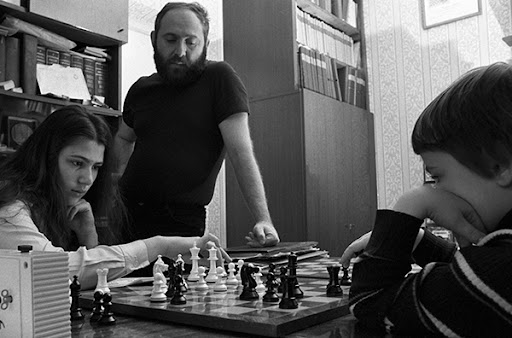
A Hungarian psychologist raised three daughters to prove that any child could become a chess grandmaster through early specialization. He succeeded. Two of them became grandmasters. One became the greatest female chess player who ever lived.
Then a sports scientist looked at the data and found something nobody wanted to hear.
His name is David Epstein. The book is called "Range."
The Polgar experiment is one of the most famous case studies in the history of deliberate practice. Laszlo Polgar wrote a book before his daughters were even born arguing that geniuses are made, not born. He homeschooled all three girls in chess from age four. By their teens, Susan, Sofia, and Judit were dominating tournaments against grown men. Judit became the youngest grandmaster in history at the time, breaking Bobby Fischer's record. The story became the gospel of early specialization. Pick a domain young, drill it hard, and you can manufacture excellence.
Epstein opens his book by telling that story honestly and then quietly demolishing the conclusion most people drew from it.
Chess works that way. Most things do not.
Here is the distinction that took him four years of research to articulate, and that almost nobody who quotes the 10,000 hour rule has ever read.
There are two kinds of environments in which humans develop expertise. Psychologists call them kind and wicked. A kind environment has clear rules, immediate feedback, and patterns that repeat reliably. Chess is the cleanest example. Every game ends with a winner and a loser. Every move is recorded. The board never changes shape. The pieces never invent new ways to move. A child who plays ten thousand games will see most of the patterns that exist in the game, and pattern recognition is exactly what chess mastery is built on.
A wicked environment is the opposite. Feedback is delayed or misleading. Rules shift. The patterns that worked yesterday may be exactly the wrong patterns to apply tomorrow. Most of the real world looks like this. Medicine is wicked. Investing is wicked. Building a company is wicked. Scientific research is wicked. Almost every job that involves a complex changing system with humans in it is wicked.
The Polgar sisters trained in the kindest environment any human can train in. Their success was real and the method was correct. The mistake was generalizing the method to fields where the underlying structure of the environment is completely different.
Epstein's research is what made the implication impossible to ignore.
He looked at the careers of elite athletes outside of chess and golf and found that the pattern was almost the inverse of what people assumed. The athletes who reached the very top of their sports were overwhelmingly people who had played multiple sports as children, specialized late, and often switched disciplines well into their teens. Roger Federer played squash, badminton, basketball, handball, tennis, table tennis, and soccer before tennis became his focus. The kids who specialized in tennis at age six and trained year-round for a decade mostly burned out, got injured, or topped out at lower levels of the sport.
The same pattern showed up everywhere he looked outside of kind environments. Inventors with the most patents had worked in multiple unrelated fields before their breakthrough work. Comic book creators with the longest careers had drawn for the most different genres before settling. Scientists who won Nobel Prizes were dramatically more likely than their peers to be serious amateur musicians, painters, sculptors, or writers.
The skill that mattered in wicked environments was not depth in one pattern. It was the ability to recognize when a pattern from one domain applied unexpectedly in another. That kind of thinking cannot be built by drilling a single subject. It can only be built by accumulating mental models from many subjects and learning to move between them.
The deeper finding is the one that should change how you think about your own career.
Specialists in wicked environments often get worse with experience, not better. Epstein cites studies of doctors, financial analysts, intelligence officers, and forecasters showing that years of experience in a narrow domain frequently produce more confident judgments without producing more accurate ones. The expert builds elaborate mental models that feel comprehensive and turn out to be increasingly disconnected from the actual structure of the problem. They stop noticing what does not fit their framework. They mistake fluency for understanding.
Generalists do better in wicked domains for a reason that sounds almost mystical until you understand the mechanism. They have less invested in any single mental model, so they abandon broken models faster. They are used to being a beginner, so they are not threatened by the discomfort of not knowing. They have seen enough different domains that they can usually find an analogy from one field that unlocks a problem in another. The technical name for this is analogical thinking, and the research on it is one of the most underrated bodies of work in cognitive science.
The single most useful sentence in the entire book is the one Epstein puts almost as a throwaway.
Match quality matters more than head start.
A person who tries six different fields in their twenties and finds the one that genuinely fits them will outperform a person who picked one field at fourteen and stuck to it on willpower alone. The lost years were not lost. They were the search process that produced the match. Every field they walked away from taught them something they later imported into the field they finally chose.
The reason this is so hard to accept is cultural, not empirical. We tell children to pick a path early. We reward the prodigy who knew at six. We treat the late bloomer as someone who failed to launch on time, when the data suggests they were running an entirely different and often more effective optimization process underneath.
The Polgar sisters were not wrong. The conclusion the world drew from them was.
If your environment is genuinely kind, specialize early and drill hard. If it is wicked, and almost every interesting human problem is, then the people who win are the ones who refused to specialize until they had seen enough to know what was actually worth specializing in.
You are not behind. You were running the right experiment all along.
The genius of Withnail and I is that it’s the greatest comedy ever made, yet there’s not only no real jokes, a lot of it isn’t even funny by nature. I’ve been thinking about this piece of dialogue for about an hour and laughing my head off:
“Indeed I often wonder where Norman is now. Probably wintering with his mother in Guildford. A cat, rain, Vim under the sink, and both bars on. But old now, old, there is no true beauty without decay.”
To read that on the page, it’s not even funny. But within the film, it becomes hysterical. That’s down to the brilliance of Bruce Robinson’s script. It’s razor sharp, not a word wasted. His direction is fantastic too. Between Marwood’s voiceover and the way we enter the scene just as these words roll out of Monty’s never-ending diatribe, it feels like we too have been roaming the fields with him for hours. Then there’s the acting, the way these actors bring flesh and blood to the characters until they feel completely lived in. We never get the backstory, but you instantly know there were all kinds of salacious antics behind Monty and Norman’s estrangement.
That’s the magic of the film. It creates an entire world that feels like it existed long before we arrived and carries on after we leave. Much like Monty ponders where Norman is, fans can’t help wonder the same about the characters of this movie, so real they seem.
NEW: Astronaut Reid Wiseman shares a video of ‘Earthset’ that was taken with his iPhone
“This is uncropped, uncut with 8x zoom which is quite comparable to the view of the human eye…” Wiseman said.
This has to be the greatest iPhone video of all time.
Moya Brennan, the singer of this haunting tune has passed on.
Talents like hers live on in the music and culture of a Nation, a music and culture she's now forever embedded in.
Ar dheis Dé go raibh a hanam