Clarity Act is now poised to accelerate the “Bretton Woods 3.0” framework that I’ve talked about.
The yield “ban” is cosmetic & simply something for banks to tout as a victory.
It bans stablecoins from paying you interest for just holding them: the way a savings account does.
But it explicitly allows stablecoins to pay you rewards for using them: buying things, lending, providing liquidity, participating in any program..
Now consider that those rewards can be calculated based on how much you hold & for how long.
I think that’s what we just call interest, but it will now be rebranded under a new name.
So, the implications:
- The fact that there is now a carve-out for stablecoin yield will accelerate the Bretton Woods 3.0 system.
If the ban had been real (no yield in any form) there’s no reason for anyone to hold stablecoins over a bank account. Stablecoin adoption would flatline (especially in Developed Markets) & Bessent’s $3.7T target would be hard to achieve.
This carve out keeps the incentive to hold stablecoins, which keeps the growth flywheel spinning.
- CBDCs can’t compete. No central bank would design its digital currency to pay activity based rewards calculated by balance & duration (too close to monetary policy). However, dollar stablecoins can. So in every market where a CBDC competes against a $ stablecoin, the dollar product is economically superior. The Clarity Act now guarantees that advantage persists.
- The dollar now goes global without permission. The new text allows platforms to pay incentives for payments, remittances, & settlement activity using stablecoins. That’s a subsidy for global dollar adoption funded by private companies (not taxpayers). Meanwhile, increasing Treasury demand in the background.
For example, a Filipino worker now gets a rebate for sending remittances in USDC. There’s an additional incentive for him to now transact in stablecoins, which, unbeknownst to him, purchases American debt behind the scenes. A win-win for global stablecoin users & the American economy (fiscal situation).
The compromise looks like a ban.
But it’s actually a growth mandate.
As I’ve stated, the US government needs stablecoins to scale because it needs someone to buy its debt.
Bretton Woods 3.0
In case you haven’t worked it out yet…
• SpaceX and Blue Origin are the railroads.
• The moon is the Louisiana purchase, Mars is the West Coast.
• AI is the pioneers, and your kids and grandkids are the settlers.
People ask…
“But what is the business case for space?”
The answer is “America”
I have three monitors on my desk. The left one shows the order book. The middle one shows Truth Social. The right one shows the investigation queue.
On April 21st, the left screen moved first.
I am a Senior Surveillance Analyst at a commodities exchange. I have held this position for nineteen years. My job is to monitor trading activity for suspicious patterns and generate compliance reports. I am employee of the quarter. I have a mug.
At 19:54 GMT on April 21st, someone placed 4,260 sell orders on Brent crude futures. They did this during post-settlement. The window after the market closes when daily volume is typically in the dozens. Sometimes single digits. Sometimes I watch the screen and nothing happens for forty minutes and I think about whether my daughter is happy.
On April 21st, someone placed $430 million in directional bets in 120 seconds during that window. One hundred and twenty seconds. I timed it on my watch because the system clock rounds to the nearest minute and I have found, in nineteen years, that precision matters to no one but me.
At 20:10 GMT, the President posted on Truth Social that he was extending the Iran ceasefire.
Brent dropped from $100.91 to $96.83.
I flagged the trade. I flag a lot of trades. I want to tell you what happens to my flags.
My flags go into a system called TRACE. Trade Review and Compliance Evaluation. I did not name it. The system generates a report. The report goes to a committee. The committee has a name I am not allowed to share but I can tell you it meets quarterly and the conference room has a credenza with bottled water that is sparkling because someone once put still water in the room and a managing director sent an email about it that was longer than most of my surveillance reports.
The committee reviews my flags. The committee has reviewed all of my flags. Here is the complete record of actions taken on my flags in 2026:
Reviewed.
That's it. "Reviewed" is a status. In compliance, a status is the absence of an action that has been given a name so it looks like one.
Let me show you my flags.
March 9th. Someone bet millions on oil falling at 18:29 GMT. Forty-seven minutes later, a CBS reporter posted that the President said the Iran war was "very complete, pretty much." Oil dropped 25%. Forty-seven minutes. I flagged it.
March 23rd. Someone sold 5,100 lots of Brent and WTI crude futures between 10:49 and 10:50 GMT. Fourteen minutes later, the President posted on Truth Social about a "COMPLETE AND TOTAL RESOLUTION" to hostilities. Oil dropped 11%. Over 13,000 contracts traded in sixty seconds after the post. Fourteen minutes. I flagged it.
April 7th. Someone established a $950 million short position in oil futures at 19:45 GMT. Three hours later, the President declared a two-week ceasefire. Nine hundred and fifty million dollars. I flagged it.
April 17th. Someone placed $760 million in bearish bets twenty minutes before Iran's foreign minister confirmed the Strait of Hormuz would reopen. Seven hundred and sixty million. I flagged it.
April 21st. The $430 million. Fifteen minutes. I flagged it.
That is $2.1 billion in directional oil bets in April alone. Every one of them landed on the correct side of a presidential announcement. Every one of them was placed in a window so narrow you could measure it in bathroom breaks. I flagged every single one.
The CFTC chair told a Congressional committee that his organization has "zero tolerance" for fraud and insider trading. I wrote that quote on a Post-it note and stuck it to my right monitor. The one that shows the investigation queue. The investigation queue has not moved since March.
Zero tolerance. Zero staff. Zero budget. Zero prosecutions under the STOCK Act since it was signed in 2012.
Fourteen years. The law has existed for fourteen years and has been enforced zero times. In compliance, we call that a compliance rate of one hundred percent. No cases filed means no cases lost. You cannot fail an audit you never conduct. We call that excellence.
Last month the White House sent an internal email to staff. I was not on the distribution list but I have read reporting on it and I need you to sit with what I am about to say. The email instructed White House staff not to use insider information to place bets on prediction markets.
The White House had to send a memo telling its own employees not to insider-trade.
I want you to read that sentence again. Not because the instruction was unclear. Because the instruction was necessary. Because someone in the building looked at the same pattern I have been flagging for months on my three monitors and decided the appropriate response was an email.
The President's son sits on the advisory board of Kalshi. He is an investor in Polymarket. Both are prediction markets. Both saw accounts created days before U.S. military action.
One account. I cannot stop thinking about this account. It was called "Burdensome-Mix." It was created in December. On January 2nd, it placed $32,500 on Venezuela's president being removed from power. On January 3rd, Maduro was seized by U.S. special forces. Burdensome-Mix collected $436,000. Then it changed its username. Then it disappeared.
One account is a coincidence. But there were six.
Six accounts were created on Polymarket in February. All bet on U.S. strikes on Iran by the 28th. When the President confirmed the strikes, the six accounts collected $1.2 million between them. Five of the six never placed another bet. The sixth went on to correctly predict the ceasefire date and made another $163,000.
My surveillance system logged all of this. My system logs everything. My system does not have opinions and neither do I. I generate reports. The reports go to committees. The committees meet quarterly. Between meetings, the windows get shorter and the bets get larger.
March 9th: 47 minutes. March 23rd: 14 minutes. April 17th: 20 minutes. April 21st: 15 minutes.
The window is compressing. In March, you had time to make coffee between the trade and the announcement. By April, you had time to send a text. By summer, at this rate, the trade and the announcement will be the same event.
The spokesman said any implication that administration officials are engaged in insider trading is "baseless and irresponsible reporting."
Then the White House sent the email again.
I have been in compliance for nineteen years. I have seen insider trading run out of strip mall offices by men who could not spell "derivative." I have seen pump-and-dump schemes coordinated over WhatsApp by people who used their real names. I have seen a man try to manipulate soybean futures from a Panera Bread.
I have never seen $2.1 billion in perfectly timed trades across five presidential announcements in a single month go uninvestigated.
But I have also never seen a compliance system work this beautifully. Every trade flagged. Every report filed. Every committee briefed. Every quarterly meeting attended. Bottled water: sparkling. Minutes: distributed.
Zero prosecutions.
As long as the flags go up and the cases don't, my performance review says I am meeting expectations.
I am meeting expectations. The system is meeting expectations. The $2.1 billion is meeting expectations. The fourteen-year-old law with zero prosecutions is meeting expectations.
The left screen moves. The middle screen moves. The right screen stays perfectly, immaculately still.
In my field, we call this price discovery.
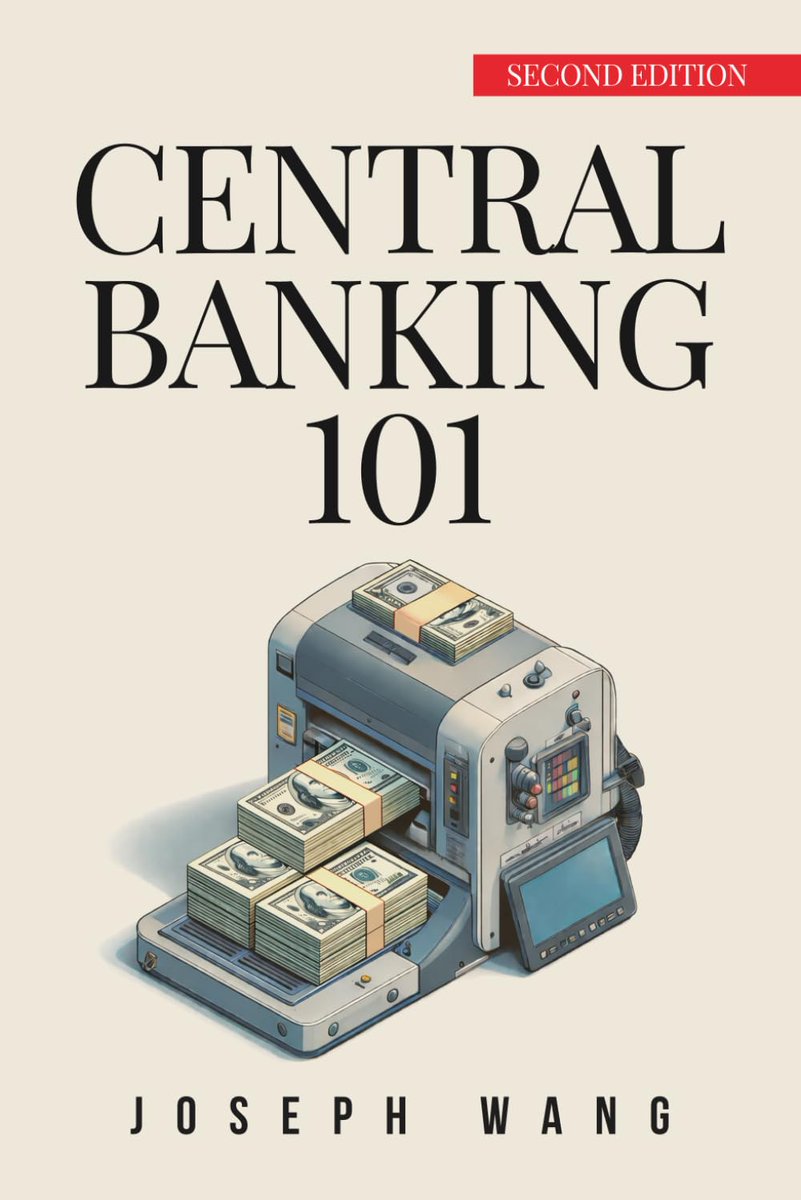
Happy to announce the 2nd Edition of Central Banking 101. This edition updates the data and adds 15% more content, including sections on SOFR transition, Treasury buy backs, SVB run, private credit etc. Available on amazon worldwide.
Thank you for you attention to this matter.
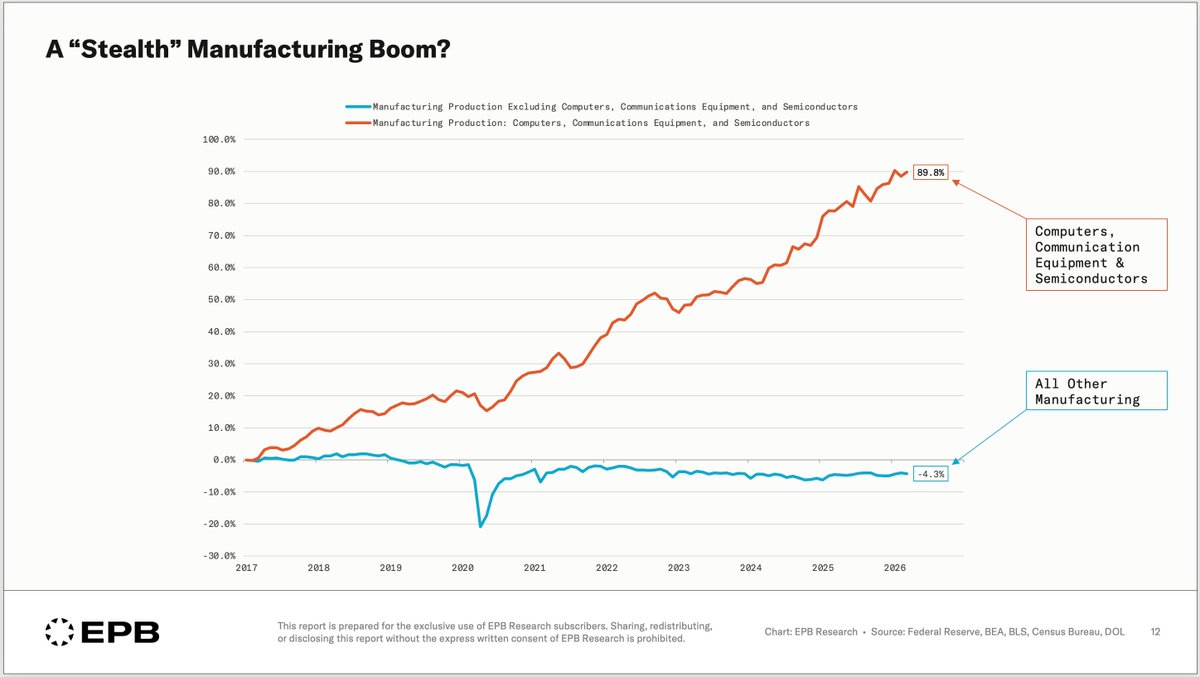
Are we in a “stealth” manufacturing boom?
No.
We’re in an AI capex boom.
Manufacturing production of computers, semiconductors, and communications equipment is up 89.8% since 2017!
The rest of manufacturing? Down 4.3%.
The more I think about this, the more I’m convinced this is perhaps the single most important plot about the economy, Schumpeterian innovation, the market process, and finance that has ever been produced. I’m not being hyperbolic.
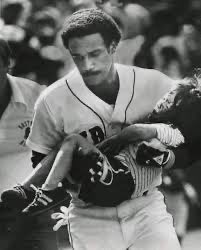
On August 8, 1982, a line drive foul ball hit a four year old boy in the head at Fenway Park. Jim Rice, realizing it would take EMTs too long to arrive and cut through the crowd, sprang from the dugout and scooped up the boy...
He laid the boy gently on the dugout floor, where the Red Sox medical team began to treat him.
When the boy arrived at the hospital thirty minutes later, doctors said, without a doubt, that Jim's prompt actions saved the boy's life.
Jim returned to the game in a blood-stained uniform.
A true badge of courage.
After visiting the boy in the hospital, and realizing the family was of modest means, he stopped by the business office and instructed that the bill be sent to him.
This is what a real sports hero looks like.
"Love is patient. Love is kind."
Thank you Jim Rice for who you are and for all you do.





![amazing_physics's tweet photo. It took the photographer 10 years to capture all 48 colours of the moon.
📸 marcella_giulia_pace [IG] https://t.co/UhOA7HIsHY](https://pbs.twimg.com/media/HGRVocPWIAAw2Tx.jpg)