@mmlopezu I agree! It adjusted my thinking about the impact those commercial pollinators have on native species. And we know these ladies can get a bad rap.
As someone who studied honey bees during his Ph.D., for which I felt a surprising amount of animosity for focusing on the "wrong bee", this paper makes me feel a little better. Cool, surprising results - the best kind. Great work!
New paper investigating the impact of migratory #beekeeping on native bees. We found that honey bees reduced native bee abundance but when moved the diversity of native bees increased compared to areas where honey bees were never present. @EntsocAmerica
https://t.co/279F5QoPdT
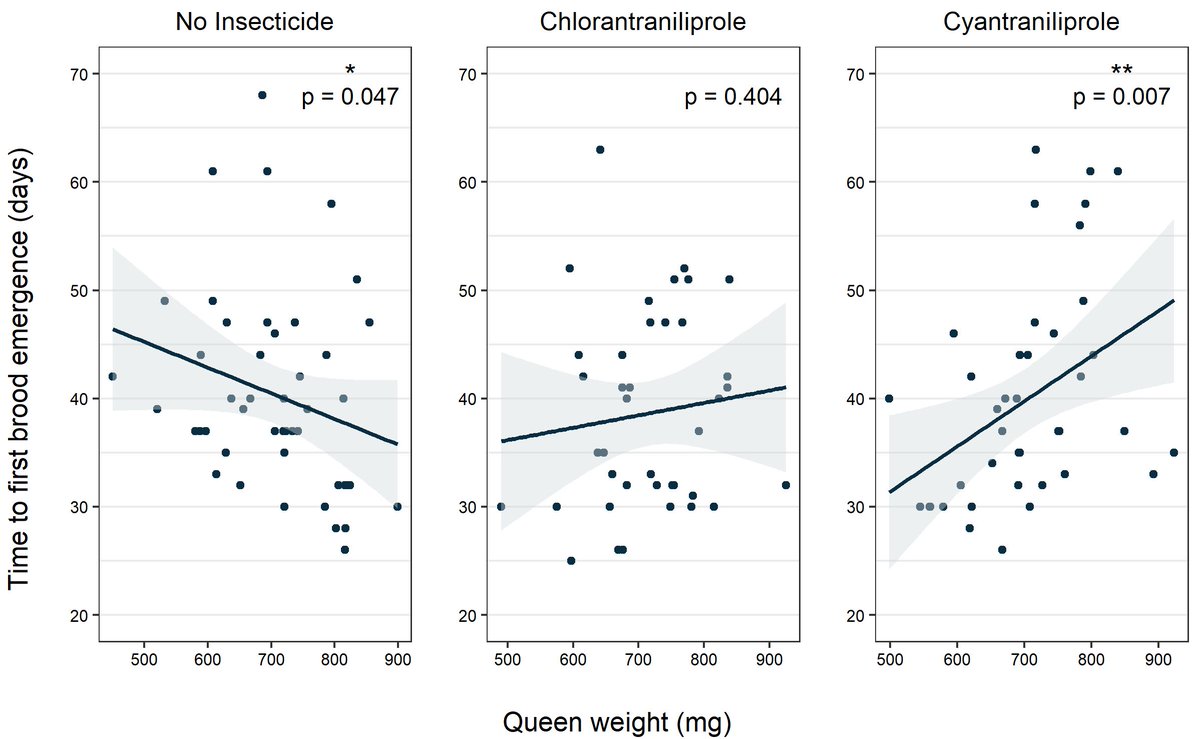
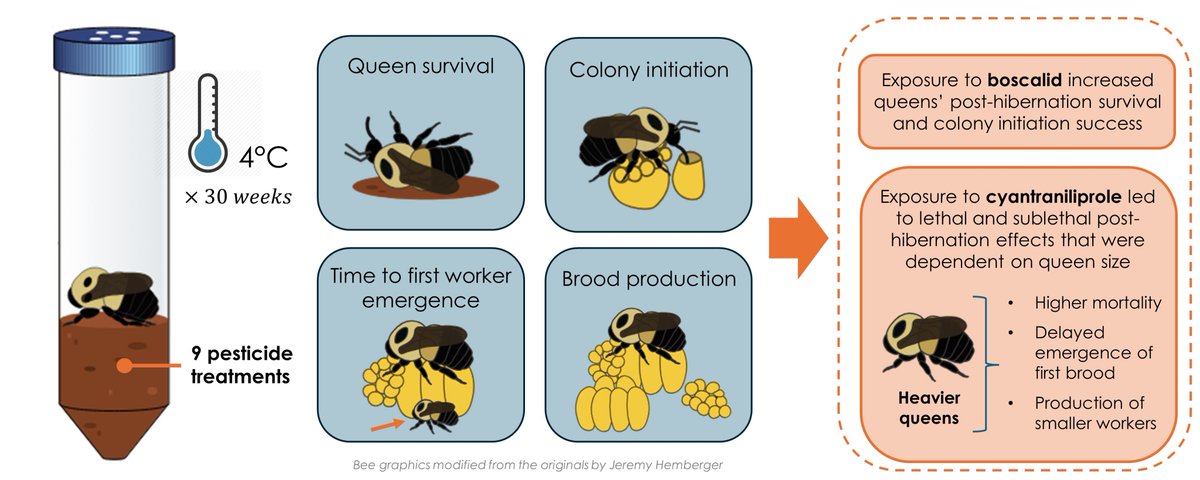
(4/5) Exposure to cyantraniliprole led to lethal and sublethal post-hibernation effects that were dependent on queen size, with larger queens showing higher mortality rates, delayed emergence of their first brood, and producing smaller workers.
Bumble bees 🐝are assumed to be monogamous. What are the consequences of violations of this assumption for colony abundance estimations? In this study, we explore this question in Bombus impatiens. Led by @sydthebirdy https://t.co/X4D828ZGlU
How does exposure to commonly encountered #pesticide residues in soil during hibernation affect #bumblebee queens? Find out in our new paper: https://t.co/sMvDjyoeZ6 with @NigelERaine ⚠️🐝👑
🧵1/5
1/3 to 2/3 of crop systems studied worldwide would produce higher yield if they had more pollinators (ie, suffer from pollinator limitation). Just published by lab postdoc Katie Turo in Nature Ecology & Evolution - read it here https://t.co/sfPUrGqT18
In #reptiles, optimal egg incubation temps are crucial for development. Here Cordero et al. examined form, locomotor performance, and survival in four co-distributed North American #turtles 🐢
https://t.co/JmphxS7KV9
It's great to see another article published from my postdoc with @MSWojc at @UMK_Torun, in collaboration with Zenon Czenze. We found that vespertilionid bats in Poland adjust evaporative cooling strategies between seasons, which may enhance water conservation during summer.
@Jenna_M_Walters What's next on the agenda, Dr. Walters?
Every now and then, I remember the 'thermal effects on pollen' data you showed at ESA, and my mind is re-blown.
Check out this new paper by #AndrewOrkney and #BrandonPHedrick, just out on @NatureComms ! 🐦
They show that the skeletal wing elements evolve more independently from one another as birds get smaller:
https://t.co/UsZg70Dq2a
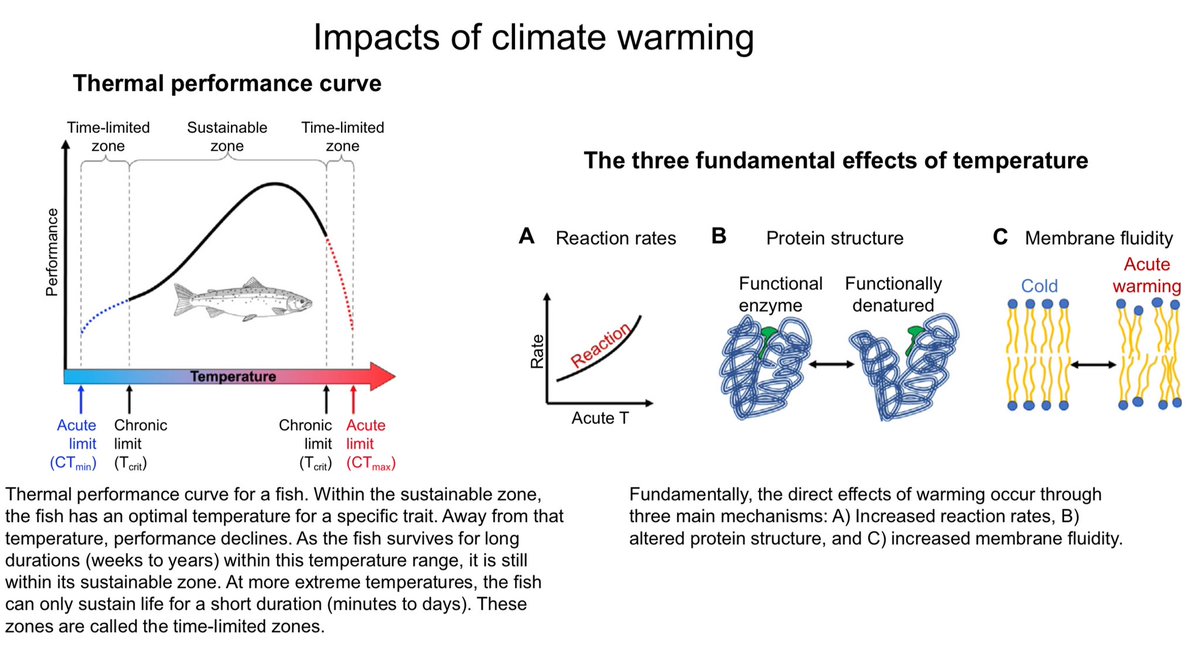
Our new encyclopedia chapter Effects of Climate Warming is out!
It’s a broad review covering acute and chronic effects of warming on fish physiology. I’ll break it down below.
@rasmusern@LeeuwisRobin@Timothy_D_Clark
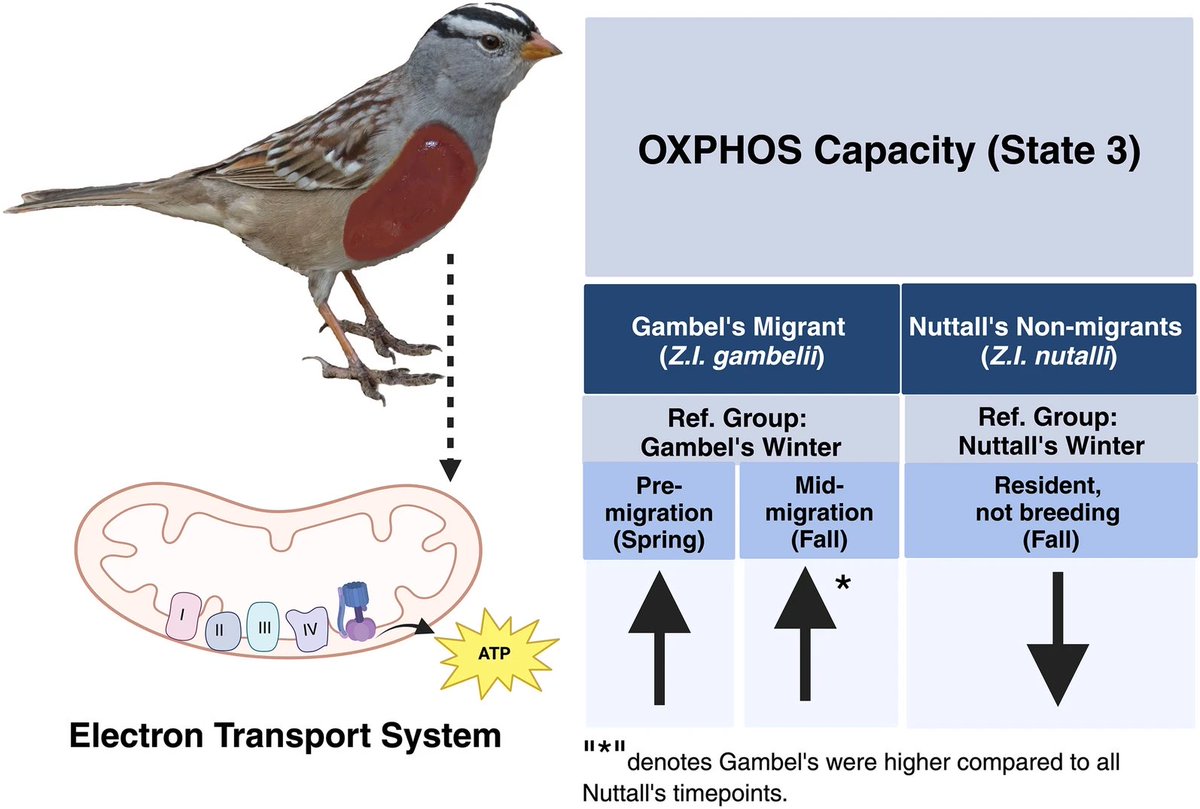
Chapter 1 of my dissertation is now live!
This was a tremendous amount of work and a team effort. So excited to share with you all! Figure from article and made using Biorender. https://t.co/5jAOQi1t71
Remember kids, if someone says your paper has too many details and that you should remove them, there's a poor grad student trying to replicate results from a publication with barely any information
Important new study on the dependence of crops on #pollinators such as #bees by @CatarinaSiopa et al. Take home: previous studies have under-estimated the role of pollinators for agricultural production - they are even more vital than we realised!
https://t.co/8F725n6UN6?