🚨 Major Quantum Breakthrough Could Boost IonQ's Long-Term Upside 🚨
New research out of Seoul National University makes one thing clear: trapped-ion quantum computing is pulling away from the pack. This could be huge for IonQ.
1/ ⚡ Quantum error correction (QEC) is the holy grail of Fault-Tolerant Quantum Computing (FTQC). This study introduces an optimized chip architecture that massively reduces error rates and improves scalability—two things holding quantum computing back. IonQ is already ahead here. Now, the gap widens.
2/ 🎯 The big number: Two-qubit gate error rates dropping to 10⁻⁸. That's orders of magnitude better than what we see in today's NISQ devices. This means more reliable circuits. Deeper algorithms. More commercial use cases.
3/ 🔑 Trapped ions are already ahead in fidelity and coherence. And now, with optimized chip layouts, they're solving the QEC challenge faster. This strengthens IonQ's long-term dominance.
4/ 🛠️ The study shows that hardware-aware scheduling and optimized qubit connectivity can reduce execution time while increasing reliability. IonQ's work in photonic interconnects and modular scaling fits perfectly with this research.
5/ FTQC = $100 billion market. And right now IonQ is the best positioned player to capture it. The shift from NISQ to scalable, fault-tolerant quantum computing is happening faster than expected. Investors need to pay attention.
6/ Key takeaways for investors:
🔹 Logical qubits are coming—this research accelerates that timeline.
🔹 Hardware-aware scheduling and transpilation will boost system efficiency.
🔹 IonQ's technology and roadmap are aligning with the future of FTQC.
7/ What to watch next:
✅ IonQ's next-gen hardware (beyond Aria & Forte).
✅ More progress on logical qubits and QEC.
✅ Signs that IonQ is implementing hardware-aware scheduling & error correction.
💡Bottom line: This research strengthens IonQ's long-term investment case. If they execute on this, the stock has significant upside. Wouldn’t be surprised if this becomes a major catalyst for investor sentiment.
🔗 https://t.co/eKZsZniacU
$FRSX Exponential Growth Anticipated in the Automotive V2X Market:
•The market will grow from $1.59 billion in 2024 to $2.28 billion in 2025 at a compound annual growth rate (CAGR) of 43.3%
•Will hit $10.76 billion in 2029 at a CAGR of 47.5% https://t.co/iVJq2QuHui
This slide represents IonQ's North Star. It's a reminder of how much work and innovation lies behind their progress. Each pillar—Performance, Scale, and Enterprise-Grade capabilities—reflects the sheer magnitude of what they're building.
Let's consider just how much effort goes into this. Gate fidelity, fast operations, and error correction are not things that happen overnight. They are the result of relentless problem-solving and innovation.
Now think about scale. IonQ is scaling its systems and building them for the future—designing multi-core QPUs, integrating modular photonic networks, and minimizing overhead to make quantum computing seamless and scalable. The team is essentially redefining what's possible in computing.
And then there's enterprise-grade readiness. Ensuring durability, reliability, and manufacturability while enabling seamless interoperability across platforms is a monumental challenge. Yet every step they take brings us closer to a quantum-powered world where solutions are faster, more energy-efficient, and more cost-effective.
Quantum computing isn't supposed to be easy. It's a technology that tests the boundaries of human ingenuity. So keep this slide in mind as a reminder: progress at this level takes perseverance and patience. But the future IonQ is building will absolutely be worth it.
I feel it's important to react to some of the most important slides from last week’s technical webinar. Starting with IonQ's Hybrid Approach.
IonQ isn't treating quantum computing as a distant, niche technology. They're making it practical today by integrating quantum capabilities into the classical systems businesses already rely on. This hybrid approach transforms quantum from a theoretical concept into a game-changing tool that enhances current workflows. It means IonQ is positioning itself as a cornerstone of tomorrow’s IT infrastructure, delivering value now, not just in the future.
By combining quantum and classical computing, IonQ is stepping into enormous markets, including data centers, cloud providers, and enterprise IT systems. This strategy is bigger than solving isolated scientific problems; it’s about showing how quantum can create real value across industries today. Think scalability, think accessibility and think growth.
Unlike companies that focus solely on long-term breakthroughs, IonQ is playing the smart game by integrating quantum into existing workflows to deliver immediate benefits. This strategy reduces risk, accelerates adoption, and creates earlier revenue streams. This approach means IonQ isn't just dreaming big; they're building the foundation for sustained momentum and profitability.
IonQ is changing the narrative from "someday" to "right now." They’re leading the charge to make quantum computing commercially relevant today, enabling enterprises to level up and driving demand for hybrid systems that we'll see reflected in growth and returns.
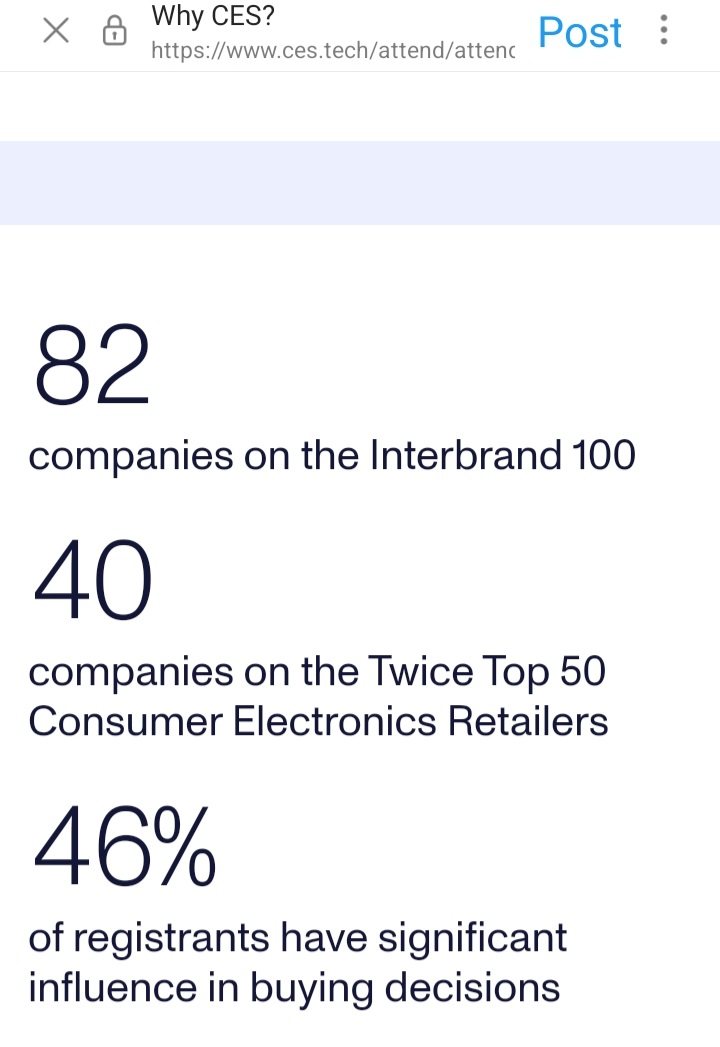
We can’t wait to connect with you at #CES2025. We’ll be there as an official conference partner, presenting programming on Quantum with some very special partners. Join us, Jan. 7-10: https://t.co/gLbG63uF4t
Here’s how you know @MartinShkreli doesn’t follow $IONQ close enough to draw the right conclusion.
“But $IONQ uses ion trap technology. This requires lasers to keep ions in a chain. But adding exponentially more ions will be difficult for spacing and complexity reasons. The current vacuum chambers were not designed with thousands of qubits in mind, so, IonQ may have to completely rearchitect its approach. Ion traps are also extremely sensitive: it is hard to imagine scaling this from 100 to 1 million will be easy.”
IONQ’s plan to scale is through a modular architecture. Connect QPU’s through photonic interconnect. Don’t need to add more ions to the chain, just need more QPU’s. All to all connectivity.
[Investing | Quantum | $IONQ]
Algorithmic Qubits (AQ): Quantum benchmarking what matters most, real-world performance! 👽
#AQ is an application based benchmark encompassing performance of a system across 6 quantum algorithm classes relevant for near term quantum applications (I'll write about applications later, stay tuned!).
In simple words, AQ is a summary metric that consider the number of 'useful' qubits in a quantum system.
In a concise yet comprehensive definition, quantum circuits running the algorithms are evaluated based on their success probability, the number of qubits (width), and the number of two-qubits entangling gates (depth), with success determined by comparing the actual quantum computer output to an ideal output, considering statistical errors. The benchmark involves plotting these circuit characteristics and defining AQ as the maximum value where all circuits up to a certain size succeed, with detailed reporting on circuit execution and optimization techniques used (see image).
To provide a less abstract idea:
֎ AQ 4: In 2020, the ground-state energy of the water molecule (H2O) was successfully simulated on $IONQ Harmony running at AQ 4. https://t.co/b5gNrJSBN7
֎ AQ 20: In 2022, Lithium oxide (energy storage development) was simulated on $IONQ Aria running at AQ 20.
Unlike other benchmarks focusing for instance simply on raw qubit count, focusing on AQ is literally trying to demonstrate and quantify how much actual value your system provides by:
- Being easily and broadly understood
- Measuring real world utility
- Testing critical aspects of performance
- Being easily verifiable
But how to measure a system's AQ count? How does AQ represent the changing needs of customers?
First, you need to define and run the various algorithms classes. 'For a qubit to contribute to an algorithmic qubit it must be able to run enough gates to successful return useful results across the 6 algorithms in the AQ definition. This is a high bar to pass and is the reason many system’s AQ is significantly lower than its physical qubit count.'
Second, you aggregate the results to represent the success probability of the quantum circuits running the algorithms on a 2D plot (circuit's depth and width as axes).
Finally, you define and add new high value algorithms to the AQ definition to refine your benchmark. Even if it means the new benchmarks differ slightly from previous ones, these updates aim to keep AQ values relevant by reflecting changes in customer requirements.
Here is the most interesting part: because AQ measures a system’s useful qubits, an increase of 1 AQ represents a doubling of that system’s computational space.
Guess what? $IONQ is scaling these Algorithmic Qubits, with Tempo AQ64 planned for 2025.
Quantinuum prefers using Quantum Volume to benchmark though, we'll see that later.
Heading to #AIChE NEXT WEEK? Connect with a Rescale expert onsite:
https://t.co/FxWd1s4GRt
Rescale works with leading #lifesciences companies to build #digitalthreads that transform pharmaceutical development by connecting teams and automating complex scientific workflows.
$IONQ These algorithms will account for the unique hardware of various quantum computers, optimising them for specific tasks in fields like chemistry, machine learning, and materials physics. This tailored approach is expected to speed up problem-solving on quantum platforms
$IONQ Virginia Tech’s algorithm set to revolutionise quantum computers
The research team, consisting of experts from Virginia Tech, North Carolina State University, and the University of California, Santa Barbara, is developing adaptive algorithms.
https://t.co/b5SVFVUWaj
At next week’s @fastcompanylive’s Innovation Festival, IonQ CMO Margaret Arakawa will join a Tuesday panel to discuss why tech giants, researchers, and investors see quantum as the next big leap in computing. Buy tix here to attend: https://t.co/S298fClEtT
#FCIF10#FCFestival
IonQ has surpassed 99.9% two-qubit gate fidelity on its next-generation barium development platform. The achievement moves IonQ one step closer to the launch of its next-gen commercial system – IonQ Tempo. Read more on the news here: https://t.co/xKWrcZQS70
Many thanks, Congressman @RepGlennIvey, for visiting @IonQ_Inc and the @Universitymary's #QLab this week. We were energized by your inspiring vision to ensure the U.S. continues to be a Quantum leader, with Maryland as a powerhouse in this transformative field.
The University of Maryland awarded IONQ a $5.7 million contract for initial work on the project, with a potential second phase worth up to $12 million. Multiple vendors competed for the award during the open solicitation announced in December.
$FRSX SoftBank’s Chief Pitches a New Path for Self-Driving Cars
Masayoshi Son, the billionaire founder of SoftBank, is trying to rally automakers around the world to join forces on autonomous-driving technologies.
https://t.co/YnTqXnEcJy
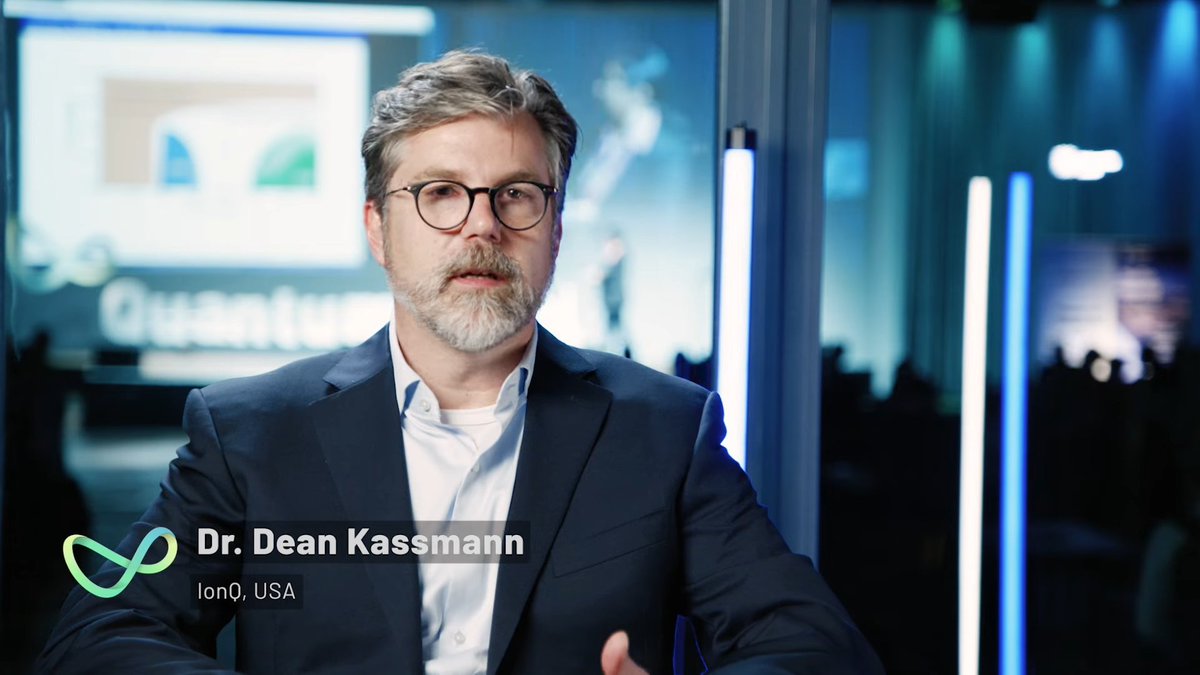
"I am here to discuss the exciting partnership between $IONQ and @QuantumBasel. This collaborative effort presents a unique opportunity to achieve commercial success together." @deankassmann@NiccoloDeMasi https://t.co/WujLqG3oI8
$PPTA In the long-term [Russian] Polyus will probably end up focusing more on its gold concentrates than its gold-antimony concentrates,is top-five gold mines in the world.
Nothing new in Australia for another two years and I don’t think there will be any new projects in China
$PPTA So supplies of antimony, which can be a byproduct in gold-antimony mines, could become tighter if gold prices stay high for long time https://t.co/kt4JkOBNJm




![ValienVision's tweet photo. [Investing | Quantum | $IONQ]
Algorithmic Qubits (AQ): Quantum benchmarking what matters most, real-world performance! 👽
#AQ is an application based benchmark encompassing performance of a system across 6 quantum algorithm classes relevant for near term quantum applications (I'll write about applications later, stay tuned!).
In simple words, AQ is a summary metric that consider the number of 'useful' qubits in a quantum system.
In a concise yet comprehensive definition, quantum circuits running the algorithms are evaluated based on their success probability, the number of qubits (width), and the number of two-qubits entangling gates (depth), with success determined by comparing the actual quantum computer output to an ideal output, considering statistical errors. The benchmark involves plotting these circuit characteristics and defining AQ as the maximum value where all circuits up to a certain size succeed, with detailed reporting on circuit execution and optimization techniques used (see image).
To provide a less abstract idea:
֎ AQ 4: In 2020, the ground-state energy of the water molecule (H2O) was successfully simulated on $IONQ Harmony running at AQ 4. https://t.co/b5gNrJSBN7
֎ AQ 20: In 2022, Lithium oxide (energy storage development) was simulated on $IONQ Aria running at AQ 20.
Unlike other benchmarks focusing for instance simply on raw qubit count, focusing on AQ is literally trying to demonstrate and quantify how much actual value your system provides by:
- Being easily and broadly understood
- Measuring real world utility
- Testing critical aspects of performance
- Being easily verifiable
But how to measure a system's AQ count? How does AQ represent the changing needs of customers?
First, you need to define and run the various algorithms classes. 'For a qubit to contribute to an algorithmic qubit it must be able to run enough gates to successful return useful results across the 6 algorithms in the AQ definition. This is a high bar to pass and is the reason many system’s AQ is significantly lower than its physical qubit count.'
Second, you aggregate the results to represent the success probability of the quantum circuits running the algorithms on a 2D plot (circuit's depth and width as axes).
Finally, you define and add new high value algorithms to the AQ definition to refine your benchmark. Even if it means the new benchmarks differ slightly from previous ones, these updates aim to keep AQ values relevant by reflecting changes in customer requirements.
Here is the most interesting part: because AQ measures a system’s useful qubits, an increase of 1 AQ represents a doubling of that system’s computational space.
Guess what? $IONQ is scaling these Algorithmic Qubits, with Tempo AQ64 planned for 2025.
Quantinuum prefers using Quantum Volume to benchmark though, we'll see that later.](https://pbs.twimg.com/media/GabXOOHXQAAQPu4.jpg)