Microsoft just cancelled most of its Claude Code licenses. Uber burned its entire 2026 AI coding budget in four months.
Fortune got the reason out of an Nvidia exec: "the cost of compute is far beyond the costs of the employees." Companies are now paying more to run AI than to employ the people using it.
Goldman thinks this gets worse fast. Their projection is 24x token growth by 2030, driven by agents that burn orders of magnitude more compute per task than a single prompt ever did. All on the inference side, not training.
Every one of those tokens has to run somewhere, and right now that somewhere is a handful of hyperscalers charging whatever scarcity allows.
IDLE exists because it doesn't have to be. Open-weight models on hardware that already exists, routed by capability, settled per request in USDC on Solana. No enterprise contract, no per-seat markup, no bill that outgrows your headcount.
The cost of intelligence is falling. The cost of running it is exploding. IDLE is the gap between the two.
https://t.co/86ioW8ioaA
1/3 - Last week we distributed 100M $ALGOPUB to 453 of our most loyal holders.
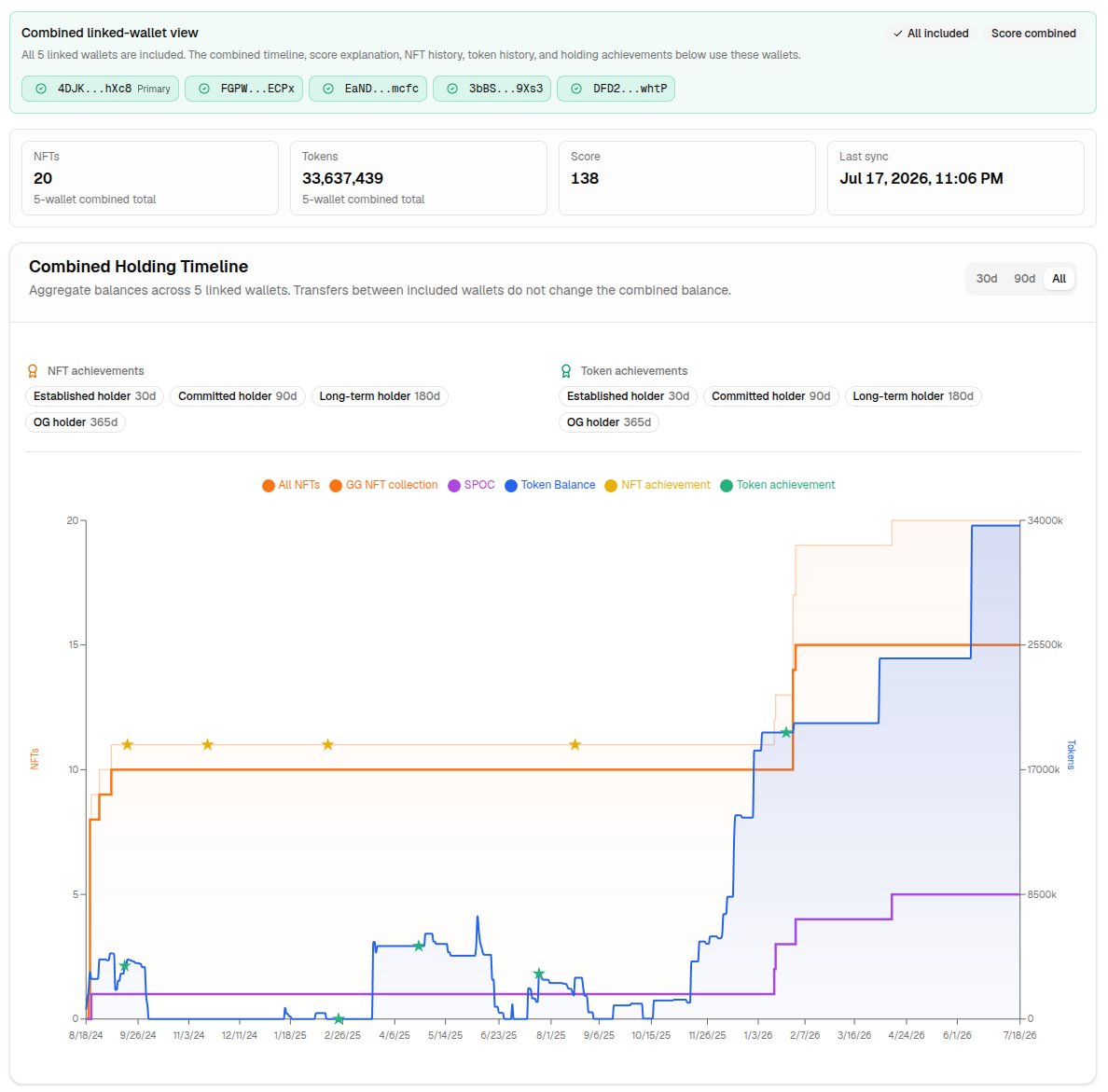
A complete history is created for every holder and continuously updates. When they purchase, swap, or transfer to other wallets.
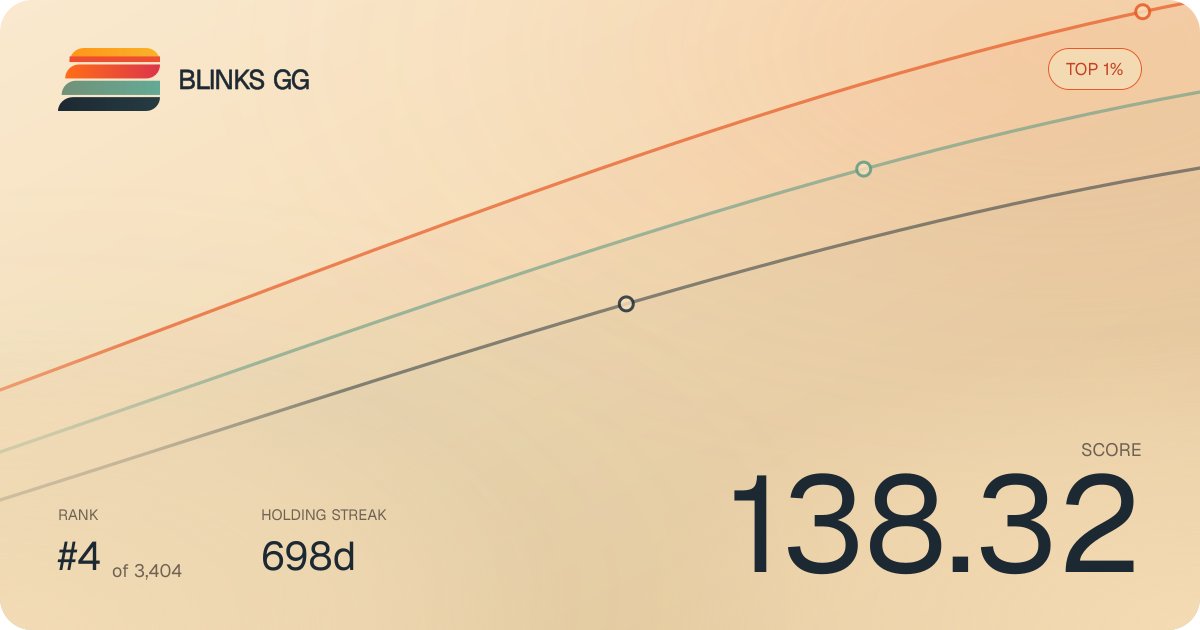
The goal is reward those who hold long term even if they sell a little here and there. This wallet held and added over 698 days!
All recipients got alpha access to https://t.co/FUhSoHkNa9 and will get more perks down the road.
XONA Resources is expanding to a new network.
Our pay-per-use AI models, APIs, data, and digital services are now accessible on @RobinhoodCrypto through x402, facilitated by @NavenNetwork.
This gives AI agents a native way to discover resources, pay per request, and settle transactions directly on Robinhood Chain.
No subscriptions. No prepaid credits.
Just machine-native access to the resources agents need, paid for as they use them.
Another network connected to the agentic economy.
"Compute is becoming the spice of our era."
That's Apollo's Chief Economist, writing to a firm that manages $700B. Their read on the second half of 2026: GPUs scarce, memory repricing, TSMC effectively sold out, power the hard bottleneck. Constraints hitting every layer of the supply chain at once.
The part that should worry everyone is what comes next. Apollo's conclusion is that rising inference costs concentrate compute toward whoever can pay for it. Big firms get access. Smaller ones and anything experimental get priced out. AI stops diffusing across the economy and starts pooling at the top.
That's not a supply problem. That's an access problem, and no amount of capex fixes it, because you cannot build a substation in a quarter.
The compute already exists. It's in homes and offices, idle 20 hours a day, spread across every country on earth. It needs no permits, no packaging capacity, no grid interconnect queue.
IDLE connects it. 78,826 operators. 553,026 on-chain transactions. Paid per job in USDC on Solana. Open to anyone with hardware and anyone who needs it.
Scarcity concentrates. Distribution is the answer to both.
https://t.co/E6mbJ7V8CM
Hi @IdleProtocol fams. Congrats to those who didn’t sell. Don’t be shaken by the Jeeters sell pressure. The spike to upside is programmed 💪🎁🔥🚀🚀🚀make Life changing money with $IDLE 🔥🎁🚀🚀🚀
IDLE Protocol has officially been accepted into @NVIDIA Inception.
NVIDIA Inception is the program for AI startups building on NVIDIA's stack. IDLE qualifies because the network runs on it - nodes serve inference on NVIDIA consumer GPUs via vLLM with continuous batching and PagedAttention, and frontier models route through NVIDIA NIM microservices.
The compute shortage isn't a chip problem. NVIDIA has shipped hundreds of millions of GPUs into homes and offices. They're idle 20+ hours a day. IDLE connects them.
NVIDIA builds the silicon. IDLE puts it to work.