Today in @NEJM w/ @DrScottHadland: Overdose deaths among high schoolers are rising despite fewer teens using illicit drugs.
We explain how physicians, teachers and parents can help teens stay safe despite counterfeit pills making experimentation risky.
https://t.co/TPe16QnJB4
It may also help explain why stimulant replacement therapy hasn't worked particularly well in clinical trials (despite a similar concept working well for opioids)—the trial doses are simply too low compared to street exposure.
New analysis: we estimate that the average consumer of methamphetamine in LA uses a dose equivalent to ~1,500 mg of Adderall daily -- about 25X the maximum stimulant dose routintely prescribed by doctors.
Out now in Journal of Addiction Medicine: https://t.co/GlRfCgu5BC
I think this explains why methamphetamine is both a medication that can safely be provide to patients for ADHD, and also a street drug responsible for so much psychiatric, cardiovascular and other harm when used illicitly. The dose makes the poison.
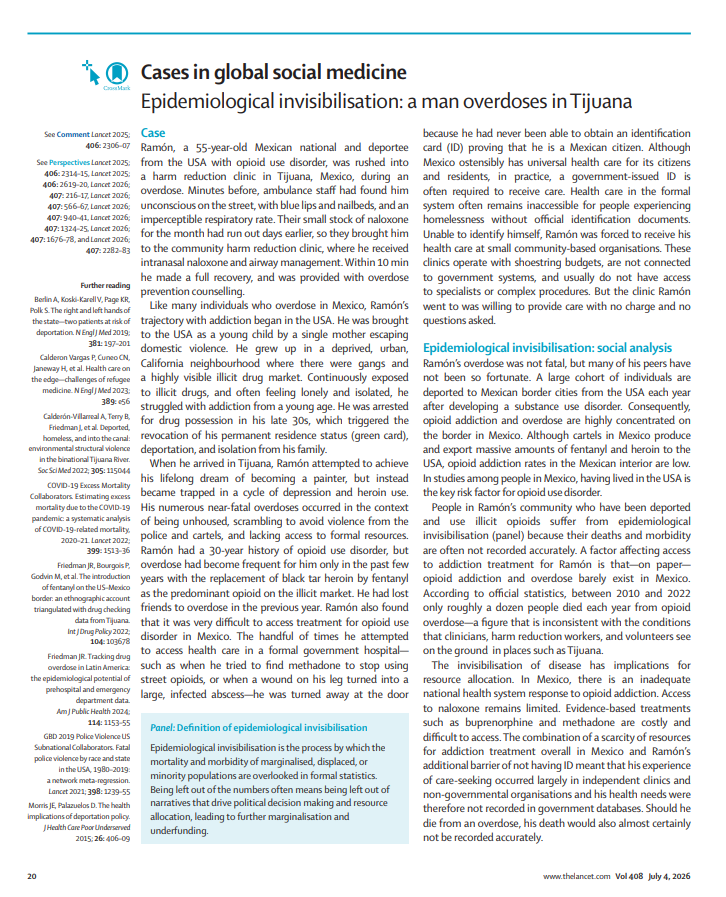
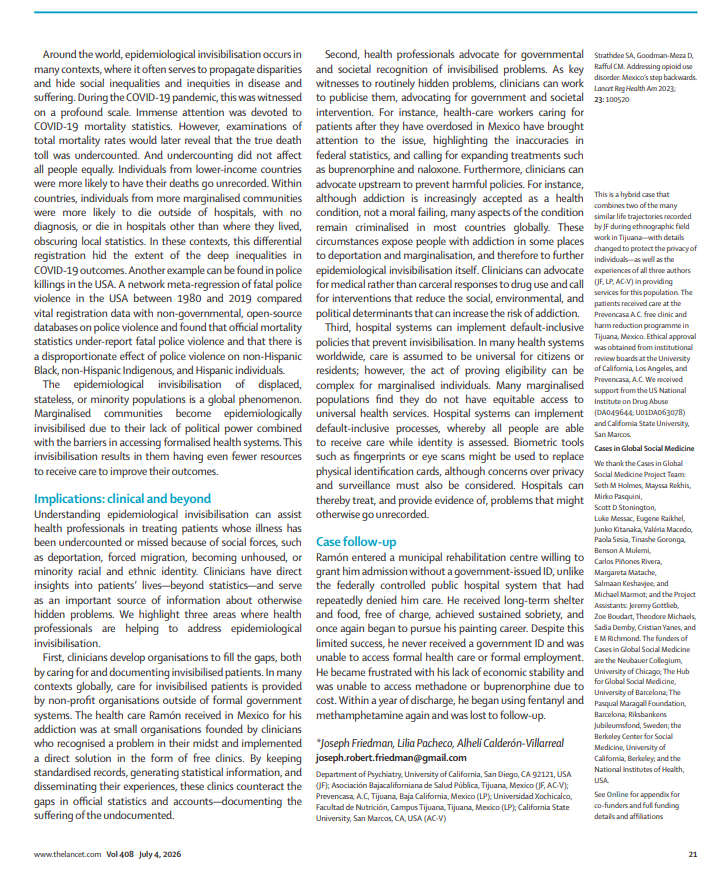
"Epidemiological invisibilisation: a man overdoses in Tijuana" - in @TheLancet
Our case study highlighting overdose and addiction trajectories in Mexico that begin in the United States, and remain invisible in formal statistics @alhelicalderon@LilyPac2
https://t.co/WM477hy7eB
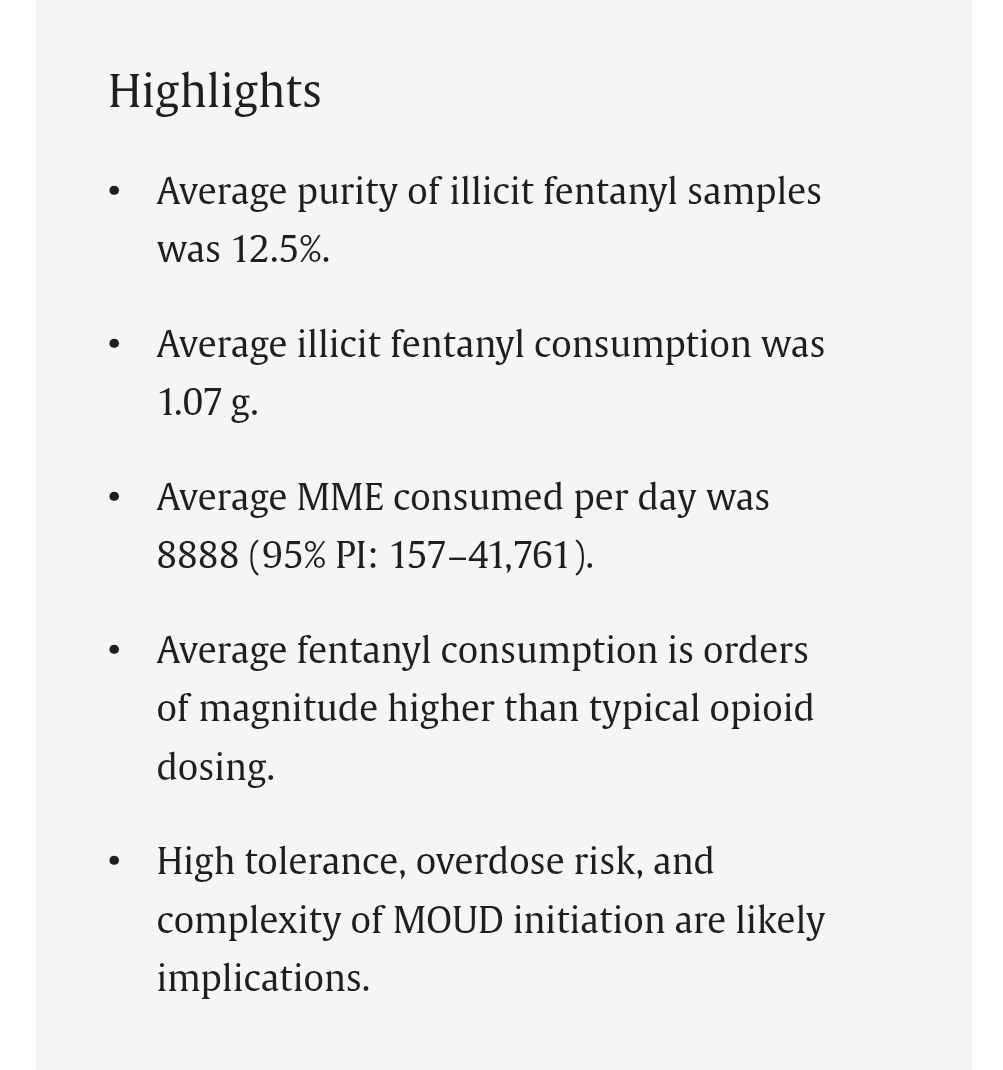
Among people using illicit fentanyl, we estimate an *average* daily dose equivalent to ~9000 milligrams of morphine.
Led by @MorganGodvin w/ @ChelseaLShover and @JosephRFriedman
https://t.co/6lXwr1eI90
We estimate the average person using illicit fentanyl in Los Angeles consumes almost 9,000 MME per day.
Drug checking opens the black box to illustrate why MOUD initiation, overdose risk, and withdrawal look different in the fentanyl era. @MorganGodvin
https://t.co/f2DuxXL9hL
“Chill packs” are like naloxone but for breaking the cycle of methamphetamine induced psychosis.
Self administered olanzapine as psychiatric harm reduction to prevent hospitalization.
Our review discusses the concept and evidence: https://t.co/py1UQdOSNJ
Out now in @AddictionJrnl:
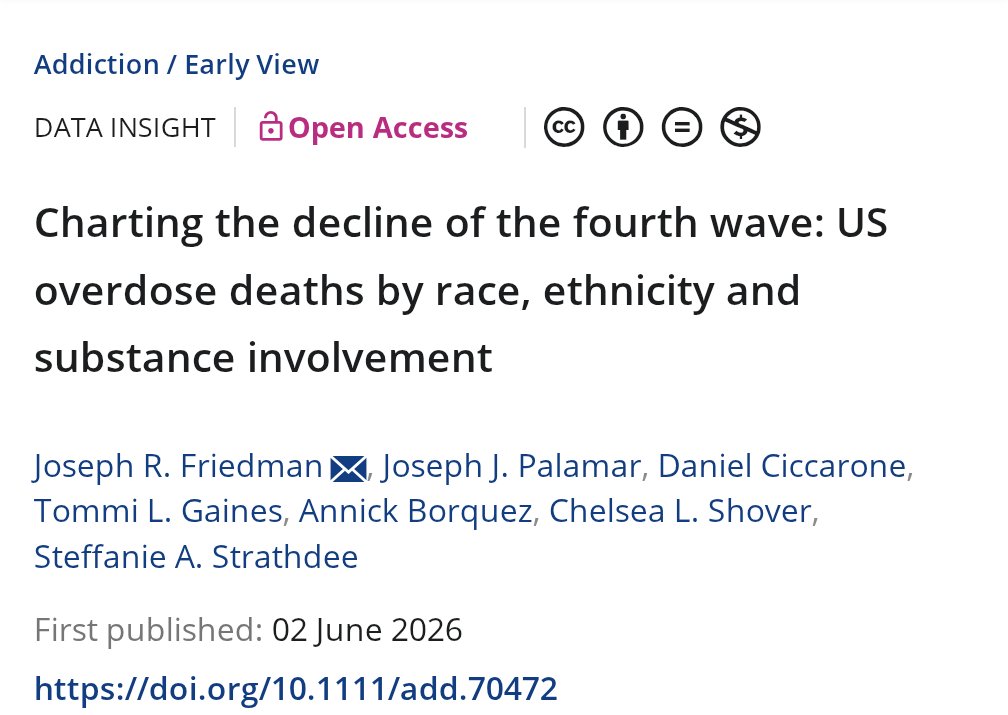
We find that the fourth wave of the overdose crisis (fentanyl plus stimulants) declined for the first time in 2024, but deaths involving stimulants, deaths involving xylazine, and racial disparities remain growing issues
https://t.co/cVHFwbP5fF
“US overdose mortality saw first drop below the Jalal-Burke exponential growth curve in 2024” by @JosephRFriedman and colleagues (2026) via @ijdrugpolicy…what factors most contributed to the 2024 overdose mortality decline?
Link: https://t.co/ocELbXqyDD
#DrugPolicy
New publication! 🧠
Excited to share our latest paper, for which I am co-first author. This randomized controlled trial provides the first evidence that #buprenorphine can prolong and augment #ketamine’s antisuicidal effects in depression.
https://t.co/kxDE7cdg2R
Out now in @ijdrugpolicy "US overdose mortality saw first drop below the Jalal-Burke exponential growth curve in 2024"
Open access: https://t.co/lhg8WsTdO7
Counterfeit pills confer unique risk by expanding who is vulnerable to fentanyl and synthetic drug overdose.
Many consumers who would never try fentanyl powder may be willing to take a tablet they believe to contain oxycodone or alprazolam.
Full talk: https://t.co/glHRdgs8m0
Acabamos de publicar el artículo original en donde analizamos los riesgos a la salud en la región costera binacional de #SanDiego#Tijuana#Rosarito
https://t.co/OlQ4lSWz7a
1/🧵Fact: US doctors reduced #opioid prescribing far more quickly than they increased opioid prescribing in the first place
It's almost never reported by the media.
Let's see the data, then talk about what happened..
California is “the state with the single highest number of overdoses. Really, the single most important place to tackle the overdose crisis, I would argue, is California. We’re the overdose capital of the world.”
https://t.co/DqVewCqAtB
US overdose deaths are dropping. Is California following? https://t.co/rGcMZruKkc with remarks by @RNBluthenthal & @JosephRFriedman More effort to reach Black and Latinx people who are at risk for overdose are needed.
With emerging signs that fentanyl is becoming more common in Latin America--but limited official mortality records--linked EMS and emergency department data systems offer great potential for overdose outbreak monitoring.
Editorial in @AMJPublicHealth:
https://t.co/OHcBtLJDjS