When companies realize how to leverage AI outside of using it just for proofreading, article generation, or basic number crunching, overhead from office staff will drop substantially, and the need for workers who produce goods will increase.
This will increase output, reduce costs (unless government continues to intervene with excessive regulatory requirements) and eliminate the need for most higher education.
Not a bubble.
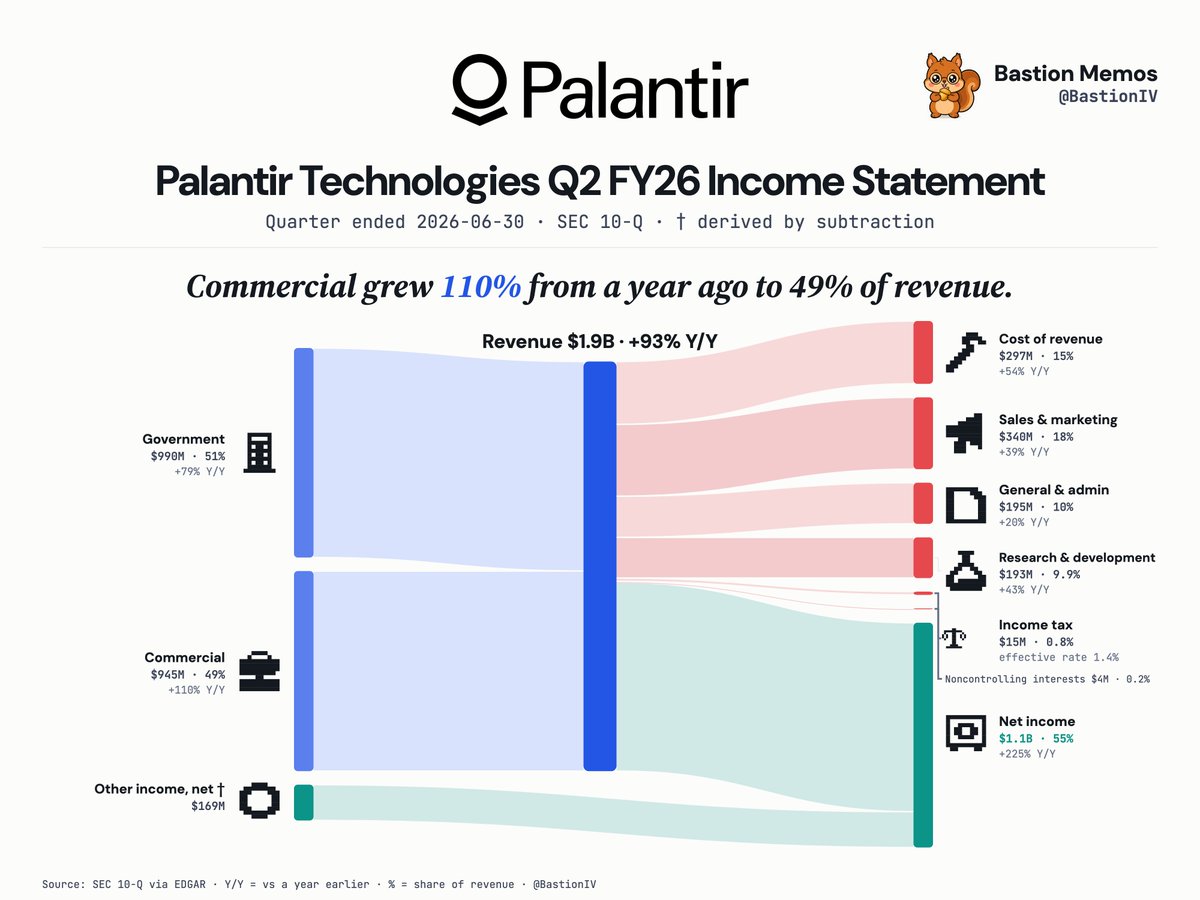
@TheProfInvestor $PLTR revenue $1.9b, up 93% y/y, net income $1.1b at a 55% margin. $OSCR revenue $4.9b, up 70% y/y, net income $362m at 7.4%. Q2 10-Q, quarters ended jun 30.
Every long term investor buying quality companies at a discount looks stupid in the moment.
And looks like a genius in hindsight.
Ask the people who were accumulating $PLTR between $115 and $130 when everyone was calling it overvalued.
Ask the people who bought $MSFT at $360 when the narrative was that growth was over.
Ask the ones who were buying $HIMS between $25 and $15 while being mocked for it.
Ask my followers who trusted the call on $OSCR at $11 to $15 when nobody wanted to touch it.
And ask yourself who was standing on the rooftop telling you software companies were a buy a few months ago into the fear.
All of these positions had one thing in common. Nobody wanted them at the time. The majority was scared. The headlines were bad. The sentiment was worse.
That is exactly when I was bullish. That is exactly when I said hold your horizon and trust the process.
Every single one went on to return 100 to 200 percent.
The reward in investing does not live in the comfortable trades. It lives in the ones that feel wrong before they feel right.
That is the motto. Learn it. Own it. Execute it. 💯
BREAKING: Iran’s Speaker of the Parliament Ghalibaf comments on the US bond market situation:
“Importing frozen meat to fix meat prices. Okay, that might work. What’s the plan for bonds, import frozen yields?”
For reference, the X subscription is the basic level—below my Patreon Tier 1, 2, and 3. That being said, even on X, I share more than 20–22 stock analyses daily and weekly, plus 2–3 weekend videos from Dr. Cat @cantonmeow , totaling 8–12 videos every month, all at a highly affordable rate.
If you’re happy with the content and want to learn more and access deeper stock analysis, consider joining my Tier 3 on my patreon. There you’ll get:
1. 60-70 stock analysis
2. Real-time buy-order/sell-order notifications
3. Weekly insights
4. My weekend/weekday bullish list
5. 12–13 Dr. Cat videos every weekend, 50 videos every month
6. Additional weekday and weekend sharing on stocks, trends, and themes
Feel free to check out the higher tiers on Patreon if you are interested. No pressure—just more of the same work, at a deeper level. I am always happy to share free algo on X.
https://t.co/3rND9EGCn4
This image has gone mega-viral over the last 24 hours.
If you bought Micron every day at market close and sold at market open, your return would be 138,330,342%.
If you bought Micron every day at market open and sold at market close, your return would be -99.2%.
I went down a rabbit hole to see if I could discover as to why this is.
An earlier historical dataset from researcher Bruce Knuteson produced similarly extreme results for a number of individual stocks:
• $MU: +16.2 million% overnight / -99.95% intraday
• $HOLX: +15.9 million% / -99.98%
• $NVR: +3.6 million% / -98%
• $JBHT: +3.0 million% / -99.8%
• $MGM: +2.6 million% / -99.96%
• $NVDA: +221,715% / -51%
Obviously, the exact numbers depend heavily on the period examined, but the pattern itself has been repeatedly documented.
Research published in the Journal of Investment Management found that the phenomenon is particularly strong among high-attention stocks popular with retail investors, including names such as:
$NVDA
$TSLA
$AMD
$MSTR
But here's what I didn't expect:
Over the 30-year period examined in subsequent research, $1 invested in only during regular trading hours grew to roughly $1.20.
The same $1 invested only overnight grew to approximately $17.27.
So why does this happen?
There are several theories.
One of the most interesting involves when investors actually place orders.
Retail investors often place orders during post or pre market hours.
Those orders accumulate while the market is closed and are executed around the opening auction.
That creates persistent buying pressure near the open, especially in popular, high-attention stocks.
There are a few other possible explanations as well:
• Earnings and major corporate news frequently arrive outside regular trading hours.
• Investors require compensation for accepting overnight gap risk when they cannot immediately exit a position.
• Institutional investors face different leverage, short-selling and financing constraints overnight.
• Liquidity and price impact behave differently around the opening and closing auctions.
• High-beta stocks appear to experience a particularly large day/night return split.
Researchers still disagrees on how much each explanation contributes.
In the next few years, it will become obvious how “easy” it was to just buy and hold compute, memory, energy and interconnects.
Power, memory and networking are becoming increasingly important as AI scales.
People will call you lucky for owning these names.
But remember, those same people were bear posting and waiting for the “crash” while the market already gave us two major pullbacks in March and July.
They only sound smart on red days, when they suddenly become way more active.
Stick to where the money is going, not what random clowns on X are saying.
My picks:
Compute: $NBIS, $IREN
Memory: $SKHY, $MU
Energy: $BE, $FCEL
Interconnect: $CRDO, $LITE
🚨BREAKING
Peter Thiel, one of the richest people in the world.
The co founder of PayPal, co founder of Palantir and early Facebook investor revealed his current investments in the recent 13F filing.
It includes these 8 stocks…
$SIVE Siver Semiconductors have their earning next week.
We had a mix of explosive earning in the sector such as $AAOI and $AXTI during the last 2 weeks and Siver is like the final boss of earning gasmble.
They usually miss their earning expectation , it is currently right over the ema200 support but right under the ema50 resistance.
I like to gamble at the casino but I think i will sit sidelined for this one.
Its either they breakout the ema50 and will come to a retest and confirm the bull trend so we would bid around 40+ orrr this goes on a nukefest and we scoop a $30 level retest.
An yone dare to play this earning ?
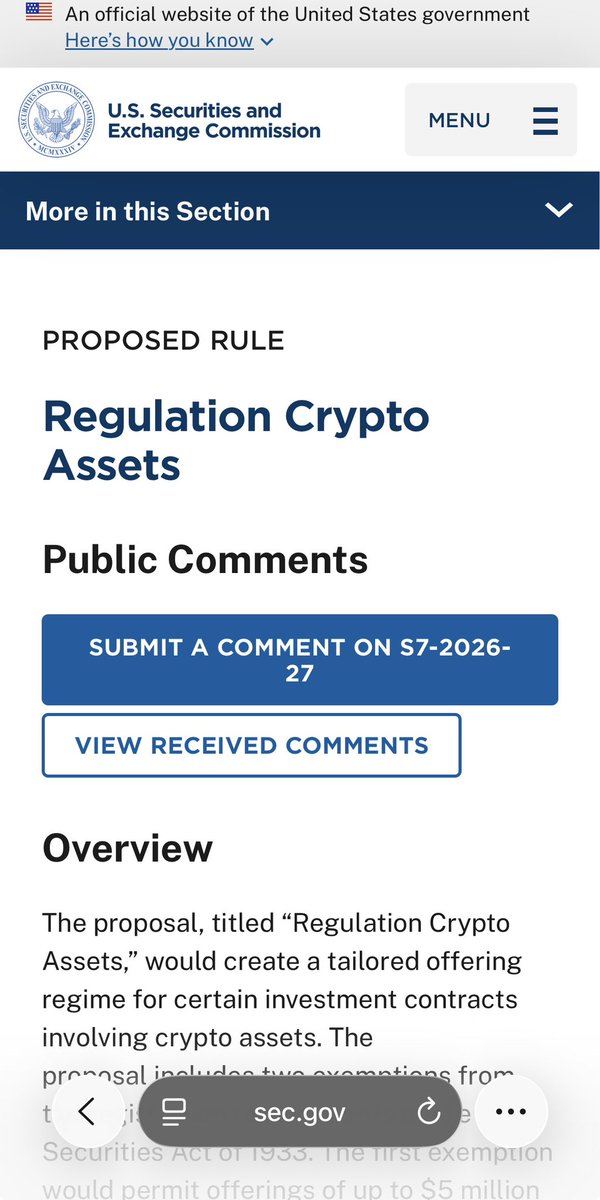
So this is why crypto is flying like crazy… on August 18th around 10am eastern, the SEC proposed a rule to deregulate crypto assets and.exempt many of them from being classified as securities.
Startup projects are exempt
Existing tokens are mostly exempt (with the exception of tokenized securities).
It is classified based on how the contract is laid out and not simply being a tradable token.
Get ready for shitcoin hysteria 2.0 if/when it releases 😂
Obviously I’m not 100% sure this is the reason, but the timing is perfect.
Also bullish for $GME is a lot of suppression is from securitized token hedging since those won’t get the special exemption.
You do not liquidate $4,000,000,000 in $BTC shorts during a simple bear market rally.
Study.
MMs build short delta to eventually take it once the bear market is over. We just printed a 25% weekly candle and broke above essentially every significant level that mattered.
If we were truly still in a bear market, we shouldn't have had this move. Bear market retests are typically shallow, controlled, and designed to protect short exposure. Instead, we completely obliterated shorts.
That is exactly why the probability of trending back down to a new low in Q4 looks extremely unlikely, incentive-wise, structurally, and fundamentally.
A lot of people will probably revenge short after getting blown out. It happens every cycle. They’ll convince themselves the move is "just another bear market rally" because accepting the structural shift is harder than fighting it.
Ignore anyone telling you that you shouldn’t be bullish.
Structure has already confirmed the shift. The positioning has been reset. Shorts have been blasted out of the market.
You don’t do that in a sustained bear market.
In a real bear market, you protect the shorts, encourage increasingly aggressive short positioning, and let the market grind lower.
Instead, we just saw the opposite.
Shorts were encouraged.
Short delta became enormous.
The market broke higher.
And then the entire positioning structure was squeezed into oblivion. That is not how a bear market behaves. That is how a trend transition begins.
Asking retail - What are your triggers to BUY a small cap stock?
Are you watching news, insider buys, quarterly financials, price appreciation, sentiment across certain platforms, announced marketing, etc.
Super curious to understand what really moves the markets.
I'm proud to say that our challenge account has OFFICIALLY reached an all-time high today since our start on June 19, 2026.
We've 3X'd the S&P 500, up 9 points against QQQ's, and up 19 points against SMH.
Core portfolio: +5.68%
$SPY: +1.84%
$QQQ: -3.34%
$SMH: -13.40%
This is actually unbelievable. We've avoided all major drawdowns in the AI sector. We've rotated and micro-adjusted weekly to ALWAYS be one step ahead of the masses.
My recent buys:
1. Fast casual restaurants
2. Telecom
My next trims soon:
1. Oil & energy like $CVX / $XOM (up 20%+ from our entry)
I promise to always do my best to make sure you survive the bad days, and win big on the green days.
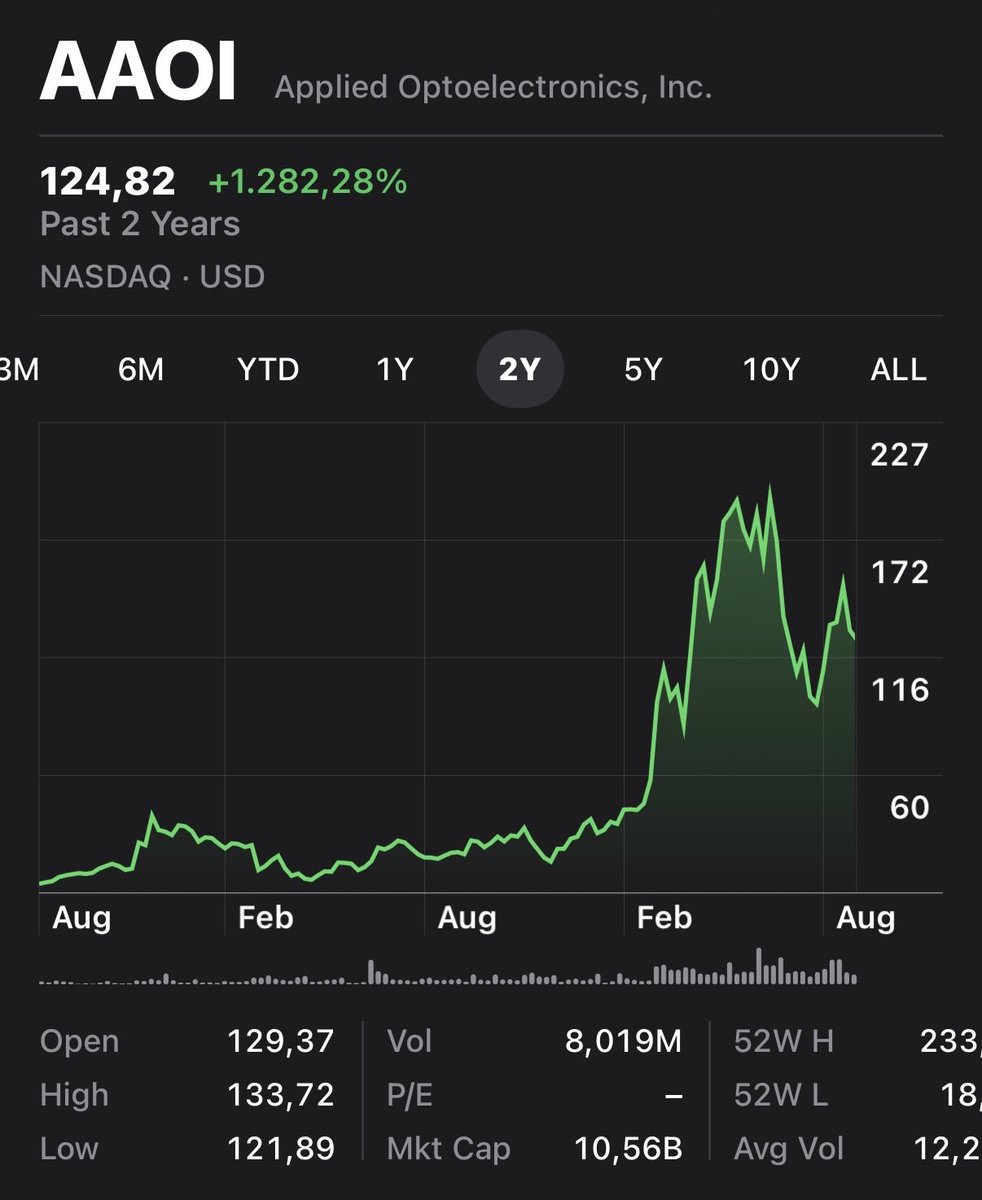
$AAOI the latest company to dilute his shareholders and probably rightly so. Cash is king and as a loss making company you need it to survive. Not using your 1.200% risen stock as an asset would be stupid, certainly with the current rates.
ATM’s are just the cheapest way to finance the business if your stock just surged. We see it in the space, drone, power, and photonics industry.
Those industries are evolving rapidly and you need cash to stay ahead of the herd.
Dilution or not, the companies with the best technologies and business models will survive. If the cash is used correctly, ATMs are a treat for long-term investors.
GME $32 dollar warrants expire in 2.5 months and they are trading at $1.61 right now. One warrant lets you buy the stock at $32.
As an alternative you could sell the warrant today and use that money to buy the actual share around $18.21. That drops your cost basis to about $16.60 and you have no theta risk, no expiration risk.
Or sell the warrant which might get extended or might not and swap into a December 2027 $32 LEAP for around $1.54 to maintain similar leveraged derivative exposure with theta risk far off in the future. Same kind of upside exposure only it lasts way longer and you keep a little cash.
I am confused by those who think risking riding warrants to $0 by end of October, hoping for an extension, is the smart play.