Author | Pastor | Award-Winning 🏆 Messenger of Grace | Founder & CEO of JB-Publishers Ltd | Standing for Truth & Justice | Against Injustice in Every Form
The book 📕 is available worldwide online, including on Amazon, in English, French, and Kinyamulenge.
One of the strongest messages in The Legacy of Honourable Gisaro Muhoza is that Gisaro did not leave Banyamulenge identity as an open discussion for every generation to restart. He understood that as long as identity remained unsettled, future generations would continue to be drawn into the same arguments, the same confusion, and the same pressure to redefine themselves. His response was to establish clarity where there had been misidentification.
He rejected the names that distorted the identity of his people and insisted that the historical name Banyamulenge be recognized, respected, and used. This was more than a change of terminology. It was the restoration of dignity, history, homeland, and belonging.
Gisaro understood that if a people do not settle the question of who they are, others will continue trying to define them. So he did not leave the matter halfway. He stood publicly for the identity of his people, defended their citizenship and belonging in Congo, and carried that identity into national leadership and public recognition.
In this sense, Gisaro did more than participate in the debate about identity. He worked to bring that debate to an end. He did not want every new generation to return to the same table and begin again asking, “Who are we?” Political circumstances may change. Governments may change. Leaders may change. Alliances may change. But the identity of a people should not be rewritten every time politics changes.
That is what makes Gisaro’s vision so powerful today. He understood that an unsettled identity would remain a permanent vulnerability for future generations. Therefore, he worked to establish a foundation strong enough to outlive him.
Gisaro did not leave future generations another debate. He left them an answer. He did not leave confusion. He left clarity. He did not leave our identity for negotiation. He left it for us to understand, preserve, defend, and pass on.
GIDEON: THE MAN WHO DISCOVERED WHO HE WAS
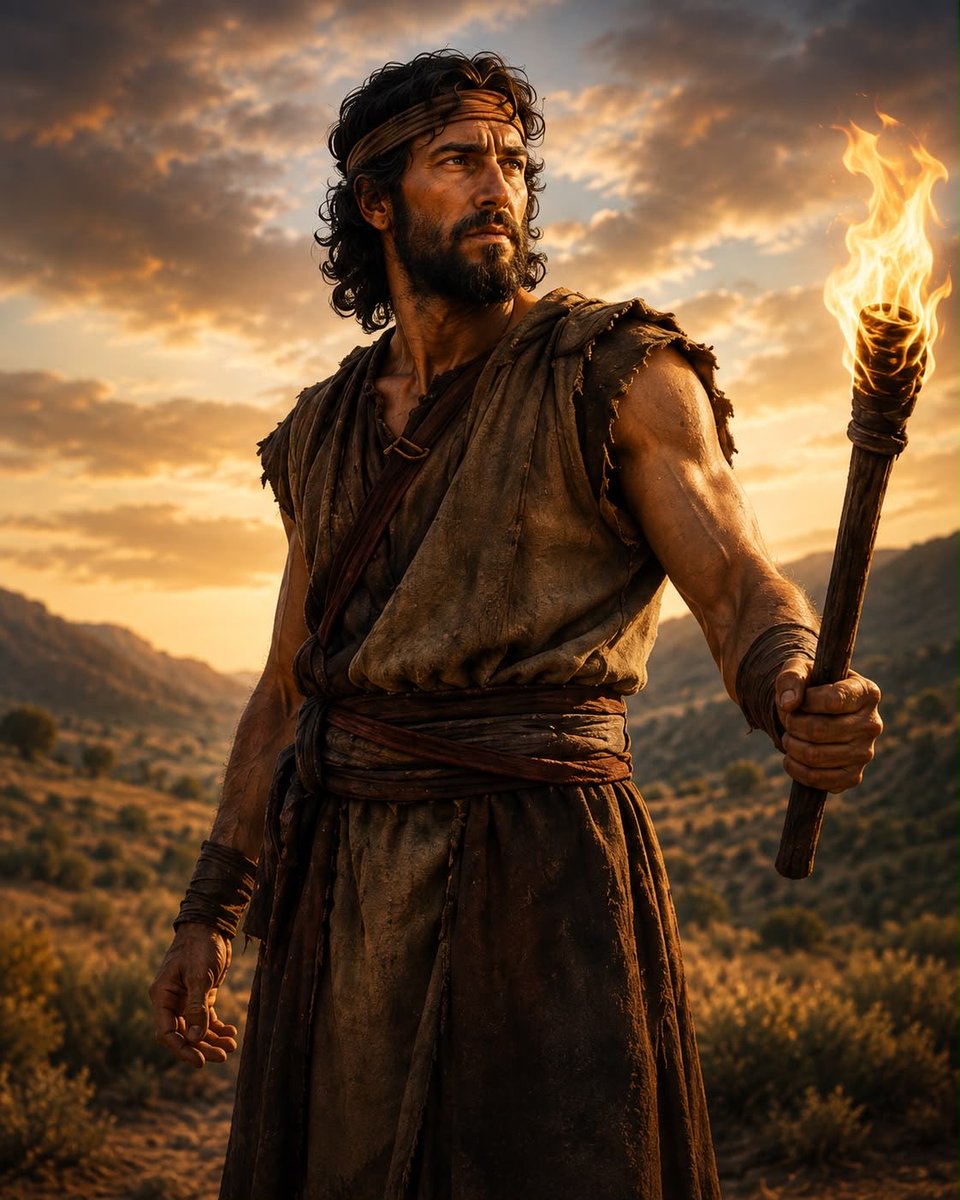
Gideon lived during a difficult time in Israel. The Midianites had oppressed the nation for years, destroying crops, stealing livestock, and leaving the people afraid and impoverished. Because of this oppression, many Israelites hid in caves and strongholds. — Judges 6:1–6
When we first meet Gideon, he is threshing wheat in a winepress so that the Midianites will not see him. He was living in fear and did not see himself as a great leader.
But God saw something in Gideon that Gideon could not yet see in himself.
The angel of the Lord appeared to him and said, “The Lord is with you, mighty warrior.” — Judges 6:12
Gideon was surprised because he saw himself as weak and insignificant. He said that his clan was the weakest in Manasseh and that he was the least in his family. But God did not speak to Gideon according to his fear. God spoke according to the purpose He had placed upon his life.
Gideon eventually accepted God’s call. He destroyed the altar of Baal, gathered men for battle, and prepared to fight against Midian.
At first, thousands came to fight with him, but God reduced Gideon’s army to only three hundred men. With those three hundred, Gideon defeated a much larger enemy and brought freedom to Israel. — Judges 7
Gideon’s story teaches us that sometimes the greatest battle is not only against the enemy outside us, but against the wrong identity we have accepted inside ourselves.
Gideon saw weakness. God saw a warrior.
Gideon saw limitation. God saw leadership.
Gideon saw his small family background. God saw someone who could deliver a nation.
WHAT WE CAN LEARN FROM GIDEON
1. DO NOT DEFINE YOURSELF BY YOUR PRESENT CONDITION. Gideon was hiding when God called him a mighty warrior.
2. GOD’S PURPOSE CAN BE GREATER THAN YOUR BACKGROUND. Gideon came from what he considered a weak family, but God still chose him.
3. GREAT LEADERS MUST FIRST OVERCOME FEAR. Gideon had questions and fears, but he eventually moved forward in obedience.
4. YOU DO NOT NEED GREAT NUMBERS TO ACCOMPLISH A GREAT PURPOSE. God used only three hundred men to defeat a powerful enemy.
Gideon teaches us that identity can change the direction of a life. Once he began to see himself according to what God had spoken, the man hiding from the enemy became the man who led his nation into victory.
Sometimes you are not waiting for your situation to change. You are waiting to discover who you really are.
The book 📕 is available worldwide online, including on Amazon, in English, French, and Kinyamulenge.
One of the strongest messages in The Legacy of Honourable Gisaro Muhoza is that Gisaro did not leave Banyamulenge identity as an open discussion for every generation to restart. He understood that as long as identity remained unsettled, future generations would continue to be drawn into the same arguments, the same confusion, and the same pressure to redefine themselves. His response was to establish clarity where there had been misidentification.
He rejected the names that distorted the identity of his people and insisted that the historical name Banyamulenge be recognized, respected, and used. This was more than a change of terminology. It was the restoration of dignity, history, homeland, and belonging.
Gisaro understood that if a people do not settle the question of who they are, others will continue trying to define them. So he did not leave the matter halfway. He stood publicly for the identity of his people, defended their citizenship and belonging in Congo, and carried that identity into national leadership and public recognition.
In this sense, Gisaro did more than participate in the debate about identity. He worked to bring that debate to an end. He did not want every new generation to return to the same table and begin again asking, “Who are we?” Political circumstances may change. Governments may change. Leaders may change. Alliances may change. But the identity of a people should not be rewritten every time politics changes.
That is what makes Gisaro’s vision so powerful today. He understood that an unsettled identity would remain a permanent vulnerability for future generations. Therefore, he worked to establish a foundation strong enough to outlive him.
Gisaro did not leave future generations another debate. He left them an answer. He did not leave confusion. He left clarity. He did not leave our identity for negotiation. He left it for us to understand, preserve, defend, and pass on.
Yes brother it is amazing message,Gisaro was not an ordinary man. He understood that the identity of a people should never change simply because politics changes. Governments change, leaders change, and alliances change, but identity must remain rooted beyond temporary political circumstances.
WHO IS MOSES?
Moses was one of the greatest leaders in the Bible. He was born among the Israelites during a time when Pharaoh had ordered Hebrew baby boys to be killed. His mother hid him, and later he was placed in a basket on the Nile River. Pharaoh’s daughter found him and raised him in the royal palace. Exodus 2:1–10
Moses grew up surrounded by Egyptian education, privilege, culture, and power. But even though he was raised in Pharaoh’s house, Egypt did not erase his identity. He did not deny where he came from, and he did not abandon his people.
The Bible says, “By faith Moses, when he had grown up, refused to be known as the son of Pharaoh’s daughter.” Hebrews 11:24
Moses could have remained comfortable in the palace and completely identified himself with Egypt, but he chose to stand with Israel. He understood that privilege should never require a person to deny who they are.
Later, after living in Midian, God called Moses through the burning bush and sent him back to Egypt to deliver Israel from slavery. Moses confronted Pharaoh and became the leader through whom God brought the Israelites out of bondage.
He led them through the Red Sea, received the Law at Mount Sinai, prayed for the nation, corrected them, defended them, and carried their burdens during forty years in the wilderness.
Moses deeply loved his people. Even when they complained against him and rebelled, he continued to intercede for them. His position did not separate him from them, and his leadership did not make him forget them.
Moses teaches us something powerful about identity. He lived in Egypt, but Egypt did not erase who he was. He received Egyptian education, but education did not make him deny Israel. He experienced privilege, but privilege did not make him ashamed of his people.
In the same way, we should never feel that we must deny who we are in order to be accepted. We can respect other people, live in different places, learn different cultures, and still remain faithful to our identity.
And above everything else, as believers, we must never forget who we are in Christ. Our environment may change, people may give us different labels, circumstances may change, but our identity in Christ remains.
MOSES AS A PICTURE OF CHRIST
1. MOSES WAS A DELIVERER. God used Moses to deliver Israel from slavery in Egypt. Jesus is the greater Deliverer who sets humanity free from the bondage of sin and death. Luke 4:18
2. MOSES IDENTIFIED WITH HIS PEOPLE. Moses refused to deny Israel even though he had been raised in Pharaoh’s palace. Jesus also entered our human condition and identified with humanity in order to redeem us. Philippians 2:6–8
3. MOSES WAS A MEDIATOR. Moses stood between God and Israel and interceded for the people. Jesus is the greater Mediator who brings us into relationship with the Father. 1 Timothy 2:5
4. MOSES POINTS US TO OUR TRUE IDENTITY IN CHRIST. Moses would not allow Egypt to erase his identity. In the same way, believers should never allow the world, pressure, fear, rejection, or acceptance to make them forget who they are in Christ. We are children of God, accepted in Christ, and called to live from that identity. Galatians 3:26
Moses did not deny his people to keep the palace. He did not erase his identity to gain acceptance. And today, we should never deny who we are or forget who we are in Christ just to fit into another environment. Know your roots, honor your identity, and above all, know who you are in Christ.
#Christian Leadership
DANIEL: A LEADER WHO NEVER LOST HIS IDENTITY
Daniel was a young Jewish man from Judah who was taken to Babylon after Jerusalem was conquered. He was selected with other young men to be trained for service in the king’s palace because he was intelligent, capable, and qualified to learn.
In Babylon, Daniel was given a new name, Belteshazzar. He was taught the language and literature of the Babylonians and prepared to serve in their government. Although his environment, education, and name were changed, Daniel did not deny where he came from, abandon his faith in God, or forget his people.
From the beginning, Daniel refused to compromise his convictions. He chose not to defile himself with the king’s food and wine. Daniel 1:8
God gave Daniel wisdom, understanding, and the ability to interpret dreams and visions. His gifts brought him before kings, and he became an important leader in Babylon. He served during the reigns of Nebuchadnezzar, Belshazzar, and later under Darius.
Daniel became known for his wisdom, integrity, and excellent spirit. The Bible says, “Daniel distinguished himself among the administrators and the satraps by his exceptional qualities.” Daniel 6:3
Even after reaching a high position in government, Daniel never denied his identity or his God. When a law was made forbidding prayer to anyone except the king, Daniel continued praying three times a day just as he had always done. Daniel 6:10
Daniel also remained deeply connected to his people. When he understood that Jerusalem’s years of desolation were coming to an end, he turned to God in prayer, confession, and intercession for them. He did not speak as though their struggles had nothing to do with him. He identified himself with his people and prayed, “We have sinned and done wrong.” Daniel 9:5
Daniel lived in Babylon, but his heart remained connected to Jerusalem. His position did not make him forget his people. His success did not separate him from their struggles. He carried their condition before God in prayer.
WHAT WE CAN LEARN FROM DANIEL’S LEADERSHIP
1. A GREAT LEADER MUST HAVE INTEGRITY. Daniel was trustworthy, faithful, and free from corruption.
2. A GREAT LEADER DOES NOT LOSE HIS IDENTITY BECAUSE OF POSITION. Daniel served powerful kings, but he never denied who he was.
3. A GREAT LEADER REMAINS CONNECTED TO HIS PEOPLE. Daniel’s success in Babylon never caused him to forget Jerusalem or separate himself from the struggles of his people.
4. A GREAT LEADER STANDS BY HIS CONVICTIONS. Daniel did not change his values simply because pressure increased.
5. A GREAT LEADER SERVES WITH EXCELLENCE. His wisdom, discipline, and exceptional character caused him to stand above other leaders.
Daniel teaches us that true leadership is not only about reaching a high position. It is about remaining faithful to God, faithful to your identity, faithful to your convictions, and connected to your people even when success takes you far from where you began.
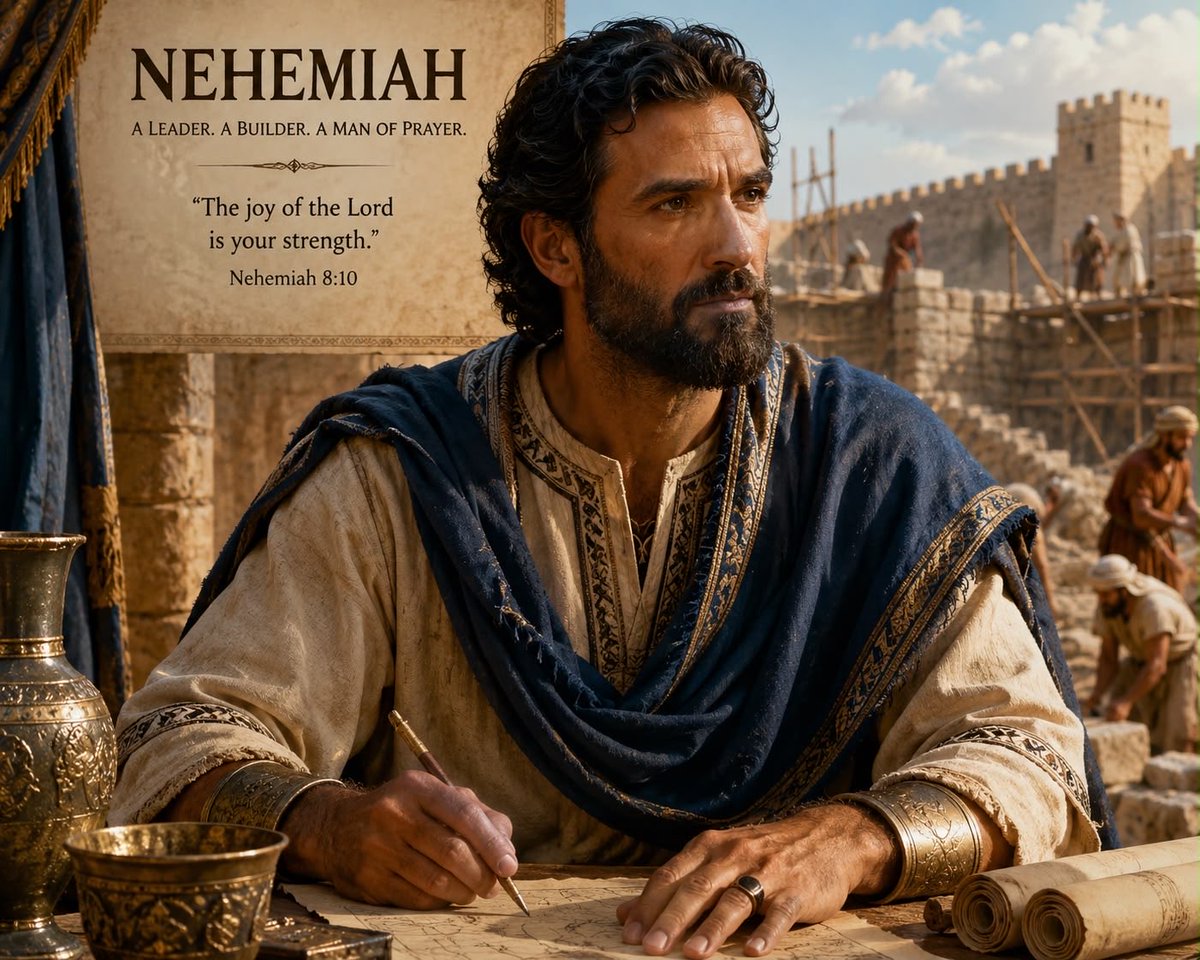
Nehemiah lived in Persia and served King Artaxerxes in an important position. He had security, influence, and access to the palace, but he never allowed success to make him forget Jerusalem or his people.
When he heard that Jerusalem’s walls were broken and its gates had been burned, he became deeply troubled. The Bible says, “When I heard these things, I sat down and wept.” Nehemiah 1:4. Nehemiah prayed, fasted, and decided to do something.
He returned to Jerusalem to rebuild the walls. But the work was not easy. Sanballat, Tobiah, and others mocked him, threatened him, and tried to distract him. Nehemiah refused to be manipulated. He knew who he was and what he had been called to do.
When his enemies invited him to leave the work and meet with them, he answered, “I am carrying on a great project and cannot go down.”Nehemiah 6:3.
Nehemiah teaches us that where you live does not have to erase where you come from. Success should not make you forget your roots, and pressure should not force you to abandon your purpose.
THREE THINGS WE LEARN FROM NEHEMIAH
1. NEVER FORGET YOUR ROOTS. Nehemiah lived far from Jerusalem, but Jerusalem remained in his heart.
2. DO NOT ALLOW PEOPLE TO MANIPULATE YOUR PURPOSE. He refused distractions because he knew what he was called to do.
3. TRUE IDENTITY PRODUCES ACTION. Nehemiah did not only speak about Jerusalem. He returned, rebuilt, and stood for his people.
When you know who you are, you can go far, become successful, and still remain faithful to your identity.
@Ndungutsefati Ugize se ngo hari ni mpamvu twarinda tumubaza yabimuteye? Uko hari hari koko yqtubwira tukayumva naho ibyo ngo ni Tito wabumutumye ubikuyehe uko ?
There comes a moment when silence is no longer wisdom. When the name of a people is being denied or slowly erased, those who carry that name have a responsibility to speak. Today, we hear voices saying that Munyamulenge does not exist. Others tell us that speaking about our identity is “politics.” But we must ask ourselves: Since when did knowing who you are and defending your name make you a politician? To say “I am Munyamulenge” is not a political campaign. To teach our children their history is not politics. To preserve Kinyamulenge, remember Mulenge, honour our forefathers, and correct falsehoods about our identity is not politics. It is the responsibility of a people who do not want their history forgotten.
The name Banyamulenge did not begin with the men who later became known for defending it. They received that identity from those who came before them, and when circumstances demanded courage, they stood.
We remember and honour:
1. Gisaro
2. Mushishi
3 . Muhindanyi
4. Ntwari
5. Ayubi Rubibi
6. Matayo Mwungura
7. Pahoro Bipamba
8.Pahoro Sebugorore
9. Obedi Kabarure
10.Enoki Karojo
11. Deo Semajambi
12. Daudi Mutanga
13.Simoni Ruhara
14. Daniel Mutumitsi
15. Razaro Ndahamikwa
16. Silas Mulondanyi
17. It is Every Munyamulenge now
These men remind us that every generation eventually reaches a moment when it must decide whether it will protect what it inherited or allow it to disappear through silence. Now that moment has reached us. This is the time to see another generation of Gisaros, Mushishis, Muhindanyis, Ntwaris, Ayubi Rubibis, and others rise among us. I am not calling for another generation of politicians. I am calling for another generation of courageous Banyamulenge.
We need men and women who will research our history. We need writers who will document it. We need parents who will teach it. We need young people who will preserve Kinyamulenge. We need educated voices capable of correcting misinformation. We need pastors and men and women of God who can speak truth without hatred. We need people who can stand peacefully and say: “We respect every country and every community. We seek peace with everyone. But we will not agree to the disappearance of our own name.”
As a man of God, I believe our response must never be hatred, insults, tribal hostility, or violence. We do not defend ourselves by demeaning someone else. But neither should Christianity be used to teach people that they must remain silent while their identity is erased. Peace is not silence. Love is not self-erasure. Unity does not require abandoning your identity. We can love our neighbours and still say Ndumunyamulenge. We can pursue peace and still preserve our history. We can respect every country and every community and still teach our children that they are Banyamulenge.
Therefore, especially to the younger generation, I say: Know your history. Write your history. Teach your children. Preserve your language. Honour those who stood before you. Correct falsehood with truth. Carry your name with dignity. Do not allow anyone to convince you that defending your identity automatically makes you a politician.
Our forefathers carried this name before us. Another generation stood when it needed defending. Now history is asking what our generation will do. Will we remain silent while our name is erased? Or will we become a generation that peacefully, wisely, and courageously says: Munyamulenge exists. Banyamulenge exist. This is our name. This is our heritage. And we will preserve it for our children.
May we see many Gisaro, many Mushishi, many Muhindanyi, many Ntwari, many Ayubi Rubibi, and many courageous men and women rise in this generation not to spread hatred, but to preserve truth, history, identity, and dignity. Do not be silent about who you are. Speak with wisdom. Stand in peace. Preserve the name.
#NDUMUNYAMULENGE
@rufagari I reject his statement because Banyamulenge is an identity our elders stood and sacrificed to defend. What they protected, we can not casually deny today.