The Journal of Applied Mechanics serves as a vehicle for the communication of original research results of permanent interest in all branches of mechanics.
Framework by Yonggang Liu, Shaobao Liu, Moxiao Li and Tian Jian Lu for ureteral pain due to kidney stones demonstrates that kidney stones with sizes 7.5% ∼20% larger than the ureter inner diameter leads to dramatically increased ureteral pain. Learn more: https://t.co/q6cmhvNcRu
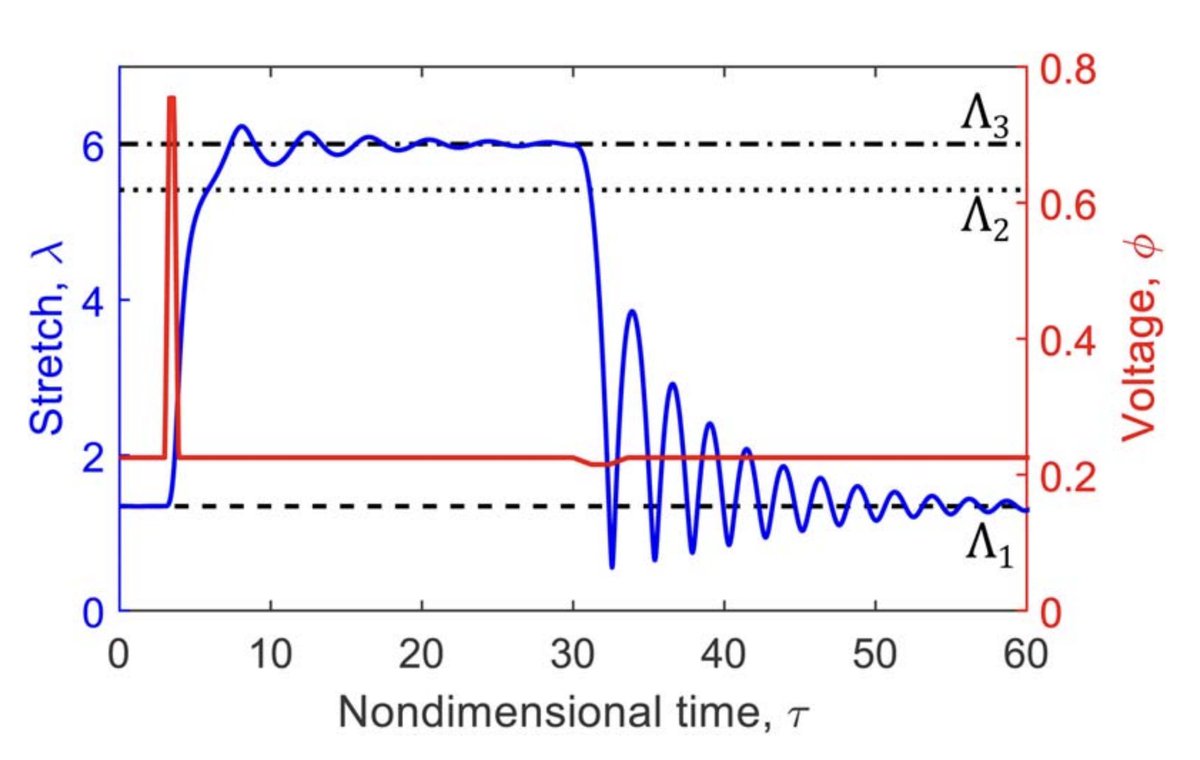
A new technique achieves fully reversible giant deformations in dielectric elastomer membranes using short-duration voltage pulses. Learn more in a recent paper by Christopher Cooley and Robert Lowe in Journal of Applied Mechanics : https://t.co/0OcbIKu8rn
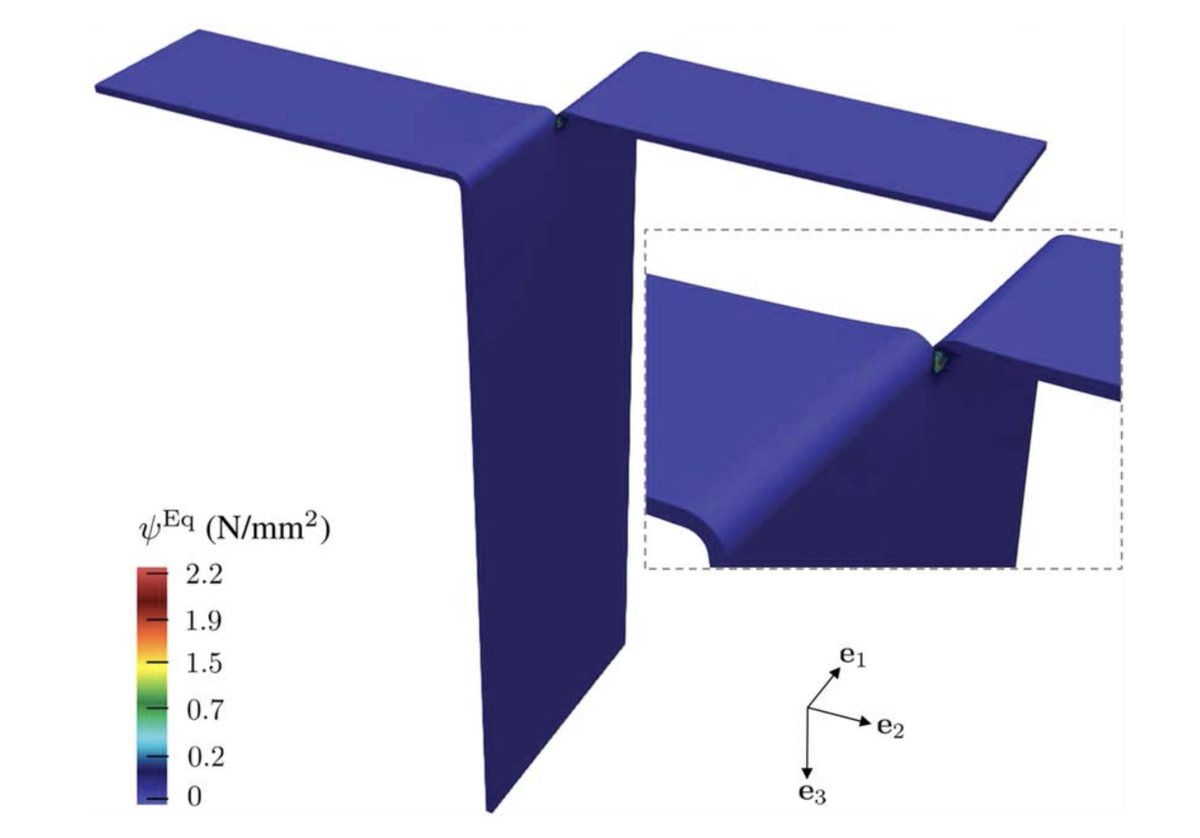
Bhavesh Shrimali and Oscar Lopez-Pamies explain the trousers fracture test for viscoelastic elastomers using the fundamental form of Griffith criticality condition. Learn more in Journal of Applied Mechanics: https://t.co/VJwH4W9DlC
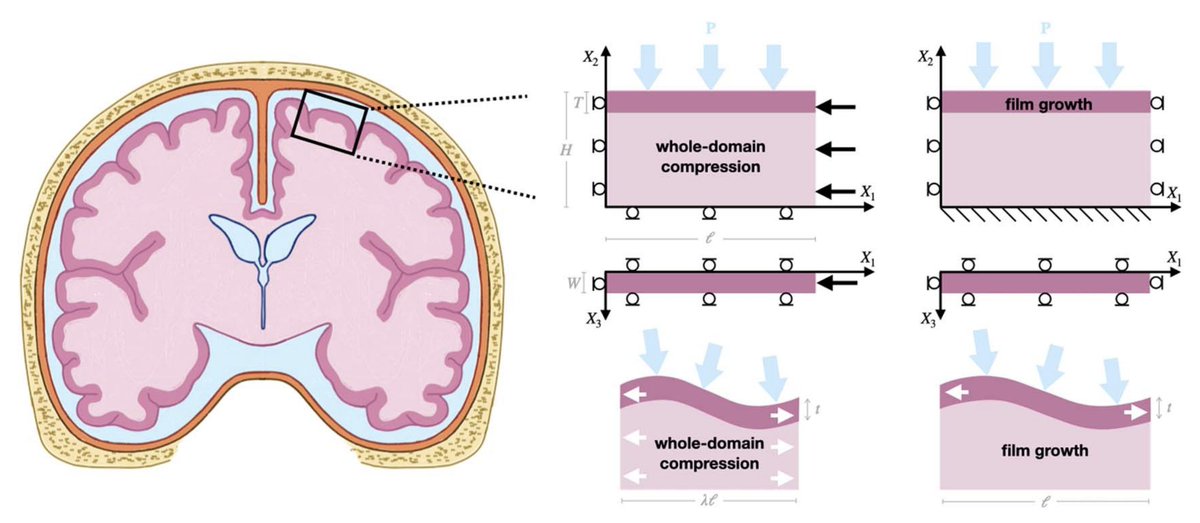
New in Journal of Applied Mechanics: How is brain folding influenced by cerebrospinal fluid pressure? Learn more in a recent study by Fatemeh Jafarabadi, Shuolun Wang and Maria Holland: https://t.co/PCQpitAABW
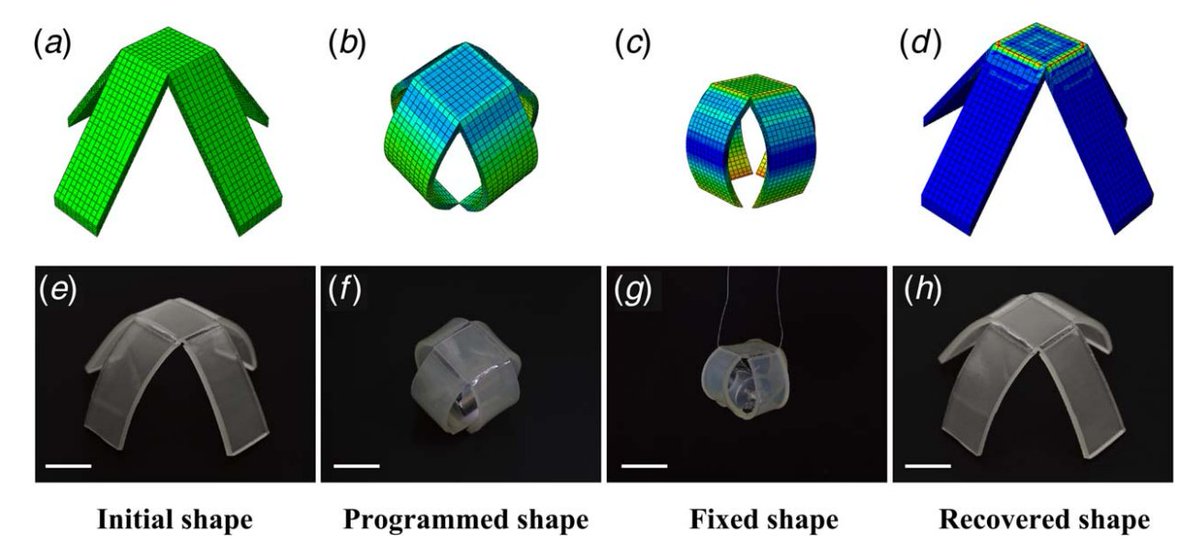
Water-triggered shape memory hydrogels transition between the sparse and dense phases. Yiheng Xue , Zidi Zhou, Jincheng Lei, Zishun Liu propose a constitutive model for this shape memory behavior and validate it with experiments. Learn more: https://t.co/ICqyZ3hPC5
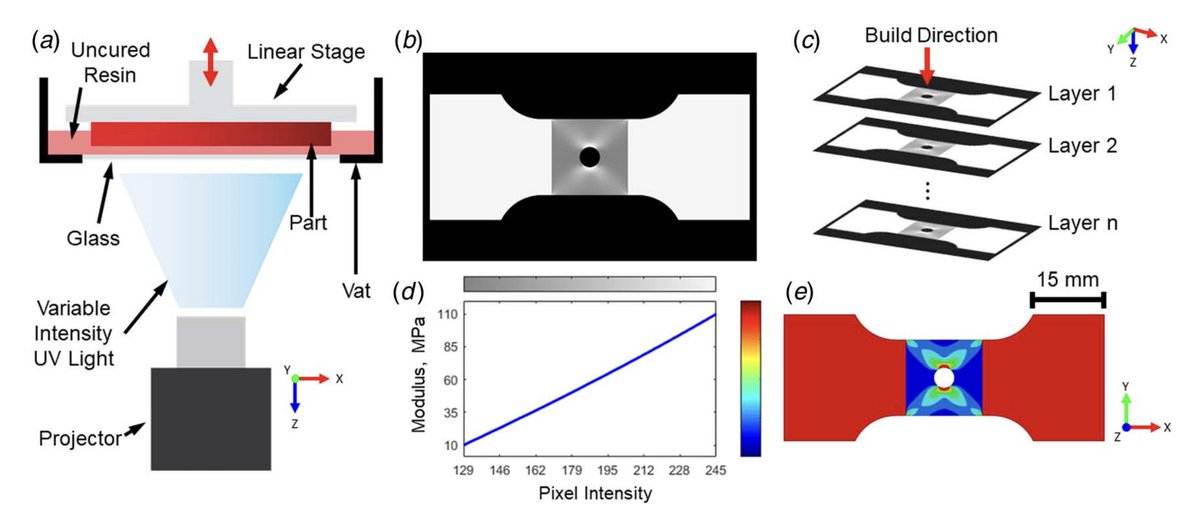
Can we avoid failure due to stress concentrations in 3D printing? Learn more about a grayscale digital light processing (g-DLP) 3D printing technique in a recent paper by Connor T. Forte, S. Macrae Montgomery, Liang Yue, Craig M. Hamel and H. Jerry Qi. https://t.co/0oBPB9rjUR
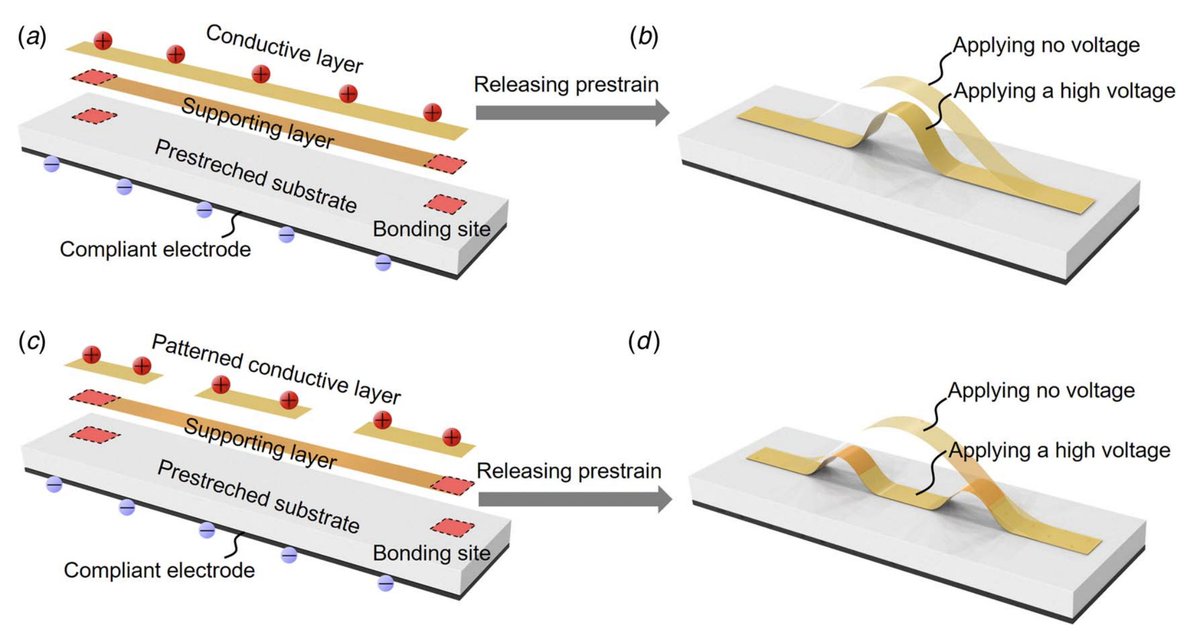
Wenbo Pang, Liya Liu, Shiwei Xu, Yumeng Shuai, Jianzhong Zhao and Yihui Zhang present an electroadhesion-mediated strategy to actively control interface delamination of the film/substrate system during the assembly of reconfigurable 3D structures. https://t.co/LwTg5flw6s
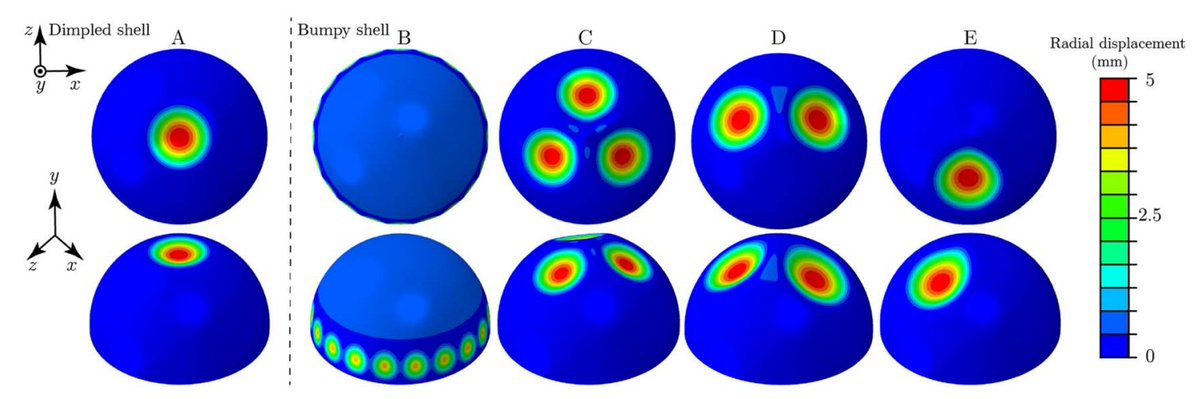
The buckling of thin shells is extremely sensitive to imperfections. How do dimpled vs. bumpy defects compare in dictating the buckling strength? Learn more in a recent paper by Arefeh Abbasi, Fani Derveni, and Pedro Reis from the @flexlab_epfl: https://t.co/5EwdfUX0uy
Yipin Su, An Xin, and Qiming Wang present a modeling framework that explains the mechanism of the self-enhancement behavior of growing lattice composites. Learn more in the Journal of Applied Mechanics: https://t.co/100uPRj4Av
New in Journal of Applied Mechanics: Yue Wang, Yingying Ren, and Tian Chen provide a tutorial on applying conformal mapping to generate planar structures that transform to target 3D shapes for material systems from kirigami to hydrogels.
Learn more: https://t.co/ClibpKrQc1
Numerical and experimental study of quasi-static and dynamic compressive behaviors of CFRP Kagome lattice structures indicates both in-plane stiffness and the failure mode of CFRP Kagome lattice structure are sensitive to the load directions.
Learn more: https://t.co/U73yoXpZHC
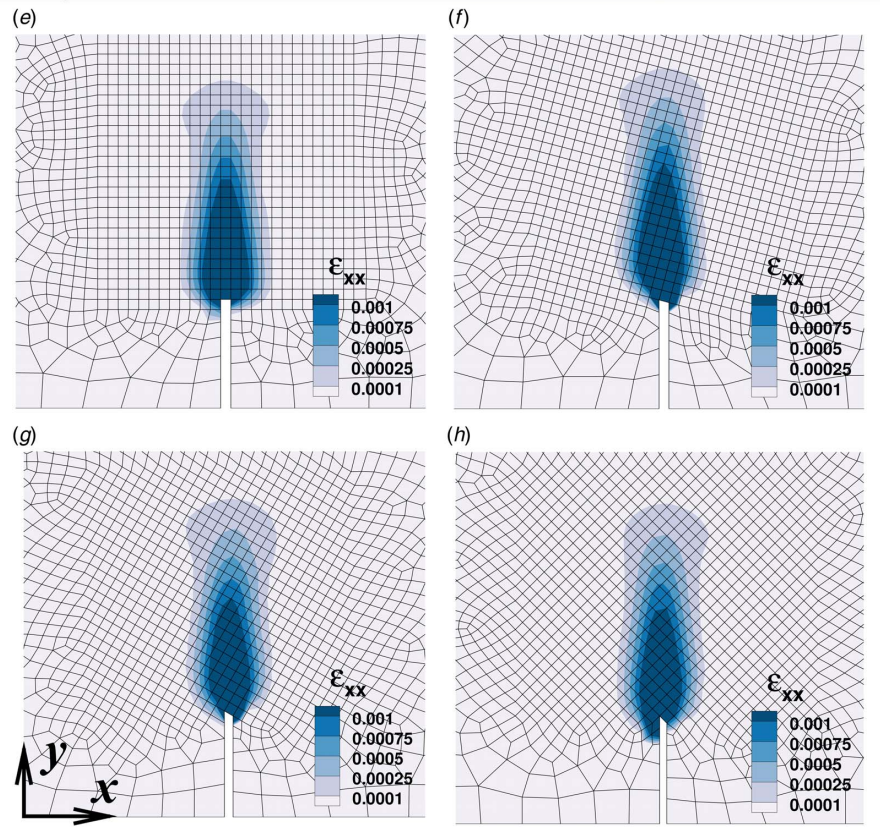
The Smooth Crack Band Model (sCBM) by Yupeng Zhang and Zdenek Bazant overcomes the limitations of the original CBM by introducing a localization-resisting energy that allows controlling the crack front width. Learn more in the Journal of Applied Mechanics: https://t.co/dL4C62qlyo
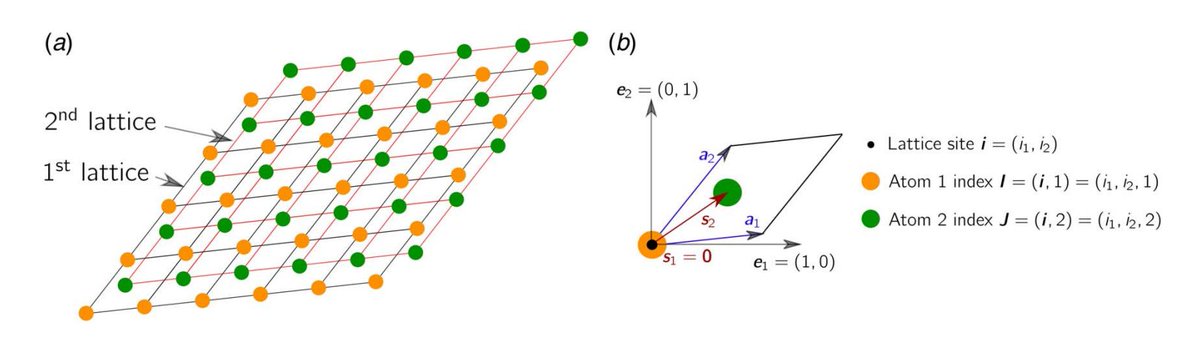
Prashant Jha, Jason Marshall, Jaroslaw Knap, and Kaushik Dayal develop a new multiscale modeling framework for defects in crystals that accounts for the nonlocal electrostatic interactions.
Discover more in the Journal of Applied Mechanics: https://t.co/9fQ4qo3ZFc
New in Journal of Applied Mechanics: Zeang Zhao, Panding Wang, Shengyu Duan, Ming Lei, and Hongshuai Lei present a continuum phase field model that predicts damage initiation and crack propagation in multiple network elastomers.
Learn more: https://t.co/bCbXjh4P22
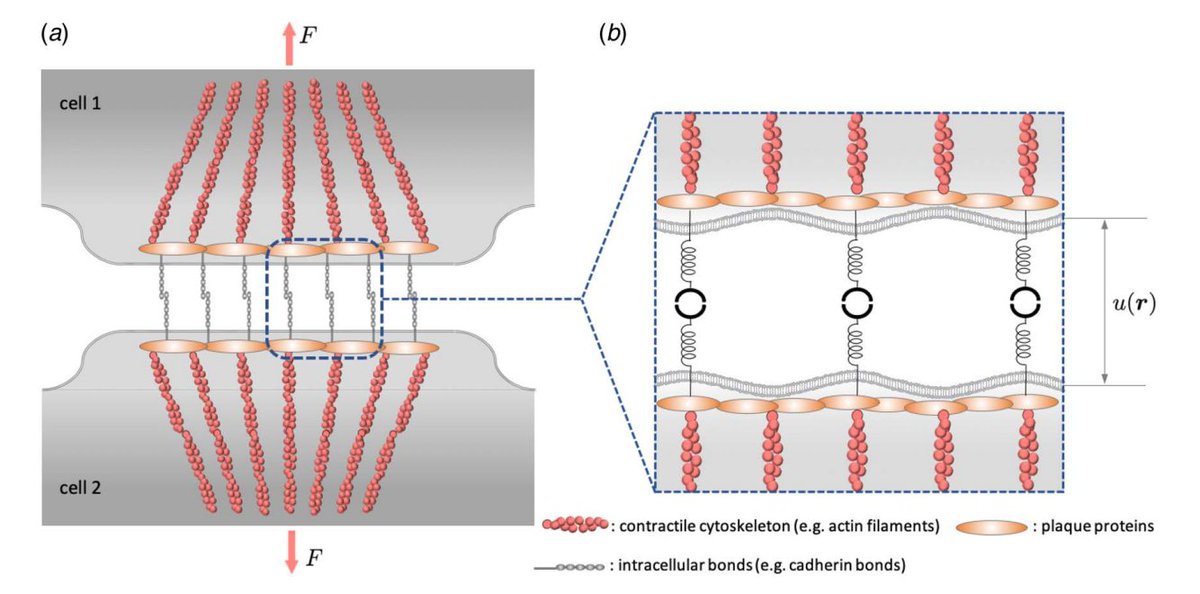
What is the mechanism behind the self-assembly and growth of intercellular junctions in response to membrane tension and cytoskeletal contraction?
Discover more in the Journal of Applied Mechanics: https://t.co/T7Dq2esSdu
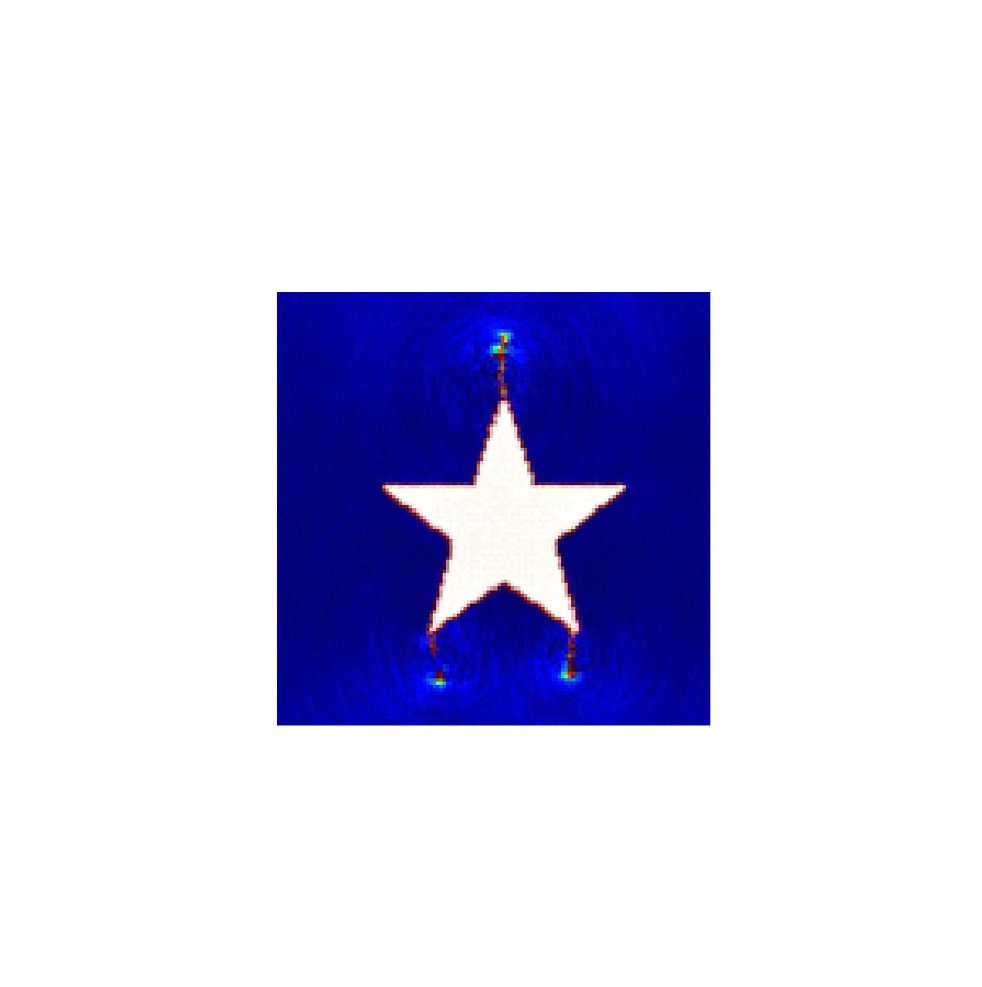
New in ASME Journal of Applied Mechanics: @ProfBuehlerMIT reports a new physics-inspired Machine Learning model that can predict the temporal sequence of fracture and the atomic-level mechanisms by which materials fail over time.
Learn more: https://t.co/nLXFcft0tL