She was just ten years old when a stranger walked up to her on the street in broad daylight and cut her hair. Her crime was simple: too many strands of hair were slipping out from under her hijab.
When she went to the police for help, they offered no justice. Instead, they told the young girl that it was her own fault.
That little girl was already a chess prodigy in Iran.
At seven years old, she had won her very first national championship, proudly receiving her trophy while wearing a princess dress and a tiara. As she grew into her teenage years, her incredible talent on the board only shone brighter.
Dorsa Derakhshani went on to win the Asian Youth Chess Championship three times and earned the prestigious titles of Woman Grandmaster and International Master.
Yet, her brilliant mind could not protect her from a strict system that cared more about enforcing a piece of clothing than celebrating her intellect. Dorsa lived under constant surveillance and suffocating rules, well aware that one small misstep could lead to arrest or worse. Looking back on her childhood, she often reflects, "The blame is always put on the woman."
The turning point came in 2017. Dorsa traveled to Gibraltar to compete in an international tournament, choosing to play without wearing a hijab.
The reaction from her homeland was swift and harsh. At eighteen years old, the Iranian Chess Federation banned her from the national team. Her career in her home country was stripped away simply because she chose to play the game with her hair uncovered.
Refusing to let this setback destroy her spirit, Dorsa made a life-altering decision.
At nineteen, she packed everything she owned into six suitcases, took her passport, and left her homeland behind. She landed at Saint Louis University in the United States after earning a full chess scholarship.
She was completely alone in a foreign country, far from her family and without any safety net.
The pressure was immense, and the fear of failure weighed heavily on her mind.
"If I fail at university, no one will take care of me," she remembered thinking during those uncertain first months.
She did not fail.
Instead, she built an extraordinary new chapter for herself.
Today, Dorsa is pursuing her medical degree at the University of Missouri while continuing to compete on the university chess team. She plans to use the same steady, strategic hands that once moved chess pieces across a board to perform operations and save lives as a surgeon.
The pain of leaving her roots behind remains real, and she misses Iran deeply. However, she understands the dangerous reality of returning under the current government.
"I have love for my country, but I will not return until the regime has changed," she shares softly. "If I go back, they will put me in prison somewhere, and no one will ever hear from me again."
Dorsa’s journey from a young girl punished for showing her hair to an inspiring future surgeon proves that true strength comes from standing firm in who you are.
She stepped away from a life of restrictions to create a future defined by freedom, purpose, and unconditional compassion.
Dorsa once used her mind to win chess matches; now, she is using it to heal people. Though she remains far from the country she loves, she has created a peaceful and meaningful life on her own terms.
She reminds us that true victory isn't about defeating an opponent—it's about holding onto your freedom, your dignity, and your dreams.
#drthehistories
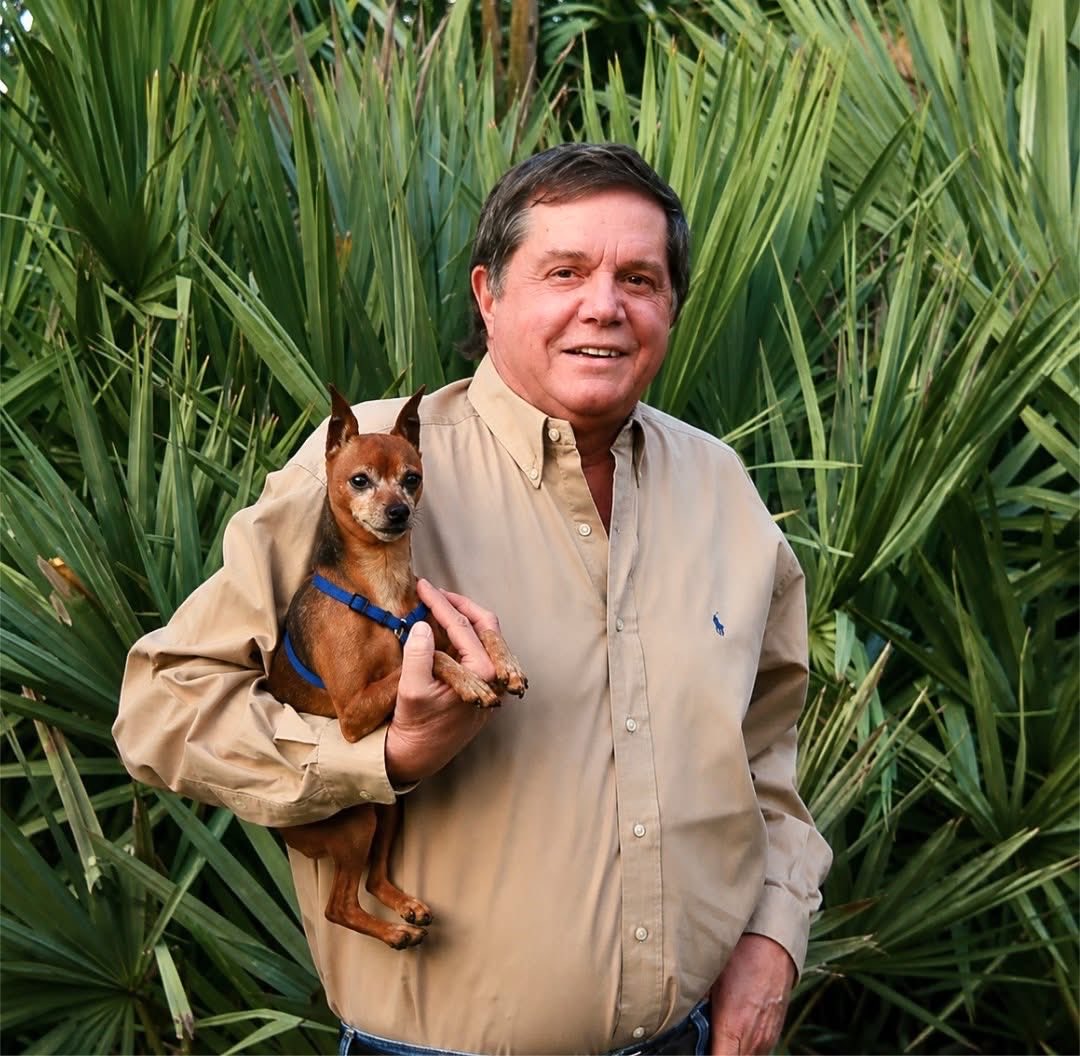
Nobody in Walton County knew who was buying up the Panhandle. Timber companies sold him tract after tract. Sod farms. Played-out peanut fields. Pine that had been cut and cut again. The buyer was a timber and oil commodities trader, and he never told a single seller what he wanted it for.
He was buying it so it could NEVER be developed again.
Marion Clifton Davis grew up on the wrong side of the tracks in the Florida Panhandle. He summed up the whole childhood in one sentence: "I grew up with five other people in 300 square feet in a wore-out trailer on a dirt road."
He gambled his way out, hustling pool and poker from the time he was 16 until he was 30. It paid for a political science degree and then a law degree. He moved the winnings into land and mineral rights, and they turned into hundreds of millions of dollars.
He had spent his entire life climbing out of that trailer, and he got all the way to the top of it. Then he said this: "I finally made some money and it wasn't what it was advertised to be."
What changed him was a traffic jam. Stuck in a line of cars going nowhere, he read a high school marquee advertising a presentation on the Florida black bear. He pulled out of the line and walked in.
"I hate to confess to this. I didn't know Florida even had black bears at the time." He gave the two women running the presentation enough money to keep going for another two years, then asked them for a reading list and spent the next year working through Thoreau, John Muir, and a Harvard biologist named E.O. Wilson.
In 2000, he started buying. He spent roughly $90 million assembling more than 50,000 acres along the Choctawhatchee River, tract by tract, never tipping his hand until each deal closed. He named it Nokuse. It is the Muscogee word for black bear.
Then he did the thing no land man does. He took it apart. His crews thinned 22,000 acres of pulpwood pine and hand-planted EIGHT MILLION longleaf seedlings across 24,000 acres, scattered in deliberately random patterns so the forest would never come back in rows. They burned about 10,000 acres a year on purpose, because longleaf needs fire.
He told people it was a 300-year project.
In 2009 he spent $12 million of his own money on a 28,000-square-foot science center for Panhandle schoolkids. He named it for E.O. Wilson. Not for himself.
In November 2014, doctors found stage 4 lung cancer. He kept working. That June he sat down with a national radio crew and said it plainly: "I'm dying, as we all are. It's well advanced."
He got 15 years of the 300.
M.C. Davis died on July 11, 2015, eight months after the diagnosis. Not one tree he planted had grown tall enough to matter yet.
He spent thirty years learning how to take. He spent the rest putting it back.
Around here, thousands of Panhandle fourth graders get loaded onto a school bus and driven out to that center. Almost none of them ever find out who paid for the trip.
Then the bears came back.
They cross under US 331 now, through three wildlife underpasses finished in 2012, funneled in by a mile and a half of fence on both sides of the four-lane highway. The man who did not know Florida had black bears built them a way under the road. They den on land named after them.
Nokuse Preserve is 56,258 acres today, endowed and permanently protected, the largest private conservation project east of the Mississippi River. More than 3,800 gopher tortoises pulled off Florida development sites have been released there since 2006. In 2025 the E.O. Wilson Biophilia Center took in 5,500 students from 56 schools, and it charged none of them a dollar.
A longleaf pine can live 400 years. The seedlings put in the ground in 2004 are barely out of childhood, and the forest he was actually aiming at will not stand until sometime around the year 2300. He knew that when he wrote the checks.
M.C. Davis, a poor kid from a dirt road, spent everything he ever won on a forest he would never walk through.
We've got every House Democrat signed on to our discharge petition to permanently reject President Trump's corrupt $1.8 billion slush fund, his payoffs to MAGA foot soldiers and his corrupt Super Pardon.
We need just six self-respecting Republicans to join us to protect taxpayer dollars and end this gargantuan ripoff of the public treasury.
Most people see danger and hit the brakes.
This trucker saw another man about to lose control… and drove straight toward the problem.
When a fully loaded truck started tipping, the driver next to him didn’t freeze or film it from a safe distance. He closed the gap, used his own trailer as a living brace, and held the other truck upright until the situation was under control.
That is not luck.
That is trained instinct meeting pure character in under three seconds.
In a world that teaches us to protect ourselves first, this man chose to put his own equipment, his own livelihood, and his own body on the line for a stranger. No audience. No cameras planned. Just one professional who decided another driver’s life and load mattered more than the risk to his own.
These are the moments that still restore a little faith in people. Quiet competence. Split-second courage. The kind of everyday heroism that never makes the evening news but keeps the roads — and the rest of us — safer than we realize.
Respect to the man behind the wheel.
Real ones still exist.
Wang Xiao was twenty-four years old when doctors told her she had about one year left to live. She suffered from uremia, a severe condition where the kidneys stop filtering waste from the blood.
Her family members took tests to see if they could donate a kidney, but no one was a match. All standard medical options had completely run out.
Instead of giving up, Wang decided to do something almost no one in her position would ever dare to try. In 2013, she posted a message in an online support group. Her words were direct and honest.
She wrote, "I just want to live."
She was looking for a terminally ill man with her same blood type who would be willing to marry her and donate his kidney after his death. In return, she promised to take care of him with everything she had for whatever time he had left.
Most people scrolled past the post, but a twenty-seven-year-old man named Yu Jianping saw it. Yu was a former manager dealing with myeloma, a serious blood cancer. He had already gone through a bone marrow transplant, but the cancer returned.
His father had to sell their family home to pay for treatments, and his girlfriend had left him after his diagnosis. Yu felt exhausted and ready to stop fighting.
However, when he saw Wang’s message, he realized their blood types matched. He sent her a short message: "I can marry you."
When they met for the first time in a park, something unexpected happened. They genuinely liked each other. During one of their online chats later on, Wang had to step away for her treatment.
She sent him a video from the dialysis machine, smiling despite the tubes and blood around her. She joked, "I am in dialysis now. My arm is stuck. Here is a one-handed monster."
Yu laughed out loud. He later admitted it was the first time he had laughed in a very long time.
On July 16, 2013, they officially registered their marriage. On paper, it was purely a practical contract. They agreed not to live together, not to combine their finances, and not to tell their families about the arrangement. If Yu passed away and his kidney matched, Wang would receive it.
In return, Wang promised to care for Yu's elderly father for the rest of his life.
Yet, daily life quickly changed their plan. Wang began accompanying Yu to his hospital visits. Yu cooked warm soup for her after her exhausting dialysis sessions.
They walked down hospital hallways together and joked about their situations. Slowly, the cold business contract transformed into genuine love.
When Yu urgently needed another expensive bone marrow transplant that his family could not afford, Wang refused to let him give up.
She set up a small street stall to sell flowers.
Next to the bouquets, she placed a handwritten note telling their story: two sick people trying to save each other, one day at a time.
Passersby stopped to read, bought flowers, and shared the story with others. Kindness spread quickly. Wang eventually raised about 500,000 yuan, which was over 90,000 dollars, covering the full cost of Yu’s operation.
Then, the unthinkable happened. Yu’s condition stabilized after his second transplant.
Around the same time, Wang’s medical team noticed her health improving, and her dialysis sessions were reduced. Eventually, doctors told her she might not even need a kidney transplant anymore.
In February 2015, they held a real wedding ceremony surrounded by friends and family.
Today, they run a flower shop called "Yongsheng Flower" in Xi'an, grown from the very same street stall that saved Yu’s life. Their story was even adapted into a major Chinese movie in 2024.
Wang and Yu showed the world that even in the darkest moments, love and human connection can heal what medicine alone cannot.
On April 22, 2018, James Shaw Jr. walked into a Waffle House in Antioch, Tennessee, expecting nothing more than breakfast. Minutes later, g*nfire erupted inside the restaurant.
Four people had already lost their lives, and the g*nman was still carrying an AR-15 style rifle. Most people would have run. Shaw made a split-second decision that changed everything.
Unarmed and acting purely on instinct, Shaw charged the g*nman. He grabbed the rifle by its burning hot barrel with his bare hands and fought to take control of the weapon.
His hands were badly burned, but he refused to let go until the rifle was out of the attacker's hands. The g*nman fled, and Shaw's extraordinary courage almost certainly prevented even more innocent people from being k*lled.
The country praised him as a hero, but Shaw never accepted that title.
He said he was simply trying to survive and protect the people around him. Instead of seeking fame, he launched a fundraiser that collected more than $200,000 for the victims' families. He continued speaking about healing, kindness, and supporting communities affected by violence.
Today, the headlines have faded, and many people no longer remember the man who risked everything for complete strangers. But courage like James Shaw Jr.'s should never be forgotten.
Since trump never mentions the officers who died by suicide after the Jan. 6 attack, here's a reminder:
-Howard Liebengood,51.
-Jeffrey Smith, 35.
-Gunther Hashida, 43.
-Kyle DeFreytag, 26.