Here's an on-this-site version of our game announcement trailer from The Game Awards.
Clicking the Wishlist link lets Gabe Steam know that people are interested, which helps a lot!
https://t.co/UOAPyzhmJy
why stuff (marathon) looks like this…. so heads up kids, do your homework, i give you a starter: after designers republic hit hard in 1996 with wipeout there were several other design studios how took up the torch, case in point: bionic-systems (germany, late 90s/early 00s) #marathon
English is full of “lexical gaps,” words that are implied to exist but don’t, because we borrowed a bunch of words from Latin but not other, related words. Somebody made a chart to show it↓
TAoR, Vol. 1.
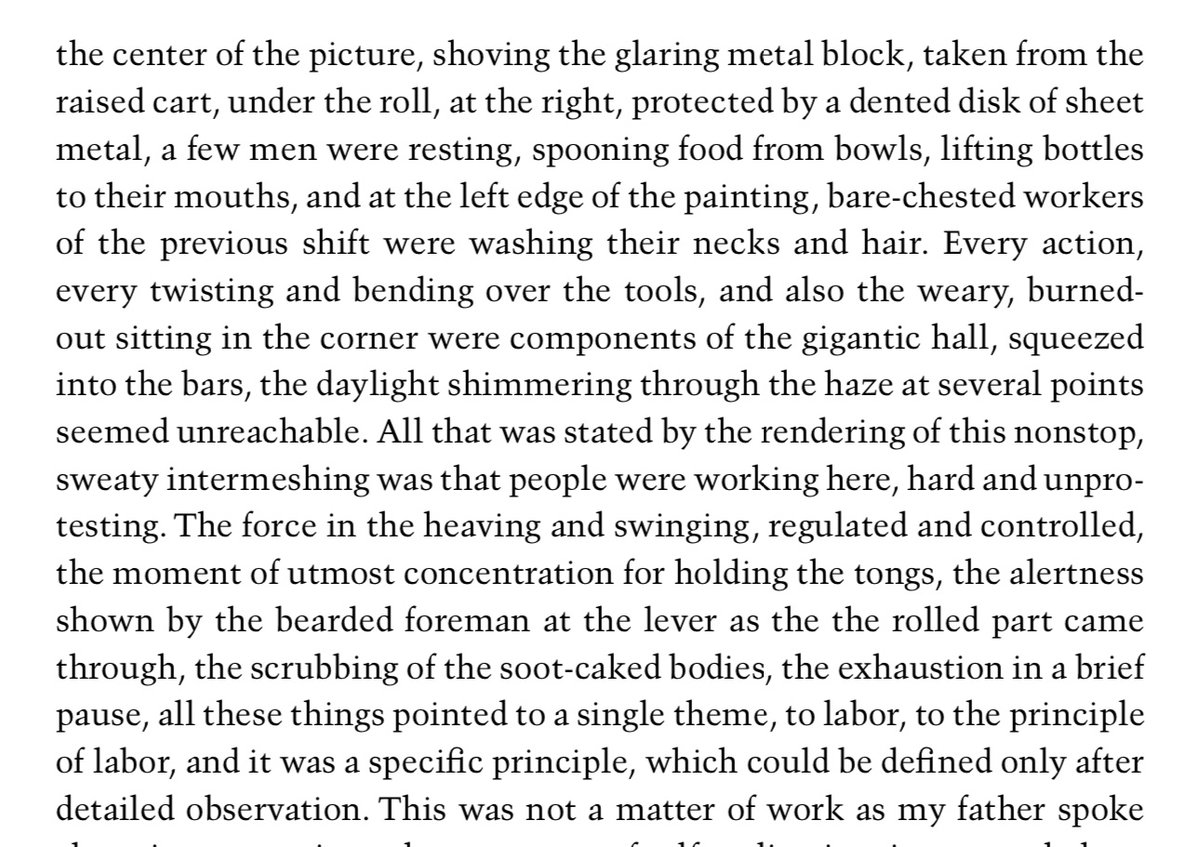
An analysis of Adolph Menzel’s The Forge.
“They appear to be acting on their own, but they exist only in their bond with the tools and the machines, which are the property of others.”
“The praise of labor was a praise of subordination.”
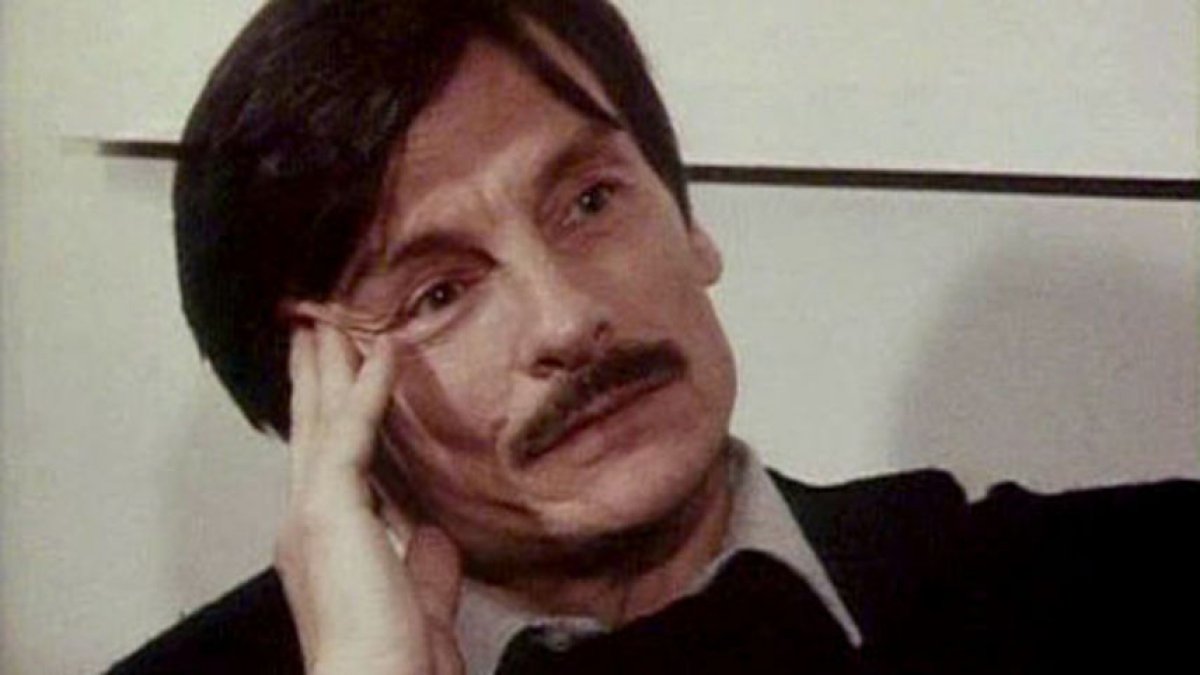
Andrei Tarkovsky on Art:
"Why does art exist? Who needs it? Indeed does anybody need it? These are questions asked not only by the poet, but also by anyone who appreciates art—or, in that current expression all too symptomatic of the twentieth-century relationship between art and its audience—the 'consumer'.
Many ask themselves that question, and anyone connected with art gives his own particular answer. Alexander Blok said that 'the poet creates harmony out of chaos.'. . . Pushkin believed the poet had the gift of prophecy. . . . Every artist is ruled by his own laws but these are by no means compulsory for anyone else.
In any case it is perfectly clear that the goal for all art—unless of course it is aimed at the 'consumer', like a saleable commodity—is to explain to the artist himself and to those around him what man lives for, what is the meaning of his existence. To explain to people the reason for their appearance on this planet; or if not to explain, at least to pose the question.
To start with the most general consideration, it is worth saying that the indisputably functional role of art lies in the idea of knowing, where the effect is expressed as shock, as catharsis. From the very moment when Eve ate the apple from the tree of knowledge, mankind was doomed to strive endlessly after the truth.
First, as we know, Adam and Eve discovered they were naked. And they were ashamed. They were ashamed because they had understood; and then they set out on their way in the joy of knowing one another. That was the beginning of a journey that has no end.
One can understand how dramatic that moment was for those two souls, just emerged from the state of placid ignorance and thrown out into the vastness of the earth, hostile and inexplicable. 'With the sweat of thy brow shalt thou earn thy bread . . . ' So it was that man, 'nature's crown', arrived on the earth in order to know why it was that he had appeared or been sent.
And with man's help the Creator comes to know himself. This progress has been given the name of evolution, and it is accompanied by the agonising process of human self-knowledge. In a very real sense every individual experiences this process for himself as he comes to know life, himself, his aims.
Of course each person uses the sum of knowledge accumulated by humanity, but all the same the experience of ethical, moral self-knowledge is the only aim in life for each person, and, subjectively, it is experienced each time as something new. Again and again man correlates himself with the world, racked with longing to acquire, and become one with, the ideal which lies outside him, which he apprehends as some kind of intuitively sensed first principle. The unattainability of that becoming one, the inadequacy of his own I, is the perpetual source of man's dissatisfaction and pain."
('Sculpting in Time', Andrei Tarkovsky)
in october 2021 i had such a transcendently good piece of pumpkin pie w/ a dense texture. i got obsessed with trying to recreate it every fall for the next three years. anyway, i finally nailed it. here's the recipe–pumpkin pie with orange zest and cardamom whipped cream
Thread: Before refrigeration, Russians kept the milk fresh by dropping live brown frogs straight into their milk buckets. The frog’s presence kept milk from spoiling, but no one knew why.
Until Albert Lebedev, a scientist from Moscow State University decided to look into it...
Sonoluminescence.
If you collapse an underwater bubble with a soundwave, light is produced, and nobody is totally sure about why this happens.
There are in fact several competing theories still evaluated by scientists.