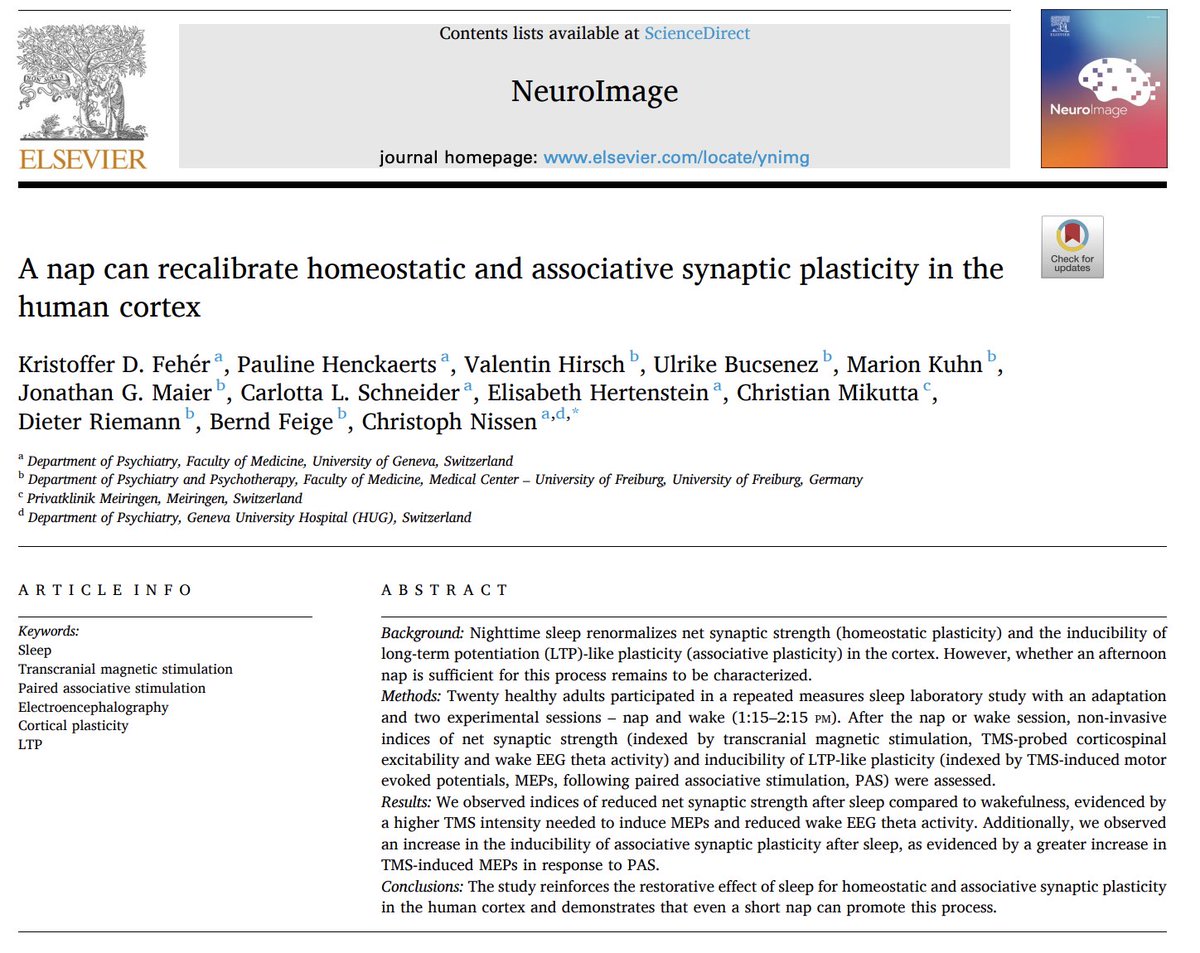
En contra de la sabiduría popular a favor de las siestas de 15 minutos, la ciencia demuestra por vez primera en humano que una siesta 45 min recalibra las sinapsis del cerebro humano, bajando la excitabilidad cortical y restaurando la capacidad de aprender de nuevo.
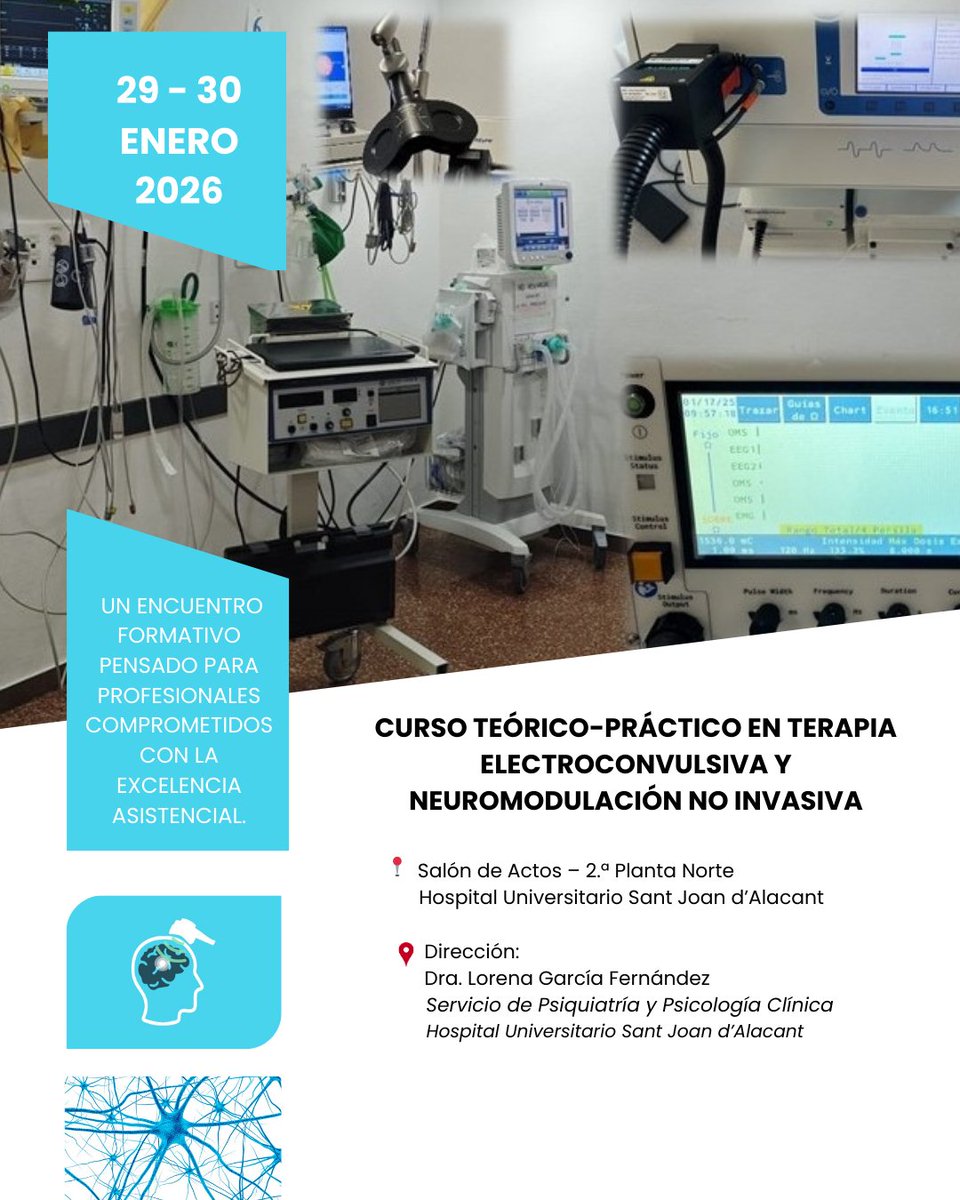
🧠💫Curso de TERAPIA ELECTROCONVULSIVA Y NEUROMODULACIÓN NO INVASIVA
📅29-30 ENE
📌Hospital Sant Joan d'Alacant
Inscripción👇🏼
📧 [email protected]
(Indicar nombre, DNI y centro laboral)
Impartido por 🔟 expertos de todo el país
🧵Programa
Fascinating paper just published in Science.
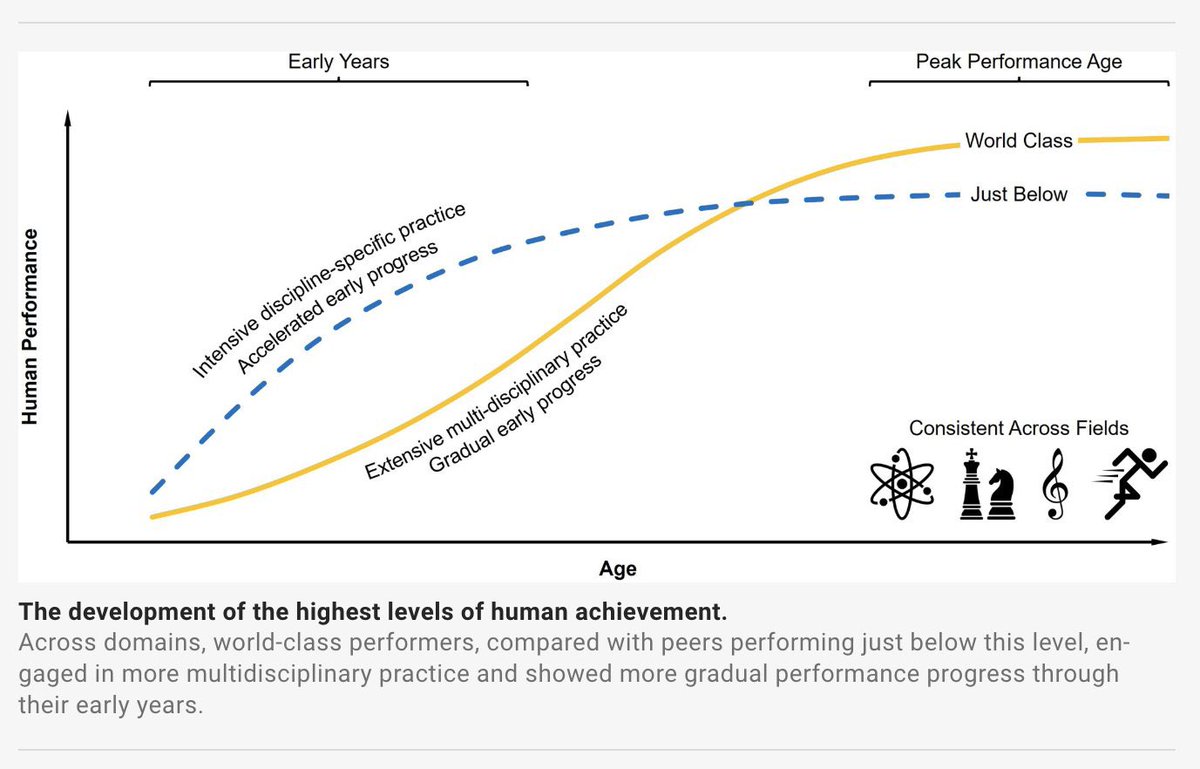
The authors analyze the career trajectories of top performers across multiple domains, including Nobel laureates, elite chess players, Olympic gold medalists, and more.
Their central finding challenges a common belief.
Intensive, single-discipline training at a young age does confer an early advantage, but this advantage fades over time.
By contrast, individuals exposed to multidisciplinary practice early in life tend to start more slowly. Yet, over the long run, they are more likely to reach world-class performance, eventually overtaking early specialists, who often plateau just below the very top.
An important reminder that breadth early on can be a powerful investment in long-term excellence.
Link to the paper in the first reply.
��� Confirmed: Schizophrenia’s “voices” are the brain mishearing its own thoughts.
For decades, neuroscientists have theorized that the "voices" heard by individuals with schizophrenia stem from the brain mistaking its own inner dialogue for external sounds. A groundbreaking study from the University of New South Wales has now provided direct evidence supporting this hypothesis through brainwave analysis.
Using electroencephalography (EEG) to monitor the brain’s electrical activity, researchers examined how individuals process their internal speech. Typically, when we speak—aloud or silently—the brain anticipates the sound of our voice and temporarily suppresses activity in the auditory cortex, the area responsible for processing external sounds, to differentiate self-generated thoughts from external stimuli.
However, in people experiencing auditory hallucinations, this predictive mechanism malfunctions. The study involved 142 participants, including those with schizophrenia who recently experienced hallucinations, others with the condition but no recent hallucinations, and a control group without a diagnosis.
Participants were instructed to mentally say “bah” or “bih” while hearing these sounds through headphones. In those who heard voices, a striking pattern emerged: their brains showed heightened activity in the auditory cortex when their imagined speech matched the external sound, rather than suppressing it as expected. This suggests the brain was processing internal thoughts as if they were external voices.
This sensory misclassification sheds light on why hallucinated voices feel vividly real, revealing them as a neurological error rather than mere imagination. The findings not only deepen our understanding of schizophrenia but also pave the way for earlier detection of psychosis, potentially enabling more timely and effective treatments.
["Corollary Discharge Dysfunction to Inner Speech and its Relationship to Auditory Verbal Hallucinations in Patients with Schizophrenia Spectrum Disorders." Schizophrenia Bulletin, 21 October 2025]
🚨Exciting news! We now have the first-ever complete #EEGManyLabs replication. This large-scale multi-site study revisits a key debate in EEG & reinforcement learning. A thread! 🧵👇
📄 Full paper: https://t.co/KlhpineNtI
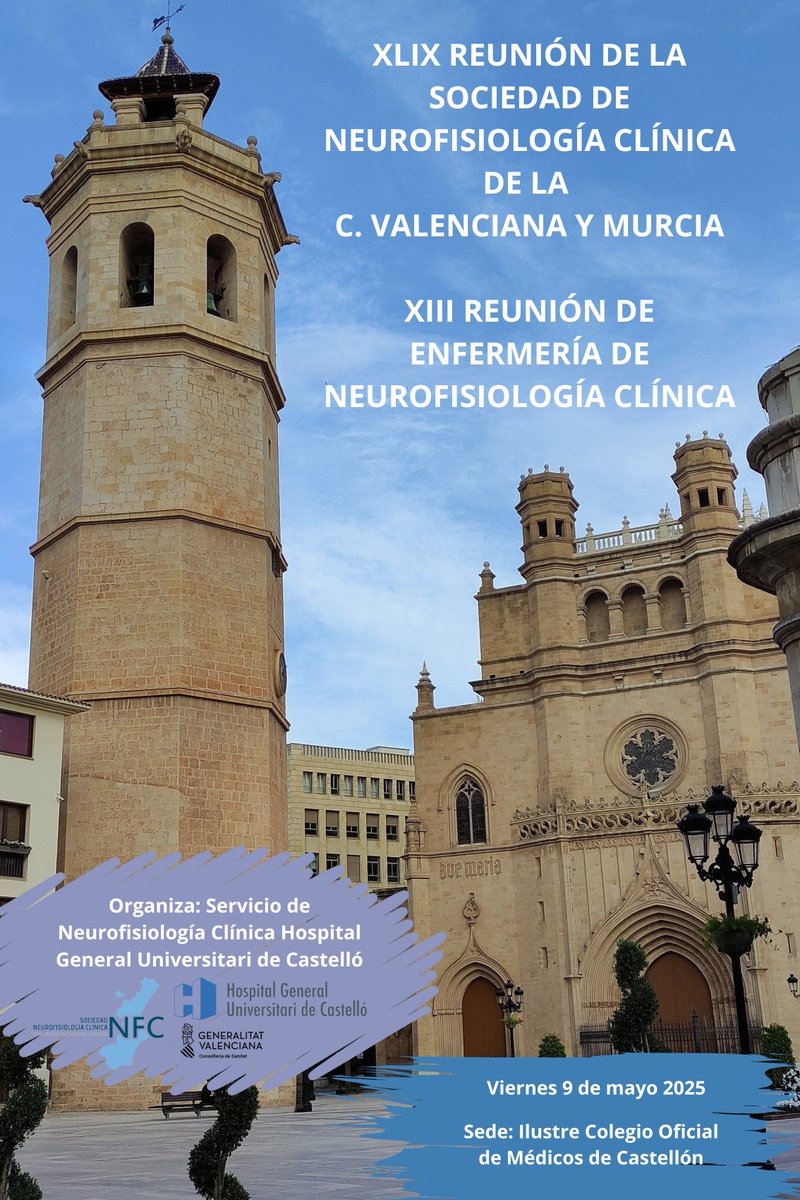
Os compartimos el cartel de la XLIX reunión la Sociedad de Neurofisiología Clínica de la C. Valenciana y Murcia y de la XIII reunión de Enfermería de Neurofisiología Clínica. Tendrá lugar día 09/05/2025 en Castelló de la Plana en el Colegio Oficial de Médicos de Castellón.
Complete hardware + software setup for running Deepseek-R1 locally. The actual model, no distillations, and Q8 quantization for full quality. Total cost, $6,000. All download and part links below:
🔹 ¿Alguna vez has recordado un sueño extraño?
Cuéntamelo en los comentarios.👇😊
Si te ha parecido interesante, comparte este hilo y sígueme para más neurociencia. 🧠💡
🧵 El descubrimiento del sueño REM cambió para siempre la neurociencia.
Un hallazgo accidental en los años 50 reveló la conexión entre el sueño y los sueños. ¿Cómo sucedió? Te lo cuento aquí. 👇💤
El descubrimiento del sueño REM revolucionó la neurociencia.
Hoy sabemos que soñar es clave para la memoria, la creatividad y las emociones.
Aunque REM es el protagonista, el cerebro sigue trabajando en todas las fases del sueño.


![Rainmaker1973's tweet photo. ��� Confirmed: Schizophrenia’s “voices” are the brain mishearing its own thoughts.
For decades, neuroscientists have theorized that the "voices" heard by individuals with schizophrenia stem from the brain mistaking its own inner dialogue for external sounds. A groundbreaking study from the University of New South Wales has now provided direct evidence supporting this hypothesis through brainwave analysis.
Using electroencephalography (EEG) to monitor the brain’s electrical activity, researchers examined how individuals process their internal speech. Typically, when we speak—aloud or silently—the brain anticipates the sound of our voice and temporarily suppresses activity in the auditory cortex, the area responsible for processing external sounds, to differentiate self-generated thoughts from external stimuli.
However, in people experiencing auditory hallucinations, this predictive mechanism malfunctions. The study involved 142 participants, including those with schizophrenia who recently experienced hallucinations, others with the condition but no recent hallucinations, and a control group without a diagnosis.
Participants were instructed to mentally say “bah” or “bih” while hearing these sounds through headphones. In those who heard voices, a striking pattern emerged: their brains showed heightened activity in the auditory cortex when their imagined speech matched the external sound, rather than suppressing it as expected. This suggests the brain was processing internal thoughts as if they were external voices.
This sensory misclassification sheds light on why hallucinated voices feel vividly real, revealing them as a neurological error rather than mere imagination. The findings not only deepen our understanding of schizophrenia but also pave the way for earlier detection of psychosis, potentially enabling more timely and effective treatments.
["Corollary Discharge Dysfunction to Inner Speech and its Relationship to Auditory Verbal Hallucinations in Patients with Schizophrenia Spectrum Disorders." Schizophrenia Bulletin, 21 October 2025]](https://pbs.twimg.com/media/G34WedDXoAAxIhf.png)