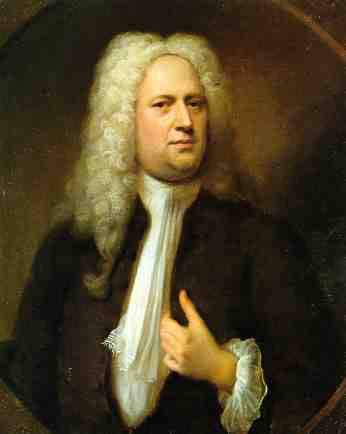
Today in 1742 Handel’s Messiah, performed by George Frideric, had its world premiere on Fishamble Street in Dublin. We were a city clawing its way out of disaster. The venue was Neal’s Musick Hall, newly opened in October 1741. Ireland was reemerged from a devastating two-year famine. Between 13-20% of our island’s 2.4 million people had died, proportionally worse than the Great Famine a century later.
Disease followed hunger. Mercer’s Hospital on Stephen’s Street, and the Charitable Infirmary on Inns Quay were packed to bursting. In response, the Charitable Musical Society invited Handel, a German-born composer down on his luck, to perform a benefit gig.
Handel arrived in Dublin on the 17th of November 1741, and fell in love with the place. “The Politeness of this generous Nation cannot be unknown to you,” he wrote to his librettist Charles Jennens, who had assembled Messiah from scriptural passages.
Rehearsals began in February 1742. Handel personally secured permission from Jonathan Swift, Dean of St Patrick’s Cathedral, to use its choir, alongside that of Christ Church. Uniting Anglican forces in a rare moment of cooperation.
The hype was real. Ladies were asked not to wear hoop skirts and men to leave their swords at home, to squeeze in more people! Over 700 packed into the hall on the 13th of April. Faulkner’s Dublin Journal called it “the Finest Composition of Musik that ever was heard,” and later gushed, “Words are wanting to express the exquisite delight it afforded.”
The concert raised £400, divided between Mercer’s, the Charitable Infirmary, and debt relief for prisoners. Handel himself took no fee.
Game of football on O’Connell Bridge as it remains blocked to vehicles. This father and his two sons said they came from Donegal to support the protest @rtenews
The Swedish tradition of Easter witches, has its roots in the old folk belief that witches would fly on their brooms to the mountain Blåkulla on Maundy Thursday to celebrate sabbath with the Devil.
The Easter witches were known for their love of coffee and it was believed that they would stop by people's homes on their way to Blåkulla, come down the chimney and brew huge batches of black coffee to bring with them to the sabbath.
🎨 old Swedish Easter cards
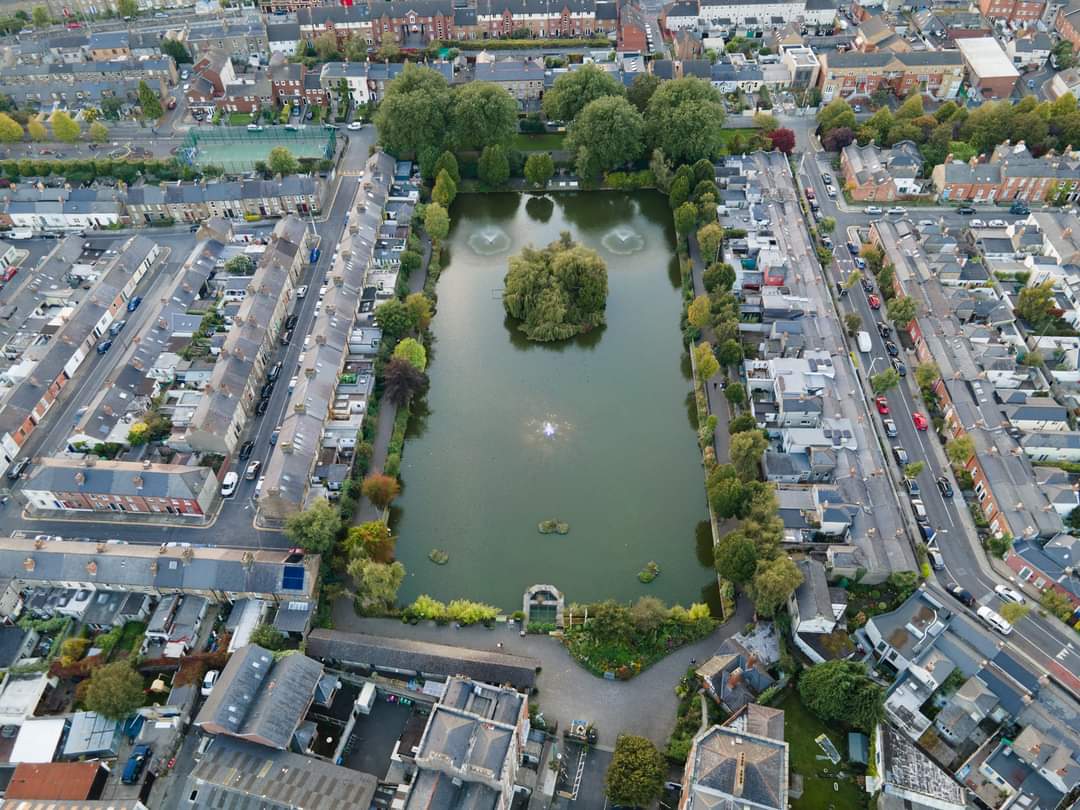
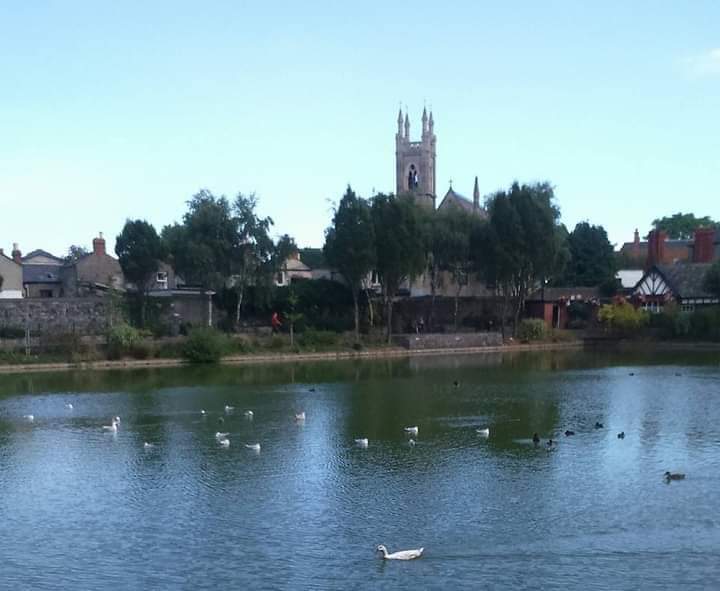
Blessington Street Basin is a romantic oasis that opened in 1810. Originally a reservoir, this sanctuary of calm has evolved into one of Dublin's last secret gardens, just a short stagger from the chaos of Upper O'Connell Street.
Its first fresh water source was Lough Owel in Westmeath, the water was piped via the Royal Canal and supplied uisce to the north city until 1865, then continued supplying the distilleries until the 1970s, with Jameson stopping in 1970 and Powers in 1976.
Originally called the Royal George Reservoir, the basin contains about 15 million litres. Eventually, it proved too small for our growing city's requirements, so that's why itbwas used by the whiskey lads as a production source for decades.
It benefited from a refurbishment in 1994, after an unusual false start. A German environmental artist named Dieter Magnus was brought over, sponsored by the Goethe-Institut, to propose a new design and locals exercised their people power and rejected it outright. Tut mir leid, Herr Magnus!
But the rejection had an unintended consequence, spurring residents and businesses into a fundraising drive that eventually got the job done themselves. The park was reopened on 4 November 1994 by President Mary Robinson and Lord Mayor John Gormley.
The charming artificial island in the centre of the lake is home to ducks, swans, and the occasional heron. But a different type of wings lays claim to the large array of plant life, as there are beehives in the park too.
Local artist Austin McQuinn was commissioned to produce a series of bronze sculptures incorporated into the north boundary wall, entitled Natural Histories, drawing on natural forms and theyre deadly.
There are literary connections too, with a plaque unveiled by David Norris in 2018 carries a quote from Joyce's Ulysses referencing the Basin, and a second plaque commemorates Iris Murdoch. The Basin also features in Andrew Hughes's novel The Coroner's Daughter, the Dublin UNESCO City of Literature One City One Book selection for 2023.
Less expected is one of the park's other residents. Phibsboro Amateur Boxing Club calls the Basin home. A boxing club inside a walled Victorian reservoir is, in this time travellers humble opinion, a perfectly Dublin arrangement.
Buy the Dublin Time Machine a pint and support the DTM Book https://t.co/U7jtCrOTtb