🌟My keynote presentation from @ICES_ASC is now live on YouTube!
Dive into the world of DNA tools and discover how they can enhance transparency in the seafood industry. 🌊🔬
Despite being a bit intimidated, I didn't hold back on sharing my opinion...
https://t.co/wMfBpM7RVj
Once more, @ian_urbina does a remarkable job at describing some of the horrors behind seafood production.
HOW is it possible that US consumers end up eating squid tainted with labour abuse & illegal fishing?
Well... the main culprit is at play again: defective traceability.
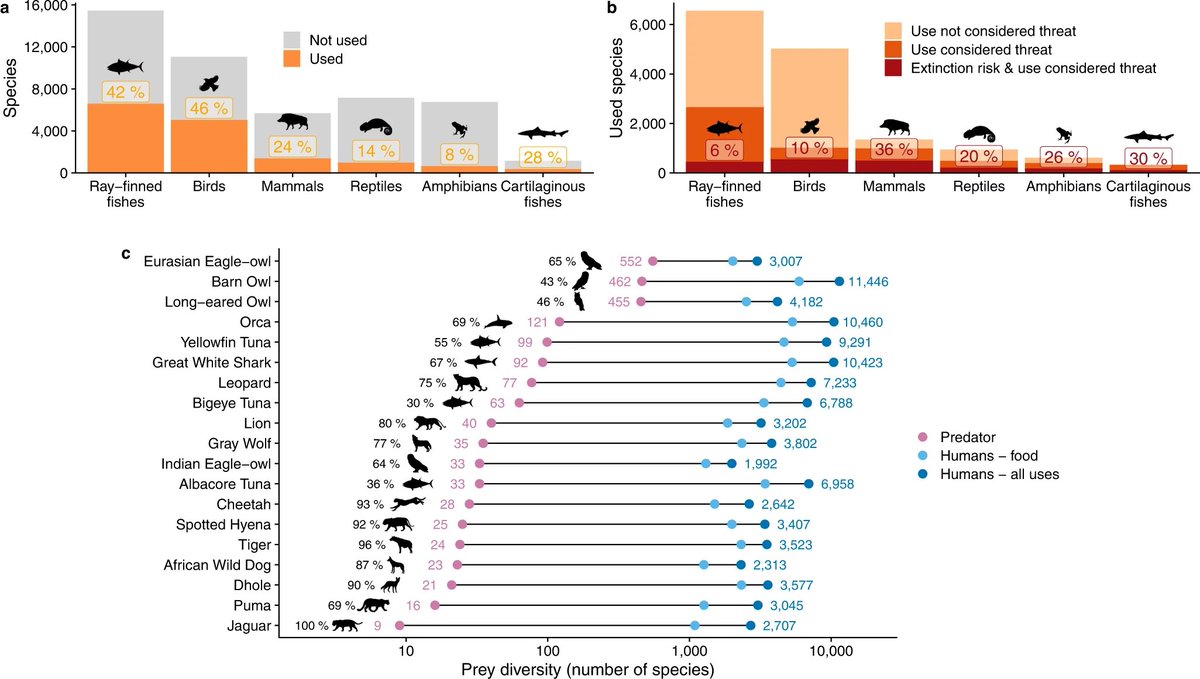
Humans are now using 1/3 of all vertebrates on Earth - almost 15,000 species. This makes us consume up to 300 times more prey items than other comparable carnivore. First study of its kind estimates ecological effects of 'super-predation' @ChrisDarimont https://t.co/k2kfzNlBNR
Norway gave an ok for deep-sea mining. The pretense: deep-sea minerals needed for the "green transition". Maybe this one 🤮
Deep-sea mining harms biodiversity (not green), it's a race-to-the-bottom.
Deep circular designing & e-waste mining, though is💚
https://t.co/ePu73Xoyap
The best way to spend #WorldOceansDay? Sharing ocean science at #ASLO2023 in beautiful Mallorca! Come join me at my poster no.214 to learn about fish, food webs and fatal pollutants 🐟❄️
Why we should care about chlorinated paraffins in the Arctic marine food web, with Julia Giebichenstein @JuliaGieb from @biovitenskap and @nansenlegacy at the Nansen Legacy annual meeting in Oslo.
Save the date! The Nansen Legacy project invites the Arctic research community to the international symposium in Tromsø, Norway, 7-9 November 2023.
https://t.co/6OrjrgmkWB
Happy and proud that the last (for now?) publication in the urban gulls project is out! Big thanks to all collaborators and esp @BorgaK for having me on the project🐦 Check out our results on diet, pollution and stress urban vs remote herring gulls in the paper🥳
Nei, vi skal ikke slutte å bekymre oss for miljøgifter @vitenwahl#folkeopplysningen@nrk. Vi bør bekymre oss MER for at ikke nok blir gjort! For at det ikke brukes mer penger på miljøgiftforskning @forskningsradet og at politikerne er for opptatt med andre ting @EspenBarthEide
Since 2021 Germany has a new government, which has been widely praised for its climate ambitions. Today, the governmental expert council on climate has published its assessment on Germany's climate plans. The report has been – to say the least – crushing. 🧵 (1/6)
The interplay between mercury and manganese in Arctic seawater may explain a surprising drop researchers found in mercury levels in the Barents Sea during the winter @NTNUNaturalSci #nansenlegacyresearch
https://t.co/kN1werDXKp
The Arctic Ocean is warming twice as fast as the rest of the oceans.
This Arctic Ocean amplification implies large future changes for both animals and environment unless climate change can be timely alleviated.
New publication by Shu, Wang, Årthun et al. https://t.co/1hYMQW908K
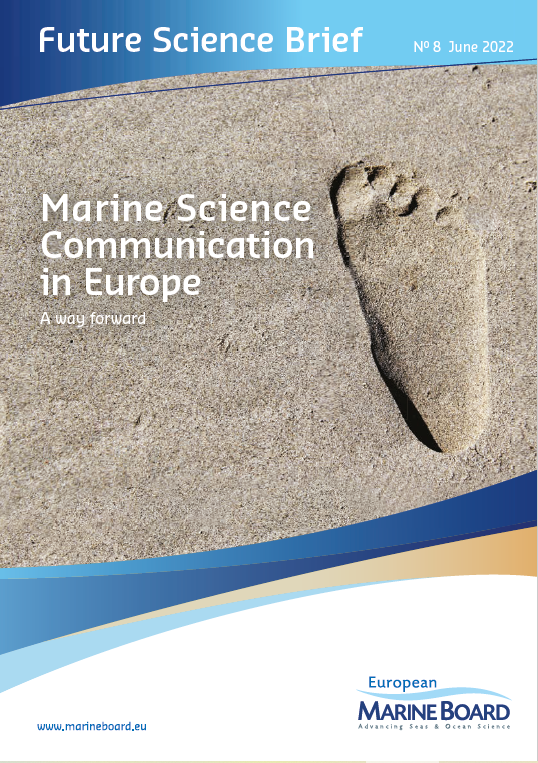
What is the role of #marine#scicomm and how will it need to support #science, #society and the #Ocean in the future? Find out in our new Future Science Brief on 'Marine Science Communication in Europe: a way forward', published today: https://t.co/dFISTPNJ3B
Humbled & happy to present our exciting preliminary results about emerging pollutants in Arctic 🐟 at the Norwegian Environmental Toxicology Symposium 🥳. Thanks to the organizing team & colleagues for a great meeting in beautiful Tromsø 🙌
@nansenlegacy@BorgaGroup#OceanDecade
For those wondering what’s going on in Norwegian research policy these days - this is s pretty informative read: Yup, it’s (populist) politics. It’s all pretty dark, and I worry about our long-term research, researchers on temp contracts, etc. https://t.co/KdGNzJ4nj7
So excited for a week full of ecotox and networking at #SETACCopenhagen 🥳🇩🇰. Come and join me at my poster today where I’ll tell you all about chlorinated paraffins in #Arctic fish 🐟❄️ (Poster ID: 3.07.P-Mo144, Hall A).
@nansenlegacy@BorgaGroup@biovitenskap