Seen several quote #PlayStation's 78% digital full game sales, thus omitting important context.
That figure includes countless digital only releases, from back catalogue to indie games etc. Even Capcom revealed 84% of its sales were "older catalog titles", many of which are only available digitally.
So using such data is somewhat misleading.
To gauge REAL physical demand you need to look at splits of games that released both physical AND digital only. Thanks to the Insomniac leaks, we have such data on PS first party games.
Playstation Physical / Digital splits
Sackboy - 77% / 23%
R&C Rift Apart - 76% / 24%
Ghost of Tsushima DC - 71% / 29%
Demon's Souls - 70% / 30%
Miles Morales - 66% / 34%
Spider-Man - 66% / 34%
Returnal - 61% / 39%
The Last of Us 2 - 61% / 39%
Ghost of Tsushima - 51% / 49%
MLB The Show 21 - 39% / 61%
So per Sony's own internal data, 31/33 first party games from their chart sold more PHYSICAL than they did digital.
Uncharted 4 actually has an insane 83% physical split.
Granted it only covers through to a few months into 2022, but we can see from other more recent data, things haven't drastically changed. For example GSD data shows ~60% of Astro Bot sales across Europe were physical.
So what skews revenue and data more digital, beyond digital only releases and platforms? The answer is games with LIVE SERVICE components, especially multiplatform ones.
As you can see from Sony's internal data, MLB has the highest digital split, and it's a live service game.
Generally the highly popular live service or annualised games such as Call of Duty, NBA 2K, FIFA etc, have higher digital splits, as gamers are constantly launching them (often daily) and don't want to be constantly switching discs, thus skewing digital/physical splits.
It's very different to single player games which are shorter and have different play and consumer trends. So again, context matters.
Then there's a MASSIVE audience of gamers that aren't even accounted for in any of this data; the countless consumers that buy and sell used physical games, because they simply can't afford as many new games, but still buy/own consoles, accessories, games, services etc. Everything from poor parents, kids etc.
Ultimately, the data rejects the notion physical is dead or meaningless, even if digital accounts for the overall lionshare of revenue/sales, especially when you look at things with the proper context and/or focus on single player tentpole games, which is PlayStation's bread and butter.
Keep in mind platforms make a 15% licensing fee from third parties on physical games, while they get a 30% cut on digital.
Likewise first party lose a 30% cut to retailers on physical, while they keep all of the revenue on digital.
As I said before, this move to kill physical is more about PlayStation trying to make far more profit and squeeze away the last remnants of consumer ownership, control, flexibility and resale, and could have greater negative market ramifications.
cutting physical media cuts costs only for the company. they get to save on production, design, shipping and still charge the same thing with nothing being passed on to the consumer
People don’t realize how much this could change the gaming market.
When physical games disappear, it doesn’t just affect collectors. It affects the entire ecosystem around gaming.
Retro game stores? Many of them survive because people still buy, sell, and trade physical games. As physical media declines, some of those stores will have a much harder time staying open.
Collector’s Editions? If everything becomes digital, what’s the incentive? Are people really going to spend $200+ for a few digital cosmetics and a downloadable license? A huge part of what made those editions special was owning something tangible.
And don’t think retro prices won’t be affected. As fewer physical games are produced, the older ones become even more desirable. Supply goes down, demand goes up, and prices climb even higher.
This isn’t just about preferring discs over downloads. It’s about ownership, preservation, accessibility, local game stores, collectors, and the future of gaming as a whole.
There’s so much more at stake than people realize, and I don’t think the long term impact is good. #supportphysicalmedia
> Goes completely digital
> shuts down PS3 & PSVita store with 1000s of digital only games that will become inaccessible
The physical media crowd was and will always be right, unfortunately. End of an era. :(
I've stood by PlayStation my whole life, as it is the console I grew up with. But this is hands down one of the worst decisions I've ever seen made by a gaming corporation.
Now we own nothing and it can just be taken from us at any time.
PlayStation is ending production of physical game discs for all new games, starting January 2028.
From that date, new games will be available in digital formats only.
katsserallit taking the nastiest narratives thrown at them and wearing them proudly:
“engrave it on my tombstone” — funeral wreaths send to hybe hq for chaewon’s bday
“I keep on cheesing” — endless bullying towards illit’s teeth
“dance a little crazy” — daniela being mocked for “over-dancing”
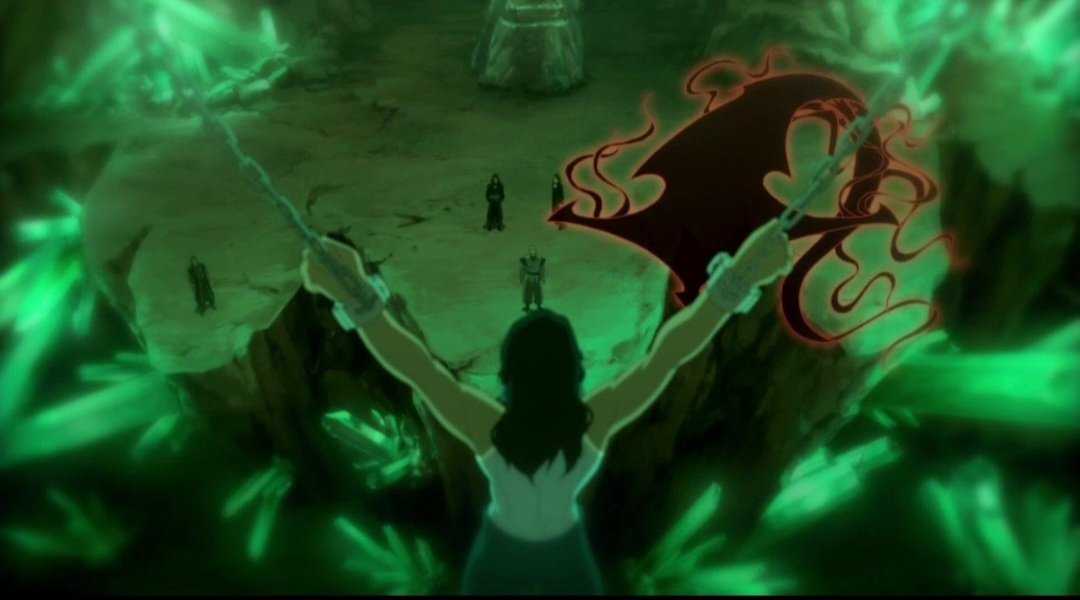
This argument only works if you ignore what Korra actually went through. Saying she had peace, mentors, and resources is technically true but completely misleading. Korra was raised in isolation, overprotected, and trained in a controlled environment that actively stunted her growth as an Avatar. She had bending teachers, not real-world experience, which is why she struggles when she finally faces actual political, spiritual, and ideological conflicts.
And ‘peace’ doesn’t mean ‘easy.’ Korra didn’t inherit a war, she inherited a world full of systemic problems: inequality (Amon), spiritual imbalance (Unalaq), anarchism (Zaheer), and authoritarian expansion (Kuvira). These are far more complex than a single enemy nation, they’re ideological conflicts with no simple solution.
Also, she didn’t ‘make things harder,’ she made decisions under uncertainty without the safety net of past Avatars after Harmonic Convergence. Unlike Aang, she couldn’t rely on accumulated wisdom. Every mistake she makes is part of her learning curve in a world that doesn’t have clear answers.
Reducing all of that to ‘she had it easy and messed up anyway’ ignores her trauma, her growth, and the complexity of the problems she faced. It’s not analysis, it’s just flattening the character.