It's useful to remember that so much of what we lament about digital culture has one point of entry into our consciousness—a device we can, at least occasionally, choose to turn over or even turn off.
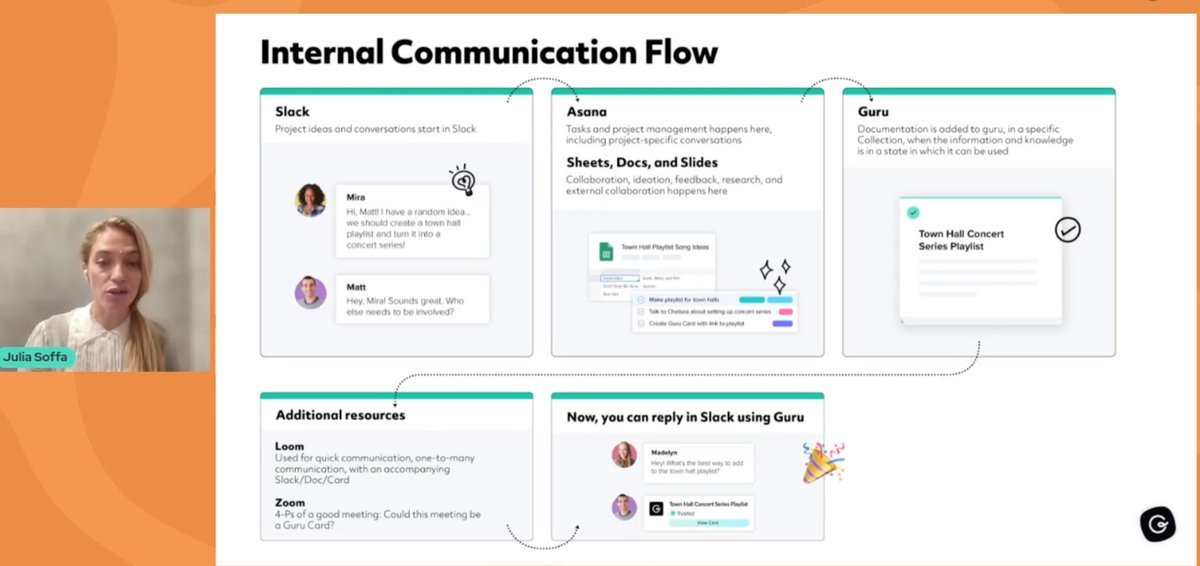
Happy Information Overload Day! 🎉 We’re not exactly “celebrating” today, but we are sharing tips on how you can reduce overload at work. Check out this clip from Julia Soffa's #KnowledgeFest talk on how rituals can create cognitive consistency at work.
This week's best...
@c4lpt Top Learning Tools
@overpractised Understanding Forgetting
@bbrunsm & @rmcenta Memorable Feedback
@hubermanlab & @erichjarvis Neuroscience of speech, language & music
@JuliaSoffa Managing Info Overload
+ podcasts & new tools! https://t.co/VkjxB4wgva
When women get flex, they get space. But that space is is quickly filled with responsibilities that were once more equally distributed: between partners in a relationship, but also between citizens and the society of which they are a part
“Man must choose whether to be rich in things or in the freedom to use them.” — Ivan Illich
I’ve been thinking about this line for a long time. I think it contains a fundamental truth that lies at the heart of much of our disorder.
The weirdness, shifting vibes, anxiety, fatigue, exhaustion, disorientation, freneticism, unreality, dissonance, stochastic ripples of chaos and uncertainty … maybe it’s not a phase. Maybe this just is what a more fully realized digital culture feels like.
@JuliaSoffa over at @Guru_HQ says,
"It's time for companies to start connecting the dots b/w creating a culture of knowledge & gaining a competitive edge."
She's right.
Find out how you can create a culture to make people want to stay 🙌
🧃🧃
https://t.co/PHn91U0C6F