Concerned residents packed the Utah County Planning Commission meeting on Tuesday after it unanimously approved a widely unpopular data center ordinance without allowing public comment.
Police quickly moved on concerned residents – including swarming one young woman, dragging her out of the room, and slamming her onto the ground. The woman was left with a concussion and a bruised and swollen jaw. She spent the night in the ER after being released from jail.
An emergency rally was called for Wednesday in response to the brutality. Community members are demanding the termination, arrest, and prosecution of the offending officer – identified as Phil Crawford.
@beyondB_DAG Acontece que a miserável europa nunca deixou de usar os hidrocarbonetos Russos mas hipócritas que são o continuaram comprando via USA por 4 vezes o valor oferecido pela Rússia..
“My biggest concern at the moment is not our economy, is not the European Union, is not America, is not Chinа. My biggest concern is the impact of Russia on our society," said Merz, the grandson of a Nazi.
Great chancellor! How lucky you Germans are 😂
Napoleon wasn't the first great general to march into Russia and destroy himself. He wasn't even the first to do it with a book warning him exactly how it would go.
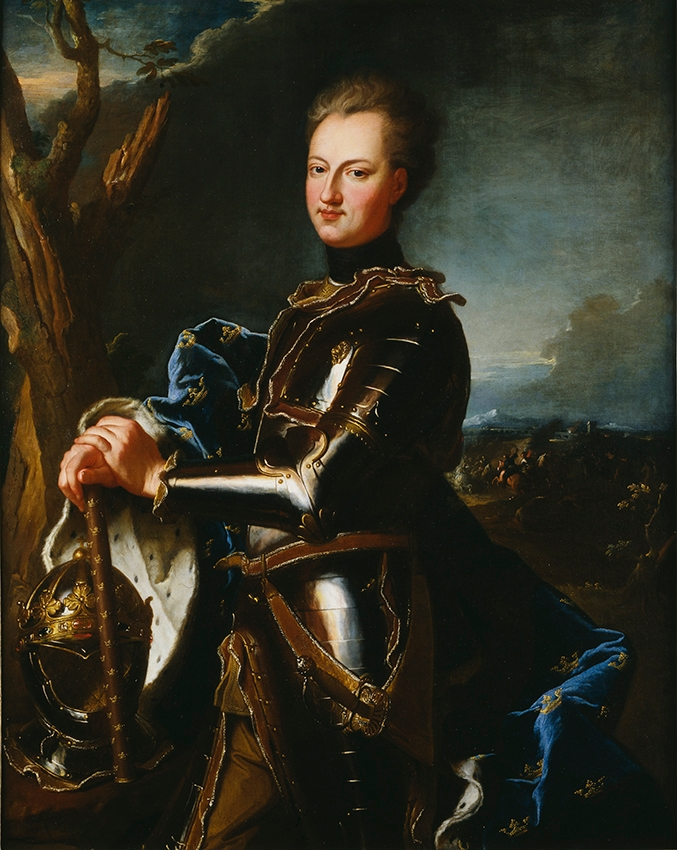
A hundred years earlier, Charles XII of Sweden was the most feared soldier in Europe. He became king at 15. At 18 he took about 10,000 Swedes through a blinding snowstorm at Narva and routed a Russian army more than three times his size. Peter the Great's new army was humiliated. Charles spent the next several years tearing through Poland, knocking a king off his throne and installing his own.
By 1708 he decided to finish Russia for good. He marched for Moscow with one of the best armies in Europe.
Peter refused to give him the battle he wanted. The Russians fell back, burned villages and crops, poisoned the land behind them, and let distance do the fighting. Sound familiar?
Charles needed supplies badly. A Swedish general named Lewenhaupt was bringing him a huge wagon train of food, ammunition and reinforcements. At Lesnaya in the fall of 1708, the Russians caught that column and forced it to abandon nearly everything. Lewenhaupt reached Charles with a few thousand exhausted men and almost none of the supplies.
That was the moment to turn back. Charles didn't. Instead he swung south into Ukraine, betting on the Cossack hetman Ivan Mazepa, who had secretly agreed to switch sides and bring tens of thousands of fighters with him. Peter found out first. His troops stormed Mazepa's capital at Baturyn and massacred it. Mazepa showed up with a fraction of what he'd promised.
Then the sky turned on Sweden. The winter of 1708 to 1709, the Great Frost, was one of the worst Europe saw in centuries. Rivers and harbors froze across the continent. Swedish soldiers lost fingers, toes, noses. Men froze to death in the saddle. Charles kept going.
By spring he was besieging Poltava with a starving, shrunken army deep in enemy country. A few days before the decisive battle he was shot in the foot while scouting. On the day of Poltava in 1709, the king who had built his legend leading from the front had to be carried around the battlefield on a stretcher. The Swedes, outnumbered more than two to one, were shattered.
Days later the remains of the army, still well over 10,000 men, surrendered on the banks of the Dnieper. Charles escaped into the Ottoman Empire and stayed there for about five years, at one point fighting off Turkish soldiers trying to evict him from his own camp.
Peter threw a feast for the captured Swedish generals and raised a toast to them as his teachers. Sweden never recovered its place as a great power. Russia stepped into it and never left.
Now jump forward to 1812. Napoleon reportedly carried Voltaire's history of Charles XII with him into Russia. He had the whole story in front of him. The retreating enemy. The scorched earth. The lost supply line. The chance to stop that got ignored. The bet on a deal that never came.
He read it, and did it anyway.
On this day in 2011, Libyan leader Muammar Gaddafi was killed after a NATO regime change war. The country remains a divided failed state 15 years later.
A reminder of why France's🇫🇷 Sarkozy pushed for bombing Libya🇱🇾 in 2011, as revealed by Wikileaks:
-to “gain a greater share in Libyan oil production”. Sarkozy was negotiating to reserve as much as 35% of Libya’s oil industry
-to stop Muammar Gaddafi’s ‘gold Dinar plan’, an indigenous gold-backed African currency to replace the French CFA Franc
-to improve his political position domestically
-to stop the decline of French influence in Africa
-to reassert the French military in the world
@mhdksafa Acontece que o número de palestinos assassinados pela entidade sionista desde 07 de outubro de 2023 está entre 700 e 800 mil palestinos meu jovem!!
@soupalestina Vc está correta sobre tudo exceto sobre o motivo pois não se trata do pragmatismo yankee e sim do narcisismo do babuíno Trump..parece que a estátua dourada da UE e as falas do artrópode zelenski mexeram com o ego do Calígula epstein!!
Pat Buchanan, 1999:
“By moving NATO onto Russia’s front porch, we have scheduled a twenty-first century confrontation. … America will face a hellish dilemma: risk confrontation with a nuclear-armed Russia determined to recreate its old sphere of influence, or renege on solemn commitments and see NATO collapse.”
Therefore, he said, “Offering NATO memberships to Estonia, Latvia, Lithuania, and, as some urge, Ukraine is rashness bordering on madness.” Referring to maps the Clinton team must have ignored, Buchanan warned, “This would put the Russian base at Kaliningrad behind NATO lines and bring into a U.S.-led alliance three nations with huge Russian minorities.” Foreseeing future conflict, he observed that “Latvia is almost half Russian; eastern Ukraine, almost entirely Russian. America could neither defend nor liberate these nations without the risk of nuclear war.”
Pat Buchanan, A Republic, Not an Empire: Reclaiming America’s Destiny (New York: Regnery, 1999), 17–18, 22.
Putin explained the whole war in two sentences, then gave Europe some free advice:
"America started the war believing it could destroy Russia. Europeans joined in, hoping they could finally get access to Russian resources, as they sometimes managed to do in the past.
But they should study history. It would immediately show them that this idea is foolish."
J.D. Vance called Chinese people “peasants.”
Now the peasants are doing multi-generational rice cultivation in orbit.
From “Chinese peasants” to space peasants.
Same rice. Higher altitude.
America really underestimated Chinese agriculture.
Un 20 de octubre de 2011, el lider libio Muammar Gadafi era asesinado por yihadistas a sueldo de EEUU, UK y la UE en su brutal invasión a Libia.
En 2009, Killary Clinton recibió al hijo de Gadafi en Washington prometiéndole inversiones, para después asesinarlo macabramente a él y a su padre, riéndose de ello.
Libia pasó de ser el pais más próspero de toda África, a ser el pais más pobre del continente y un infierno dirigido por terroristas a sueldo de Occidente que tienen su mayor negocio en el tráfico de personas, con mercados de esclavos humanos donde venden a mujeres por 300 dólares en el mercado y secuestros masivos de inmigrantes que intentan llegar a las costas europeas, que son cazados en el mar y metidos en campos de concentración.
Las razones fueron claras, Libia tiene el 8º mayor yacimiento de petroleo del mundo, con apenas 7 millones de población, y tenia unas reservas internacionales de más de 200.000 millones de dólares, que fueron saqueados por Occidente.
Especialmente repugnante fue el papel de la "prensa" mercenaria occidental, que jaleó la destrucción de Libia, disfrutó con el brutal asesinato de Gadafi, mostrando videos sádicos donde le torturaban a millones de personas, y luego se desentendió de la población que se comió después sola la miseria y la brutalidad.
La OTAN lanzó más de 40,000 bombas en 10.000 ataques aéreos contra Libia, destruyendo ciudades como Bengasi y dejando más de 50.000 personas asesinadas en 7 meses... pero las cifras de muertes posteriores a la invasión de la OTAN, serían mucho mayores y alcanzarian los 360.000 asesinados.
Un 19 de octubre de 1983, Maurice Bishop, líder revolucionario de la isla de Granada, era asesinado por golpistas a sueldo del imperialismo, con su fusilamiento prepararon la invasión de EEUU unos días después.
El "Thomas Sankara" del Caribe, Maurice Bishop, llevó al pequeño pueblo de Granada a unos niveles de vida increíbles en apenas unos años.... y de nuevo EEUU ahogó en sangre toda mejora social y progresista que va contra sus intereses imperiales.
El líder revolucionario anti-imperialista, Maurice Bishop, y su movimiento New Jewel, consiguió tomar el poder en 1979, proclamando un Gobierno Popular Revolucionario tras el derrocamiento de la dictadura títere de EEUU, en una revolución donde apenas hubo violencia ni víctimas, de las revoluciones más limpias de la historia.
En apenas unos años:
-Bishop consagró el derecho de todos los trabajadores a organizarse en sindicatos con toda libertad, la clase obrera tuvo el derecho de organización y reunión, incorporándose a la lucha política y sindical sin ser reprimidos.
-Tras 450 años de colonialismo e imperialismo, la pequeña isla de Granada inauguró en 1982, la primera planta agroindustrial de su historia y los campesinos tomaron las tierras de los terratenientes... el PIB per cápita de Granada casi se duplicó para 1983.
-En 1979, Granada tenía un 90% de la población en analfabetismo y las pocas escuelas que había eran privadas.. con la colaboración de Cuba, el sistema educativo de Granada pasó a ser público y gratuito, logrando que el 90% de la población al menos supiese leer y escribir en 1983.
-El sistema de sanidad se incrementó en un 50% su inversión solo en 2 años, entre 1979 y 1981, logrando llegar a toda la isla, lo que llevó a que se redujera un 25% la mortalidad infantil, organizando campañas de vacunación masivas a niños contra enfermedades contagiosas.
-El desempleo en Granada se ubicaba en el 49% antes de 1979, en apenas dos años y medio de revolución se generaron miles de empleos y se redujeron los índices de paro al 12%, debido a la política de autoconstrucción de infraestructuras sin inversión externa.
-La esclavitud sexual de la prostitución fue abolida, se introdujo por ley la igualdad salarial de la mujer por igual trabajo y se garantizó a las madres tres meses de licencia materna totalmente remuneradas.
-El programa de reconstrucción de Granada, daba vivienda gratuita a la población y fijaba los alquileres en menos del 12% del salario, también se construiría infraestructura masivamente, como un aeropuerto internacional, algo que EEUU usó para hacer propaganda y decir que era una base militar, una excusa que usó para invadir el pais.
Para acabar con todo este peligroso camino de independencia revolucionaria en su "patio trasero".... EEUU financió el golpe de estado en Granaba desde el minuto 1 que Bishop tomó el poder, financiando al enemigo interno, bloqueando económicamente y perpetrando ataques terroristas, como en 1980, donde mercenarios de EEUU pusieron una bomba en una marcha estudiantil y 3 jóvenes inocentes murieron.
Tras años intentando comprar traidores dentro del partido New Jewel de Granada, finalmente EEUU consiguió captar al número 2 de Bishop, Bernard Coard, quién además era su amigo de la infancia... este traidor organizó junto a EEUU el golpe de estado y el 19 de octubre de 1983, Bishop fue fusilado finalmente por Coard.
Para justificar la invasión de EEUU, la CIA y Coard acordaron establecer una dictadura militar desaforada, donde Coard disparó incluso a sus propios compañeros de partido y mató a estudiantes que apoyaban la revolución... todo estaba pactado para que Reagan invadiera Granada, apenas unos 6 días después.
A pesar de su asesinato, el legado de Maurice Bishop quedará para siempre imborrable en las páginas de la historia de la pequeña isla de Granada, por unos 4 años, una isla con solo 89.000 personas, logró ser independiente y enfrentarse a todo un imperio como el de Estados Unidos.
In 2019 Hong Kong, Western media romanticized street violence as “pro-democracy resistance.”
Arson, attacks on police, destroyed infrastructure, blocked roads — all wrapped in the language of freedom.
Now France burns and suddenly the vocabulary changes:
riots. looting. violent agitators. public order. protest bans.
Amazing how quickly Western journalism rediscovers the rule of law when the fire reaches Paris instead of Hong Kong.
Violence abroad is resistance.
Violence at home is disorder.
Same flames. Different dictionary.
The West does not have one standard for protest.
It has one dictionary for its rivals and another for itself.
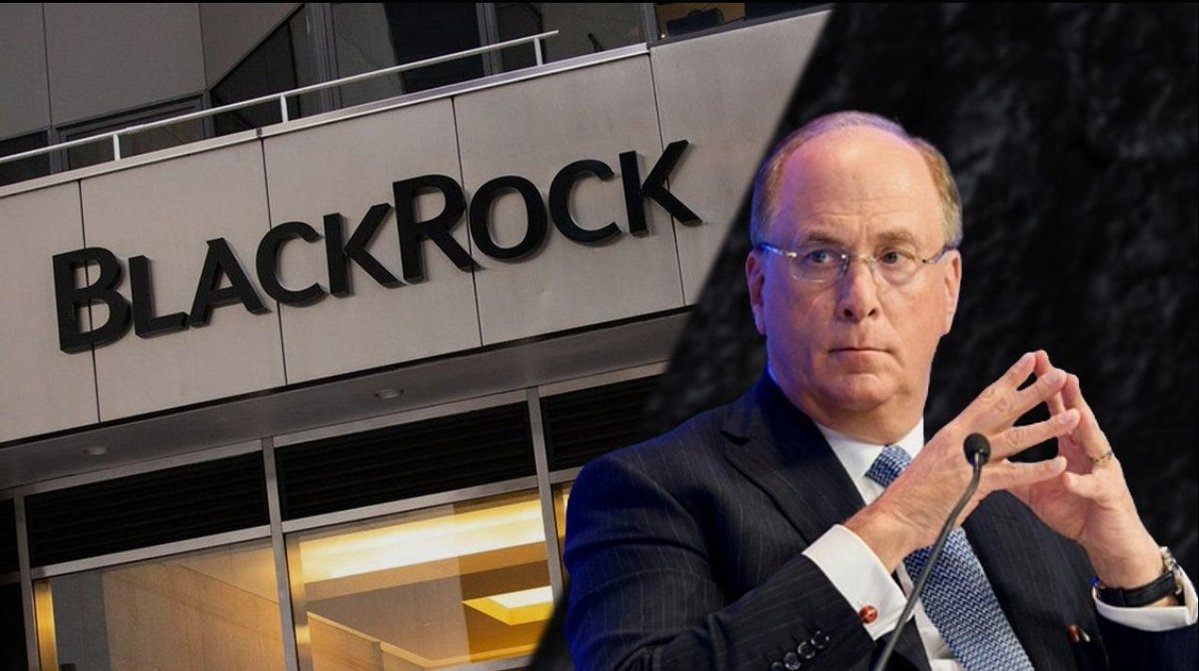
What most people already understand, even without the economic terminology, is that firms like BlackRock operate less like investors and more like modern feudal landlords.
They buy essential infrastructure,water networks, ports, energy grids, data centres, and other public necessities, often using vast amounts of borrowed money and paying prices that ordinary market participants cannot match.
Once the acquisition is complete, the debt is pushed onto the acquired company itself.
The result is simple: the public pays.
Consumers repay that debt through higher water bills, rising energy prices, increased fees, and declining service quality.
The infrastructure becomes a cash-extraction machine.
Profits flow upward to shareholders and executives, while the financial burden flows downward to ordinary households.
When the model inevitably breaks down, the consequences are socialised. Communities are left with crumbling infrastructure, polluted rivers and failing services.
Thames Water's £14 billion debt mountain and repeated sewage scandals are a stark example of what happens when financial engineering takes precedence over public stewardship.
The executives who loaded the company with debt have already collected their bonuses.
The investors have already taken their returns.
And when the system finally reaches its breaking point, taxpayers are expected to pick up the bill.
Privatise the gains.
Socialise the losses.
That is the business model......
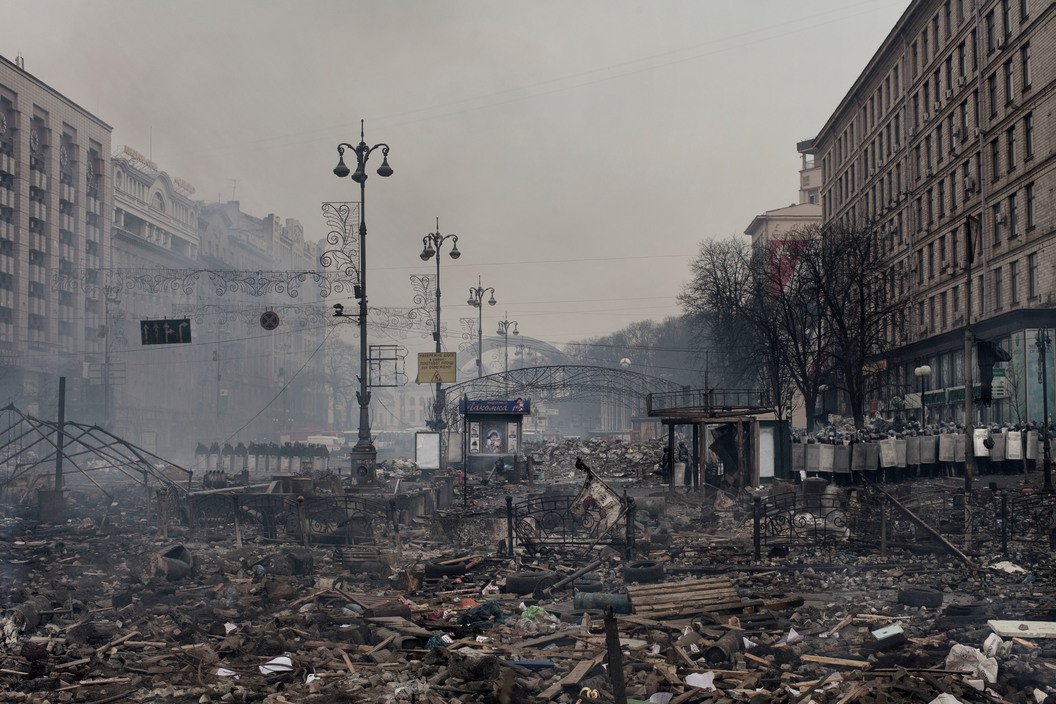
Gabriel Attal, el primer ministro francés en 2024, llegó a calificar los disturbios de Maidan en Kiev como «un viento de libertad». Ursula von der Leyen lo calificó como «Dignidad. Orgullo. Lucha por la libertad».
Esas mismas instituciones, ese mismo poder que financió y armó un golpe de Estado en Ucrania con nefastas consecuencias ahora tilda las manifestaciones de Francia como:
«Sediciosos procedentes de grupúsculos de ultraizquierda, acompañados de numerosos delincuentes». — Emmanuel Macron
«Se trata del islam que quiere apoderarse de un país antaño grande». — Donald Trump
«El eje del mal que une a extremistas de izquierda y fanáticos islámicos». — Matteo Salvini
Así quedó Kiev 👇. El edificio incendiado con pintura roja era la casa de los sindicatos. No son los disturbios los que les molestan… es no haberlos instigado ellos.