Recently, I was asked to host a Q&A webinar regarding careers in #academia for scholars of color and/or marginalized genders in #STEM. If you'd like to be notified of such an event (pending sufficient interest), join the mailing list: https://t.co/wKKJfHUMpJ
Retweets encouraged!
In 2018 I wrote a small book (in German) about infectious diseases. The last sentences: „New plagues will come. Whether they will lead to catastrophe, will depend mostly on what wins out in the end: empathy and innovation or ignorance and selfishness.“
Are you a junior researcher, incoming grad student, or just starting out with research this summer? Here are some tips for creating your online presence as a scholar that maybe no one told you.
Thread🧵🧵
Round your estimates. A relative risk of 1.23423 gives a false sense of precision. 1.23 will do, and really 1.2 will do. Would your inference change if you thought the RR was 1.23 vs 1.2?
THINK LIKE AN EPIDEMIOLOGIST:
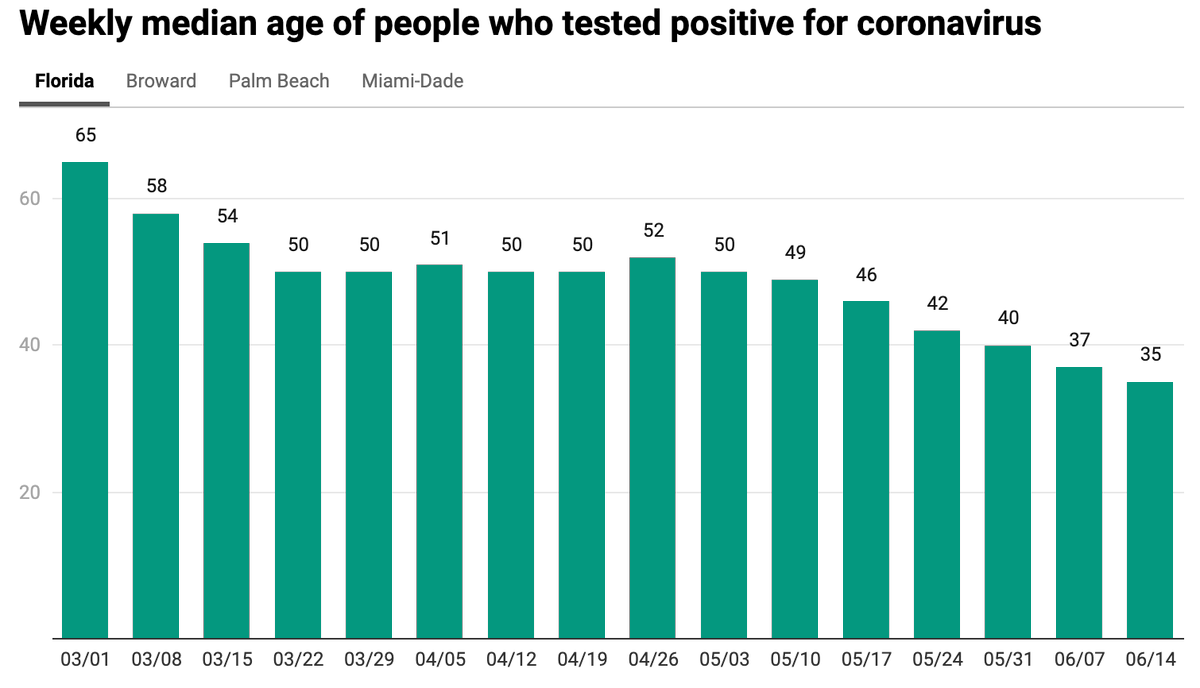
What does it mean that the median age of new cases is dropping in some areas? I see three possible explanations, not all good. A thread on how to distinguish between them. 1/10
(Figure h/t @ScottGottliebMD)
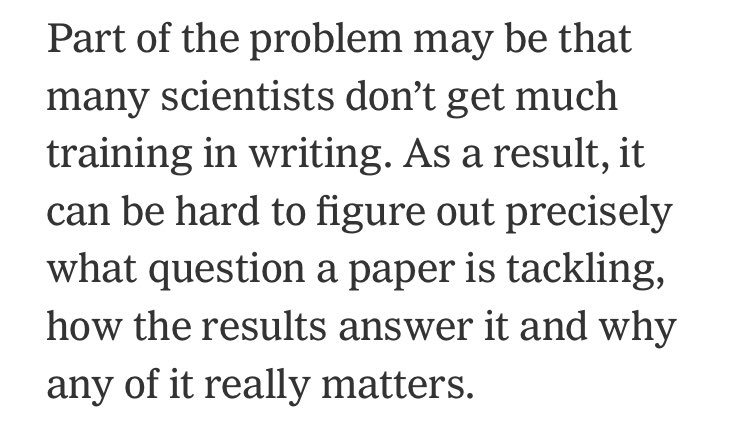
Most common issues I see in scientific writing:
- Doesn���t explain why the problem is important.
- No clear takeaway message. (How would the reader explain it to a colleague?)
- Sentences too long/complex.
- Doesn’t offer intuition for results.
- Over-stated conclusions.
Speaking as a statistician, "science is truth" is a dangerous statement. Science is a very reliable but imperfect knowledge-generating process. It's a gradually improving framework for predicting the outcome of actions taken in the physical world. Not the same as truth at all.
Say you have a list of studies that you'd like to cite in a paper. It's important to check that none of these studies have been retracted, but manually going through a long list can take time.
Here's how to check for retractions with a few lines of #Rstats code
[MINI-THREAD]
Epidemiologists have made some extremely powerful enemies because they managed to convince world that sometimes lives are more important than the economy. This idea is a threat to a lot of people’s agenda.
“The media has been reasonably responsible in saying ‘this is not yet a peer-reviewed study,’ but I’m not sure that the average person really knows what that means,” says @ProfMattFox. https://t.co/LBer2lYD9f
Saying "Race is a risk factor" is problematic. Statisticians and social scientists need to be more careful about this kind of language and avoid it where possible ...
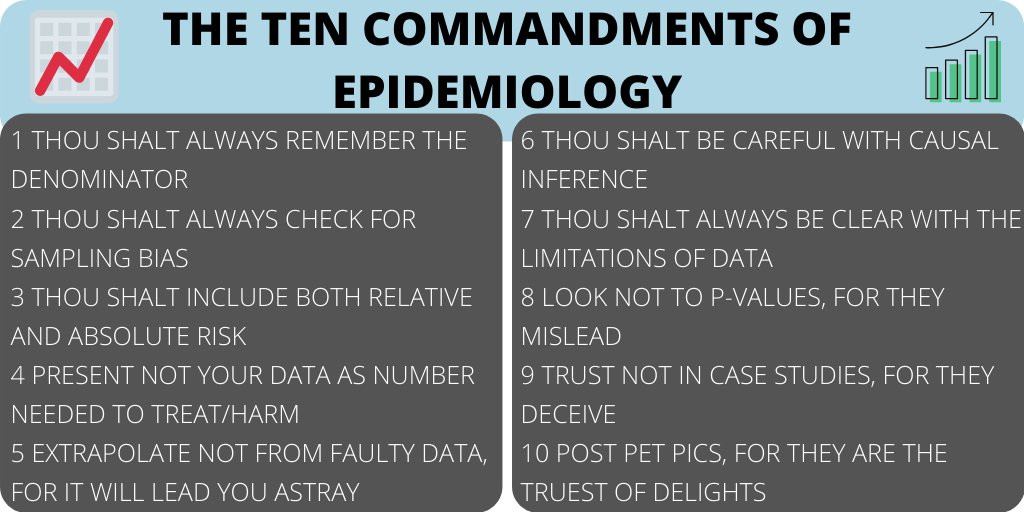
Since everyone's decided that they are an epidemiologist because of coronavirus, I thought I'd put together some basic advice to follow if you're going to give it a whack
Presenting: The Ten Commandments of Epidemiology #COVID19#epitwitter
If you’d never heard of epidemiology before #COVID19, it’s probably because many epidemiologists spend all their time controlling outbreaks so that they never become news.
Don’t try to reinvent the wheel. Don’t assume no one knows what to do. Listen to the experts.
How can we flatten the curve? Researchers evaluated two strategies: mitigation focused on slowing but not stopping the coronavirus’s spread and suppression aimed at reducing the number of cases. https://t.co/2RUez0P2w3 via @WSJ