I hope everyone reads the report. Nothing could better demonstrate how far Amnesty has fallen than their demonisation of gay rights charities for refusing to adopt Amnesty’s approved gender beliefs, or their attack on a rape crisis centre because it is run by women, for women.
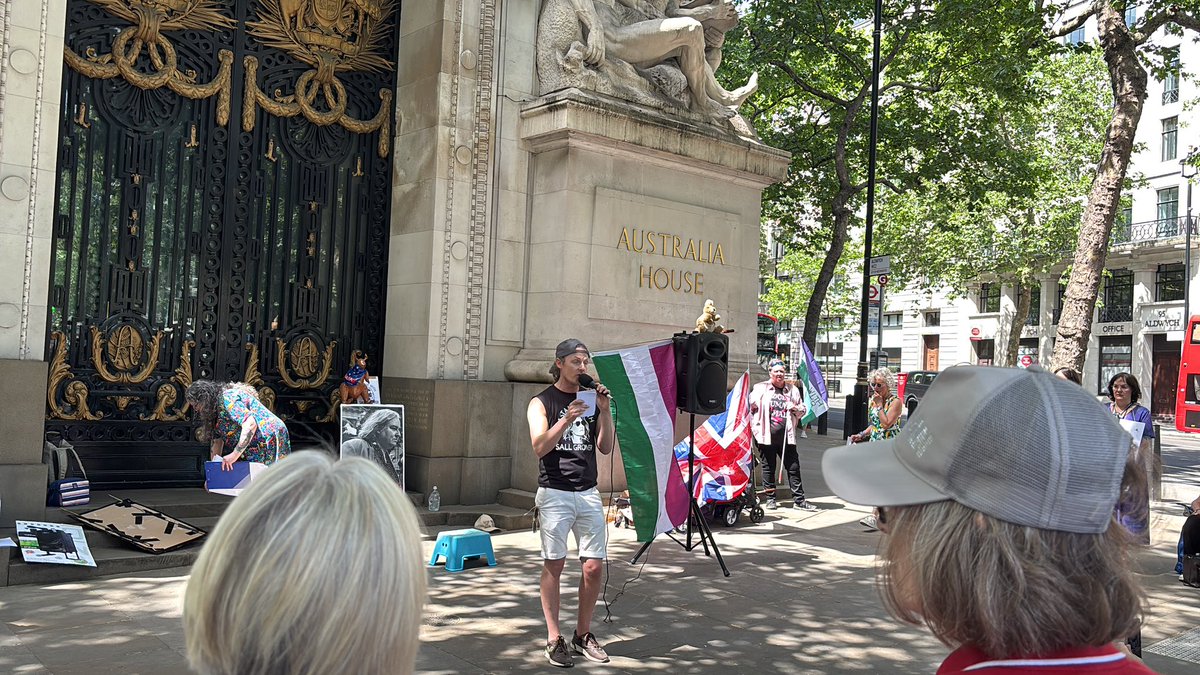
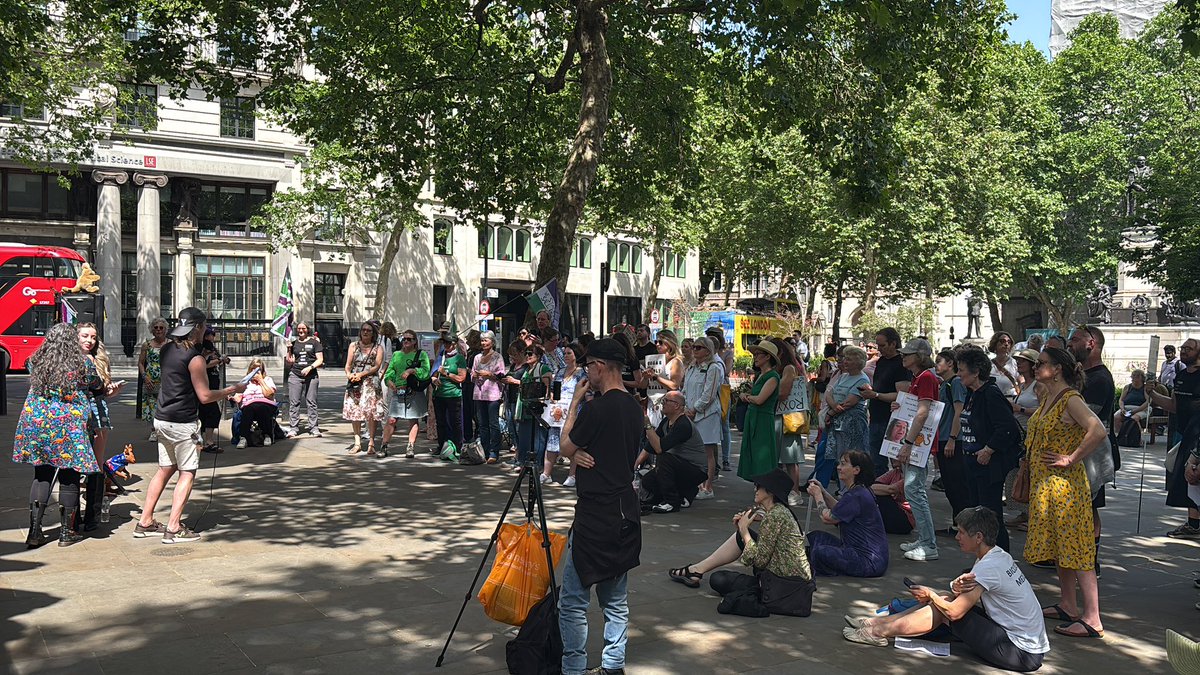
The UK stands with Sall Grover
She is not alone
She’s not forgotten
We are not going to take our EHRC guidance and forget
Every day women’s rights and the gay/lesbian rights that depend on the coherence of the 84 SDA are under threat.
We say as one
#IstandWithSallGover
Long 🧵
1 Reading Billy Bragg comparing the @EHRC Code with Thatcher & section 28 is baffling. In the 80s I was a left wing feminist teenager – demonstrating against s.28, implacably anti-Thatcher, visiting Greenham Common, the whole scene – & I came out as a lesbian in the 90s…
So let's break down the timeline:🧵
2016 - I start to read mutterings in Guiding groups about girls who are "now boys" and people asking if they can stay in Guiding. No, say the mods, they are boys now, why would they want to?
Early 2018 - I am now aware that this is policy and
Something very odd happened when the Sandie Peggie employment tribunal delivered its judgment - and it wasn’t just the made-up quotes and mangled law. 🧵
Statement forwarded to @indyscotnews by @LeanneTervit#Holyrood2026
"My name is Leanne Tervit. I’m a full-time unpaid carer who grew up in Woodmill Crescent, Dunfermline. I donated a kidney to save my mum, who has had three transplants, and I live on £540 a month in Universal Credit. It’s a 24/7 job with no holidays, no sick pay, and no pension, but it saves the country a fortune in care costs.
Back in June, I decided I wanted to stand as an independent candidate in the 2026 Scottish Parliament elections. I grew up in an area of high deprivation where many people don’t vote anymore – they feel no party has ever given them hope or changed their lives. I thought, maybe someone like me could make a difference. Working class voices are almost non existent in politics, and I wanted to try.
Then I hit the wall....
I asked the Electoral Commission if I could crowdfund for a campaign. Leaflets, travel, and the deposit, just like every other candidate does. They said they couldn’t advise on benefits and sent me to the DWP. What followed was months of emails and calls. At first, DWP officials told me any money raised would count as capital and be taken off my benefits. Later, they changed it to “we’ll decide after the fact” – meaning I’d have to risk losing my only income on a decision that might come too late.
No one can take that chance of looking their sole income.
I’m effectively barred from standing. And so are 3.1 million other people on Universal Credit. Even when lawyers (Balfour + Manson) offered to investigate for £3,000, the DWP said I couldn’t crowdfund the legal fees either – the same money would be deducted.
People keep suggesting workarounds: “Just get someone else to hold the money,” or “Find an election agent to manage a separate account.” But the very fact that we have to find complicated workarounds proves how unequal and unfair the system is. Why should people on benefits have to jump through extra hoops that wealthier candidates never face? And in deprived areas like the one I grew up in, it’s not that simple. Who do you ask to take on the legal and financial responsibility of being your election agent or handling campaign funds? Most people are struggling themselves – they can’t risk their own finances or credit rating. Trust is hard when everyone’s just trying to survive. These “solutions” only work if you already have a network of financially secure friends or family. For many of us, that network doesn’t exist.
Since then, I’ve contacted Inclusion Scotland, the Scottish Legal Aid Board, the Scottish Human Rights Commission, the Equality and Human Rights Commission, and more. I’ve submitted dozens of Freedom of Information requests. I’ve spoken to the Equality Advisory Service. And I got my MP, Graeme Downie, to ask a written question in Parliament.
The answers have been shocking. The DWP has admitted in writing that:
• They have never carried out any equality impact assessment on how the £6,000 capital rule affects people’s ability to stand for election or fundraise for candidacy.
• They have never considered adding “verified election expenses” or “political donations” to the list of disregarded capital.
• They keep no records of how many claimants have had benefits cut because of campaign donations.
• There is no specific guidance for caseworkers on political crowdfunding.
The Electoral Commission has admitted they have never assessed how benefits rules affect equal access to standing for election, and they have never even spoken to DWP or HMRC about why tax-free political donations count as capital for UC claimants.
The Ministry of Justice has admitted they hold no assessments on whether these rules breach human rights obligations under ICCPR Article 25 or ECHR Protocol 1 Article 3 – the right to free elections and equal access to public office.
In other words: for 12 years, a rule that acts as a wealth test on democracy has existed without anyone in government ever checking its impact, counting its victims, or considering a fix. This isn’t a mistake. It’s deliberate exclusion. It disproportionately hits disabled people, carers, women, anyone on low or part time wages – the groups most likely to be on Universal Credit. It’s indirect discrimination. It breaches the Public Sector Equality Duty. And it turns our “free elections” into elections for those who can afford them.
My local papers – The Courier and Dunfermline Press – have run my story. My MP has now written directly to the Minister asking for urgent change. But I’m not stopping. This rule must be wiped out. Elections should be open to anyone, regardless of how much money they have or whether they’re on benefits. I’m just one carer from Dunfermline.
But I’m not letting this go. If you believe democracy is for all of us, not just the privileged few, please share my story.
Contact your MP.
Demand an end to this discrimination against the poor."
This is plain disturbing.
Judge Alexander Kemp, who presided over the Sandie Peggie tribunal, 'has been urged... to withdraw his findings and consider his position after it emerged that his ruling was “riddled” with errors and inaccuracies.'
1/4
https://t.co/LSCVukvspb
What’s frustrating about the BBC resignations is how much of the coverage has focused on Trump.
Yes - the editing of his Capitol Hill speech was a serious lapse, but it was also a single incident.
The Prescott Report, on the other hand, highlights years of bias across multiple areas of BBC output - a deeper, more systemic problem.
And this isn’t just about politics or war.
It’s about how the BBC has framed women’s issues - often in ways that feel openly hostile towards their sex-based rights.
Take Woman’s Hour, the BBC’s flagship programme for women.
Following the Supreme Court ruling in April - which clarified the legal meaning of the word “woman” - the show ran a series of follow-up interviews.
Two of the five guests I heard were men - one of them a man who said he was a woman. The irony of that seemed entirely lost on staff.
But that wasn’t even the worst part. It was hearing the women they did interview being gaslit and misrepresented.
Susan Smith, co-director of the campaign group For Women Scotland - which brought the Supreme Court case - was described by one presenter as being part of an “anti-trans lobby group.”
Kate Barker-Mawjee, founder of the LGB Alliance, said that lesbians are women - and the presenter apologised for her “offensive” views.
One male guest implied Helen Joyce, director of advocacy at Sex Matters - another featured interviewee - had 'misunderstood' the Supreme Court judgment. The presenter did not challenge this.
It was hardly surprising.
Just a few months earlier, Bethany Hutchison - one of the Darlington Nurses currently taking legal action against their NHS Trust for being forced to share a women’s changing room with a male colleague - was ticked off in her Woman’s Hour interview for refusing to call that colleague “she.”
A man who, allegedly, wore boxer shorts, spoke about getting his girlfriend pregnant and demanded to know why female colleagues weren’t changing in front of him.
And sadly that’s not all. For years, the BBC has:
- Reported violent crimes by male offenders as if they were committed by women
- Celebrated men winning women’s awards - including in sport
- Platformed more trans activists (and drag queens) than women with gender-critical views
- Published content about “trans children” - including those of primary-school age - and that even suggested men may produce better “breast milk” than women
All of this speaks to a pattern, not a one-off - and to an organisation captured by ideologies that harm women and children.
And isn’t it funny - in a bleak sort of way - that even the media coverage about women being sidelined still manages to sideline women?
While headlines obsess over “Trump bias,” the deeper issue is trust. And if the BBC can’t treat women fairly and report facts plainly, how can it claim impartiality on anything?
We are really fed up of being told that we cannot demand fairness for women because some people might weaponise it.
The BBC needs to get it's house in order, apologise to women's rights campaigners, stop saying (for example) that it's controversial to say that lesbians are women, & report accurately when men commit crimes. Then you will probably find that many of us will defend the BBC from attacks from the people you mention. But why should we shut up about the bias and the damage to our campaigns because of these men? This is just more coercive control of women and it won't wash.
It only took:
Eight years of notebooks of tracking stats.
Six years after presenting my findings for the first time. @fairplaywomen@sharrond62
Five years after writing the first peer-reviewed paper that established an evidence base for policy making. @TLexercise@Scienceofsport
An onslaught of abuse.
Multiple institutional complaints, and attempts to trash my credibility.
Arguments to force retractions.
A report to the U.K. police.
A trans-identifying male tweeting about me 400 times a month, while making vulgar remarks about his breasts.
No platforming and refusals to even be in the same room as me.
IOC-backed scientists calling me TERF in secret groups.
IOC-backed scientists making published arguments to ignore my papers.
IOC “scientists” snarling at me in a public forum.
An IOC sociologist inventing a whole new term to describe my approach, as if “biofeminism” was a pejorative 😂
An IOC-backed journal rejecting an extensive and well-backed critique of the IOC policy that has now been thrown out (because transphobe, testosterone doesn’t map to performance anyway, and other such bullshit).
So many - far too many - private apologies from those too concerned to be publicly associated with me.
The IOC didn’t need this scientific review. The work was already done, by those of us who have worked diligently for years to synthesise and analyse evidence, to consider arguments and examine counter arguments, all in the public domain.
And all of whom have suffered the same backlash. @runthinkwrite@cathydevine56
Male development leads to male sporting advantage, and it’s baked in.
It’s that simple.
SNP ministers have failed to pay their £250k bill, six months after the Supreme Court ruling. The rumour is that they’re trying to stop @ForWomenScot taking further action against the government, but that plan has a rather large flaw. Me. https://t.co/xvZ7Pq7f1Y
Very interesting interview with Lord Hodge of the U.K. Supreme Court on, among other things, the fallout from the For Women Scotland decision.
https://t.co/xe7HrWC5hV
Missed this! Great deep-dive on the state of the Scottish Arts world with contributions from @msjlindsay
It lays bare that @edbookfest caved to threats of violence not just over women's rights activists, but over money from Baillie Gifford.
https://t.co/uX3iE4p6s6