We will cover
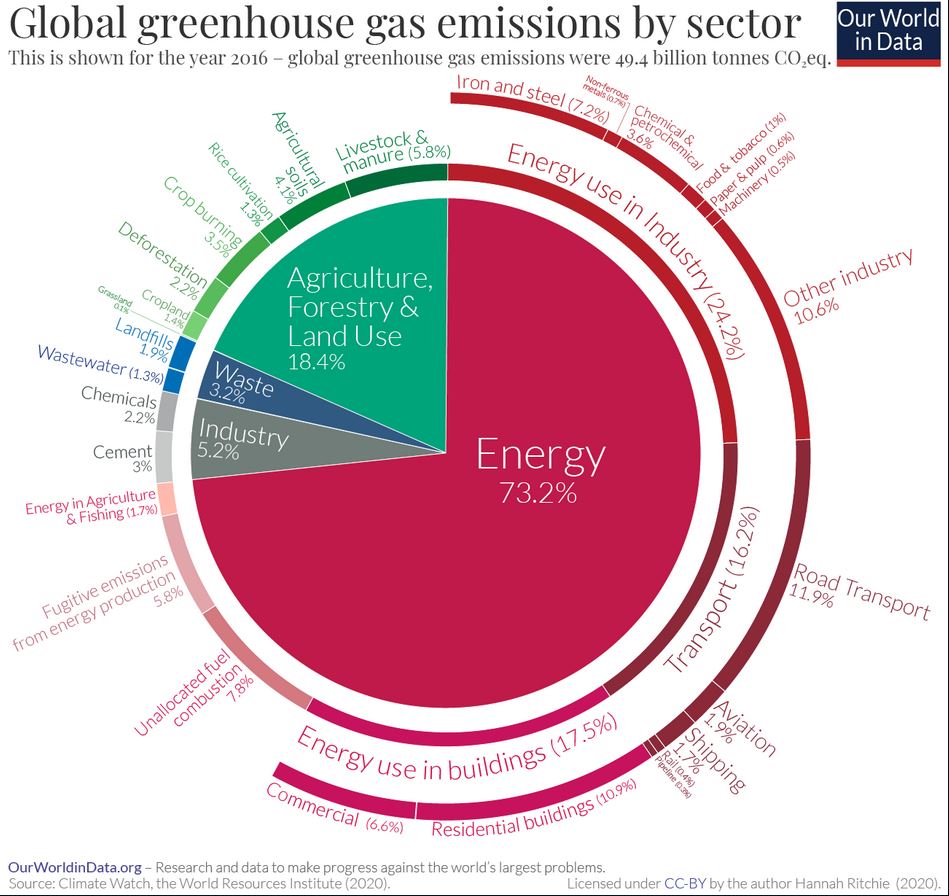
-Energy (Industry, Transport, Use in buildings) - 73,2%
-Industry -5,2%
-Waste - 3,2%
-Agriculture, Forestry & Land Use - 18,4%
#CO2#environment
To figure out how we can most effectively reduce emissions and what emissions can and can’t be eliminated with current technologies, we need to first understand where our emissions come from.
Emissions come from many sectors, we need many solutions. #CO2#GHG#decarbonisation
@TheSeanBaumann Oxygen is not ghg
the main GHGs:
carbon dioxide, methane, nitrous oxide, hydrochlorofluorocarbons (HCFCs), hydrofluorocarbons (HFCs) and ozone
@JackieMeek6@bbc5live and what happens in an electric cars, if they suffer an accident. They burn like.... Just watch:
https://t.co/WXFdKSEL9v
We just will analyse every emission sector, and do R&D to lower that. And do not ruin the people's day
our #energy to #R&D and not to #waste
Fremantle Highway cargo ship with electric vehicles on board has been burning off the coast of the Netherlands for several days, the fire has not been extinguished.
There are 2,800 cars on the ship in total.
At the same time, Greenpeace says that the sinking of a burning ship with electric vehicles in the North Sea threatens billions of animals, the spill of heavy fuel oil will be a disaster for the local ecosystem.
"The habitat of billions of animals will be threatened, oil will seep into the silt. It will take years to restore the damage. First, rescuers must put out the fire, and then pump out the oil," the organization said.
@JackieMeek6@bbc5live If i would count the CO2 emissions from the production of batteries and electric cars, it would be interesting. A lot of R&D is necessary in this topic, and nobody knows, what will happen with them if they "will be old" and has to be dismantled (and with the batteries)