"Participants saw wrongdoers as more moral in the future if they apologized or felt guilty for what they had done, relative to when they did neither." - Emily (Em) Bosche, @JustinMLudwig, & Karina Schumann https://t.co/0rzPQYr2Ox
New #SPSPblog: How Apologies Shape People’s Perceptions of Your Moral Future by Emily (Em) Bosche, @JustinMLudwig, & Karina Schumann https://t.co/bgTmt2zaTp
These findings suggest that cultivating gratitude and humility alongside self-forgiveness may help mitigate the potential negative effects of DF on apology behavior.
Divine forgiveness (DF)—the belief that one has been forgiven by God—is a deeply meaningful part of many people’s lives and can positively impact their well-being, including the ability to self-forgive after wrongdoing.
"divine forgiveness works through two opposing pathways—one that inhibits and one that supports the act of apologizing" https://t.co/00m6zk7WdH via @PsyPost
At the same time, this is not the whole story. Our research also shows that perceptions of DF can foster gratitude and humility, which in turn encourage sincere, high-quality apologies.
Across five pre-registered studies, Koetke et al. find that perceptions of scientists’ intellectual humility positively affect how trustworthy scientists and their research are perceived.
https://t.co/XhjcFjuYvb
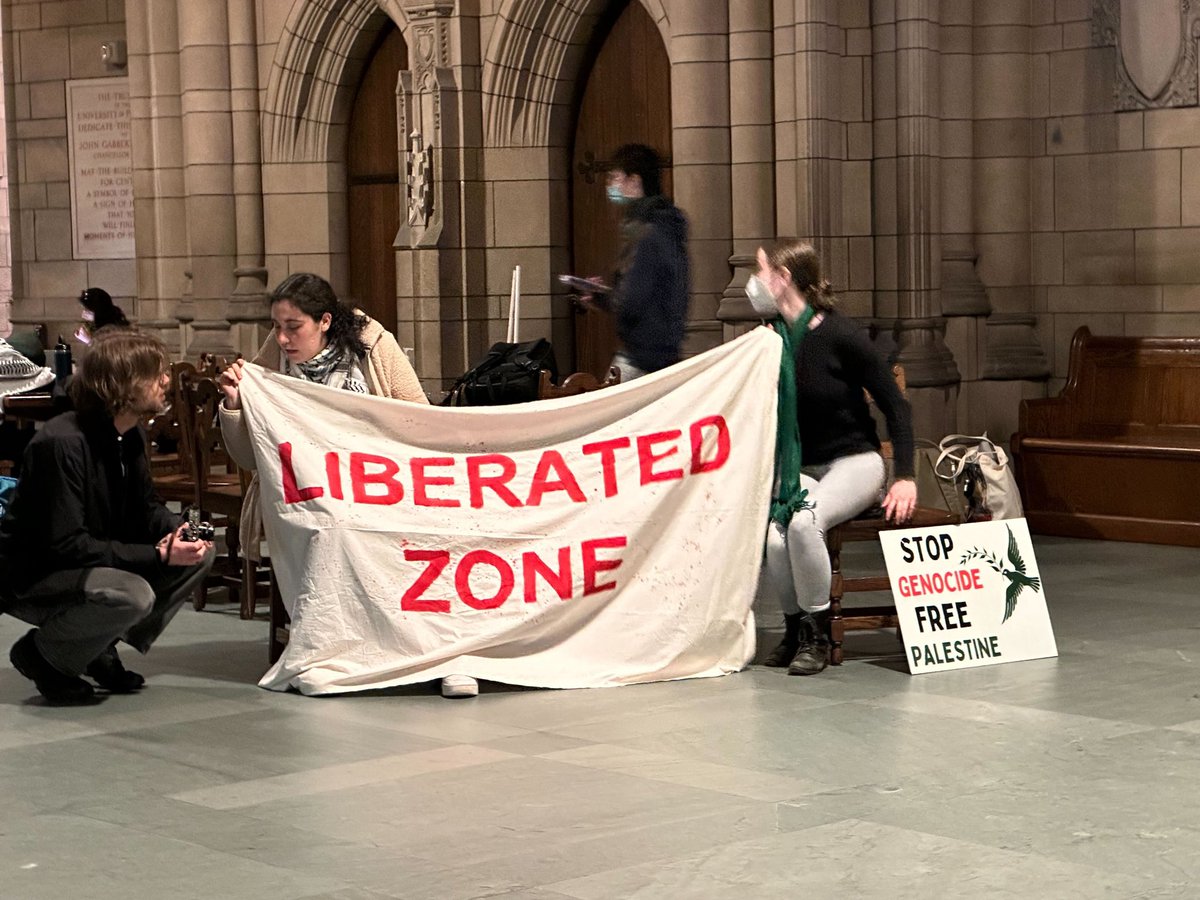
BREAKING: A group of students are organizing a “liberated zone” inside the Cathedral of Learning in support of Palestinians and demanding Pitt disclose its investments in Israeli organizations.
🚨 New Preprint!
Jonah Koetke, Karina Schumann, & I investigated whether divine forgiveness (i.e., perceived forgiveness by God) inhibits apologies by promoting self-forgiveness. We also explored counteracting mechanisms whereby DF promotes apologies via gratitude and humility.
After harming someone, transgressors sometimes offer an apology in an attempt to reconcile with the victim. But what if transgressors believe they have already received divine forgiveness.* Come chat #spsp2024
*10/10 presentation by my cat, pictured below
Check out this new preprint from @JustinMLudwig and Karina Schumann at @PittTweet! The authors looked at how certain actions (either doing something wrong or failing to do something right) influence whether someone is forgiven, and whether saying "sorry" works equally well for both types of mistakes.
Study 2 uses a census-matched sample on #Connect (available with the click of a button and at no extra cost), and 98.8% of participants passed the attention checks!
The authors explain why people might be less willing to forgive when someone does something wrong (vs. fails to do something right), but also found that apologies can be effective in both cases. Read the full report here: https://t.co/6A914sk8i4
@JonathanShedler my intuition is that people engage in this behavior, or cancel culture more generally, because they want accountability and to fix the system (i.e., restorative justice). Do you not think this is the case?
@JonathanShedler Super interesting study, thanks for sharing! It seems like retributive justice is motivating online shaming through satisfaction in seeing the person punished. I wonder what they would find if they were better able to tease apart retributive vs. restorative justice motivations.
My poster at #aps23dc (and proof that I was indeed there!).
In a nutshell, we found that divine forgiveness (i.e., perceived forgiveness by God) promoted greater self-forgiveness, which in turn reduced transgressors' likelihood of offering an apology to the victim.