I had a fascinating discussion with @DAlperovitch about the Jensen Huang scandal, Nvidia, and what it all means for national security
https://t.co/OrD0Y5Mlue
Appreciate the opportunity to meet with Brigadier General Yevhen Lasiychuk, Commander of the 7th Air Assault Corps AAF, and his staff. I was also joined by @konrad_muzyka and other research team members. More insights to follow from a recent field study trip to Ukraine.
Interesting conversation about Iran's nuclear program and the road ahead with @AOstovar and @BrewerEricM ! (for War on the Rocks members)
https://t.co/nrdBcnGOT0
🚨NEW EPISODE🚨
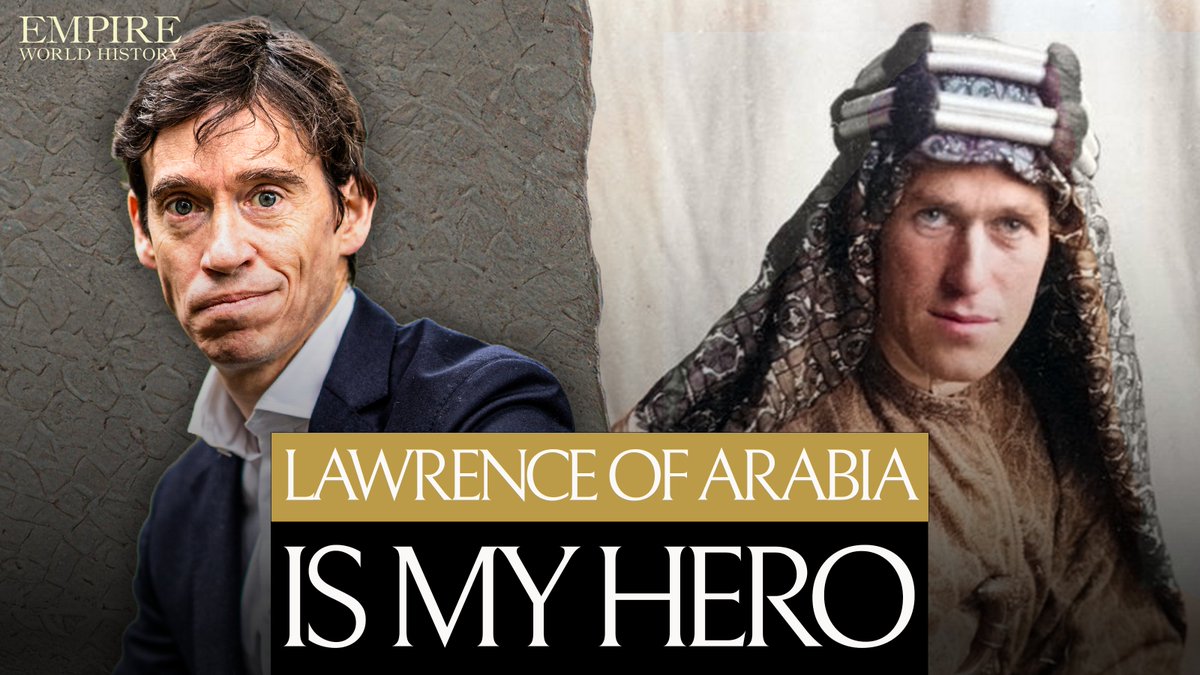
Rory Stewart On The Legendary Lawrence of Arabia 🐪
Why does @RoryStewartUK still count Lawrence among his heroes?
Join @DalrympleWill and @tweeter_anita as Rory joins them to debate the man, the myth and his complicated legacy.
Link to episode in replies 👇
Super interesting. Note: "a broader perception within the Iranian military establishment that the U.S. can inflict substantial damage but lacks the means to force Iran into submission."
Is #Iran preparing to break the U.S. naval blockade?
🔹IRGC spokesperson Hossein Mohebbi made several important statements today that offer important insights into Tehran’s current military calculations and its approach to negotiations with Washington.
🔹First, he claimed that Iran has already demonstrated a missile range of 4,500 kilometers, specifically referring to Diego Garcia. This is particularly important given earlier reports that Iran attempted to target the island during the 40-Days War. Although those missiles reportedly failed to reach their destination, Tehran is now openly claiming the capability to threaten U.S. military assets far beyond the Persian Gulf, including in Europe.
🔹More importantly, Mohebbi rejected the description of the current situation as “no war, no peace,” arguing that Iran is already at war and will not tolerate a prolonged war of attrition. He said the conflict would be brought to a definitive conclusion, either on the battlefield or through Washington accepting Tehran’s conditions.
🔹This statement should be read alongside reports that Iran is preparing to resume oil exports despite the U.S. naval blockade. A Fars News Agency report warned that any attempt to stop an Iranian tanker preparing to depart would trigger attacks on energy facilities in six GCC countries. TankerTrackers has also reported preparations to resume Iranian oil exports.
🔹If these reports are accurate, Tehran may be preparing to actively challenge the blockade. The logic is quite clear: if an Iranian tanker successfully passes through, it would undermine the effectiveness of the blockade. If U.S. forces intercept or attack it, Tehran would have a direct trigger for retaliation. Such a move would also suggest that Iran has already considered how to confront or deter U.S. naval forces.
🔹In other words, Tehran appears to be seeking to take the military initiative while leaving Washington with the responsibility for triggering the next escalation.
🔹Mohebbi’s remarks about a potential U.S. ground operation reinforce this assessment. He argued that Iran’s defensive capabilities are significantly stronger on land than in the air or at sea, while questioning Washington’s ability to conduct ground operations. This reflects a broader perception within the Iranian military establishment that the U.S. can inflict substantial damage but lacks the means to force Iran into submission.
🔹On diplomacy, Mohebbi reiterated that Iran will not reopen Hormuz until its seven conditions are met and their implementation is verified. Only afterward would Tehran consider discussing the nuclear issue, and even then, its rights under the NPT – implicitly including domestic uranium enrichment – must be guaranteed.
🔹Another noteworthy point was his confirmation that the earlier decision to accept the MoU had been jointly endorsed by military and diplomatic officials. This appears intended to dismiss reports of divisions within the Iranian leadership and underline that the IRGC was itself part of the decision.
🔹Overall, these remarks suggest that Tehran is increasingly convinced that time and military endurance favor its position, while the Trump administration faces growing constraints on further escalation.
🔹The immediate implication is that Iran may no longer be willing to wait for a diplomatic breakthrough while the blockade continues. Instead, it appears increasingly prepared to challenge the blockade directly, accepting the risk of renewed military confrontation.
🔹The danger, however, is that Tehran’s growing confidence in Washington’s constraints may lead it to underestimate the risk of a much stronger U.S. military response, which could inflict devastating damage on Iran’s energy infrastructure and further weaken its already struggling economy.
@observatoiregeo This post didn’t provide a value judgement to the Jensen Huang scandal and was not about that issue. Perhaps it’s a translation issue that is causing you to have such a strong reaction?
I had a great chat with @nktpnd about what the Trump-Xi-Putin summit meant for nuclear arms control and nonproliferation! (for War on the Rocks members)
https://t.co/0YdhZybVKC
What is actually going on in the Strait of Hormuz? I talked with @AmiDaniel1 at @WindwardAI about it! (For War on the Rocks members)
https://t.co/GhdMqfw7bP
Very sorry to see this. I worked with Mat Burrows a few times over the years, and he was always kind, supportive, very interesting, and so curious about the world
https://t.co/CT8W0jgrzn
All this talk about Iran's chem and bio weapons is definitely NOT giving me flashbacks to 2002/2003. Definitely not. Not remotely nervous. I have full faith that no one will exaggerate risks to achieve their own aims. 😬
Is the dollar in decline? It's an interesting, important, and nuanced issue. We asked @keatingetom@joshualipsky Zongyuan Zoe Liu @AgatheDemarais and @reziemba for their insights (for WOTR members)
https://t.co/0s41ZE1yLm
I don’t have any children, but there is something in building an organization that is at least analogous to parenthood. Raising @WarontheRocks from birth to teenager has been both difficult and the privilege of a lifetime. But I don’t think anyone should run an organization for as long as I’ve run this one. The measure of this project will be what it can be after me. And I believe War on the Rocks will become better in its next phase. It is time for the precocious but still unruly teenager and me to put some distance between us. I will still be available from my perch on (and here is where the analogy stretches) the board of directors to advise.
It is hard for a founder to turn over his business, but I view it as an important achievement because it is hard. For me, it is hard because I’ve poured so much of myself into it and because it is what I am known for. But I am looking forward to being known for other things. More practically, I needed to put together the right team: people who can take over and improve what War on the Rocks does across the key roles I’ve occupied from the start, from editing to podcasting to the running of it as a business, which encompasses a great many things.
The person who will be responsible for those great many things as our new CEO is Nick Hanson, a Marine reservist, a graduate of the Naval Academy as well as the Harvard Kennedy School and Business School, and my friend. Nick (who is not on X, wisely) has been our chief operating officer for about two years now, adding immeasurably to our team. He brings to every conversation a sense of purpose, intellectual curiosity, and moral seriousness. He has a gift for reframing hard problems in new ways, often revealing possibilities others miss. I am excited for you all to discover this about him.
I will write more at a later date about others joining the team, and other matters, but for now I would be grateful if you would extend your congratulations to Nick.
His note, which he posted on LinkedIn, is below:
-------------
After two years as chief operating officer, I am honored to step in as CEO of War on the Rocks.
I was an active-duty Marine officer when Ryan Evans founded War on the Rocks, and I remember how rapidly it became the forum of choice for serious debate on the most complex challenges in national security. It brought together the scholars who study war, the diplomats who work to prevent it, the congressional staffers who write the laws that govern it, the intelligence professionals who warn of it, and, above all, the servicemembers who fight it.
Ryan has given War on the Rocks more than a decade of his life. I am grateful he is trusting me with its future and glad he will stay on our board.
The mission is not changing. In 2013, shortly after War on the Rocks' founding, Frank Hoffman wrote an article with a passage that Ryan made our mission statement:
"[I]n a world in which relative power levels are narrowing and means are diluted, America’s historical black hole, a bifurcation between policy and operations, must be closed. Given that our country expects great sacrifices from those toiling at the tactical level, much more can and should be expected at the summit. It is my expectation that War on the Rocks will help fill in the black hole."
The questions facing American national security are getting harder, as are the demands on those who are expected to deter and, failing that, defeat America’s enemies. These challenges demand debate that challenges the national security community, which is not always a comfortable experience, but it is a critical one. We will keep providing it, with the same independence and rigor our readers expect.
My focus will be on growing the community that makes this work possible, online and in person, and building an organization that can sustain it for the next decade and beyond.
This has always been a team effort. Our authors, contributors, and podcast guests bring the ideas, and our editorial and content teams sharpen them into arguments worth your time. More news about additions to the team will be coming soon.
Thank you to everyone who reads, listens, writes, and shows up to make War on the Rocks the community it is today.
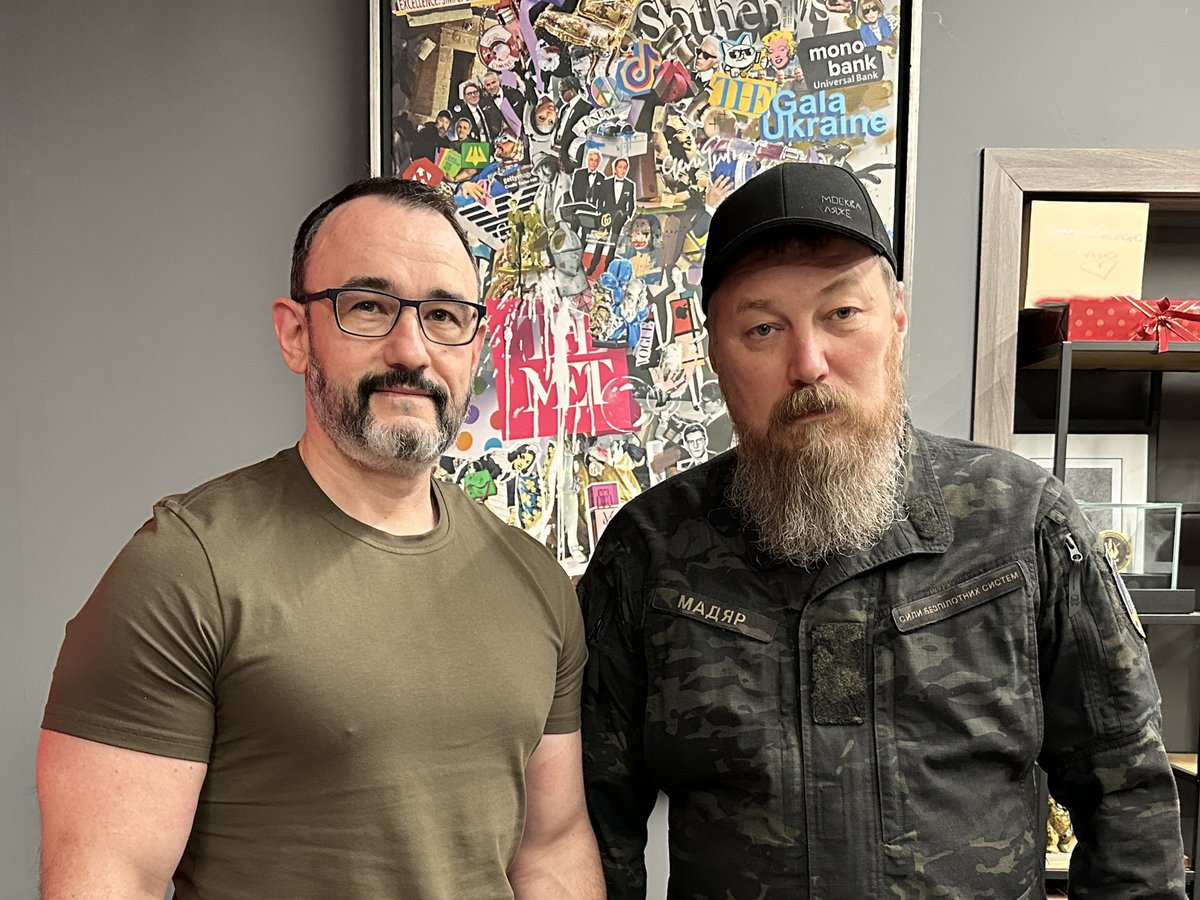
It was good to see our longtime friend @KofmanMichael today. He stopped by to congratulate us on the successful operation targeting the Crimean Bridge and to discuss the challenges we face as the war evolves.
Conversations with experts like Michael help keep the Euro-Atlantic community informed about how the war is changing and what those changes mean on the ground 🤝