I believe “SHAMPOO” and “CONDITIONER” should be the two biggest words on the bottle. Not size 8 font on a matching background like I’m supposed to solve a fcking puzzle in the shower.
Delta Flight 15 takes off from Frankfurt at dawn.
On board: 218 passengers. Families. Business travelers. A pregnant woman. Shirley Brooks-Jones, 65 years old, heading home to Columbus, Ohio.
Five hours into the flight, a note reaches the cockpit.
All U.S. airspace is closed. Land immediately.
The captain says nothing about why. He tells passengers it's a minor instrument problem. Privately, the crew already knows about the World Trade Center.
Gander International Airport. Newfoundland, Canada. Midday.
The plane touches down 400 miles off its route. Out the window, passengers count 38 other jumbo jets already parked on the tarmac.
By nightfall, 53 international flights sit grounded here. Nearly 6,600 people are stuck, with nowhere to go.
Nobody is allowed off.
For 28 hours, 218 people sit inside that plane. No real answers. No word on what's happening back home.
Here's what makes it worse: most of them don't yet know if their own families are safe.
Word finally spreads through the cabin. Two hijacked planes. The towers. The Pentagon. A field in Pennsylvania.
The plane goes silent.
Gander. Day two.
Passengers finally step off the aircraft. They're bused 45 kilometers to a town called Lewisporte.
Population: just over 3,300 people.
Lewisporte has no idea 218 strangers are about to double its guest capacity overnight. It doesn't matter.
The mayor puts out one call for bedding and food.
The whole town answers.
Schools close. Churches open. The Lions Club clears its hall and sets up cots by hand. High schoolers skip class to serve meals and translate for confused travelers.
The pregnant passenger is placed in a home across the street from urgent care.
Elderly passengers are welcomed into private houses, not shelters.
Phone lines are opened for free, unlimited, day and night.
When passengers try to pay shopkeepers back, the answer is always no.
Nobody in Lewisporte will take a dollar.
Local volunteers even bring out screech, the region's famous rum, and host a mock "screeching-in" ceremony to make the exhausted travelers laugh.
For three days, this town of fishermen and loggers cares for people it has never met and will likely never see again.
Brooks-Jones later calls it something simple.
She says: "the most beautiful experience I have ever had in my life."
Gander Airport. Three days later. Departure.
Flight 15 is finally cleared to fly home.
Before takeoff, Brooks-Jones asks the captain for one thing: permission to speak on the intercom.
He hands her the microphone.
She reminds everyone what Lewisporte just did for them. Then she asks for something back.
Pledge sheets start moving up the aisle.
Business travelers write checks. Strangers pass around pens. By the time wheels touch down in Atlanta, passengers have pledged $15,000.
Brooks-Jones doesn't stop there.
Back in Columbus, she calls the Columbus Foundation. An anonymous donor hears the story and matches it instantly, doubling it to $30,000.
In 2002, the fund gets a name: the Lewisporte Area Flight 15 Scholarship Fund.
It's built for one purpose. Send local kids to college.
More than two decades later.
The fund is still active.
It has sent more than 300 students from the Lewisporte area to college and trade school. Doctors. Nurses. Engineers. Teachers.
Some of them weren't born yet when Flight 15 landed.
Brooks-Jones has flown back to Newfoundland more than two dozen times since 2001. She still shows up for graduation ceremonies.
The friendships that started on cots in a high school gym are still going, more than 20 years on.
Most people who know this story didn't hear it from a history book.
They heard it from a Broadway stage. Lewisporte and Gander's kindness became a musical called "Come From Away." It has since played in cities across the world.
Few people watching that show realize the scholarship fund behind it is still cutting checks to real students, every single year.
The Falling Man, 2001.
The most widely seen images from 9/11 are of planes and towers, not people. This is why the Falling Man is different.
The photo, taken by Richard Drew in the moments after the attacks 25 years ago today, is one man’s distinct escape from the burning buildings, a symbol of individuality against the backdrop of faceless skyscrapers.
It can be a difficult image to process: the man perfectly bisecting the iconic towers as he darts toward the earth like an arrow. The Falling Man’s identity is still unknown, but he is believed to have been an employee at the Windows on the World restaurant, which sat atop the North Tower, where between 1,344 and 1,426 people were trapped when American Airlines Flight 11 struck.
The Unknown Soldier in an unknown and uncertain war, suspended forever in history.
🕊 The missing Twin Towers returned to New York for a few minutes
A light show was held on the eve of the 25th anniversary of the September 11 attacks.
The drones first rose into the night sky in a spiral, then formed the outlines of the destroyed World Trade Center towers.
The installation used 2,977 drones — one for each person killed in the attacks.
imagine being a menswear writer and having to go back to writing about this fall’s best socks after reading anthropic employees say AI might destroy humanity in a few years
This World #History Timeline shows the main superpowers and dynasties over the last 5000 years. Gorgeous piece of work. These type of charts really help to understand who ruled at the same time on the other side of the globe. Love it! Source: https://t.co/d0WbwrEVkF
Dear @JeremyClarkson I saw this on my feed on another platform and instantly thought you needed to see it.
"Jeremy Clarkson thinks people who receive benefits should have to send a weekly thank you email to a randomly chosen working person, explaining what they did with the money, or have their payments stopped.
So here is mine. If you’d like to give it a share to help Jeremy see it, that would be great.
Dear Jezza,
Thank you for your concern about my contribution to society.
I should say first that you were aiming this at young people you believe are sitting at home doing nothing.
But you wrote it as a blanket rule applying to everyone whose benefits are paid.
That includes more than thirteen million pensioners, millions of people who receive benefits while working, who may find themselves being ordered to thank another benefit claimant, and me.
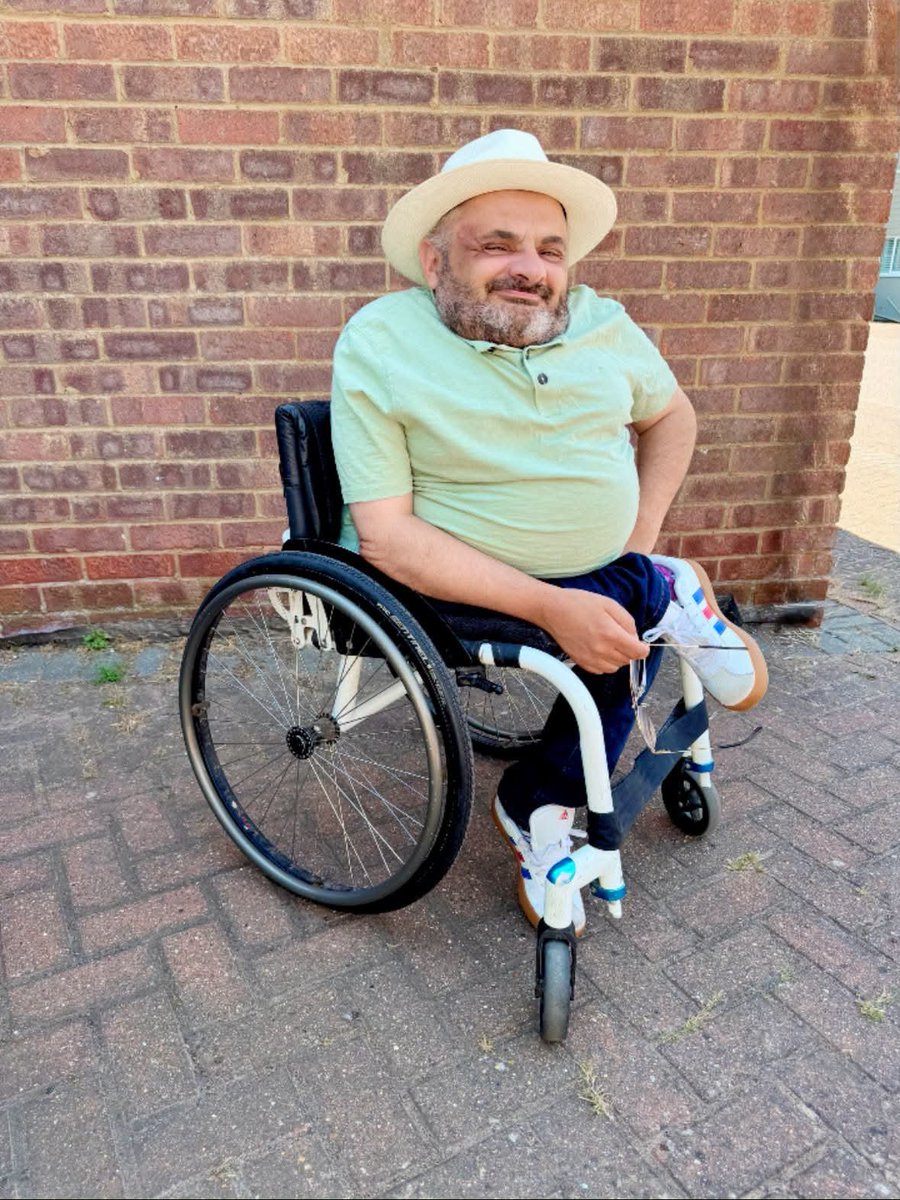
I receive PIP.
That money goes towards the Motability car I use to travel to work.
It is not a free car. It is not even my car. I exchange the mobility part of my PIP to lease it.
The car takes the lot.
Which is awkward, because that same payment is also meant to help cover the additional costs of being disabled, including a wheelchair that is actually usable for my job and hearing aids that allow me to do it.
There is nothing left for either.
I chose the thing that gets me to work.
That car enables me to work and, because I can work, I now pay considerably more in tax than I have ever received in PIP.
But my contribution does not end with my own tax bill.
I have built programmes that hundreds of people now use to earn a living.
They pay tax too.
Those programmes have helped thousands of people overcome anxiety, return to their lives and, in many cases, return to work.
Then there are all the people supported by the coaches and practitioners I have trained.
That is what disability support can do when it is designed to enable people rather than humiliate them.
My PIP did not disappear into some great benefits black hole.
It helped provide the transport that allowed me to work, build a business, create opportunities for other people and contribute far more than I could ever have done without it.
But as we are exchanging thank you letters, perhaps you could send me one too.
I paid my television licence throughout the years the BBC gave you the platform that made you famous.
I now pay for Amazon Prime, which helps fund the television programme about your farm.
I do not choose to watch it.
But that is how society works, Jeremy.
We all contribute towards things we may never personally use because the entire country would fall apart if every payment had to provide us with an individual benefit.
Perhaps you could also thank the taxpayers whose public services and infrastructure support your businesses.
And while you have the stationery out, perhaps you could explain the farm.
In 2021, you told The Times that avoiding inheritance tax was “the critical thing” in your decision to buy land.
In 2024, when that became rather inconvenient, you said it had never been true. You claimed you had actually bought the farm because you wanted somewhere to shoot and that tax avoidance had simply sounded like a better story at the time.
I am not sure which version helps your argument.
It is funny how public support and clever tax arrangements are treated as perfectly respectable when they benefit wealthy people.
Yet when a disabled person receives help to leave the house, go to work and participate in society, you think they should be made to perform gratitude.
So thank you for your concern, Jezza.
I hope my licence fee, Amazon subscription, taxes and contribution to the economy have all been gratefully received.
Please send your thank you letter weekly, along with a full breakdown of how you spent the money.
If it is not sufficiently fulsome and effusive, I assume your income will be stopped.
That is only fair."
There was a time when I didn't know who JD Vance, Erika Kirk, Pete Hegseth, Kash Patel, Stephen Miller, Todd Blanche, and Karoline Leavitt were, and I really took that for granted.
"There's no way you can write a ten page paper without chatGPT"
WE COULD LITERALLY DO EVERYTHING THAT EVER HAPPENED IN HUMAN HISTORY WITHOUT CHATGPT WHAT THE ACTUAL FUCK ARE YOU TALKING ABOUT.