📍Në SHFMU “Dardania” në Prishtinë për të diskutuar rreth sigurisë së të rinjve në shkolla.
👥Nxënësit theksuan se pasiguria shfaqet më shumë në tualete dhe në hapësirat përreth shkollës, ndërsa konfliktet shpesh lidhen me rrjetet sociale, presionin nga bashkëmoshatarët dhe ngacmimet verbale.
📌Po ashtu, u diskutua nevoja për më shumë mbështetje psikologjike, mbikëqyrje dhe aktivitete ndërgjegjësuese në shkollë.
Ky aktivitet u zhvillua në kuadër të projektit “Brezi i rrezikuar”, zbatuar nga QKSS dhe @IDM_Albania me mbështetje nga @OpenSocietyWB.
https://t.co/MLmCTKyHWd
📍Në Gjimnazin “Ulpiana” në Lipjan për të diskutuar rreth sigurisë së të rinjve në shkolla.
👥Gjetjet nga pyetësori tregojnë se konfliktet shpesh lidhen me rrjetet sociale, ngacmimet për pamjen fizike dhe presionin nga bashkëmoshatarët. Nxënësit theksuan nevojën për më shumë mbështetje psikologjike, mbikëqyrje dhe mekanizma më të besueshëm raportimi.
📌Këto aktivitete kontribuojnë në hartimin e rekomandimeve të bazuara në evidenca, me synim krijimin e një mjedisi më të sigurt dhe gjithëpërfshirës për të rinjtë.
Ky aktivitet u zhvillua në kuadër të projektit “Brezi i rrezikuar: Trajtimi i kriminalitetit tek të rinjtë dhe siguria në shkolla përmes hulumtimit dhe reformimit të bazuar në evidenca”, zbatuar nga QKSS në bashkëpunim me @IDM_Albania me mbështetje nga @OpenSocietyWB
https://t.co/las92ulPnd
ALB:
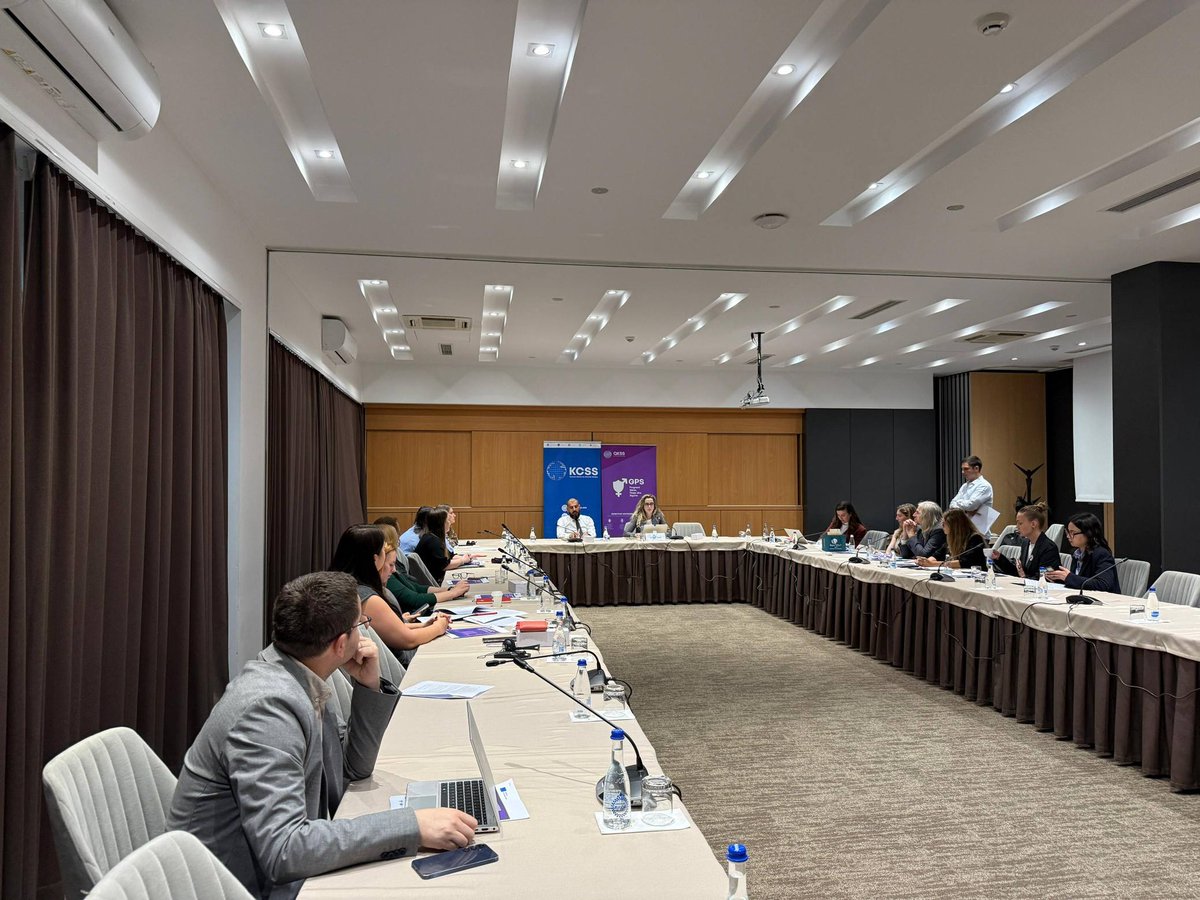
Me mbështetjen e Bashkimi Evropian, QKSS ka lansuar raportin e ri “RRITJA E NARATIVAVE ANTI-GJINORE NË KOSOVË Ideologjitë e së Djathtës Ekstreme, Dhuna Digjitale dhe Kërcënimet ndaj të Drejtave të Grave”, në kuadër të një konference të mbajtur të premten, Prishtinë.
Raporti trajton rritjen e narrativave anti-gjinore në Kosovë dhe implikimet e tyre për zhvillimin demokratik, barazinë gjinore dhe kohezionin shoqëror. Hulumtimi analizon mënyrën se si diskursi kundër-gjinor është përhapur në hapësirat politike, mediale dhe digjitale, duke u ndërlidhur me ideologjitë e së djathtës ekstreme dhe format e dhunës digjitale që synojnë gratë, aktivistet dhe grupet e margjinalizuara.
Gjetjet kryesore të raportit u prezantuan nga Jeta Loshaj, hulumtuese në QKSS, e cila paraqiti trendet kryesore dhe zhvillimet në këtë fushë.
Ky aktivitet është financuar nga Bashkimi Evropian. Përmbajtja e tij është përgjegjësi e vetme e QKSS dhe nuk pasqyron domosdoshmërisht qëndrimet e Bashkimit Evropian apo BIRN-it.
───
ENG:
With the support of the @EUKosovo KCSS has launched the new report “THE RISE OF ANTI-GENDER NARRATIVES IN KOSOVO Far-Right Ideologies, Digital Violence and Threats to Women’s Rights”, as part of a conference held on Friday in Prishtina.
The report addresses the rise of anti-gender narratives in Kosovo and their implications for democratic development, gender equality and social cohesion. The research analyses how anti-gender discourse has spread across political, media and digital spaces, linking them to far-right ideologies and forms of digital violence targeting women, activists and marginalised groups.
The main findings of the report were presented by Jeta Loshaj, a researcher at the KCSS, who presented the main trends and developments in this field.
This activity is funded by the European Union. Its content is the sole responsibility of KCSS and does not necessarily reflect the views of the European Union or BIRN.
───
SRB:
Uz podršku EU, KCSS je objavio novi izveštaj „PORAST ANTI-RODNIH NARATIVA NA KOSOVU: Krajnje desničarske ideologije, digitalno nasilje i pretnje ženskim pravima“, kao deo konferencije održane u petak u Prištini.
Izveštaj se bavi porastom anti-rodnih narativa na Kosovu i njihovim implikacijama po demokratski razvoj, rodnu ravnopravnost i društvenu koheziju. Istraživanje analizira kako se anti-rodni diskurs proširio kroz političke, medijske i digitalne prostore, povezujući ih sa krajnje desničarskim ideologijama i oblicima digitalnog nasilja usmerenim na žene, aktivistkinje i marginalizovane grupe.
Glavne nalaze izveštaja predstavila je Jeta Lošaj, istraživačica u KCSS-u, koja je predstavila glavne trendove i razvoj u ovoj oblasti.
Ovu aktivnost finansira Evropska unija. Njen sadržaj je isključiva odgovornost KCSS-a i ne odražava nužno stavove Evropske unije ili BIRN-a
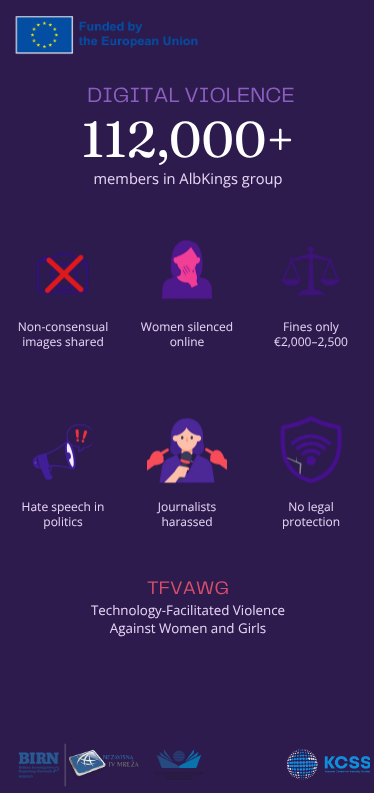
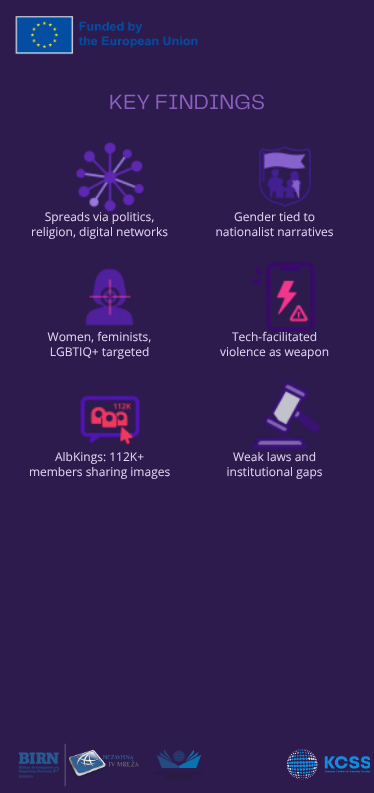
Another infographic from the KCSS report 📊
Anti-gender narratives in Kosovo are increasingly fueled through digital platforms — amplifying hate speech, misinformation, and coordinated attacks against women, activists, and the LGBTIQ+ community.
This infographic highlights key findings on:
▪️ The role of social media in spreading anti-gender narratives
▪️ Online targeting and intimidation
▪️ The impact of digital violence on public participation
▪️ Risks posed to democratic values and social cohesion
Explore the infographic to better understand how these narratives are shaping Kosovo’s digital space.
Read the full report by KCSS here: https://t.co/p18owe93aR
This activity is implemented by KCSS as part of the project “Preventing and Strengthening Resilience Against Anti-Gender Ideologies and Right-Wing Extremism,” supported by BIRN Kosovo and funded by the @EUKosovo.
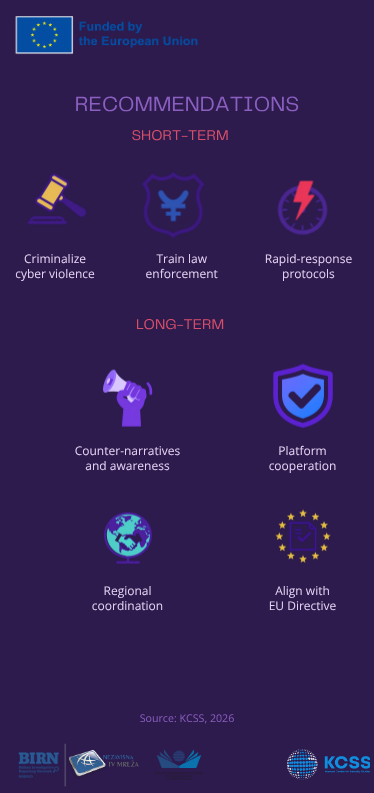
New infographic highlights from the KCSS report 📷
Anti-gender narratives are on the rise in Kosovo — spreading across politics, media, online spaces, and religious discourse, while increasingly targeting women, activists, and the LGBTIQ+ community.
These infographics present key findings from the report “The Rise of Anti-Gender Narratives in Kosovo: Far-Right Ideologies, Digital Violence, and Threats to Women’s Rights” and shed light on:
📷 Growing anti-gender rhetoric
📷 Online harassment and hate speech
📷 Digital violence and deepfakes
📷 Threats to women’s rights and democratic values
Swipe through the infographics to explore the main trends and findings.
Read the full report by KCSS here: https://t.co/p18owe8vlj.
This activity is implemented by KCSS as part of the project “Preventing and Strengthening Resilience Against Anti-Gender Ideologies and Right-Wing Extremism,” supported by BIRN Kosovo and funded by the European Union.
Can peacebuilding move beyond ethnic binaries?
This is a question that @dea_fetiu and Marija Jovanovic are asking and to get the answer, read their analysis, developed as part of the Kosovo Interethnic Dialogue and Integration Initiative (#KINDI), supported by the Robert Bosch Stiftung.
The piece challenges how peacebuilding is commonly understood in the Kosovo–Serbia context. While discussions remain focused on ethnic divisions, other lived experiences of conflict and particularly those shaped by gender identity, sexuality, and social marginalization are often left out.
Drawing on the concept of queer peacebuilding, the authors argue that peace cannot be reduced to agreements between groups. It must also reflect how people experience safety, belonging, and dignity in their everyday lives.
At a time when the normalization process is stalled, this op-ed offers an important reminder that sustainable peace depends not only on political settlements, but on whether societies address the full spectrum of exclusion and lived realities on the ground.
https://t.co/P0WW3Ya379
ALB:
Me mbështetjen e BE-së, QKSS organizoi webinar mbi rritjen e narrativave anti-gjinore në Kosovë, ku u diskutuan gjetjet e raportit “Rritja e Narrativave Anti-Gjinore në Kosovë: Ideologjitë e së Djathtës Ekstreme, Dhuna Digjitale dhe Kërcënimet ndaj të Drejtave të Grave”.
Paneli mblodhi aktiviste dhe eksperte që diskutuan ndikimin e narrativave anti-gjinore, dhunën digjitale ndaj grave dhe sfidat ndaj barazisë gjinore dhe hapësirës demokratike në Kosovë.
Ky aktivitet është financuar nga Bashkimi Evropian. Përmbajtja e tij është përgjegjësi e vetme e QKSS dhe nuk pasqyron domosdoshmërisht qëndrimet e Bashkimit Evropian apo BIRN-it.
---------------
ENG:
With @EuropeanUnionInKosovo support, QKSS organized a webinar on the rise of anti-gender narratives in Kosovo, where the findings of the report “The Rise of Anti-Gender Narratives in Kosovo: Far-Right Ideologies, Digital Violence, and Threats to Women’s Rights” were discussed.
The panel brought together activists and experts who discussed the impact of anti-gender narratives, digital violence against women, and the challenges to gender equality and democratic space in Kosovo.
This activity was funded by the European Union. Its content is the sole responsibility of QKSS and does not necessarily reflect the views of the European Union or BIRN.
---------------
SRB:
Uz podršku EU, QKSS je organizovao vebinar o porastu antirodnih narativa na Kosovu, na kojem su predstavljeni nalazi izveštaja „Porast antirodnih narativa na Kosovu: ideologije krajnje desnice, digitalno nasilje i pretnje pravima žena“.
Panel je okupio aktivistkinje i stručnjakinje koje su razgovarale o uticaju antirodnih narativa, digitalnom nasilju nad ženama, kao i izazovima za rodnu ravnopravnost i demokratski prostor na Kosovu.
Ova aktivnost je finansirana od strane Evropske unije. Za njen sadržaj isključivo je odgovoran QKSS i on ne odražava nužno stavove Evropske unije ili BIRN-a.
https://t.co/jgSrbbevei
🟣 Whose voices are missing in the Kosovo–Serbia Normalization Dialogue?
We’re pleased to share a new analysis by Anja Jokić, developed as part of the Kosovo Interethnic Dialogue and Integration Initiative (KINDI), supported by the Robert Bosch Stiftung.
The piece takes a closer look at something often overlooked. While the normalization dialogue is meant to shape the future of communities, women and young people remain largely excluded from it.
Despite strong commitments under the Women, Peace and Security (WPS) and Youth, Peace and Security (YPS) agendas, their meaningful participation in the process is still limited. As a result, key perspectives — especially those closest to everyday realities — are missing.
The op-ed argues that this is not just a matter of inclusion, but of effectiveness, as it 👉 sustainable peace is difficult to achieve if it does not reflect the voices and needs of the people it affects.
At a time when the normalization dialogue remains stalled, this is a timely reminder that how peace is negotiated matters just as much as what is agreed.
#Peacebuilding #KosovoSerbia #NormalizationDialogue #EU https://t.co/8VpFloUUg7
We are happy to share that Dr Lura Pollozhani has joined our think-tank as a Senior Non-Resident Fellow.
Dr. Pollozhani brings strong academic and policy expertise on the Western Balkans, EU enlargement, democratization, youth and civic participation, among others. Her work and experience will add important value to KCSS’s research, analysis, public discussions, and future project development.
This appointment is part of our efforts to build a wider network of senior experts connected to Kosovo, the Western Balkans, and EU policy. The Senior Non-Resident Fellowship is designed as a flexible platform for cooperation, including joint research, policy briefs, op-eds, public discussions, and project-based engagement.
We are delighted to welcome Dr. Pollozhani to KCSS and look forward to future cooperation.
Welcome, Lura! 👏
📖 New Op‑Ed
As part of the KINDI project, supported by Robert Bosch Stiftung we are pleased to share a new op‑ed by Vesa Ferizi examining how EU language subtly reshapes the Kosovo–Serbia Dialogue — and the political realities it seeks to manage.
In “How the EU reshapes the Kosovo–Serbia Dialogue through language,” Ferizi analyses how recurring EU discursive practices , including appeals to “both sides,” calls for restraint, and sometimes selective framing of events, in most cases seem to do more than describe the Dialogue.
https://t.co/eF2KDWAwM9
#KINDI #KCSS #KosovoSerbiaDialogue #EUForeignPolicy #Mediation #DiscourseAnalysis #WesternBalkans
Disclaimer: The views expressed are those of the author and do not necessarily reflect the views of the Kosovar Centre for Security Studies (KCSS) or the Robert Bosch Stiftung.
Read the latest blog by KCSS on why urgent reform can no longer wait:
Kosovo’s Accountability Crisis: Addressing Digital Violence Against Women with Urgent Legislative Reform and EU Harmonization
Digital violence against women is not just an online issue — it is a democratic and accountability crisis. Kosovo urgently needs stronger legislation, institutional accountability, and alignment with EU standards to protect women in digital spaces and beyond.
https://t.co/EmCChC5OzM
This article was funded by the European Union. Its content is the sole responsibility of the Kosovar Centre for Security Studies and does not necessarily reflect the views of the European Union or BIRN.
New op-ed by KCSS explores how anti-gender narratives and far-right discourse are increasingly shaping Kosovo’s digital space — amplifying misogyny, disinformation, and polarization online.
The piece examines how these narratives move from online platforms into public and political discourse, and why addressing them is essential for protecting democratic values and human rights.
Read more:
https://t.co/TDgn58dtAT...
This publication was funded by the European Union. Its content is the sole responsibility of the Kosovar Centre for Security Studies and does not necessarily reflect the views of the European Union or BIRN.
With verdicts, likely, expected soon and considering the profound ramifications they may have on and outside Kosovo, we hosted a webinar yesterday titled “Reflecting on the Kosovo Specialist Chambers: Justice, Politics, and Long‑Term Consequences,” featuring an excellent lineup of speakers from academia and civil society. We are grateful to Robert Muharremi Gëzim Visoka Aferdita Sylaj Shehu and Armend Bekaj for their thoughtful and insightful contributions, and to Ramadan Ilazi for facilitating the discussion.
Across legal, political, and community perspectives, the conversation highlighted deep concerns about the court’s legitimacy, its societal impact, and its broader political consequences. Speakers questioned whether the process has delivered justice or closure for victims; whether it has instead reinforced polarisation within Kosovo and between communities; and whether it risks reshaping narratives of the war with long‑term implications for peace, reconciliation, and international justice.
A few of the questions on the table:
→ What does it mean for transitional justice when a court's jurisdiction is broader than the crimes it was established to investigate — and when that breadth has never been seriously scrutinised by the parliament that passed the enabling law?
→ The ICTY found no joint criminal enterprise in any KLA-related case. The KSC has found JCE in both cases it has completed. How do we account for that divergence — and what precedent does it set for how international tribunals treat liberation movements?
→ The court was established under pressure from Kosovo's Western partners. If the verdicts produce convictions, many in Kosovo will not experience them as justice — they will experience them as a politically motivated indictment of the liberation war itself. What does that do to trust in international institutions at a moment when that trust is already fragile?
→ From community-level research: the overwhelming majority of Kosovo citizens still do not understand what this court is, what it is trying, or why. Accountability that is invisible to those it is supposed to serve cannot perform the reconciliation function transitional justice promises.
The KSC is, in many respects, a unique arrangement for Kosovo and the region in the context of transitional justice, established within a domestic legal order but staffed exclusively by international personnel, sitting outside the country it covers. Examining what it has and has not achieved is important scholarship regardless of where one stands on the verdicts.
🎬 Our documentary 'Middle Rage – Social Media and the War on Democracy' is now live!
Exploring how social media, disinformation and online narratives shape democracy - focusing on middle-aged audiences.
Watch now 👇
https://t.co/Rr2OCsNGeP
#MiddleRage#SmidgeProject #Disinformation #MediaLiteracy #Democracy
📢Webinar "Reflecting on the Kosovo Specialist Chambers: Justice, Politics, and Long‑Term Consequences" with @GezimVisoka@ArmendBekaj@RobertMuharremi Aferdita Sylaj Shehu @Danlazi on Wednesday, 29 April 2026 from 14:00 CET.
More details and registration on this link 👉 https://t.co/Y1YyLUC3Nc
🎉 KCSS at 18: Building Accountable Security Sectors; Promoting Peacebuilding
Today marks 18 years 🎂 since the founding of the Kosovar Centre for Security Studies (KCSS)—a period defined by independent research, critical policy engagement, and a strong commitment to democratic security governance and peacebuilding.
Established in April 2008 in Prishtina, KCSS began when Kosovo had no dedicated security think tank, driven by the belief that security must be accountable and serve citizens. Over the years, KCSS has become a respected security research centre in Kosovo, the Western Balkans, and beyond.
📊 18 years in numbers
📑 247 publications influencing national, regional, and European discussions
🔖6+ thematic programmes addressing various security challenges
🤝 250+ partner institutions across 20+ countries
📝 Contributions to national strategies, EU consortia, and global policy forums KCSS has progressed from monitoring Kosovo’s first security institutions to participating in EU research and global policy initiatives, becoming a regional and international voice on security, peace, and governance.
We appreciate our researchers, partners, donors, and supporters who have joined us throughout this journey. 18 years. 247 publications.
One mission: Ensuring security serves citizens and promoting peacebuilding.
#KCSS18 #SecurityInServiceOfCitizens #PromotingPeacebuilding #ThinkTank #PolicyImpact #Kosovo #SecurityStudies
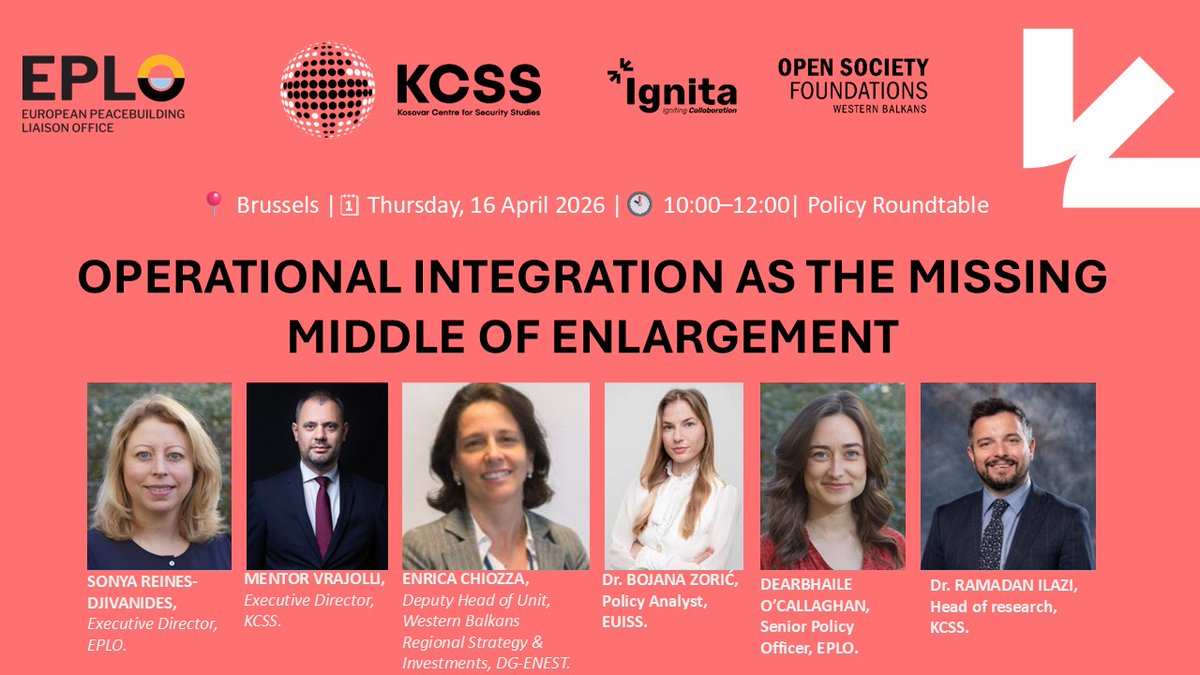
Today in Brussels, together with the European Peacebuilding Liaison Office (@EPLO_network), we hosted a policy roundtable on Operational Integration as the Missing Middle of Enlargement, held in the framework of the #IGNITA initiative supported by @OpenSocietyWB Open Society Foundations | Western Balkans.
The discussion brought together representatives from the Western Balkans, EU institutions, and the think‑tank community to explore how gradual, sector‑specific cooperation can bring the region closer to the EU’s security and rule‑of‑law architecture—without replacing or undermining accession processes.
A key takeaway was that many of today’s risks—cyber threats, hostile investment, organised crime, corruption, and disinformation—already cross borders, regardless of enlargement timelines. Legal approximation alone is not enough and therefore what is missing is operational cooperation, trusted channels, and crisis‑time coordination.
Cybersecurity emerged as a particularly clear entry point, given shared risks and mutual benefits, alongside discussions on FDI screening, justice cooperation, migration governance, and countering foreign information manipulation.
The overarching message was that operational integration is not a way around conditionality, but a practical way to make enlargement more concrete, credible, and useful—both for the Western Balkans and for the EU.
📍 Brussels | Policy Roundtable | Operational Integration as the Missing Middle of Enlargement
Next week in Brussels, KCSS and the European Peacebuilding Liaison Office (@EPLO_network), in the framework of the #IGNITA initiative, supported by @OpenSocietyWB Open Society Foundations | Western Balkans will host a policy roundtable to discuss how operational integration can advance the EU enlargement process for the Western Balkans.
The discussion will focus on practical, agency‑level cooperation between the Western Balkans and EU security, justice, and cyber bodies—such as ENISA, Eurojust, EPPO, and FRA—and on identifying realistic next steps for deeper engagement in areas where risks are already shared.
🗓 Thursday, 16 April 2026
🕙 10:00–12:00
📍 EPLO Office, Brussels
If you are based in Brussels and would like to join the discussion, feel free to reach out.
Next week in Brussels for an important conversation on greater security convergence between the Western Balkans and the EU, focusing on operational integration. @KCSSQKSS@EPLO_network