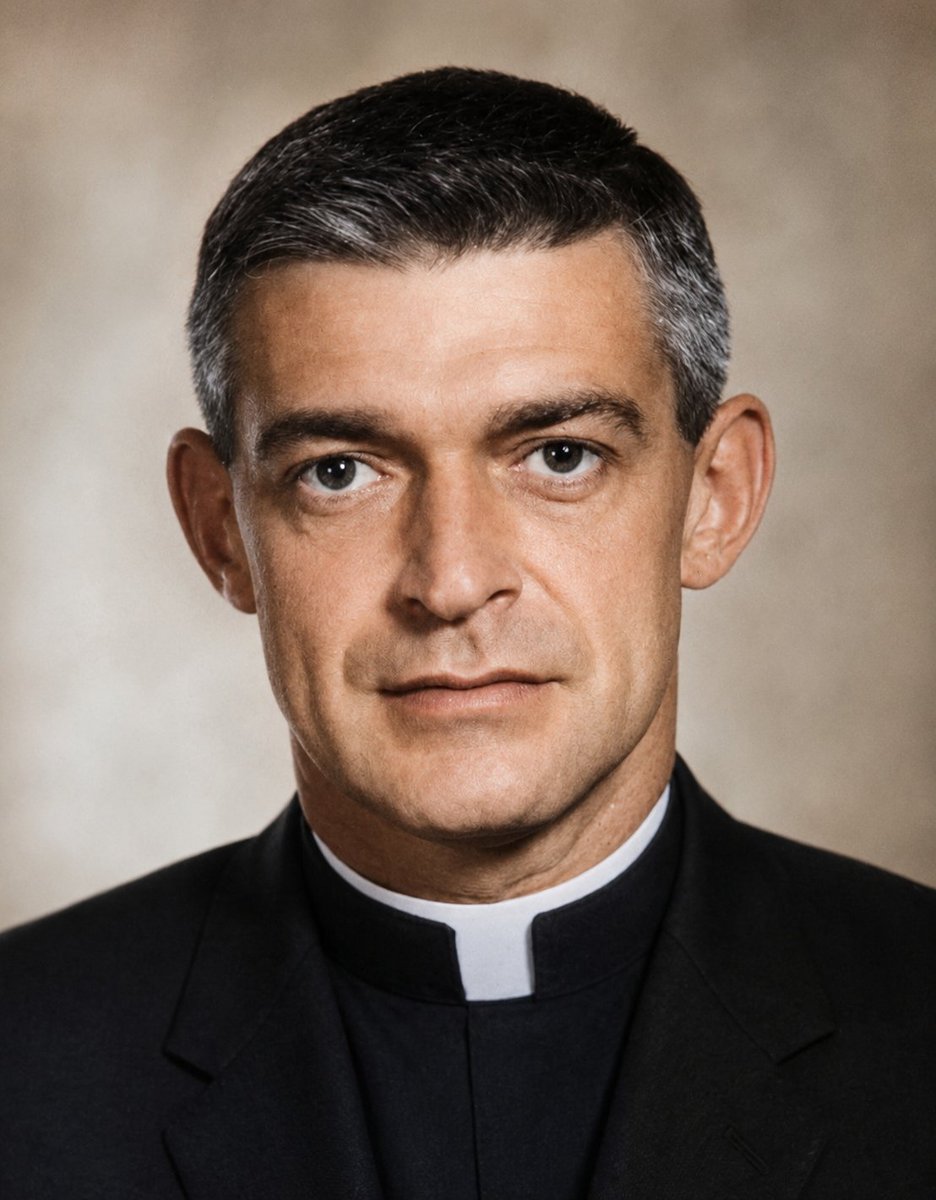
Vincent Capodanno did not carry a rifle. He carried a Bible and a box of St. Christopher medals. He was a Catholic priest, a Maryknoll missionary from Staten Island, and when he joined the Navy as a chaplain in 1965 he asked for the one assignment most men would have run from. He wanted to be with the Marines in the field. They called men like him the Grunt Padre, and he earned it. He lived the way his Marines lived, ate what they ate, slept in the same mud, and spent his hours hearing confessions, writing letters home for scared kids, and sitting with the grieving and the dying.
On September 4, 1967, during Operation Swift in the Que Son Valley, the same mountains where Marines would still be fighting years later, a company of the 5th Marines was hit by a massive North Vietnamese force, around 2,500 men. When Father Capodanno heard that a platoon was about to be overrun, he did not stay in any safe place, because there was no safe place and he would not have gone to it anyway. He ran across open ground under fire to reach the Marines who were being cut apart.
Then he just moved through the battle doing his work. He went from man to man, giving last rites to the dying and pulling the wounded to cover, praying over kids as they bled out, telling terrified Marines that God was with them right there in that field. A mortar round shredded his arms and legs and tore off part of his right hand. He refused medical aid and kept going, one hand mangled, still crawling to the next wounded man.
He saw a wounded corpsman lying out in the open, close to an enemy machine gun, and went to him. As Father Capodanno knelt over that Marine to comfort him and give him last rites, the machine gun found them both. The priest was shot more than 27 times. He died there in the field with his Marines, doing exactly what he had come to do.
He received the Medal of Honor in 1969. The Catholic Church later opened his cause for sainthood, and he now carries the title Servant of God. To the men of the 5th Marines he was already something close to a saint long before any of that, the padre who ran toward the fire empty handed so that no man in that valley would have to die alone.
@DrMarioRSanchez@BreeSolstad Who’s ego is being served by remembering martyrs, saints, heroic examples of faith? Sorry but your dismissal of these acts sounds very much like the Pharisees - who were blind to higher spiritual values:
In 2008, Malcolm Gladwell explained why some people succeed and some don't in a single 1-hour talk.
This will permanently change the way you think about talent, effort, and success.
Bookmark & watch today, no matter what.
@DrMarioRSanchez@BreeSolstad Are we serve humanity first or God first? If they would have surrendered: Would we have remembered what they did as much - would they have served as heroic examples of love of God - is it virtuous to say untruths?
@evanhill 1) Offensive player beat defensive player to the ball 2) Blind high kick is at best careless (common foul) and perhaps even reckless (yellow card). It’s only “enormous” because of where it happened on the field - which the defensive player is obligated to be aware of.
The Atlantic’s new cover story about the end of reading is absolutely frightening.
Here are 5 concerning facts from it:
1) 51% of adults read 0 books a year: According to the National Endowment for the Arts, which conducts the most comprehensive survey of the nation’s reading habits, fewer than half of all adults reported having read a book of any kind in 2022.
2) Reading for fun has gone from a mainstream hobby to a niche one: Americans who read for pleasure on any given day fell from 28 percent in 2004 to 16 percent in 2023.
3) Everyone is reading less: The decline in reading cuts across age groups, gender, and education levels. Even the demographics that traditionally read the most—retirees, women, and college graduates—have seen a collapse.
4) Books are getting simpler and shorter: New York Times best sellers today have sentences that are about one-third shorter than they were a century ago.
5) Kids are struggling to read and doing less of it: Fourth- and eighth-grade reading scores have slid for the past decade. From 1984 to 2025, the percentage of 13-year-olds who said they rarely or never read for fun rose from 8 to 29 percent. "Every year older a child gets, the less they like to read."
For most of history, the biggest reading problem was illiteracy. People didn't know how to read books.
But today the biggest problem is post-literacy. People know how to read books, but don't.
A society that doesn't read loses more than just books. People lose the ability to think critically, focus deeply, and see life through multiple perspectives.
The world needs you. Please consider picking up a book today.
https://t.co/P8Sq3pAa6K
Ronald Reagan’s inspiring patriotic speech from 1981 about why America is the greatest. This is an absolute must watch today on this 250th birthday of our country 🇺🇸
A German fighter ace pulled up behind a crippled American bomber, his finger on the trigger, an easy kill that could put him in line for his country's highest honor.
He could see the wounded crew through the holes in the fuselage.
What he did next was so unthinkable that both men hid it for almost 50 years.
Then, as old men, they found each other..🧵1/7
Ben Sasse has always been honest, but facing a terminal diagnosis he has been unplugged. Last night, in exactly 13 seconds, he explained the real reason compulsory education ever started in America.
Catholics, consider this when making choices about education for your children.
“As He died to make men holy, let us live to make men free”
Chills every time.
Here is the Tabernacle Choir and the West Point Band performing Battle Hymn of the Republic 🇺🇸🎺
A must-listen this Memorial Day:
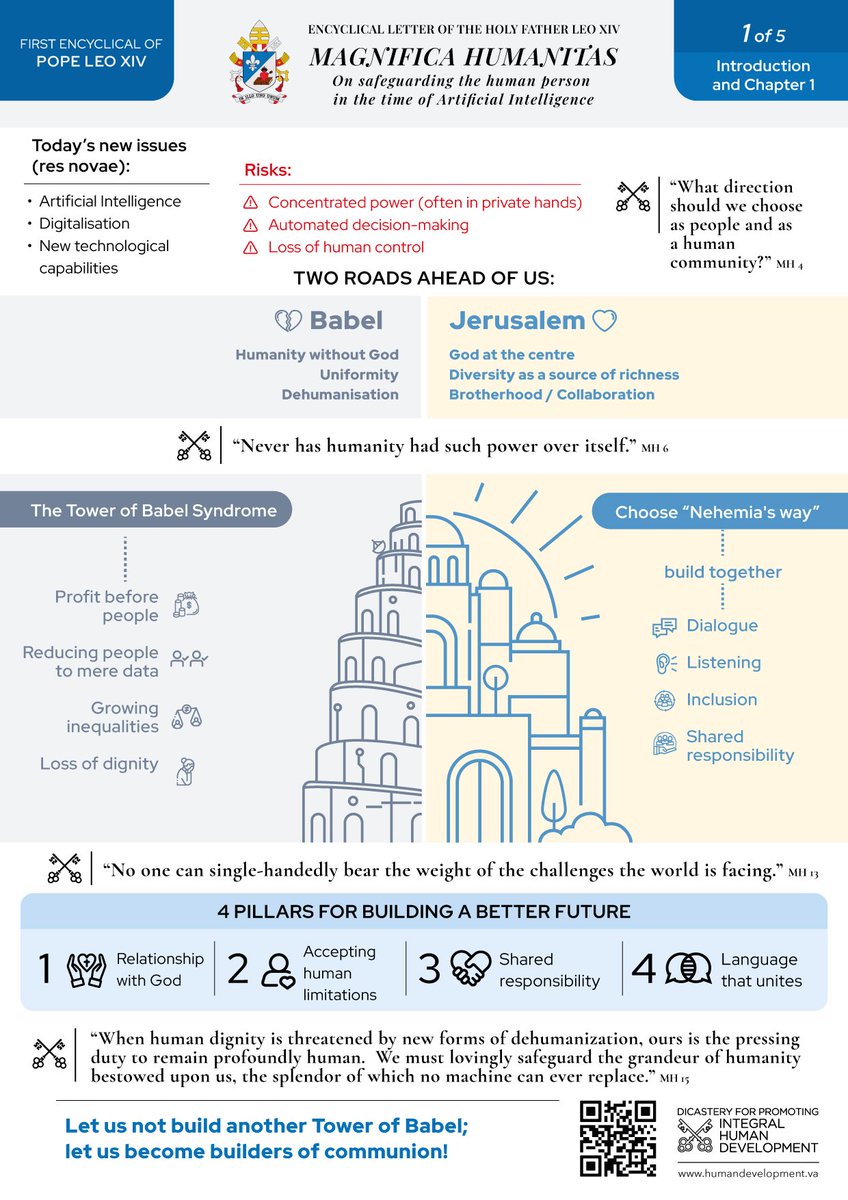
Pope Leo XIV’s address in English at the publication of his Encyclical Letter Magnifica humanitas, on safeguarding the human person in the age of Artificial Intelligence.
Do listen to all of it. It is very good.
the pope and anthropic's co-founder just stood together at the vatican to release "magnifica humanitas," the first ever catholic teaching on AI
yes, you read that right. the full ceremony was 2 hours.
here's the most interesting things for you to know:
1. this is the biggest religious response to AI in history. popes only put out a handful of these huge official letters in their entire time as pope. the fact that one of them is about AI tells you how seriously the church is taking what's coming.
2. small detail with massive meaning: this pope picked the name "leo XIV" on purpose. the last pope named leo was leo XIII back in 1891, and his most famous act was writing the church's response to the industrial revolution. picking the same name is a deliberate signal. this pope sees AI as the new industrial revolution.
3. the catholic church does this every time a major technology reshapes humanity. they wrote "rerum novarum" in 1891 to respond to the industrial revolution. when nuclear weapons threatened the world in the 1960s, they wrote "pacem in terris." climate change and runaway tech got "laudato si" in 2015. now AI gets "magnifica humanitas." they don't issue these often.
4. the pope's main line: "AI needs to be disarmed." he literally compared AI to nuclear weapons. he said the church spent decades pushing for nuclear disarmament because the technology was too dangerous to leave in the hands of a few. he says AI is now in that same category.
5. anthropic co-founder christopher olah told the pope, on stage at the vatican, that anthropic's own research team keeps finding things inside their AI models that "mirror joy, satisfaction, fear, grief, and unease."
6. olah's reframe of what AI actually is: these things are grown. they're trained on a structure roughly modeled after the human brain and fed everything humans have ever written. in his own words: "they are made from us, from our words." he said even the people building them don't fully understand what's happening inside.
7. olah publicly admitted that every AI lab, including his own, faces pressure that can conflict with doing the right thing. commercial pressure to keep shipping, competitive pressure from other labs, plus the older pressures of pride and ambition. his solution: we desperately need outside critics with no skin in the game who will tell the labs when they're failing.
8. olah says there are 3 giant questions the AI labs cannot answer alone and the world needs religion and philosophy to step in on:
> how do we make sure poor countries actually benefit from AI?
> what does human flourishing even look like in this new world?
> and what are these things we're actually building?
9. one of the sharpest lines in the whole encyclical: "the promise of automatic general prosperity often proves illusory." translation: the idea that AI will just make everyone rich on its own is a fantasy. someone has to actually design the system so the benefits get shared.
10. the pope also pulled out a 100-year-old quote: "contemporary man has not been trained to use power well." said by a theologian back in the 1920s. the whole encyclical is basically a long argument that we need to learn how to use this kind of power before it uses us.
11. the pope kept stressing that he doesn't have the technical answers. but he says the church has thousands of years of wisdom on what it means to be human, and that wisdom is exactly what's missing from how we're building AI right now. his closing line: this technology should serve "human flourishing and human dignity, not control consciences."