Teaching 8th grade has proven this true. Kids *know* very little. This prevents any deep comprehension of subjects they should be able to learn. They want to learn. They can learn. But they have learned so little that everything is just out of reach.
Well-reported piece but it misses something essential. The Achilles Heel of Calkins approach isn't phonics, it's what comes next: worshipping student engagement to excess, and encouraging the idea that if kids just love to read they'll become good readers. It doesn't work that way.
My South Bronx school was a Calkins school. In five years teaching 5th grade, I never had a single student who could not "read" (decode). Their struggle was with comprehension. It's why I became an E.D. Hirsch disciple. My staff developers from Calkins' shop stressed reading comprehension skills and strategies; they insisted my students were bored. They needed books that reflected their interests and experiences with characters "who looked like them." Put those "just right" books in their hands and--voila!--success would follow.
But Hirsch's work described my students' struggles as if he'd been in my classroom: "No," he might have said had he been there, "it's background knowledge. It's vocabulary." An education that is all mirrors and no windows creates the *illusion* of literacy -- kids seem competent when reading and writing about topics they know, as Hirsch's work would predict, because they're reading about topics they know and understand. But it creates a "false positive" for Lucy and her acolytes. The language proficiency "skills" they demonstrate don't translate to tests or the broader world of mature literacy, because they are not skills at all. They're an effect of knowledge.
Lucy still doesn't get it: if you want kids to be broadly literate, they must be broadly educated and endowed with the knowledge that literate writers and speakers know *and assume they know* too. That's what literacy and language proficiency is. It's not a skill you teach, it's a condition you create.
With the election over, I'm ready to get back to Civil War stuff. So, in that spirit, how about a long thread on the decimation of the CSA Army of Tennessee's officer corps at the Battle of Franklin, Nov. 30, 1864? Let's go...
This is what I find interesting about WWI. Following specific soldiers or battalions through the war provides a much clearer picture of the grim realities they faced.
Today 108 years ago 315e Regiment orders arrived:
Next stop Verdun
For many it seemed like a death sentence What did they experience? How did they survive?
Below a thread on what 12 days on Verdun frontline was like for the 109 soldiers that never came back & the 400+ wounded
📸Ravin des Vignes, 315e location near Thiaumont
This kind of thread is why I have returned my science class to the analog age—at least about 90% of it. Kids benefit and enjoy an older form of education.
Yes, college students have lost their ability to read. I have taught lit for 24 years; the threshold started to decline in the late aughts and nosedived during Covid. A thread with observations + how I get my students to read ALL (or at least most) of the reading I assign: 🧵
Put this in practice last year and it was wildly successful. Kids were thrilled to compete on who got more questions right on tests. It made them want to do the class work which my district has all but mandated as optional.
Traditional education is fun if you do it right. The biggest lightbulb moment for me as a teacher was realising what kids find "fun" is not posters, group work, interactive pupil-led learning or other nonsense, but *feeling successful and getting loads of stuff right*
As the frequent recipient of these students, I am thankful my principal usually asks me first. I regularly deny the transfer. Everyone has difficult students and need to bear that burden.
Year in review- Several students were pulled from my class because they "didn't like me" Usually because of my behavioral and academic expectations. I followed their progress for the rest of the year and over 50% of them did worse in their new class, very few did better.
Synchronisation of the song "In the Hall of the Mountain King" by Edvard Grieg to a line rider track drawing
Sound on
📹 DoodleChaos
https://t.co/Nweactxkw9
Don't forget that this was a unique battle at a specific point in tactical development. Armies went from modernized Napoleonic tactics to combined arms specifically because of this disaster of the Somme.
Reading about the Battle of the Somme - we all know what a terrible mistake it was, how many English were killed storming German trenches covered in barbed wire sprayed by machine gunfire. But I had not known how overburdened the attackers were. Crazy:
@FischerKing64 Much of this is specific to this one specific battle in a long, complicated war of tactical development. A year before you have men advancing with rifles but no grenades or even helmets. A year later you have men advancing with complex bombardments and tanks.
@MrZachG Because instruction matters noticeably less than the leadership qualities of the teacher. Add to that the different dynamics of behaviors--not just the classic kind but the mesh of personalities of the group. Instruction is less than 10% of teaching.
I just picked up the honor roll certificates to pass out to my first period class. Only one out of 28. That's too few. But in the past I've complained that 23 out of 28 is too many. So what should be the ideal number?
Eventually we will do an episode set following the 13th battalion through the war as an example of what it was like. This is a great thread on their first experience of the trenches.
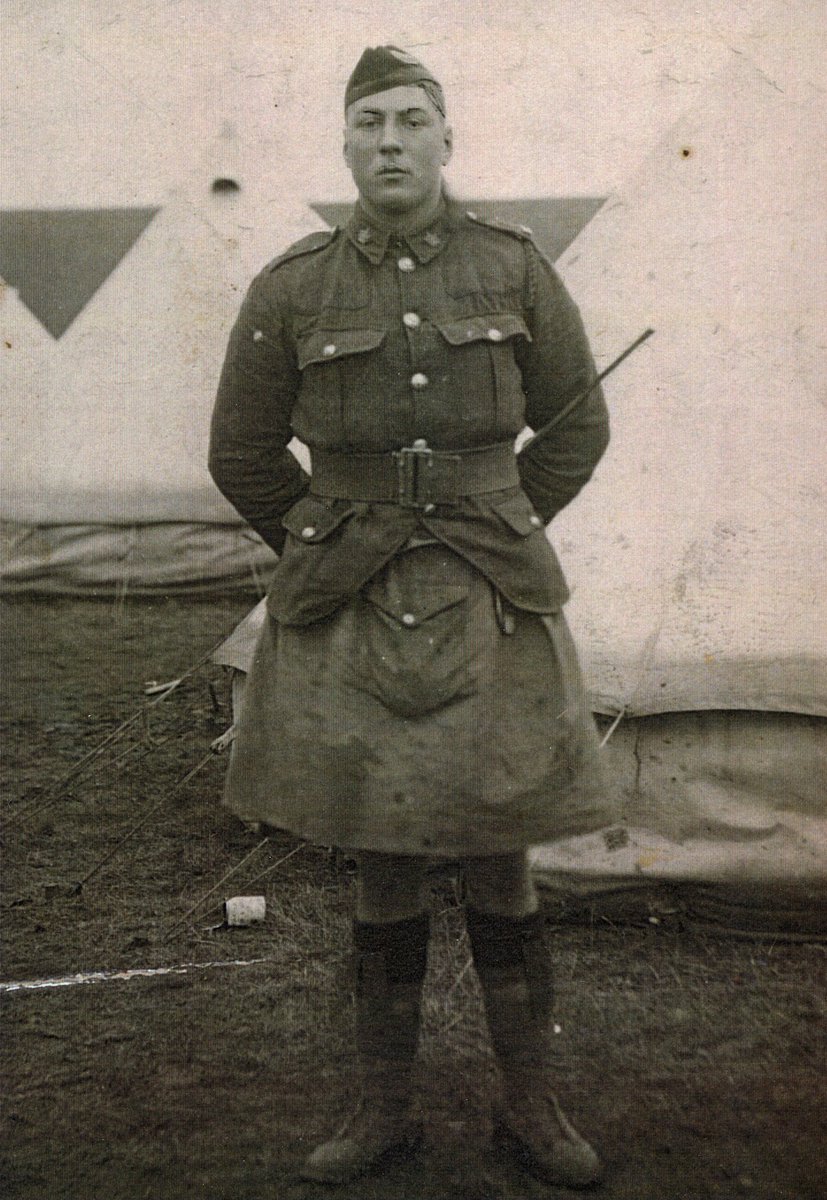
This is my great-great-Uncle, Edwin Dickenson. 109 years ago today, on April 22, 1915, he found himself in the front lines at the 2nd Battle of Ypres, his first ever battle. This is his story. 🧵1/22
Only 5 or 6 years ago the concept of a student choosing not to participate was rare--maybe 5 out of 170. Now it's 5 or more per class. This started pre-covid and seems to be worse outside my district. More than half my new transfer students won't even take out a pencil.
This time last year, I was sounding an alarm about the coming AI revolution. However, it seems as if it has petered out due to the fact that students this year care even less whether they pass or fail and don't even bother to try and cheat.
Cold-calling can widen the net, avoiding the issue of only a few students responding. I prefer to provide ample time for student preparation so they have answers ready before they could be "cold-called." But sometimes kids need to be kept on their toes too.
Student-centered pedagogy assumes students engaged at all times. That's unrealistic. A classroom--like mine--with plenty of engagement stills benefits from direct instruction strategies. I have used cold-calling 4 times all year to support specific lessons--NOT as a daily thing.