@Sambannz So no Law governing them? 🤷.
And who forces those complaining to step in their offices for services when there's good options like Banks and Saccos.
Xenophobia
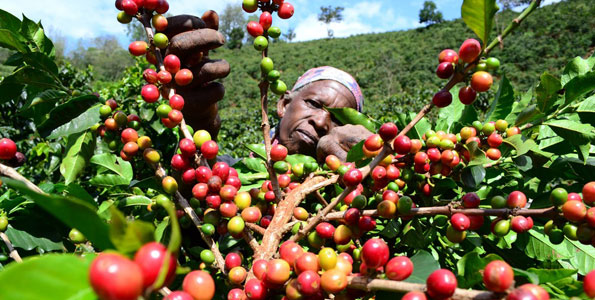
Did you know that for the longest time, the global coffee story has sounded simple and settled:
Uganda is the home of Robusta and Ethiopia is the home of Arabica.
That narrative has been repeated in classrooms, conferences and marketing campaigns for years. Yet most of our scientific studies have always pointed all the coffee back to Uganda but we didn’t have clear evidence as a country to win this claims but in change of events by a new scientific research carried out by @Cirad (French agricultural research and cooperation organization) evidence is quietly reshaping that understanding and the updated story should make every Ugandan stand a little taller in the coffee world
Scientists studying coffee genetics have shown that Coffea arabica did not just appear independently in isolation. It was born from a natural crossing between two species: Coffea canephora (Robusta) and Coffea eugenioides (Eugenioides). This rare natural event called allopolyploidization created a completely new species.
Even more remarkable, researchers found that this crossing likely happened only once. One single natural “super plant” gave rise to the Arabica coffee that today fills cups across Latin America, Asia and the entire intertropical world.
For that natural crossing to occur, both parent species had to exist in the same environment under the same tropical forest conditions. That ecological overlap only exists in Uganda. Uganda is home to natural populations of Robusta and Eugenioides the very genetic parents of Arabica.
In addition, Uganda hosts multiple coffee species including Coffea liberica and Coffea dewevrei. This level of biodiversity is not ordinary. It is foundational to the process
This is not about dismissing anyone else’s contribution to coffee history. It is about recognizing scientific evidence and understanding what it means. If Arabica emerged from a natural union of species that coexist in Uganda’s ecosystem then Uganda is not just a strong Robusta producer. Uganda sits at the heart of coffee’s genetic story.
To the world: the Arabica you prize, trade, roast and celebrate traces back to a natural genetic event rooted in Uganda in an environment where these species met and merged. That matters.
To Uganda: we must stop thinking small about our place in coffee history. We are not just exporters of green beans competing on price. We are custodians of a genetic heritage that shaped one of the most valuable agricultural commodities on earth.
This is a moment for pride but also for strategy. Pride should push us to invest more in research, conservation, branding, value addition and storytelling. Governments build powerful origin identities around far less. Ours is backed by biodiversity and science.
The world drinks coffee every single day.
Uganda should confidently say: we are central to its origin story.
And it is time both the world and we ourselves fully understood that as a country and leveraged it as marketing our coffee with a better story for a higher market price
If you are a proud Ugandan atleast the least you can do for your country is to share this information to your circles
For God and my country
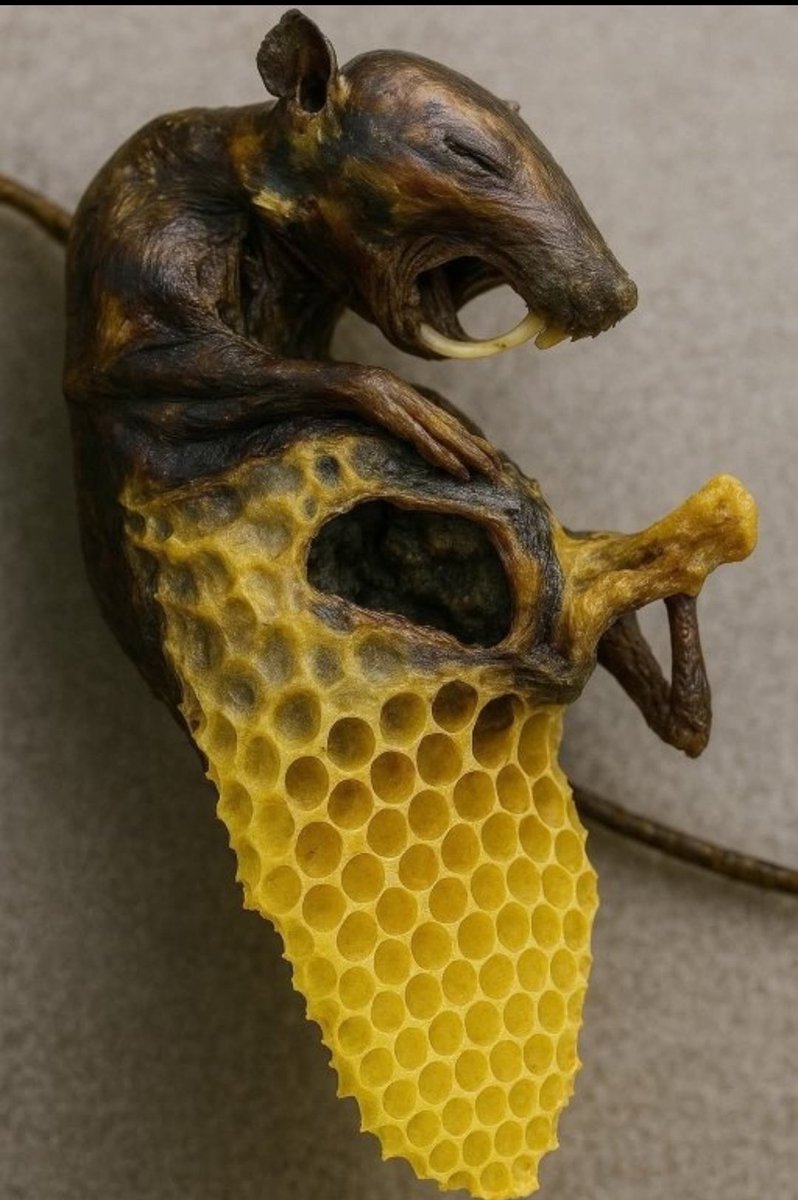
Sometimes a mouse can enter the beehive, attracted by the warmth and the smell of honey. The bees react immediately, defending their nest. They attack the intruder together until it stops moving. However, a problem arises that cannot be solved with force: the dead body is too large to be carried out. If left there, it would begin to rot and could put the entire colony at risk. The bees have their own method to deal with it.
They cover the body layer by layer with propolis, a substance collected from tree resins and enriched with enzymes produced by the bees themselves. Propolis has antibacterial, antifungal, and preservative properties. It isolates the intruder’s body, preventing odors and decomposition, protecting the inside of the hive from diseases.
This is one of the most extraordinary examples of hygiene in the insect world. The impossibility of removing the danger does not mean giving up: the bees simply neutralize it, maintaining order and balance within the hive.
@akinwale_cfi@adekunleGOLD@Millishield01@woye1
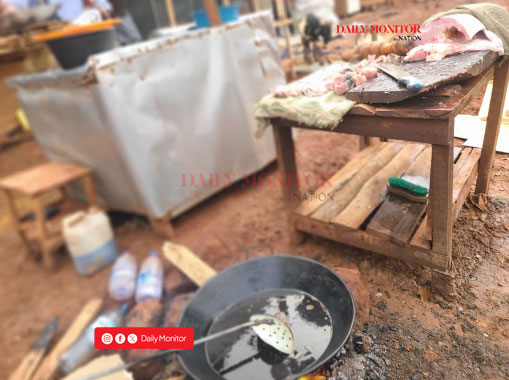
PHOTOS: A roadside vendor sells deep-fried, ready-to-eat Nile perch displayed openly, with flies buzzing around it.
Such practices raise serious food safety concerns.
According to the World Health Organization (WHO), improper handling and exposure of ready-to-eat foods can lead to contamination and pose significant public health risks.
Such practices are common in informal street food settings and increase the likelihood of foodborne illnesses. The photos were taken on February 22 at Nakuwadde, along Ssentema Road in Wakiso District.
📷 @GabrielBuule
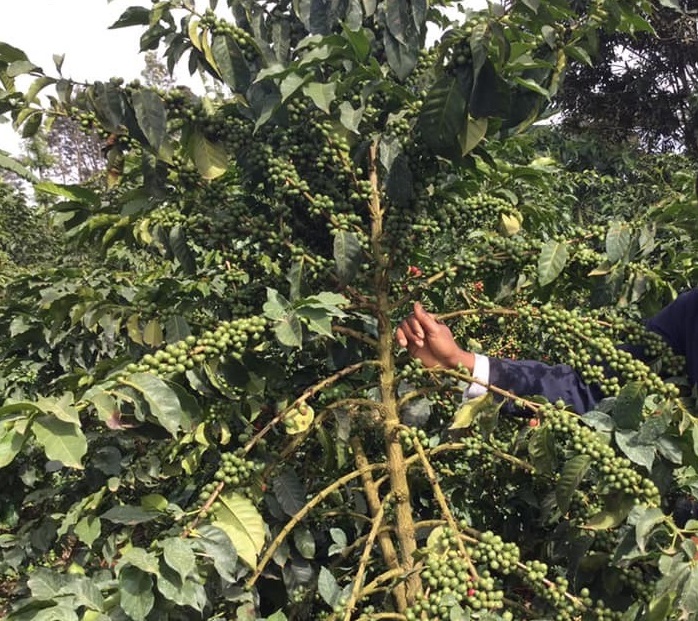
COMMERCIAL COFFEE GROWING IN UGANDA:
Greetings from Greening Uganda. Did you know you can earn 12,000,000 Ugx (Twelve Million Uganda Shillings) per season from an acre of well looked after or managed coffee plantation, for more details, visit https://t.co/7JMBVzu7bT OR visit us at https://t.co/e59w7BzOhO OR drop us an email at [email protected]
Uganda, Africa's second-largest coffee producer after Ethiopia, set a new export record in the 2024/2025 financial year. The Coffee Development Authority (UCDA) reported that international coffee shipments generated $2.2 billion, twice the $1.14 billion earned the previous year.
ESTABLISHMENT COSTS:
1. Bush clearing 100,000Ugx per acre
2. Ploughing 1st & 2nd 400,000Ugx per acre (LUWERO)
3. Pitting & Planting per acre 360,000Ugx
4. Seedlings 675,000Ugx per acre
5. Fertilizer 1st year 480,000Ugx per acre
6. Weeding 1st year 240,000Ugx per acre
THE ABOVE COSTS ARE ESTIMATES, EACH LOCAL AREA HAS ITS OWN RATES!
We're very proud to have been associated with Uganda Coffee Development Authority in promoting, The Large Scale Coffee Growing Scheme, we helped 100’s of Ugandans receive free government coffee seedlings.
To place your order for coffee seedlings for 1ST season 2026 planting MARCH-JUNE, kindly log onto https://t.co/7JMBVzu7bT and apply online. On the same page you will find the Cost Benefit Analysis (CBA) of Growing Coffee. You can as well Inter-Crop coffee with Banana's.
COFFEE INTER-CROPPING:
For maximum utilization of your land, you can inter-crop your coffee with Bananas, they co-exist very well, this gives you extra income and enables you to realize steady income, if you’re not harvesting coffee, you’re harvesting banana’s. We recommend you plant Bogoya (Cavendish), Ndiizi (Apple Bananas) & Gonja (Plantain), they have a good market and prices.
ORDER PLACEMENT:
We have available only CWDr/Kr CLONAL ROBUSTA CUTTINGS (SEEDLINGS) at 1,500Ugx per seedling (Small pots) 2500Ugx per seedling (BIG POTS), and Arabica Coffee Seedlings at 500Ugx per seedlings.
To place your order Call/Whatsapp/Text T: 256-776-200002/752-200003 OR Whatsapp +256-712-200000 OR email: [email protected]
(NO BOOKING NEEDED ) PLEASE NOTE ALL ELITE ROBUSA AND ORDINARY CLONAL ROBUSTA SPPs were discontinued by the Government of Uganda due to CWD (COFFEE WILT DISEASE)
A yet to be identified woman who resides in Kasangati is on suicide watch after loosing Shs80M , in a video circulating online ,the distressed woman says that she recently sold her house and rental houses and was paid Shs80M cash , however when she kept the money in her house not knowing that there was a plan to steal the money.
Now stuck and distressed with no where to get help after senior police officers at the Kasangati Police station were paid and released the suspects yet she had all the evidence.
So should we say Police in Uganda has done a big job to protect and promote the safety of the bandits!?
#UnpopularOpinion #670. On Thursday, I visited the Namanve Industrial Zone to make a Security Risk Assessment Survey for my new client. I realized that most factories & industries are owned by Indians & Chinese. Why can’t Ugandans go to China or India, buy the same equipment & start these industries? We can get development or commercial competitive loans for a good grace period. Why do we go there to look for jobs instead of creating them? Why don’t Ugandans like to operate in silos or partnerships if they can’t afford these establishments alone? C’mon. We spend a lot of time talking about tribes in government offices who earn not more than 3m a month as if this is the best thing to happen to us. We can own these companies, factories or industries. It’s possible.
Imagine a car constantly moving without service, imagine a race without a break. Now, imagine working without rest? The Lord knew that you and I needed time to rest, reset and renew our energy in Him thus blessing us with the gift of the Sabbath.
#HappySabbath God's very own🕊