Swapped the backend behind a real, internet-facing ALB recently.
We kept sending traffic the whole time. 872 requests over 25 minutes. Zero errors.
What made it clean: add the new target group as a second rule, let the targets register, then flip.
#DevOps#AWS
SpaceX is actively hiring world-class engineers/physicists for SpaceXAI, even if you have zero prior experience in AI. Smart humans figure it out fast.
Please send an email with ~3 bullet points demonstrating evidence of exceptional ability to [email protected].
Anthropic just showed a 24-minute workshop on how to actually prompt Claude.
Taught by the people who built it.
Free. No signup. No paywall.
I've watched $300 courses that don't cover what they teach in the first 8 minutes.
The creator of Claude Code teaches more about vibe-coding in 30 minutes than most tutorials do in hours.
Save this - it'll change how you build forever.
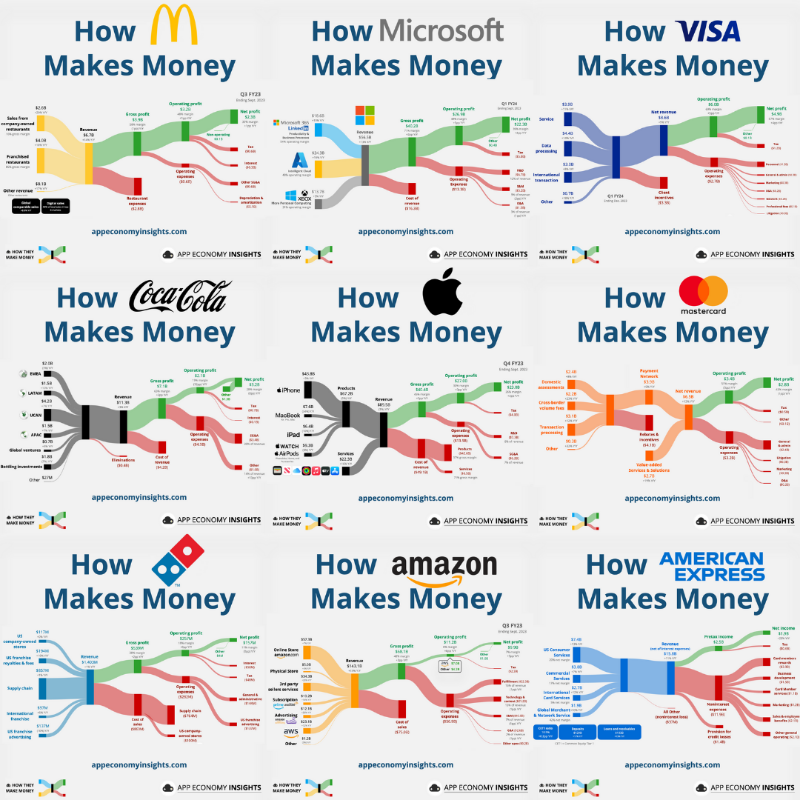
Who's reshaping industries?
Explore which strategies are propelling today’s business titans through easy-to-understand visuals. Stay ahead with engaging content that demystifies complex financial data.
BREAKING: We just gave Claude access to the entire options and stock market.
It's the Unusual Whales MCP Server. It plugs directly into any AI assistant and gives it live, structured data on demand.
Build a trading bot. Build a finance dashboard. Build whatever you want.
POV: you're rolling around on the Red Planet
You’re looking at six years on Mars in around two minutes. This timelapse contains images captured by our Curiosity rover between 2020 and 2026 from one of its navigation cameras. https://t.co/yfDUkHzBgF
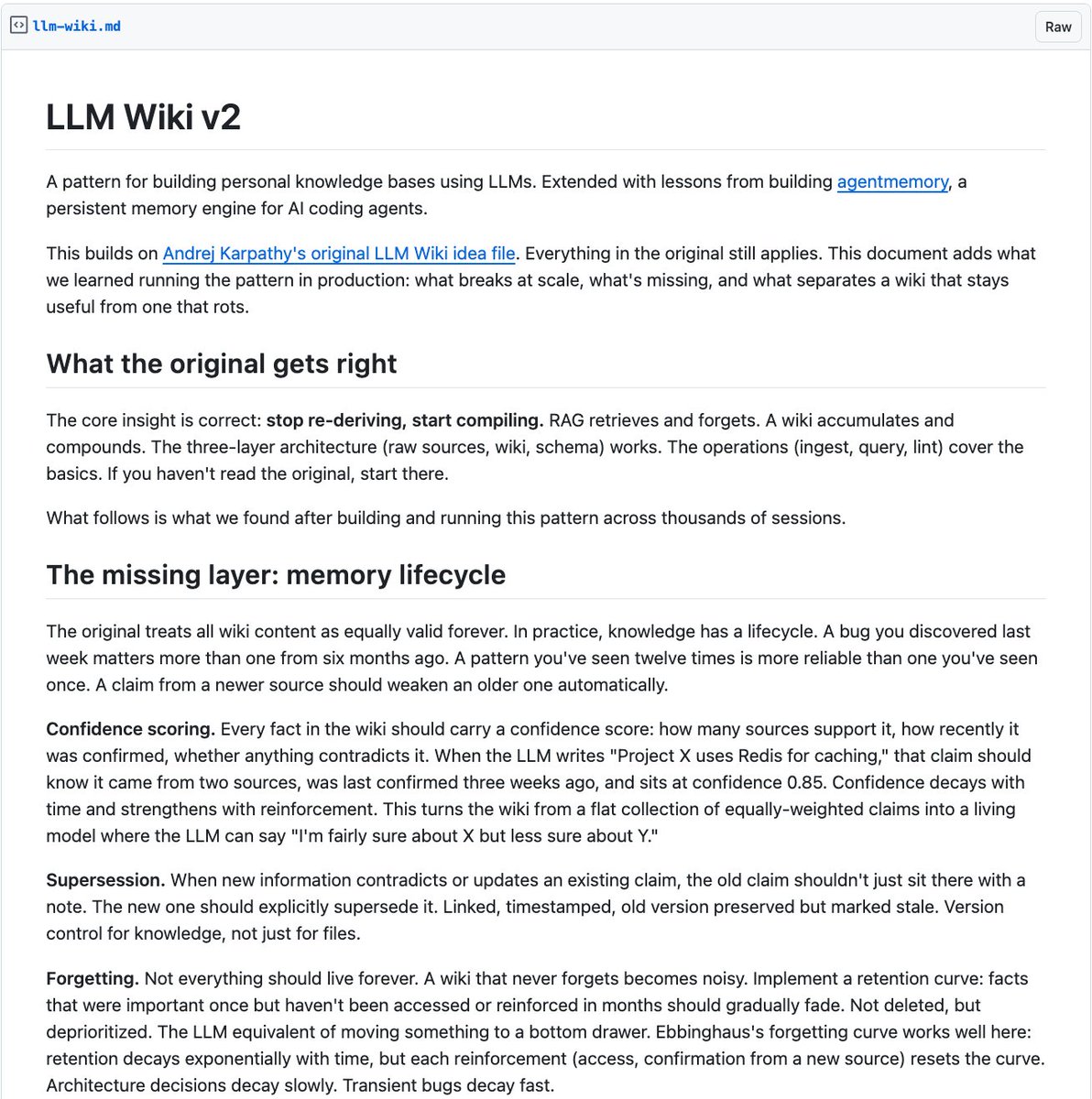
Karpathy's LLM Wiki got 5,000 stars in 48 hours. Now someone extended it with the features it was missing.
Memory lifecycle. Confidence scoring. Knowledge graphs. Automated hooks. Forgetting curves.
It's called LLM Wiki v2.
The original pattern was brilliant. AI builds a wiki instead of re-deriving knowledge from scratch every time. But it treated all knowledge as equally valid forever. In practice, that breaks.
Here's what v2 adds:
→ Confidence scoring. Every fact carries a score. How many sources support it. How recently confirmed. Whether anything contradicts it. Knowledge that decays over time. Not everything is equally true forever.
→ Memory tiers. Working memory for recent observations. Episodic memory for session summaries. Semantic memory for cross-session facts. Procedural memory for workflows. Each tier more compressed and longer-lived.
→ Knowledge graph. Not flat pages with links. Typed entities with typed relationships. "A caused B, confirmed by 3 sources, confidence 0.9." Graph traversal catches connections keyword search misses.
→ Hybrid search. BM25 for keywords. Vector search for semantics. Graph traversal for structure. Fused with reciprocal rank fusion. Replaces the index .md file that breaks past 200 pages.
→ Automated hooks. On new source: auto-ingest. On session end: compress and file. On schedule: lint, consolidate, decay. The bookkeeping that kills wikis is now fully automated.
→ Forgetting curves. Facts that haven't been accessed or reinforced in months fade. Not deleted. Deprioritized. Architecture decisions decay slowly. Transient bugs decay fast.
→ Contradiction resolution. AI doesn't only flag contradictions. It resolves them based on source recency, authority, and supporting evidence.
Here's the wildest part:
The original LLM Wiki was a flat collection of equally-weighted pages. This turns it into a living system with memory that strengthens, weakens, consolidates, and forgets. Like a real brain.
"The Memex is finally buildable. Not because we have better documents or better search, but because we have librarians that actually do the work."
Built on lessons from agentmemory, a persistent memory engine for AI agents.
Extends Karpathy's original. Open Source.