People trade floors.
Serious people hunt sats.
Uncommon. Rare. Epic. Legendary. Mythic.
The Art is the costume.
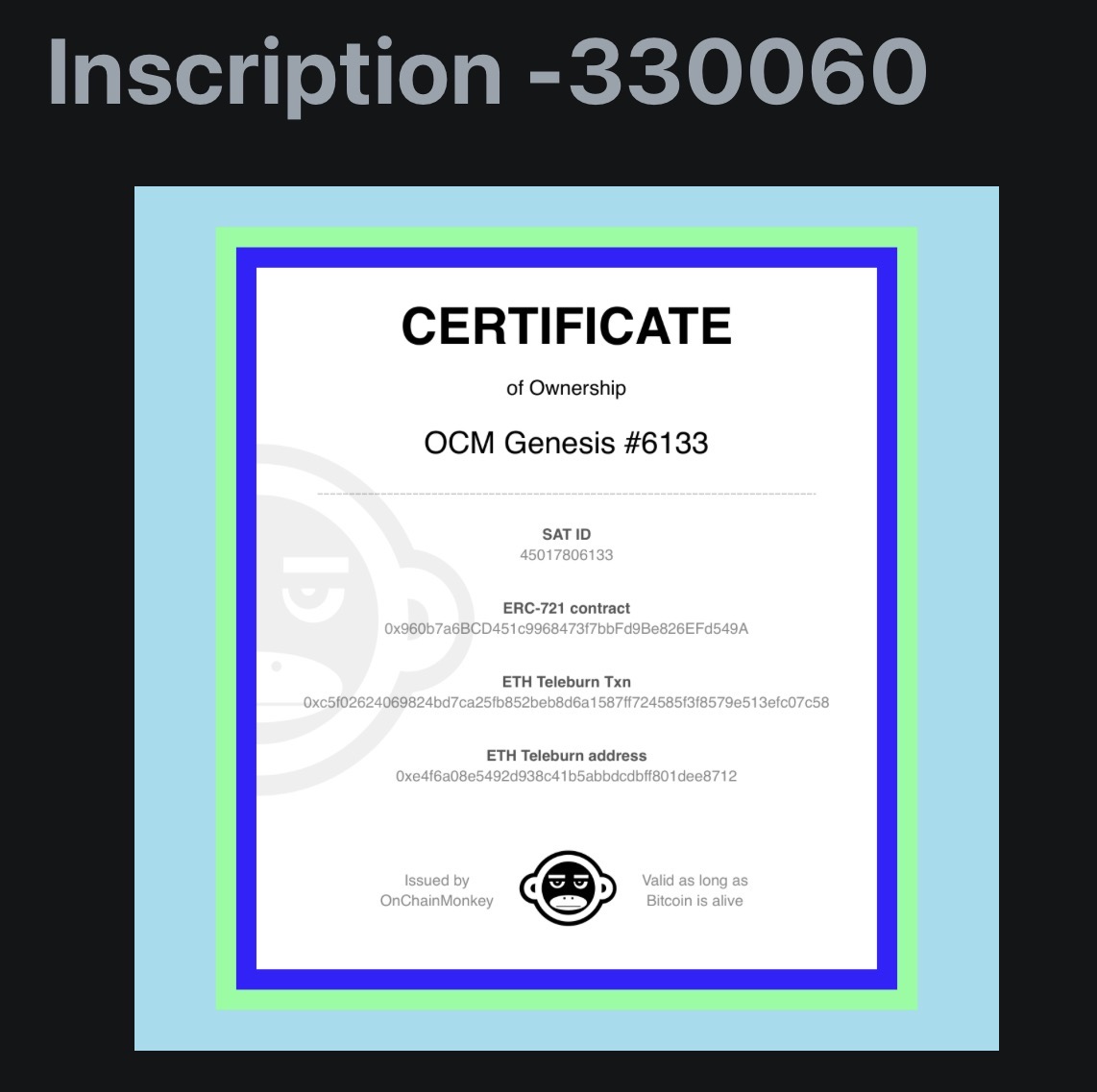
The sat is the bloodline.
If you don’t know which sat you hold, you don’t own an Ordinal.
You own a sticker.
There is an enormous amount of dormant capital in crypto.
It doesn’t need another narrative.
It needs a new opportunity.
If Bitcoin Ordinals can create applications with real users, real demand and real economic activity…
liquidity won’t need to be convinced.
I have yet to find a precedent in art history for what OCM Genesis has now done.
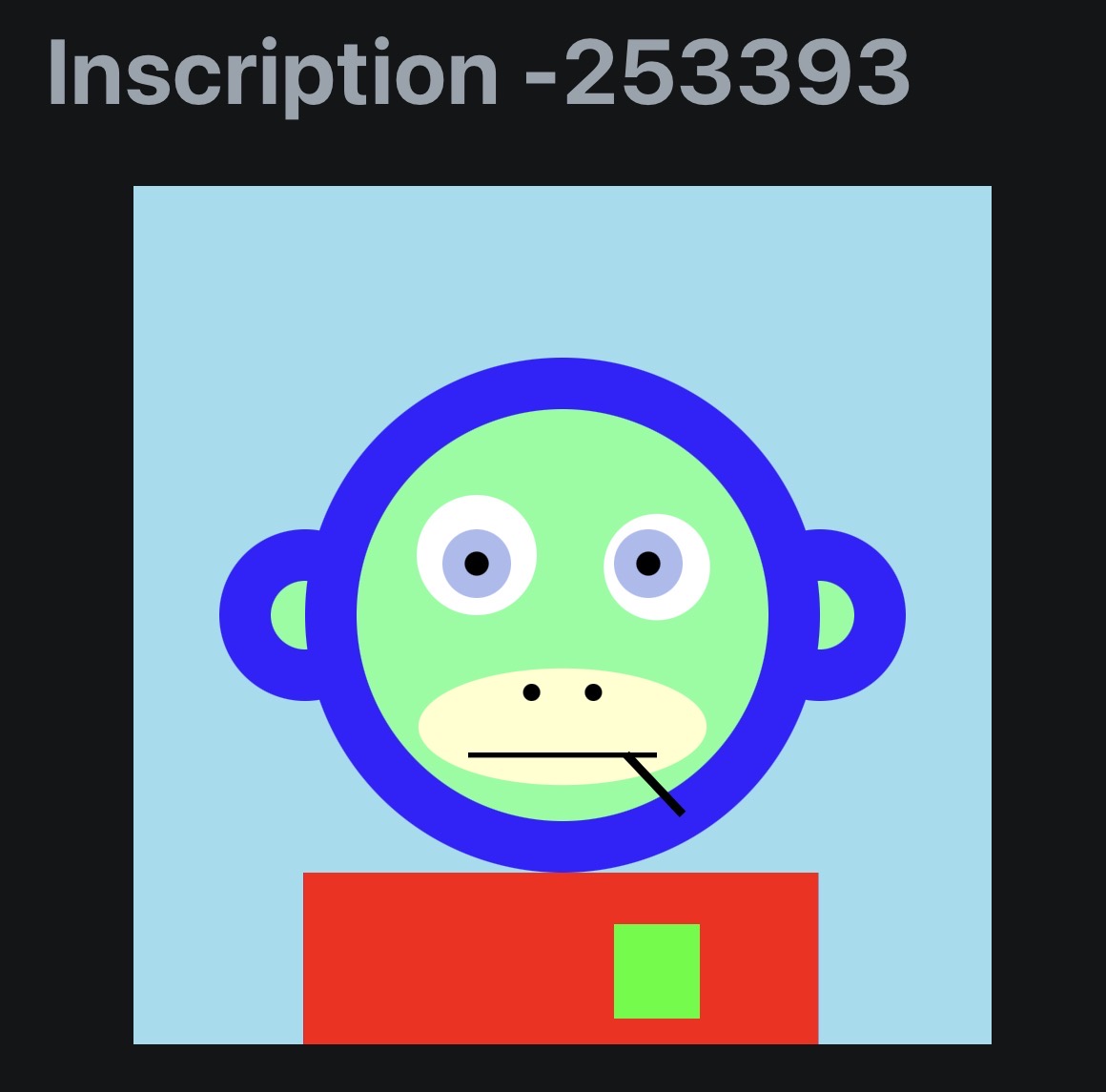
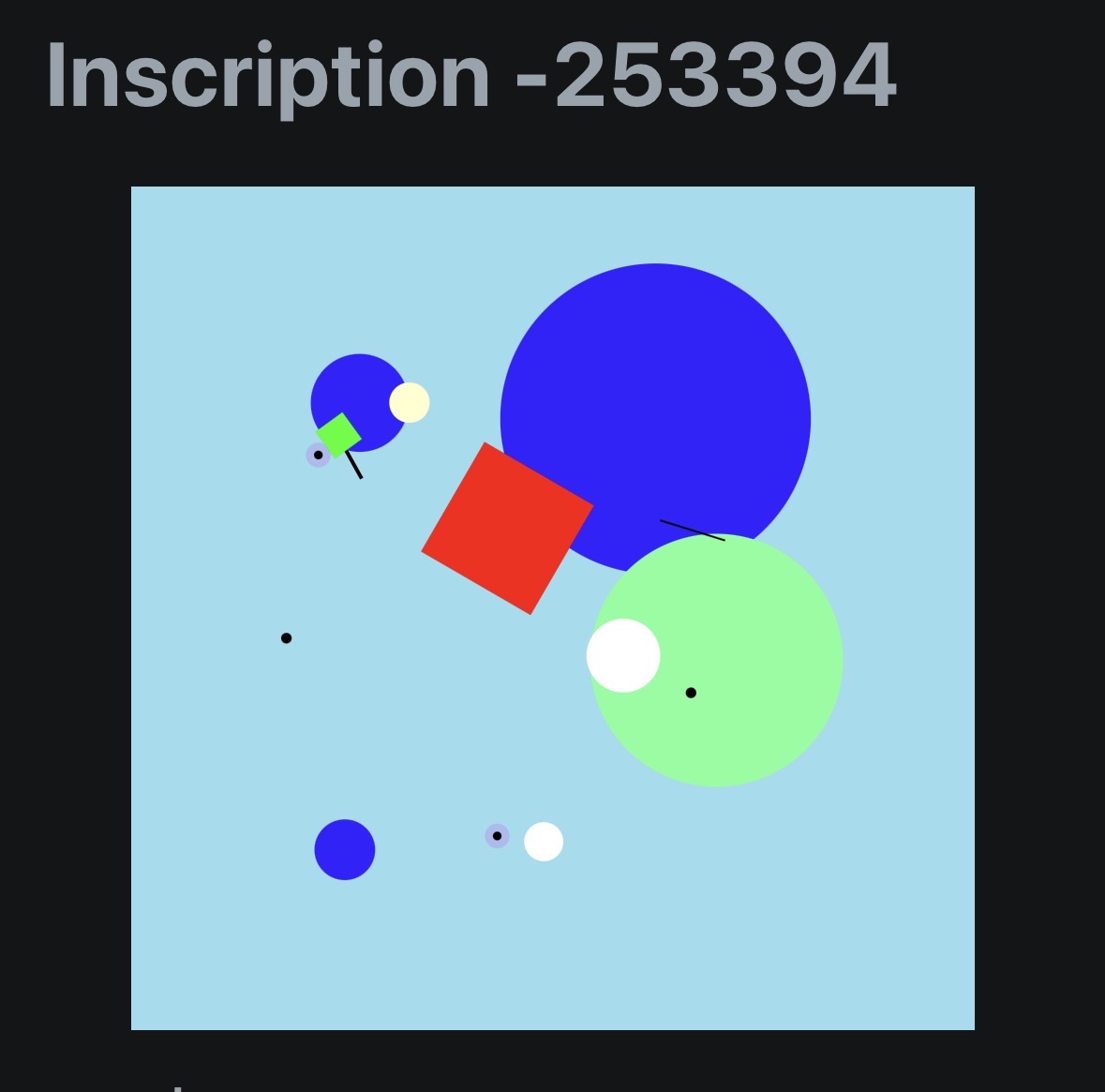
10,000 artworks whose complete visual corpus can be independently rebuilt from raw Bitcoin data.
Without the original technological environment that birthed them.
Using preservation instructions carried alongside the art itself.
Cryptographically verified and reconstructable pixel-for-pixel using future computational technology that may bear no resemblance to the systems that created it.
The original artworks are vector-based.
But the sixth Digital Rosetta Stone defines a canonical 500 × 500 RGB8 preservation raster for every work.
an exact visual target that future technology can reconstruct regardless of how it renders images.
250,000 precisely defined pixel positions per artwork.
10,000 × 250,000 = 2.5 BILLION pixel positions.
2,500,000,000 positions whose intended visual state is now deterministically recoverable and independently verifiable from the surviving Bitcoin record.
- Browsers can disappear
- JavaScript can disappear
- SVG implementations can disappear
- Ordinals software can disappear
OCM Genesis can now outlive the very technological era that created it!
We are so far past “onchain” art at this point. @OnChainMonkey have forged an entirely new lane of permanence:
art engineered to outlive its own technological era. 🗿
You don’t need a roadmap.
You don’t need a foundation.
You don’t need a token.
You need one sat, one inscription, and the willingness to never sell the story.
That’s how Bitcoin won.
That’s how Ordinals win.
Diamond hands on the base layer.
I wonder when @huuep might be willing to expand a little more on why some of his architectural decisions may be important far beyond the preservation of OCM Genesis as artwork.
Being able to recover the visual output is obviously significant. But what interests me even more is what has to be preserved in order to make that possible: the identity of the object, its history, its relationship to other objects, the instructions needed to interpret it, and the information required to verify that what was reconstructed is actually correct.
Anyone with a solid grasp of the broader digital innovation landscape can easily see that those capabilities seem much larger than art alone.
Art on Bitcoin may simply be one of the clearest ways to experiment with and demonstrate this architecture. Once onchain infrastructure can provably and autonomously identify an object and carry its identity, provenance, relationships, interpretive instructions, and verification information across time, you begin approaching an architecture that could potentially preserve many other forms of digital property and knowledge.
It also makes me think about technological change itself. Bitcoin may continue to exist while the software used to access it changes. Browsers, rendering systems, libraries, wallets, and indexers may all be replaced. Even Bitcoin’s current key and signature system may eventually need to evolve if quantum computing becomes a credible threat.
In that kind of future, preserving the bytes is only one part of continuity. We are moving into current and future systems where digital innovation, permanence, verification, and security are expanding into traditional finance, business, property, ownership, identity, and recordkeeping. These systems will need to preserve more than files. They will need to preserve what those files represent, how they were created, what they are connected to, who has authority over them, and what evidence allows another person or system to independently verify those claims.
As more real world assets, financial instruments, ownership records, contracts, credentials, and institutional records become digitally represented, their long term value will depend upon whether their meaning and proof can survive the particular company, application, software, or security system that originally supported them.
A future system may need to understand what the data represents, how all of its components relate, which history is authoritative, what rules governed its previous state, and how an existing asset carries its identity, provenance, and ownership into whatever security architecture comes next.
That is why preserving the Ordinals protocol and its interpretive framework seems potentially much more important than simply ensuring that 10,000 images can still be rendered.
The @OnChainMonkey ecosystem of collectibles makes that architecture visible and understandable today, but the same foundational design principles could eventually support far more consequential forms of digital property and real world ownership.
I have a feeling Danny sees a broader landscape here than he has publicly explained so far. I’d be interested in hearing more about that larger architectural vision whenever he is ready to share it.
Until then, I’ll remain bullish on Danny Yang and the community he has fostered.
Remember:
What is the point of participating in a digital innovation ecosystem if you aren’t going to follow the actual creators of innovation and the people building hands-on infrastructure for the emerging restructuring of the global economy through tokenization?
Ignorantly choosing distance from significant builders makes zero sense to me. Proximity creates opportunities to learn, observe, contribute, and recognize value before it becomes obvious to everyone else.
There are many here early but will still manage to find themselves too late.
OnChainMonkey,
Built Different.
Fees went up.
Maxis got angry.
Good.
When a monetary network starts pricing blockspace for meaning instead of just settlement, you are watching the asset become a civilization.
Congestion is demand.
Demand is belief.
Belief is the product.
Bitcoin Ordinals need more financial infrastructure.
Deep marketplaces.
Lending.
Derivatives.
Indexes.
Fractionalization.
Cross-market liquidity.
Not because speculation is the end goal.
Because liquidity makes an asset class usable.
The next Ordinals meta shouldn’t be “which collection pumps?”
It should be:
“What can only exist because this is on Bitcoin?”
That question creates better products.
Better products create stronger demand.
Stronger demand creates liquidity.
Ordinals have a distribution advantage nobody talks about enough:
Bitcoin already has hundreds of millions of users.
The problem isn’t the size of the network.
The problem is that most Bitcoin users still don’t have a reason to interact with Bitcoin-native assets.
Give them one.
Ethereum made culture liquid.
Bitcoin made culture immortal.
That’s the entire thesis.
If you believe Bitcoin is the last ledger, then the only place culture should live is on Bitcoin.
Ordinals are that sentence becoming true.